
A clear look at the biggest arenas in the world, how they compare by capacity, and what makes these massive venues matter for sports and shows.
A sold-out arena feels big when the lights drop and the crowd starts to roar. But when you look at the biggest arenas in the world, “big” takes on a different meaning. These are venues built to hold staggering numbers of people for basketball, college sports, concerts, religious gatherings, and major live events – and their size often says as much about local culture as it does about architecture.
If you have ever wondered which arenas truly stand above the rest, the answer depends on one key detail: are we talking about official maximum capacity, regular sports setup, or concert configuration? Arena rankings can shift because seats are added, removed, or reconfigured depending on the event. Still, a few massive venues consistently show up at the top.
What counts as one of the biggest arenas in the world?
An arena is usually defined as an enclosed venue with a large central floor surrounded by seating. That separates it from outdoor stadiums, which often hold far more people but serve a different purpose. The biggest indoor arenas are built for flexibility. One week they host basketball or hockey, the next they bring in a touring music act, a wrestling event, or a convention-sized gathering.
That flexibility is part of why capacity can get tricky. Some buildings advertise one number for concerts, another for sports, and sometimes a higher standing-room figure for special events. So when people talk about the biggest arenas in the world, they are usually discussing the highest commonly cited capacity for an indoor venue rather than a single universal standard.
The biggest arenas in the world by capacity
Several arenas dominate global rankings, and they are not all in the places casual fans might expect.
Philippine Arena
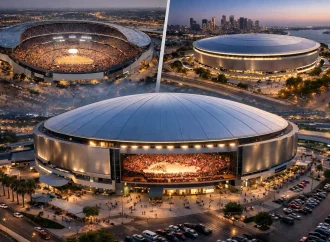
Located in Bulacan, Philippines, Philippine Arena is widely recognized as the largest indoor arena in the world. Its capacity is commonly listed at around 55,000, which puts it in a category of its own. That number is so high that it rivals or exceeds some outdoor venues used in American sports.
What makes it stand out is not just the raw capacity, but the scale of its design. It was developed to host large religious events, concerts, and international entertainment. For readers used to NBA or NHL buildings in the US, Philippine Arena can feel almost hard to picture because it is dramatically larger than a typical pro sports venue.
Greensboro Coliseum
In the United States, Greensboro Coliseum in North Carolina often appears near the top of the list among traditional indoor arenas. Depending on configuration, it can seat more than 23,000 for basketball. That makes it one of the largest arena-style venues in the country.
Its staying power is especially interesting. Newer arenas often get the attention because of luxury suites, upgraded screens, and premium hospitality spaces. Greensboro Coliseum proves that older venues can remain major players when they have strong event history, regular renovations, and a loyal regional audience.
Carrier Dome and similar large enclosed venues
Some of the biggest crowd numbers in college sports have come from oversized enclosed venues such as the JMA Wireless Dome, formerly known as the Carrier Dome, in Syracuse, New York. Depending on the setup, it has hosted crowds above 30,000 for basketball.
This is where classification matters. Some domed buildings blur the line between arena and stadium because they serve football, basketball, and multi-use events under one roof. If you use a strict arena definition, they may not always be ranked alongside purpose-built indoor arenas. If you care more about indoor attendance than venue label, they absolutely belong in the conversation.
Belgrade Arena
Belgrade Arena in Serbia is another heavyweight on international lists, with capacity often cited above 18,000 and higher for certain events. It is one of Europe’s best-known large indoor venues and has hosted basketball championships, concerts, and other major gatherings.
Its importance goes beyond seating count. In Europe, where basketball culture runs deep and live entertainment regularly fills major halls, venues like this help define a city’s place on the international events map.
Lanxess Arena and other European giants
Germany’s Lanxess Arena in Cologne is one of the most significant indoor venues in Europe, with capacities that can exceed 18,000 depending on the event. Similar large-scale venues in Paris, Manchester, and elsewhere across Europe may not beat the absolute global leaders, but they remain central to how major tours are routed.
For performers and promoters, this matters. A city with a truly large arena can support bigger productions, larger audiences, and more profitable single-night shows. That can make the venue a regional magnet for entertainment spending.
Why arena size is only part of the story
The largest capacity does not always mean the best fan experience. In fact, there is often a trade-off.
A giant indoor venue can create a memorable sense of scale, especially for championship games or superstar concerts. At the same time, the farther fans are from the floor, the more the experience relies on giant screens, sound design, and in-house production quality. A 55,000-seat arena is impressive on paper, but some fans would still choose a smaller, better-designed venue with stronger sightlines.
That is why promoters, sports organizations, and venue operators think beyond raw size. They care about loading access, acoustics, premium seating, concessions, parking, and how quickly a venue can turn over from one event to another. A building that holds 20,000 efficiently may be more valuable than one that holds 30,000 awkwardly.
How US arenas compare with global leaders
American readers may assume the biggest arenas are all in major US markets like New York, Los Angeles, or Chicago. That is true if you focus on brand recognition, but not always if you focus on pure indoor capacity.
Many famous US venues are optimized for revenue per guest rather than maximum attendance. That means more luxury suites, club areas, wider concourses, and premium food options. Those upgrades are great for comfort and profitability, but they can reduce total seat count compared with older bowl-style buildings or mega-venues built for different purposes.
Madison Square Garden, for example, is one of the most famous arenas on earth, but it is not the largest. Its reputation comes from history, location, and event prestige. The same goes for Crypto.com Arena and other iconic US buildings. They are major venues, just not the absolute biggest by capacity.
What makes a giant arena successful?
The most successful large arenas usually get three things right. First, they serve a market with steady demand, whether that is sports, concerts, or large-scale cultural events. Second, they are designed for flexibility, so operators can host many event types without expensive downtime. Third, they offer enough comfort and visibility to keep fans coming back.
This is where some enormous venues struggle. A huge arena is expensive to maintain, and filling it regularly is not easy. An undersold event can make a building feel empty fast. Smaller arenas often create better atmosphere with fewer people, which is one reason not every city aims to build the biggest possible venue.
The biggest arenas in the world and why people care
Part of the fascination is simple scale. People like records, and “largest indoor arena” is an easy headline to understand. But there is another reason these venues draw attention: they reflect what a city or organization wants to say about itself.
A mega-arena signals ambition. It says this place expects major events, major crowds, and major visibility. In some cases, it supports tourism and local business by pulling in visitors for concerts, sports tournaments, and conventions. Hotels, restaurants, and transportation networks all benefit when a venue can attract tens of thousands of people in one shot.
For fans, these arenas also represent access. A larger building can mean more tickets, lower scarcity, and a better chance to see a top act without resale prices going through the roof. That does not always happen, but capacity can help.
So which arena is really the biggest?
If you are asking for the clearest single answer, Philippine Arena is generally recognized as the largest indoor arena in the world by capacity. After that, rankings get more complicated because different venue types, event configurations, and definitions start to blur together.
That is the honest answer, and it is more useful than pretending there is one perfectly fixed global list. Some venues dominate in standard sports setup, some in concert mode, and some in total enclosed attendance across multiple uses. The right comparison depends on what you actually want to measure.
The next time you see a packed house on TV, it is worth remembering that arena size is not just trivia. It shapes ticket access, atmosphere, city economics, and even how a live event feels from the moment you walk through the doors. The biggest buildings may win the headline, but the best arenas earn their reputation one crowd at a time.

















Leave a Comment
Your email address will not be published. Required fields are marked with *