
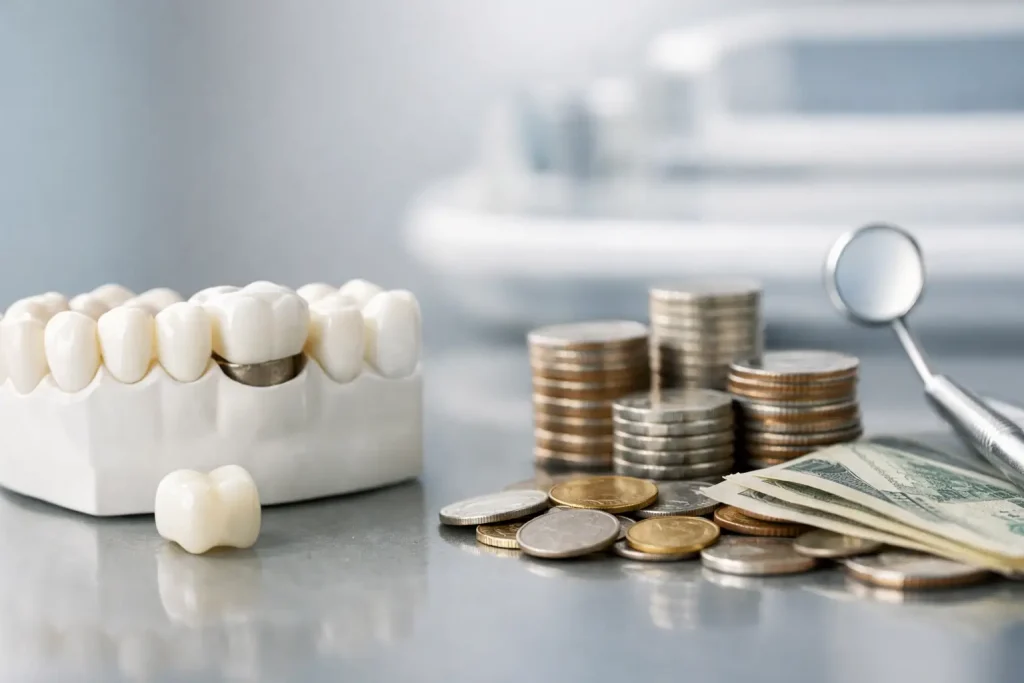
Dental crown cost can range widely by material, tooth location, and insurance. Learn what affects pricing and how to lower out-of-pocket costs.
A crown can sound like a simple fix until the estimate lands in your inbox. Then the real question shows up fast: what is a realistic dental crown cost, and why can one office quote a few hundred dollars while another is well into four figures?
The short answer is that crowns are not one-price procedures. Your final bill depends on the crown material, where the tooth sits in your mouth, whether you need extra work first, and how your insurance handles major dental services. For most patients in the US, the price can range from several hundred dollars to well over $1,500 per tooth.
What affects dental crown cost?
The biggest driver is the type of crown your dentist recommends. Porcelain and ceramic crowns often cost more than metal options because they are designed to blend in with natural teeth. That matters a lot for front teeth, where appearance is harder to compromise on.
Location matters too. A molar takes more force than a front tooth, so the crown may need a stronger material. In some cases, a dentist may suggest zirconia or porcelain-fused-to-metal for durability, and that can change the price.
Then there is the condition of the tooth itself. If the tooth is badly damaged, you may need a buildup before the crown can be placed. If infection is present, a root canal may come first. Those steps are separate from the crown and can raise the total bill quickly.
Geography also plays a role. Dental fees in large metro areas tend to be higher than in smaller cities or rural markets. The experience of the provider, the technology used in the office, and whether the crown is made by an outside lab or produced the same day can all shift pricing.
Average dental crown cost by crown type
If you are comparing estimates, it helps to look at broad national ranges rather than one fixed number. Exact pricing varies, but these ballpark figures are common in the US.
Porcelain or ceramic crowns
These often run around $800 to $1,800 per tooth. They are popular because they look natural, especially on visible teeth. The trade-off is that some ceramic options may not be the best fit for heavy grinders or certain back teeth, depending on the case.
Porcelain-fused-to-metal crowns
These usually fall around $800 to $1,400. They offer a middle ground between appearance and strength. They have been widely used for years, though some patients dislike the possibility of a dark line near the gum over time.
Gold or other metal crowns
These often range from $900 to $2,500, depending on the metal content. They are extremely durable and can be gentle on opposing teeth, but the obvious color makes them a tougher sell for visible areas.
Zirconia crowns
These commonly cost about $1,000 to $2,000. Zirconia is strong and increasingly popular for back teeth, though some versions also work well in visible areas. Pricing can be higher because of the material and manufacturing process.
Same-day crowns
If your dentist offers in-office milling technology, a same-day crown may cost around $1,000 to $1,800. The convenience is a real selling point because you avoid a temporary crown and second appointment. Still, not every office uses the same system, and not every case is ideal for same-day treatment.
What is usually included in the price?
This is where many patients get tripped up. A quoted dental crown cost may only cover the crown itself and the placement visit. It may not include the initial exam, X-rays, numbing, core buildup, temporary crown, or lab fees if those are billed separately.
Some offices bundle everything into one number. Others break out each line item. Neither approach is automatically better, but it does make comparison harder unless you ask what the estimate actually includes.
A useful question is simple: what will I owe from start to finish if nothing unexpected comes up? That gets you closer to the real number than asking only for the price of the crown.
Does insurance cover dental crowns?
Often, yes, but rarely at 100%. Most dental insurance plans classify crowns as a major service. That means the plan may cover about 50% of the allowed amount after you meet your deductible. Some plans pay less, and some have waiting periods before major work is covered.
There is another catch. Insurance does not pay based on what your dentist charges. It pays based on the plan’s allowed fee schedule. If your dentist charges more than that allowed amount and is out of network, your share can be much higher than expected.
Annual maximums matter too. Many traditional dental plans cap benefits at $1,000 to $2,000 per year. If you already used part of that for cleanings, fillings, or other work, there may not be much left for a crown.
If you have insurance, ask the office for a pre-treatment estimate. It is not a guarantee, but it can help you spot surprises before treatment starts.
Why one crown quote can be so much higher than another
A lower quote is not always a better deal, and a higher quote is not always overcharging. Sometimes you are paying for better materials, stronger lab work, or digital scanning that improves fit and comfort. Sometimes you are paying for a high-cost market or a specialist-level case.
That said, price gaps can also reflect differences in office overhead, brand positioning, and treatment philosophy. One office may recommend a premium esthetic material where another would choose a more basic option. If the difference is large, ask why that material was selected and whether there are other clinically sound choices.
This is especially relevant if the tooth is not highly visible. You may decide that perfect cosmetic blending is worth the extra money, or you may prefer the more affordable option. Neither choice is wrong if it fits your needs.
Ways to lower your out-of-pocket cost
If the estimate feels steep, you still have options. Many dental offices offer payment plans or work with third-party financing companies. That will not reduce the total price, but it can make the timing more manageable.
You can also ask whether there is a less expensive crown material that still makes sense for your tooth. For example, a back molar may not need the same cosmetic finish as a front tooth. The right answer depends on your bite, habits, and the tooth’s position.
Dental schools can be another route for lower fees. Treatment is usually provided by dental students or residents under supervision. The savings can be meaningful, though appointments may take longer and scheduling may be less flexible.
If you have flexibility, you can also plan treatment around your insurance year. Some patients split care across two benefit periods to use two annual maximums. That strategy only helps when timing is safe from a dental standpoint, so confirm with your dentist first.
Finally, do not be shy about requesting a written estimate. A clear breakdown helps you compare clinics more accurately and gives you a better chance of catching charges that might be optional or postponable.
When a crown is worth the money
Crowns are expensive, but putting one off can become even more expensive if the tooth fractures further or fails completely. A crown is often recommended to protect a weakened tooth, restore a tooth after a root canal, or rebuild a large area that a filling can no longer support.
The key is whether the tooth is still restorable. If it is, a crown may extend its life for years. If the tooth is too damaged, you may end up paying for an extraction and replacement instead, which can cost more than a crown in the long run.
That does not mean every recommendation should be accepted without questions. It does mean that cost should be weighed against what happens if you wait. In dentistry, delay can be cheap for a month and expensive by the next season.
Questions to ask before you agree to treatment
Before you book the procedure, ask what type of crown is being recommended and why. Ask whether the estimate includes the exam, X-rays, temporary crown, buildup, and cementation. Ask what your insurance is expected to cover and whether there are any likely added costs.
It is also smart to ask how long the crown is expected to last and whether habits like teeth grinding could shorten its lifespan. A cheaper crown that fails early is not really cheaper.
Dental work is rarely fun to shop for, but it is still worth shopping smart. The best number is not just the lowest dental crown cost. It is the price that makes sense for your tooth, your budget, and the result you want to live with every day.


















Leave a Comment
Your email address will not be published. Required fields are marked with *