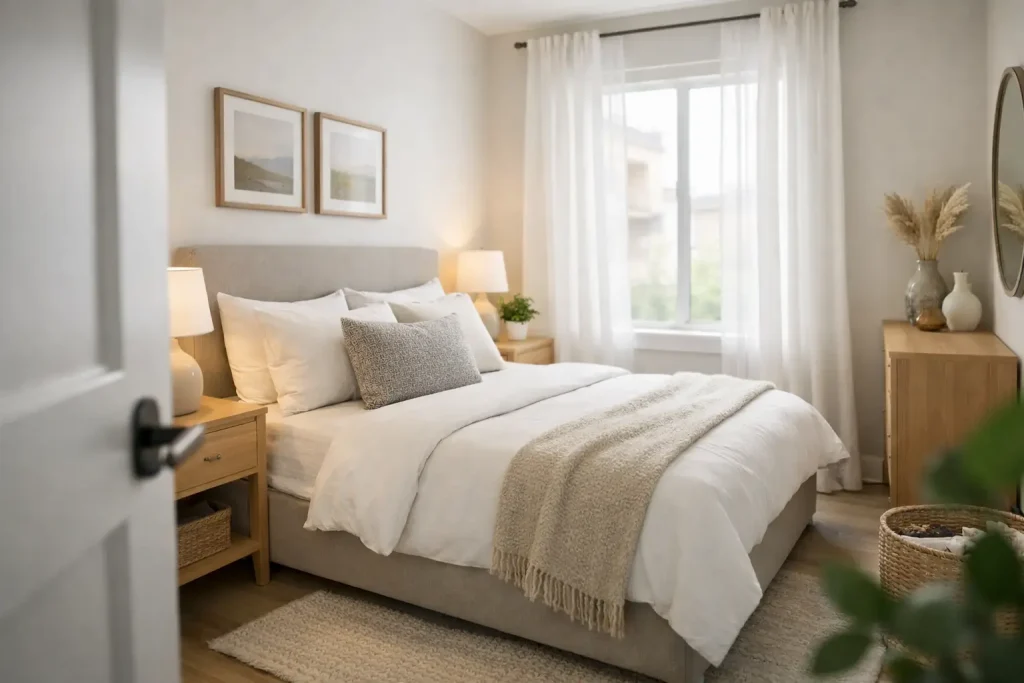
Learn how to make a small bedroom look bigger with smart layout, lighting, color, storage, and decor tricks that add visual space fast.
That cramped feeling usually isn’t about square footage alone. A small bedroom can feel tighter than it is when furniture blocks sightlines, lighting falls flat, or too many visual details compete for attention. If you’re wondering how to make a small bedroom look bigger, the good news is that a few strategic changes can shift the whole room without knocking down a single wall.
The best results come from thinking visually, not just practically. You want the eye to move easily through the space, land on a few clean focal points, and register more openness than clutter. That means every choice matters a little more in a small room – from bed placement to curtain height to whether your nightstand looks heavy or light.
How to make a small bedroom look bigger starts with layout
Before buying new decor or repainting, look at the room’s traffic flow. In many bedrooms, the biggest problem is that furniture is technically useful but poorly positioned. A bed shoved into the wrong wall, a dresser that interrupts the doorway, or mismatched pieces with bulky proportions can make the room feel boxed in.
Start with the bed, since it dominates the space. If possible, place it where you can still see some floor around it. That visible floor area creates a sense of openness, even if the room is still compact. Pushing a bed tightly against one wall can save inches, but it can also make the room read like an afterthought. Sometimes a centered bed with slimmer side tables actually feels larger than an off-balance setup designed only to squeeze things in.
Scale matters just as much as placement. Oversized furniture is one of the fastest ways to shrink a bedroom visually. If your nightstands are deep, your dresser is tall and wide, and your bed frame has a thick headboard and footboard, the room has almost no breathing room left. Consider pieces with narrower legs, open bases, or floating designs. Furniture that lets you see beneath or through it tends to feel lighter.
Leave room for negative space
Not every corner needs to be filled. Empty space is part of the design. A clear patch of wall, a visible strip of floor, or a dresser top with only one or two items on it can make a room feel intentionally edited rather than unfinished.
This is where trade-offs come in. If you need lots of storage, completely minimal styling may not be realistic. But you can still aim for visual quiet by choosing storage that hides items instead of displaying everything at once.
Use color to open the room up
Color has a real effect on how large a room appears, but the answer is not simply paint everything white and hope for the best. Light colors generally reflect more light and make walls seem to recede, which helps. Soft whites, warm beige, pale gray, muted greige, and light blue are all reliable choices.
That said, the right shade depends on your light. A cool white in a north-facing bedroom can feel flat and chilly. A warmer off-white or creamy neutral often works better in real homes because it keeps the room bright without looking sterile. If you like deeper colors, you do not have to rule them out completely. A darker room can still feel stylish and spacious if the lighting is layered well and the furnishings stay streamlined. It just won’t create the same airy effect as a lighter palette.
Keep contrast under control. Sharp jumps between wall color, bedding, curtains, and furniture can visually chop the room into smaller pieces. A more connected palette helps the eye travel smoothly. That does not mean everything should match exactly. It means the tones should feel related.
Monochrome works harder in small spaces
One of the easiest designer tricks is using a tight range of similar shades. Think soft taupe walls, ivory bedding, beige curtains, and natural wood accents. This gives the room dimension without making it feel busy. If you want personality, bring it in through texture rather than ten competing colors.
Light is what makes the room feel open
A small bedroom with poor lighting will always feel smaller than it is. Natural light does the heavy lifting during the day, so avoid blocking windows with dark curtains, bulky blinds, or furniture placed too close to the glass.
Hang curtains higher than the window frame and let them extend a bit wider than the window itself. This trick makes the window look larger and the ceiling feel taller. It is simple, inexpensive, and surprisingly effective. Choose curtain fabrics that let in some light if privacy allows.
Artificial lighting matters just as much at night. Relying on one harsh overhead fixture can flatten the entire room. Instead, layer light with bedside lamps, wall sconces, or a small accent light on a dresser. Multiple light sources reduce shadows and make the room feel more dimensional.
Mirrors can help here too, but placement is everything. A mirror opposite or near a window can bounce light around the room and create the impression of depth. A mirror in the wrong spot, especially one reflecting clutter, just doubles the problem.
Smart storage keeps visual clutter from taking over
If you want to know how to make a small bedroom look bigger, clutter control is non-negotiable. Even a well-decorated room feels cramped when clothes pile up on a chair, cords trail across the floor, and every surface is packed.
The goal is not to own less overnight. The goal is to store more intelligently. Under-bed bins, storage beds, floating shelves, slim dressers, and closet organizers can all help, depending on the room. Closed storage usually works better than open storage in a small bedroom because it hides visual noise.
Try to keep the floor as clear as possible. Floor baskets, stacks of books, and extra stools may seem minor, but they break up open sightlines. When the eye sees a cleaner floor plane, the room reads as bigger.
There is also a styling angle here. If your dresser top becomes a catchall for skincare, jewelry, receipts, and random chargers, the room instantly feels tighter. Use a tray, a small box, or a drawer insert to contain essentials. You do not need empty surfaces everywhere, but you do need surfaces that look controlled.
Choose decor that adds height and depth
Small bedrooms benefit from decor choices that pull the eye upward. Vertical artwork, tall headboards with simple lines, and floor-to-ceiling curtains all help emphasize height. Horizontal clutter, by contrast, tends to make the room feel squat and crowded.
Wall art should be scaled with intention. One larger piece above the bed often works better than a gallery wall full of small frames. Too many tiny items can create visual static. The same goes for decorative objects. A few stronger accents usually beat lots of little ones.
Rugs can also help define the room and make it feel finished. A rug that is too small can have the opposite effect by making everything look shrunken. In many cases, a larger rug tucked partly under the bed creates a broader visual footprint.
Skip anything that looks overly heavy
Chunky bed frames, dark bulky armoires, thick patterned bedding, and heavy furniture finishes can all weigh the room down. If you like a cozy look, go for softness instead of bulk. Quilted bedding, textured throws, and upholstered details can still feel inviting without overwhelming the space.
Keep patterns and accessories on a short leash
Pattern can add life to a bedroom, but in a small room, less usually looks better. A bold wallpapered accent wall can work, though it depends on the print and the rest of the furnishings. Large-scale patterns sometimes create more openness than tiny busy ones because they read clearly from a distance.
If you already have patterned bedding, printed curtains, and a textured rug, adding more may push the room into crowded territory. Choose one or two moments of personality and let the rest support them. This is often where magazine-ready bedrooms get their calm look – not because they are boring, but because they are edited.
For renters, this is especially useful. You may not be able to paint or replace major furniture, but you can swap heavy comforters for lighter bedding, simplify your nightstand styling, and use a mirror or brighter lamps to change the whole feel of the room.
Small upgrades that make a real difference
Some changes pay off faster than others. If you want the biggest visual return without a full redesign, start with lighter bedding, better lighting, elevated curtain placement, and a serious decluttering pass. These four moves often make more impact than buying all-new furniture.
If you do plan to spend, prioritize pieces that earn their footprint. A bed with built-in storage, a wall-mounted sconce that frees up nightstand space, or a slim dresser with better organization can improve both form and function. That balance matters in a room you use every day.
A bigger-looking bedroom is rarely about tricks alone. It is about making the room easier for your eye and your routine to live with. When the layout flows, the light works, and the clutter stops shouting for attention, even a modest bedroom can feel calm, polished, and far more spacious than its dimensions suggest.
The smartest approach is to change one layer at a time, then step back and see what the room still needs.
















Leave a Comment
Your email address will not be published. Required fields are marked with *