
Discover what a staycation is and how it can save money, reduce stress, and offer a refreshing break right at home. Dive in now!
A staycation is a vacation spent at home or very close to home, planned with the same intention and care you would give any trip. No airports, no hotel check-in queues, no jet lag. Just a deliberate pause from routine, right where you already are. The short version: it costs less, removes travel stress, and works beautifully for a quick mental reset, a long weekend with family, or any time a full trip simply isn’t practical.
Table of Contents
- What does “staycation” actually mean, and where did the word come from?
- Fun staycation activities you can actually do this weekend
- Why a staycation can be better than a traditional trip
- The psychology behind why staycations actually restore you
- When staycations go wrong — and how to avoid the pitfalls
- How to plan a staycation that actually feels like a vacation
- Staycation vs. vacation: a quick cost and timing comparison
- How to get family or roommates on board
- Setting boundaries so work and chores don’t creep back in
- Meals and entertainment that make a staycation feel special
- Key Takeaways
- A note from our team at Lizard’s Lunch
What does “staycation” actually mean, and where did the word come from?
Staycation is a portmanteau of “stay” and “vacation.” The term gained mainstream traction during the 2008 economic downturn, when households cut travel budgets without wanting to skip time off entirely.
“A staycation is a vacation taken at home or near your home rather than traveling to another place.” — Cambridge English Dictionary
Merriam-Webster and Cambridge both list it as a standard English word. The meaning has a small but real nuance worth knowing: in the United States, a staycation typically means staying at your own home or within an easy day-trip radius. In the UK and Ireland, the term has expanded to include any domestic holiday taken within the country rather than traveling abroad. For most American readers, the home-or-nearby definition is the one that applies.
Fun staycation activities you can actually do this weekend
The best staycation ideas share one quality: they feel different from a regular Saturday. Novelty is the key ingredient, and you don’t need to travel far to find it.
- Local museum or art gallery day. Many U.S. cities offer free or low-cost admission on certain weekdays.
- Backyard camping. Set up a tent, make a fire (or use a fire pit), and sleep outside. Kids love it; adults are often surprised how restorative it feels.
- Hotel or resort day pass. Services like ResortPass let you book pool and spa access at nearby hotels without paying for a room. It’s a genuine luxury experience at a fraction of the overnight cost.
- Themed dinner nights. Pick a cuisine, find a recipe, and treat the meal like a restaurant experience. Italian night, sushi night, or a backyard barbecue with a playlist to match.
- Nearby state or national park. Most Americans live within an hour of a state park. Pack a lunch and spend a half-day hiking or picnicking.
- Guided local tour. Walking food tours, ghost tours, and architecture walks exist in most mid-size U.S. cities and reveal things locals never notice.
- Home spa day. Face masks, a long bath, a good book, and no schedule. Simple, free, and genuinely restorative.
- Hobby workshop. Pottery, painting, cooking classes, and axe-throwing venues all offer drop-in sessions. Book one as your anchor activity for the day.
Pro Tip: Browse budget-friendly staycation ideas before you plan. Having a short menu of options ready prevents the “what should we do?” spiral that kills the vacation mood.
Why a staycation can be better than a traditional trip
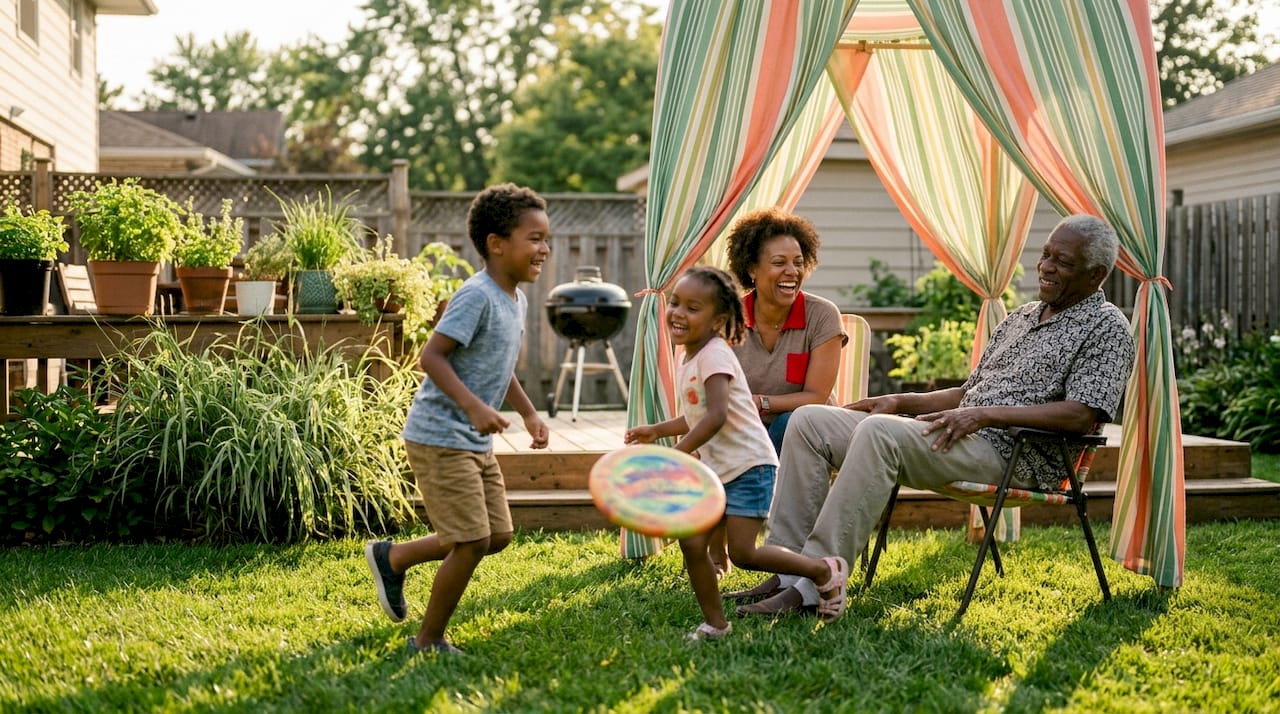
The financial case is straightforward. Eliminating flights, hotel nights, rental cars, and airport meals frees up real money. That savings can fund one genuinely special experience, like a nice dinner or a spa day, rather than being spread thin across travel logistics. For practical vacation budgeting tips, the staycation model is one of the most effective tools available.
Beyond cost, the psychological case is compelling. According to AAA’s Trip Canvas, staycations let you reallocate funds to a single meaningful upgrade rather than spreading a budget across travel overhead. And because you control your own schedule entirely, the nervous system gets something long trips often deny: genuine rest without the cognitive load of navigating unfamiliar places, time zones, or logistics.
A staycation is especially sensible when you have pets, caregiving responsibilities, a tight budget, or simply need a short reset rather than a full week away. Short resets are a legitimate recovery strategy when long travel is impractical, and treating them as such removes any guilt about “not going anywhere.”
The psychology behind why staycations actually restore you
Staycations can produce genuine mental restoration when they are designed with intention. The science behind this comes from two well-established frameworks.
Attention restoration theory holds that directed attention, the kind you use for work and problem-solving, depletes over time. Recovery happens through “soft fascination”: low-demand, pleasurable experiences like walking in a park, watching a fire, or sitting near water. You don’t need to travel to Yellowstone to access this. A nearby trail or a quiet backyard works on the same mechanism.
Self-determination theory adds a second layer. Autonomy, the sense that you are choosing how to spend your time, is one of the strongest predictors of psychological wellbeing. A well-planned staycation maximizes autonomy. You pick the activities, the pace, and the meals. That control is itself restorative in ways that a packed travel itinerary often isn’t.
“Staycations offer slower-paced benefits — gratitude, noticing small pleasures, and reduced decision-making demands — making them restorative in different ways than long-distance travel.” — The Travel Psychologist
Pro Tip: Our team at Lizard’s Lunch recommends anchoring your staycation around one booked activity, a spa appointment, a guided tour, or a special dinner reservation. That single commitment gives the brain a clear signal that this is vacation time, not an extended weekend.
For more on building rest into your routine, our mental health and wellbeing guide covers the broader habits that support genuine recovery.
When staycations go wrong — and how to avoid the pitfalls
The most common reason a staycation fails is simple: the boundaries never get set. Home is full of cues that trigger work and chore behavior, and without a plan, you’ll find yourself doing laundry and answering emails by noon on day one.
- Blurred work boundaries. Fix: close the home office physically, set an out-of-office reply, and treat work messages the same way you would on a beach in another state.
- Chores taking over. Fix: handle or outsource must-do chores before the staycation starts, so the days feel clear.
- No anchor activity. Fix: book at least one thing in advance. A reservation creates occasion and separates the break from routine.
- Expecting the same novelty as travel. Fix: reframe the goal. A staycation delivers rest and autonomy, not adventure. Plan for what it does well.
- Devices staying on. Fix: set specific phone-free windows. Digital-detox rules are consistently recommended to preserve the restorative benefits of any local break.
How to plan a staycation that actually feels like a vacation
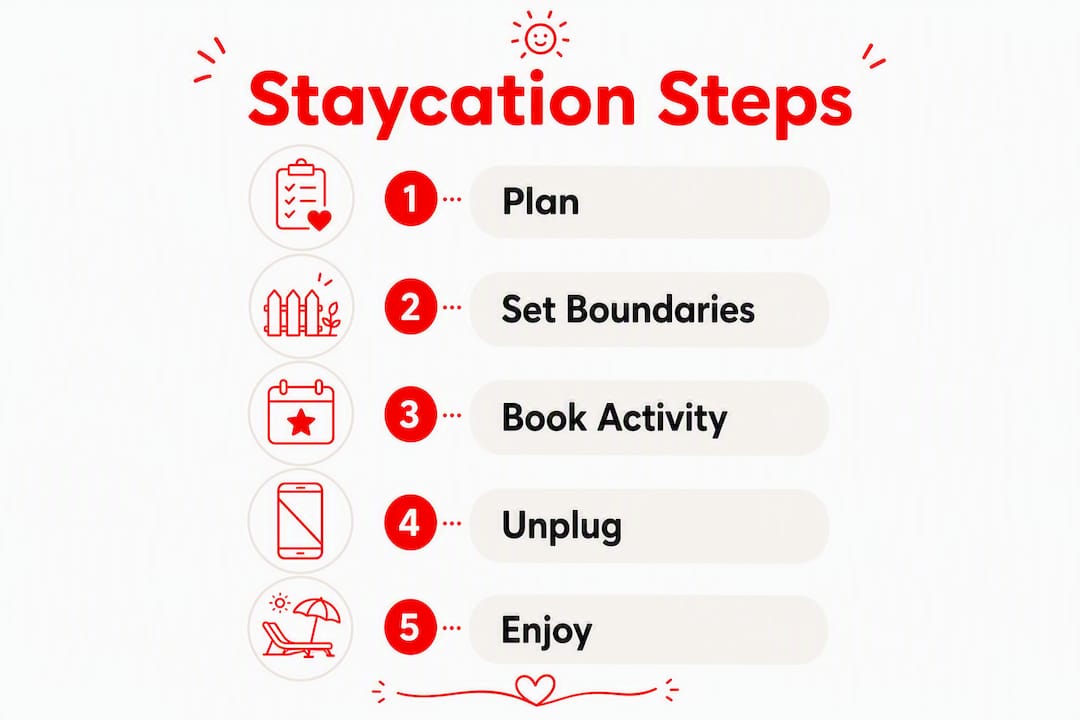
Treat it like a real trip. That single instruction separates a restorative staycation from an unproductive weekend. Here’s a simple checklist:
- Set firm dates. Announce them to anyone who might contact you for work or obligations.
- Create a lightweight itinerary. Not a minute-by-minute schedule, but a rough plan: morning activity, afternoon activity, special meal.
- Book one anchor activity. Paid or free, but confirmed in advance. A hotel day pass, a cooking class, a guided hike.
- Handle chores before day one. Grocery shop, do laundry, and tidy up so the space feels like a retreat.
- Plan at least one special meal. Cook something new, order from a restaurant you’ve been meaning to try, or set the table properly for a home dinner.
- Set device rules. Decide on phone-free hours and communicate them to your household.
- Build a wind-down routine. On the final evening, do something calming to ease the transition back to work mode.
Timing guidance:
- Single day: Best for a quick mental reset. Focus on one great activity and one good meal.
- Long weekend (2–3 days): Enough time for genuine restoration. Mix one paid anchor activity with low-key days.
- Full week: Works well for families. Plan more variety, including a short day trip or overnight nearby stay.
Staycation vs. vacation: a quick cost and timing comparison
Here’s how the two options stack up across the dimensions that matter most for planning:
| Dimension | Staycation | Traditional vacation |
|---|---|---|
| Logistics | Minimal — no flights, no packing stress | High — booking, transfers, packing |
| Cost | Low to moderate | Moderate to high |
| Novelty | Moderate — depends on planning | High — new places, new experiences |
| Recovery potential | High when boundaries are set | Variable — travel fatigue is real |
| Flexibility | Very high — easy to adjust | Low — bookings lock you in |
Quick duration guide:
- A single day works for a reset when you’re burned out but not depleted.
- A long weekend suits most restoration goals without requiring much planning.
- A full week at home is best paired with at least one overnight nearby stay to add genuine novelty.
If you’re weighing a staycation against a resort trip, our all-inclusive resort guide lays out what a traditional getaway actually delivers, so you can make the comparison honestly.
How to get family or roommates on board
A staycation works best when everyone in the household is genuinely participating. The simplest approach: hold a short planning conversation before the dates arrive. Let each person choose one activity or meal. That small act of co-creation builds buy-in and prevents one person from feeling like they’re on vacation while everyone else is just home.

For families with kids, a theme helps. “Beach weekend” means tropical drinks, beach towels in the backyard, and a playlist. “Adventure weekend” means a hike, a campfire, and a movie about exploration. The theme gives children something to anticipate and keeps the energy from deflating by day two.
Roommates who aren’t joining the staycation are worth a quick heads-up. A shared space where one person is in vacation mode and another is in work mode creates friction fast.
Setting boundaries so work and chores don’t creep back in
Boundaries are the infrastructure of a good staycation. Without them, the break dissolves. The most effective ones are physical and pre-communicated.
Close the door to your home office, or if you don’t have one, put your laptop in a drawer. Set an out-of-office message that mirrors what you’d send before a real trip. Tell your manager and close colleagues the specific dates. These steps sound obvious, but most people skip them because they feel unnecessary when they’re “just staying home.” That’s exactly the thinking that turns a staycation into a guilt-ridden weekend.
For device management, research consistently supports designated phone-free periods as a way to reduce cognitive load and improve presence. Even a two-hour window each morning makes a measurable difference in how rested you feel by the end of the day.
Meals and entertainment that make a staycation feel special
Food is one of the fastest ways to shift the atmosphere at home. A few ideas that work well:
- Build-your-own taco bar or sushi night. Interactive meals slow the pace and make dinner an event rather than a task.
- Breakfast in bed on day one. It signals immediately that this is not a normal day.
- Backyard movie night. A projector, string lights, blankets, and popcorn. The setup takes 20 minutes and the payoff is real.
- Mocktail or cocktail hour. Pick a theme, make a signature drink, and sit somewhere you don’t usually sit.
- Streaming marathon with intention. Choose a series you’ve been saving, make a snack spread, and commit to watching without multitasking.
The goal isn’t elaborate production. It’s the small signal to your brain that this time is different, set apart, and worth savoring.
Key Takeaways
A staycation delivers genuine rest when you plan it with the same intention you’d give any real trip, anchored by clear boundaries and at least one booked activity.
| Point | Details |
|---|---|
| Core definition | A staycation is a vacation spent at home or very close to home, planned intentionally. |
| The one planning rule | Book one anchor activity in advance to signal to your brain that this is vacation, not routine. |
| Set hard boundaries | Close the home office, set an out-of-office reply, and agree on device-free hours before day one. |
| Psychology backs it | Attention restoration theory shows that low-demand, pleasurable activities replenish directed attention without requiring travel. |
| Cost advantage | Eliminating travel overhead frees budget for one meaningful upgrade, like a day pass or special dinner. |
A note from our team at Lizard’s Lunch
The most common objection we hear about staycations is that they don’t “count” as real time off. That framing is worth pushing back on. The research on attention restoration and autonomy doesn’t care whether you flew somewhere. What it cares about is whether you actually stopped, set boundaries, and did something that felt different from your normal week.
Our honest recommendation: try a one-day version this month. Pick a Saturday, book one thing you wouldn’t normally do, handle the chores on Friday, and treat the day with the same care you’d give a trip. You might be surprised how much a single well-designed day can shift your energy heading into the following week. That’s the experiment worth running.


















Leave a Comment
Your email address will not be published. Required fields are marked with *