

Discover why to choose shoulder season for travel. Enjoy lower costs, fewer crowds, and better experiences on your next trip!
Shoulder season is often the single best time to travel — lower prices, thinner crowds, and weather that’s genuinely pleasant rather than punishing. If you’re weighing when to book your next trip, the case for traveling between peak and off-season is hard to argue with. Here’s the quick version:
- Lower costs: airfares and hotel rates drop noticeably when demand falls between peak windows
- Fewer crowds: national park visits can drop to roughly 85% of peak levels in September, meaning shorter lines and better access
- Better experience: restaurants take reservations, locals have time to talk, and iconic spots are actually photographable
The bottom line: if you have any flexibility in your travel dates, shoulder season almost always delivers more value per dollar and more enjoyment per hour than peak season.
Table of Contents
- What does “shoulder season” actually mean?
- Why the benefits of shoulder season are so compelling
- When shoulder season tends to occur and where it works best
- When shoulder season isn’t the right call
- How to plan a shoulder-season trip without the guesswork
- What travel experts and data say about shoulder season
- Key Takeaways
- Our team’s take on shoulder season travel
- Useful sources and further reading
What does “shoulder season” actually mean?
The name is more literal than it sounds. Shoulder season describes the travel window that sits on either side of peak demand, like the shoulders of a bell curve. Demand dips, but the destination hasn’t shut down the way it does in true off-season. That distinction matters: during shoulder season, hotels, restaurants, tours, and transport are largely still running. Off-season often means reduced schedules, closed attractions, and limited dining options.
Exact timing shifts by destination type. For most U.S. travelers, the two main shoulder windows are spring (March through May) and fall (September through November). But those are generalizations. A beach town in Florida peaks in winter; its shoulder season runs in spring and fall. A ski resort in Colorado peaks December through February; its shoulder falls in November and April. European city breaks follow a different rhythm entirely, with August as peak and May or September as the sweet spot.
The key is that shoulder season timing varies by destination, climate, and traveler type. Knowing your specific destination’s calendar is more useful than following a generic rule.
Why the benefits of shoulder season are so compelling
The advantages stack up quickly once you look at them together. Cost is the most obvious draw, but the experience improvements are just as real.
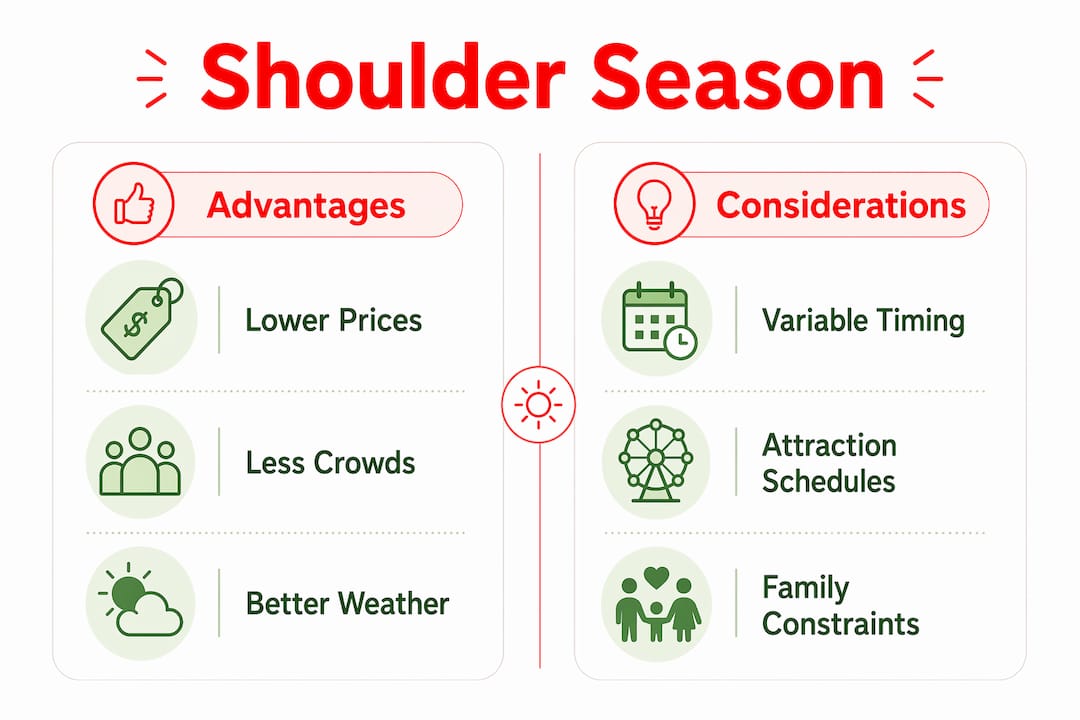
Prices drop across the board
When demand falls, supply stays the same — and prices follow. Airlines, hotels, and tour operators all adjust rates to fill inventory. Industry data indicate a shift toward shoulder-season bookings, with some sources reporting up to a 20% surge in bookings as travelers avoid peak-season crowds and costs.

Crowds thin out in meaningful ways
Fewer crowds aren’t just a comfort thing. They change what’s possible. You can walk up to a popular trailhead without a timed-entry permit. You can get a table at a restaurant you’d normally need to book weeks out. You can stand in front of a famous painting without twelve strangers’ elbows in your ribs.
Weather is often better than you’d expect
Peak season weather is frequently extreme. August in Rome or Phoenix is brutal. July in Yellowstone means thunderstorms every afternoon. Shoulder months often land in the sweet spot: warm enough to enjoy outdoor activities, cool enough to actually walk around comfortably.

Sustainability and local connection
Spreading tourism across the calendar eases overtourism pressure on communities that get overwhelmed during peak months. Your travel dollars reach local businesses at a time when they genuinely need them, and locals have more bandwidth to actually engage with visitors.
Here’s a quick comparison of what shoulder season typically delivers versus peak:
| Factor | Peak Season | Shoulder Season |
|---|---|---|
| Airfare & hotels | Highest rates | Noticeably lower |
| Crowd levels | Maximum | Moderate to light |
| Reservation difficulty | High | Much easier |
| Weather | Often extreme | Frequently pleasant |
| Local interaction | Rushed, transactional | More relaxed, genuine |
Two quick examples worth knowing:
- National parks: September visits drop to around 85% of summer peak levels, yet most amenities stay fully open. You get the scenery without the parking-lot chaos.
- European city breaks: May and September in cities like Paris, Prague, or Lisbon offer mild temperatures, open museums, and hotel rates that can be meaningfully lower than July or August.
When shoulder season tends to occur and where it works best
For U.S.-based travelers, the spring and fall windows are the most reliable starting points. But regional variation is real, and worth knowing before you book.
Coastal and beach destinations (think the Outer Banks, Cape Cod, or the Gulf Coast) peak in summer. Their shoulder runs May through June and September through October — warm enough to swim, quiet enough to enjoy it.
Mountain and national park destinations like Yellowstone, the Grand Tetons, or Rocky Mountain National Park peak July through August. September is arguably their best month: fall color starts, crowds thin, and temperatures stay manageable.
Hawaii is a special case. It has two peak windows (summer and December through January) and two shoulder periods (spring and fall). The fall shoulder, particularly September and October, offers some of the best value on the islands.
The Caribbean peaks December through April (winter escape season). Its shoulder runs May through early June, just before hurricane season picks up. That window can offer real savings, though travelers should monitor storm forecasts.
Japan is worth a global mention: its shoulder seasons around the cherry blossom period (late March to early April) and fall foliage (November) are famous for beauty, though they’re increasingly crowded themselves. The true shoulder for Japan is often May or early June.
Shoulder season also tends to align with natural events like fall foliage, wildlife migrations, and wildflower blooms — often with far fewer people around to see them. Timing can shift by weeks year to year, so checking recent reports close to your trip date pays off.
When shoulder season isn’t the right call
Shoulder season isn’t perfect for every traveler or every trip. Knowing the tradeoffs helps you decide honestly.
Common drawbacks include:
- Seasonal closures: Some restaurants, tour operators, and smaller attractions close between seasons. A beloved local spot might not reopen until the week after you leave.
- Reduced transport frequency: Ferries, shuttle buses, and regional trains sometimes run on limited schedules outside peak months.
- Unpredictable weather: Spring and fall can bring rain, cold snaps, or heat waves. Packing for variability is non-negotiable.
- Timing sensitivity: If you’re traveling specifically for a festival, a natural event, or a season-specific activity (skiing, whale watching), shoulder season may simply miss the window.
Families tied to school calendars often can’t use shoulder season at all — summer and holiday breaks are peak season almost everywhere. If your dates are fixed, the shoulder-season math doesn’t apply the same way.
Pro Tip: Before finalizing any shoulder-season trip, check local opening calendars for your must-do attractions. Reopening and closing dates shift faster than weather patterns, and a quick email or phone call to a key restaurant or tour operator can save real disappointment.
How to plan a shoulder-season trip without the guesswork
Getting the most out of off-peak travel comes down to a few concrete steps. Here’s a practical sequence:
- Identify your destination’s actual shoulder window. Don’t assume spring and fall apply everywhere. Look up the destination’s peak season first, then work backward.
- Book flights with flexible dates. Use tools like Google Flights’ calendar view or Kayak’s flexible-date search to spot the cheapest days within your shoulder window. Even a Tuesday vs. Saturday departure can shift the price noticeably.
- Lock in accommodations early for popular spots. Shoulder season has fewer crowds, but the best-value hotels still fill up. Book 6–8 weeks out for domestic trips, 10–12 weeks for international.
- Pre-book must-have experiences. Timed-entry permits for national parks, popular cooking classes, or sought-after restaurant reservations should be secured before you arrive. Leave the rest open for spontaneity.
- Pack for variable weather. Layers are your best friend. A lightweight waterproof jacket, a packable fleece, and versatile footwear cover most shoulder-season conditions. For a deeper look at packing smart, the guide to packing light at Lizardslunch is worth a read.
- Get travel insurance or flexible tickets. Shoulder-season weather and occasional closures make trip-interruption coverage genuinely useful, not just a formality.
- Verify operating hours close to your trip. Confirm hours for restaurants, tours, and museums within two weeks of departure. Operational windows move faster than you’d expect.
Pro Tip: Set a Google Alert for your destination plus “reopening” or “closing dates” a month before your trip. Local news often reports seasonal business changes before the businesses update their own websites.
For broader budget travel strategies, pairing shoulder-season timing with smart spending habits multiplies your savings considerably.
What travel experts and data say about shoulder season
The industry has noticed the shift. Leigh Barnes of Intrepid Travel, speaking with National Geographic, frames shoulder season as a practical tool for easing overtourism — one that improves the quality of traveler-local interactions while taking pressure off destinations that get overwhelmed in peak months.
“Traveling in shoulder season isn’t just about saving money — it’s about having a richer, more connected experience while helping the communities you visit thrive year-round.” — Leigh Barnes, Intrepid Travel (via National Geographic)
The numbers back that perspective. Bookings during shoulder windows have increased, with some industry sources reporting up to a 20% surge as travelers increasingly seek to avoid peak-season costs and crowds. And national park visitation data shows September visits running at roughly 85% of summer peak levels — a meaningful drop that translates directly into shorter lines, easier parking, and a quieter experience on the trail.
Key Takeaways
Shoulder season consistently delivers the best balance of value, access, and experience for flexible travelers.
| Point | Details |
|---|---|
| Best timing for most U.S. trips | Spring (March–May) and fall (September–November) are the most reliable shoulder windows. |
| Cost savings are real | Airfares and hotel rates drop when demand falls; booking flexibility amplifies those savings. |
| Crowds drop meaningfully | National park visits fall to around 85% of peak levels in September, improving access and enjoyment. |
| Watch for closures | Seasonal businesses may not be open; verify hours within two weeks of your departure date. |
| Plan early, stay flexible | Pre-book must-do experiences, but leave room for spontaneity once you arrive. |
Our team’s take on shoulder season travel
Our team at Lizard’s Lunch has looked at a lot of travel advice, and the shoulder-season case is one of the most consistently underrated recommendations out there. Budget travelers get the obvious win — lower prices across flights, hotels, and tours. But the people who benefit most aren’t always the ones chasing discounts.
Photographers get golden-hour shots without a crowd of strangers in the frame. Solo travelers find locals who actually have time to talk. National park visitors get the trails to themselves on a Tuesday in September. Those are experiences that peak-season money simply can’t buy, no matter how much you spend. If your schedule has any flexibility at all, shifting your trip by three or four weeks can transform the entire experience. For anyone planning a U.S. road trip around these windows, our road trip planning guide covers the operational side in detail.
Useful sources and further reading
These are the sources that informed this article, organized by what they contribute:
- National Geographic — Shoulder Season Travel: Best destination examples, Leigh Barnes expert perspective, and sustainability framing
- NerdWallet — Why Shoulder Season Is Great for Travel: National park visitation data and consumer-facing cost analysis
- Outlook Traveller — Shoulder Season vs. Peak Season: Booking surge data and demand-shift context
- Lonely Planet — 9 Great Reasons to Travel During Shoulder Season: Practical planning tips, operating-hours verification advice
- YMT Vacations — 5 Reasons to Travel During Shoulder Season: Airfare and lodging savings examples
- Revivalist — Shoulder Season Pros and Cons: Balanced drawbacks coverage and weather variability context
- Charlotte Douglas Airport — Steeped in Savings: Etymology and industry usage of the term “shoulder season”

















Leave a Comment
Your email address will not be published. Required fields are marked with *