

Discover essential strategies for Mental Health in 2026. Learn expert tips and daily practices to enhance your emotional well-being today!
Mental health is the state of well-being that allows you to manage life’s stresses, recognize your own abilities, and participate fully in society. The World Health Organization, the CDC, and SAMHSA all anchor their guidance in this definition, and for good reason. Nearly 1 billion people globally live with a mental illness, and half the world’s population will experience a mental health concern at some point. That scale makes understanding mental wellness one of the most practical things you can do for yourself and the people around you. This guide pulls together the latest expert consensus, 2026 CDC stress management advice, and concrete daily practices to help you build and protect your emotional well-being.
What are the core dimensions of mental health?
Mental health is defined by positive functioning, not just the absence of illness. That distinction matters more than most people realize. You can live with a diagnosed condition and still experience genuine well-being. You can also appear symptom-free and feel completely disconnected from a meaningful life.
A 2026 international consensus study identified six core pillars of mental well-being, with over 90% expert agreement:
- Meaning and purpose: Feeling that your daily actions connect to something larger than yourself
- Life satisfaction: A general sense that your life is going well, even when specific things are hard
- Self-acceptance: Recognizing your strengths and limitations without harsh self-judgment
- Social connection: Having relationships where you feel genuinely seen and supported
- Autonomy: Making choices that reflect your own values rather than constant external pressure
- Happiness: Experiencing positive emotions with enough regularity to balance the difficult ones
The same research proposed a broader 19-dimension taxonomy, but these six pillars represent the foundation. Think of them as the load-bearing walls of your emotional house. Strengthen one and the others tend to benefit too. The Watershed Framework from Frontiers in Psychology describes this as an interconnected hallmarks model, where improving one area creates a cascade of positive effects across the rest.
Experts also confirm that mental illness and well-being are not mutually exclusive. A person managing depression can still build strong social connections and find daily purpose. That nuance removes the all-or-nothing thinking that keeps many people from investing in their own wellness.

Pro Tip: You do not need to score perfectly on all six pillars. Identify the one or two that feel most depleted right now and start there. Small, targeted improvements build momentum faster than trying to fix everything at once.
How does stress affect mental health?
Stress is the body’s natural response to perceived threats or demands, and in short bursts it actually sharpens focus and performance. The problem is chronic stress, which keeps your nervous system in a state of low-level alarm for weeks or months at a time. That sustained activation raises cortisol levels, disrupts sleep, weakens the immune system, and gradually erodes your emotional reserves.
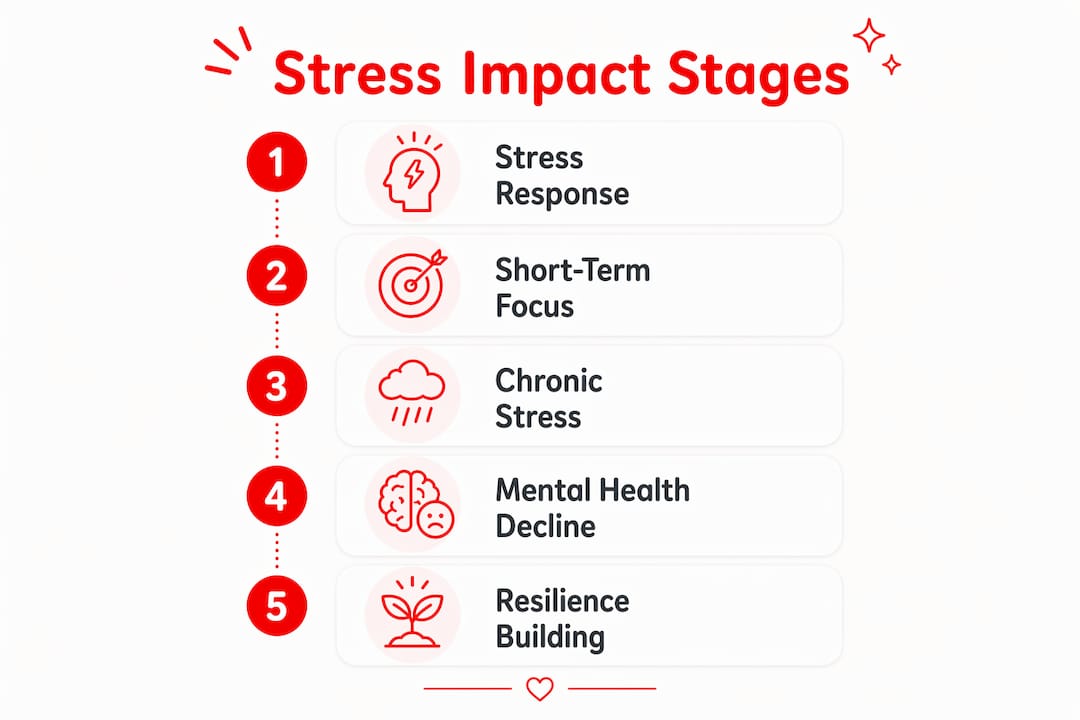
The CDC’s 2026 guidance offers one of the clearest prescriptions available. 2.5 hours of moderate physical activity per week, broken into 20 to 30 minute segments, is recommended as an effective stress management strategy. That works out to about five short sessions per week, which is far more achievable than a single long workout. The segmented approach also fits into real schedules, whether you walk at lunch, stretch in the morning, or ride a bike after dinner.
Beyond movement, research points to several other methods that consistently reduce stress load:
- Mindfulness practice: Even five minutes of focused breathing lowers cortisol and interrupts the stress cycle. Apps like Calm and Headspace provide structured starting points.
- Gratitude journaling: Writing three specific things you are grateful for each day shifts attention away from threat-scanning and toward what is working.
- Boundary setting: Limiting social media intake and stepping back from draining conversations protects your mental energy and reduces stress accumulation over time.
- Sleep consistency: Going to bed and waking at the same time each day regulates the stress hormones that spike when your sleep cycle is irregular.
- Social support: Talking through a stressful situation with someone you trust activates the brain’s calming systems in ways that solo coping cannot replicate.
Coping with anxiety specifically benefits from a combination of physical activity and cognitive techniques. Cognitive Behavioral Therapy, or CBT, is the most research-supported approach for anxiety disorders, and many of its core tools, such as thought records and behavioral experiments, can be practiced independently between therapy sessions.
Pro Tip: Small daily habits build resilience far better than intense occasional efforts. A 20-minute walk five days a week does more for your stress response than a single weekend wellness retreat.
What are practical ways to nurture your mental wellness daily?
Protecting your mental wellbeing is an ongoing practice, not a destination you reach and then maintain automatically. The most effective approach combines self-awareness, physical care, and intentional social choices.
Build a daily check-in habit
Start each morning with a 60-second emotional inventory. Ask yourself: How is my body feeling? What is my mood? What is one thing I am carrying from yesterday? This practice is not about solving problems before breakfast. It is about noticing patterns before they become crises. Mental Health America’s 2026 Action Guide emphasizes that well-being is deeply personal, defined by your own experience rather than external productivity standards.
Protect your energy proactively
Your attention and emotional energy are finite resources. Limiting social media and disengaging from draining conversations are not antisocial behaviors. They are maintenance. UCLA Health’s 2026 guidance specifically names these as protective factors for mental wellness. Set a daily screen time limit on your phone, mute accounts that consistently trigger comparison or anxiety, and give yourself permission to decline conversations that leave you feeling worse.
Here are additional daily practices that support lasting emotional well-being:
- Move your body in ways you enjoy. Regular physical activity lowers stress hormones and boosts mood. It does not have to be a gym workout. Dancing, gardening, and walking the dog all count.
- Maintain one consistent daily anchor. A morning coffee ritual, an evening walk, or a regular bedtime creates predictability that calms the nervous system.
- Practice self-compassion. When you make a mistake, respond the way you would respond to a close friend. Harsh self-criticism increases cortisol and reduces motivation.
- Invest in at least one real relationship. A single trusted person you can call when things are hard provides more protection against depression than almost any other factor.
- Spend time in nature. Even 20 minutes in a park or garden measurably reduces stress hormones, according to research from the University of Michigan.
Research from the University of Maryland Medical Center confirms that small consistent habits are more sustainable than dramatic lifestyle overhauls. Consistency beats intensity every time. You are building a foundation, not staging a performance.
Animals also play a surprisingly powerful role in daily wellness. Spending time with pets lowers blood pressure and cortisol, and the companionship benefits extend to emotional regulation and reduced loneliness.
How do mental health conditions affect life expectancy?
The physical consequences of untreated mental illness are severe and often underestimated. People with severe mental health conditions die 10 to 20 years earlier on average than the general population. That gap is not primarily caused by suicide, though that risk is real. It reflects the cumulative toll of chronic stress on the cardiovascular system, immune function, and metabolic health.
Understanding the difference between mental illness and mental well-being helps clarify what is at stake:
| Dimension | Mental Illness | Mental Well-Being |
|---|---|---|
| Definition | Diagnosable condition affecting mood, thinking, or behavior | Positive state of functioning across the six core pillars |
| Presence of symptoms | Yes, often persistent | Not required; can coexist with illness |
| Treatment focus | Symptom reduction, medication, therapy | Strengthening purpose, connection, and self-acceptance |
| Life impact | Can impair work, relationships, and physical health | Buffers against stress and supports recovery |
| Measurement | Clinical diagnosis by a professional | Self-reported and clinician-assessed well-being scales |
Mental illness also creates difficulties in relationships and work and increases the risk of human rights violations, particularly in settings where mental health care is underfunded or stigmatized. Stigma remains one of the largest barriers to treatment globally. Many people delay seeking help for years because they fear judgment, which compounds both the psychological and physical damage.
Addressing depression and mental health conditions early produces dramatically better outcomes. The WHO estimates that for every dollar invested in mental health treatment, there is a return of four dollars in improved health and productivity. That ratio makes the case for treating emotional well-being as health care, not a luxury.
What resources are available for mental health support?
Knowing where to turn is half the battle. The mental health support system includes a wide range of professionals, organizations, and digital tools, and you do not need a crisis to use them.
Types of professional support
- Psychiatrists are medical doctors who can diagnose conditions and prescribe medication. They are the right choice when symptoms are severe or when medication may be part of the treatment plan.
- Psychologists hold doctoral degrees and specialize in assessment and therapy. CBT, Dialectical Behavior Therapy (DBT), and Acceptance and Commitment Therapy (ACT) are among the most evidence-based approaches they use.
- Licensed counselors and therapists provide talk therapy for a broad range of concerns, from work stress to grief to relationship difficulties.
- Social workers often connect clients with community resources alongside providing direct counseling.
Reputable organizations and hotlines
The National Alliance on Mental Illness, known as NAMI, operates a helpline at 1-800-950-NAMI and offers free peer support groups across the United States. The Crisis Text Line allows you to text HOME to 741741 for immediate support. The Substance Abuse and Mental Health Services Administration, or SAMHSA, maintains a national helpline at 1-800-662-4357 that is free, confidential, and available around the clock.
For readers exploring online therapy, comparing platforms like Online-Therapy.com and BetterHelp is a practical starting point. Both offer licensed therapists via video, phone, and messaging, with pricing that is often lower than traditional in-person sessions.
Seeking professional support is a strength. The Brain and Behavior Research Foundation states directly that mental health care is health care, and reaching out when you need it is one of the most self-aware things you can do. If you are looking for deeper reading on specific topics, a curated list of books on women’s mental health offers a strong starting point for understanding gender-specific experiences and research.
Pro Tip: You do not need to be in crisis to benefit from therapy. Many people use regular sessions the way they use a personal trainer: to build capacity, not just to recover from injury.
Key takeaways
Emotional well-being is built through consistent daily habits, grounded in the six core pillars of mental wellness, and supported by professional resources when needed.
| Point | Details |
|---|---|
| Six pillars define well-being | Meaning, satisfaction, self-acceptance, connection, autonomy, and happiness form the foundation of mental wellness. |
| Stress management is physical | CDC recommends 2.5 hours of moderate activity weekly, broken into short daily segments, to reduce stress effectively. |
| Illness and wellness coexist | You can live with a mental health condition and still build genuine well-being across multiple dimensions. |
| Consistency beats intensity | Small daily habits like a 20-minute walk or a gratitude journal outperform occasional wellness efforts over time. |
| Professional support is health care | Seeking therapy or calling NAMI or SAMHSA is a sign of strength, not weakness, and produces measurable outcomes. |
Why i think we’ve been thinking about mental health all wrong
Most conversations about emotional well-being focus on what to fix. Reduce your anxiety. Manage your depression. Lower your stress. That framing treats mental health like a problem to be solved rather than a capacity to be built. After spending years reading the research and watching how people actually change, I am convinced the fix-it mindset is one of the biggest obstacles to lasting progress.
The six-pillar model from the 2026 international consensus study changed how I think about this. When you orient toward building meaning, connection, and self-acceptance rather than eliminating symptoms, something shifts. You stop waiting to feel better before you start living. You start making choices that reflect who you want to be, even on hard days.
The other thing I have noticed is how much people underestimate the power of the ordinary. A consistent bedtime. A daily walk. One honest conversation per week. These things sound almost embarrassingly simple compared to the complexity of what people are dealing with. But the research is clear, and so is lived experience: the ordinary, done consistently, is what actually works. Dramatic interventions feel satisfying in the moment, but they rarely stick. The societal conversation around mental health has opened up enormously in recent years, and that openness matters. Stigma costs lives. But openness without practical tools is just awareness. The goal is to turn that awareness into daily action, one small habit at a time.
— Alexander
Explore more wellness and lifestyle insights on Lizardslunch
Your mental wellbeing does not exist in isolation. It connects to how you sleep, how you move, how you set up your home, and how you use technology every day. Lizardslunch covers all of it. From understanding how healthy living is evolving in response to new research and lifestyle shifts, to exploring how gadgets and tech tools fit into your daily wellness routine, the site brings together practical guides across health, home, and lifestyle. Whether you are building a calmer morning routine or rethinking how your environment supports your mood, you will find ideas worth trying. Start with the healthy living guide and see what resonates with where you are right now.
FAQ
What is mental health, exactly?
Mental health is the state of well-being that allows you to cope with stress, recognize your abilities, and contribute to your community. The WHO defines it as a positive state of functioning, not simply the absence of illness.
Can you have good mental wellness and a mental illness at the same time?
Yes. Research confirms that mental illness and mental well-being are not mutually exclusive. A person living with depression or anxiety can still build strong social connections, find purpose, and experience life satisfaction.
How much exercise actually helps with stress?
The CDC recommends 2.5 hours of moderate physical activity per week, broken into 20 to 30 minute segments. That level of activity measurably lowers stress hormones and improves mood and focus.
When should i seek professional mental health support?
Seek support when stress, anxiety, or low mood persists for more than two weeks, interferes with work or relationships, or feels unmanageable on your own. NAMI, SAMHSA, and online therapy platforms like BetterHelp offer accessible starting points.
What is the single most effective daily habit for mental wellbeing?
No single habit works for everyone, but consistent physical movement combined with at least one meaningful social connection covers the most ground. Both are supported by strong research and the six-pillar consensus model.


















Leave a Comment
Your email address will not be published. Required fields are marked with *