
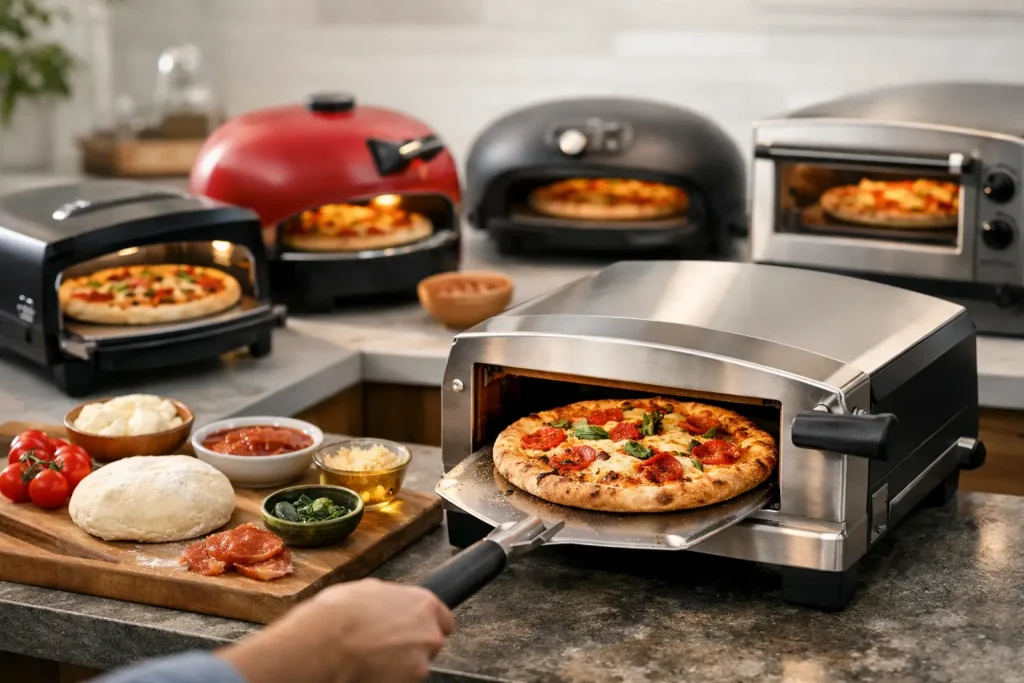
Shop the best indoor pizza ovens for crisp crusts, faster cook times, and easy home pizza nights. Compare features, size, heat, and value.
Counter space gets real valuable the moment you start shopping for a pizza oven. The best indoor pizza ovens promise blistered crust, bubbling cheese, and fast cook times without sending you outside to wrestle with propane, pellets, or the weather. But they do not all cook the same way, and the right pick depends on whether you want true high-heat performance, weeknight convenience, or a more affordable way to upgrade frozen and homemade pies.
What makes the best indoor pizza ovens worth buying?
A regular kitchen oven can make good pizza. An indoor pizza oven is built to make better pizza faster. That usually means higher temperatures, tighter cooking chambers, and heat directed closer to the top and bottom of the pie so the crust browns before the toppings dry out.
That difference matters most if you love Neapolitan-style pizza, where a very hot environment helps create puffed edges and charred spots in just a couple of minutes. It also matters if you make pizza often and want less trial and error. A purpose-built oven can turn pizza night from a project into something you do on a Tuesday.
There is a catch, though. Indoor models vary a lot. Some are true pizza specialists with stone decks and temperature ranges that climb far above a standard oven. Others are better described as premium countertop ovens with a strong pizza setting. Both can be good buys, but they serve different cooks.
Best indoor pizza ovens for different needs
If you want the headline choice, the Breville Smart Oven Pizzaiolo still sets the pace for shoppers chasing authentic, high-heat indoor pizza. It can reach temperatures far beyond what most home ovens offer, and it is designed specifically for pizza rather than trying to be ten appliances at once. That focus shows up in the results. Crust gets better lift, cheese finishes quickly, and the overall bake feels closer to what people expect from restaurant-style pizza at home. The trade-off is price. This is a premium machine, and it takes up a noticeable amount of counter space.
For buyers who want strong performance without spending top dollar, the Cuisinart Indoor Pizza Oven is an appealing middle ground. It generally heats quickly, handles a range of pizza styles, and feels friendlier for first-time buyers who want better results without a steep learning curve. It may not have the same prestige as higher-end specialty units, but for many homes it hits the sweet spot between cost and capability.
The Ninja Woodfire Outdoor Oven gets attention in pizza conversations, but if you are strictly shopping indoor, look instead at multifunction countertop options from Ninja and similar brands that include pizza settings. These are best for households that want versatility first. If you need one machine to toast, air fry, bake, and occasionally turn out a solid pizza, this category makes sense. Just be honest about expectations. You are usually trading some top-end pizza performance for everyday convenience.
The Ooni Volt 12 deserves serious attention if you want enthusiast-level results indoors. It is one of the strongest options for shoppers who are not just casually interested in homemade pizza but actively want to experiment with dough hydration, bake times, and different styles. It reaches very high heat, looks sleek enough for a modern kitchen, and gives users a lot of control. The main downside is that it leans enthusiast. If you only make pizza once a month, it may feel like more machine than you need.
For smaller kitchens, compact pizza ovens from brands like Chefman and Presto can be practical buys. They will not always produce the same leopard-spotted crust as the premium category, but they can outperform a standard oven on speed and crust texture while taking less space and costing far less. These are often smartest for apartment dwellers, students, or anyone testing whether homemade pizza is becoming a real hobby.
How to compare indoor pizza ovens without getting distracted
The first thing to check is max temperature. If you want Neapolitan-style pizza, high heat is not a luxury feature. It is the feature. Models that reach 700 degrees or more can produce dramatically different results from units that top out much lower. If your goal is New York-style slices, pan pizza, or reheating leftovers with better texture, you may not need that kind of heat.
Next, look at the cooking surface. A stone or stone-like deck helps with bottom crust texture, but size matters too. Some ovens technically fit a 12-inch pizza, yet leave little room to turn it comfortably. If you plan to make pizzas often, ease of handling matters almost as much as raw heat.
Preheat time is another spec people overlook. A model that cooks in 90 seconds sounds great until you realize it needs 30 minutes to get there. That may still be worth it for serious pizza fans, but for busy households, a slightly less intense oven with a faster start may get used more often.
Cleaning should not be ignored either. Flour, cheese, and oil can build up fast in a compact oven. Removable crumb trays, accessible interiors, and surfaces that wipe down easily can make a real difference over time.
Who should buy a premium indoor pizza oven?
If you make dough from scratch, care about crust structure, or regularly host friends and family for pizza night, a premium oven makes sense. The extra cost buys more than bragging rights. You usually get better heat retention, stronger top heat, more consistent results, and controls that let you adapt to different pizza styles.
This is also the right category for people who have tried every baking steel and broiler trick in a conventional oven and still feel like something is missing. A specialized indoor oven can close that gap in a way standard appliances rarely do.
On the other hand, if your household mostly bakes store-bought pizza, reheats leftovers, or wants a countertop appliance that does many jobs, a premium pizza-only oven may be overkill. You might appreciate it for a month, then resent the space it takes up.
Best indoor pizza ovens for beginners
Beginners usually do better with ovens that offer preset modes, stable heating, and enough flexibility to forgive small mistakes. That is why mid-range options can be so appealing. They make it easier to get a crisp crust without obsessing over dough science.
A beginner-friendly oven should feel approachable from day one. Clear controls, predictable cook times, and room to learn matter more than restaurant-grade specs if you are still figuring out how much flour to use on the peel. In that scenario, an oven that is slightly less powerful but easier to use may lead to better pizza overall.
There is also a budget argument here. If you are new to homemade pizza, it is smart to leave room in the budget for a good peel, dough containers, a cutter, and ingredients. The oven is the biggest purchase, but it is not the only one that shapes the final result.
A few trade-offs that matter more than marketing
Speed sounds great, but faster is not always better for every style. Super-hot ovens excel at thin pizzas, while thicker crusts and heavily topped pies sometimes benefit from a little more moderation. If your family likes deep-dish, pan pizza, or loaded toppings, do not assume the highest-temperature model is automatically the best fit.
Noise and ventilation can also matter. Some countertop ovens run louder than expected, and high-heat cooking in a small kitchen can create more smoke than buyers anticipate, especially during the learning phase. That does not rule them out, but it is worth planning for if your kitchen has limited ventilation.
And then there is capacity. Most indoor pizza ovens are built for one pizza at a time. That is fine for couples or solo cooks, but larger families may find themselves working in shifts. If group cooking is your norm, think about whether you want speed for one pie or volume from a bigger oven.
So which model is actually the best buy?
For pure indoor pizza performance, Breville Smart Oven Pizzaiolo and Ooni Volt 12 remain the standouts. They are expensive, but they deliver the closest thing to serious pizzeria-style cooking in a home-friendly format.
For value, the Cuisinart Indoor Pizza Oven is one of the strongest choices because it gives many shoppers the result they want without pushing into luxury pricing. For casual users and smaller kitchens, compact countertop pizza ovens can still be worthwhile if you prioritize convenience, price, and a lighter footprint over elite crust char.
The best pick comes down to how you actually cook. If pizza is your hobby, buy for heat and control. If pizza is dinner, buy for simplicity and value. If you want one machine that earns its keep every day, lean toward multifunction models and accept that true specialist performance may be a step lower.
A good indoor pizza oven should make you want to use it again next week, not just admire it on the counter. That is usually the clearest sign you bought the right one.

















Leave a Comment
Your email address will not be published. Required fields are marked with *