
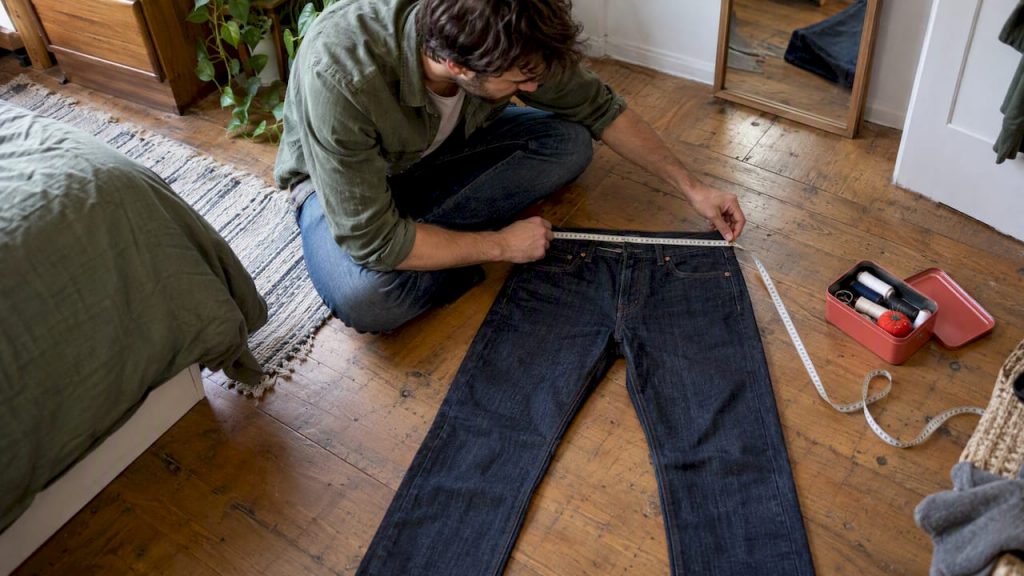
Measure to find the right denim fit. Learn the seven measurements to compare brands, match fits to your body, and follow a quick try-on checklist.
The main denim fit families are skinny, slim, straight, tapered, relaxed, loose or baggy, bootcut, and wide leg. Straight is the most versatile starting point, slim sharpens your silhouette, and relaxed or loose fits give you room to move and breathe. Rise, inseam, and fabric all change how any one of these cuts actually sits on you, so the name on the label is only half the story.
TL;DR:
- Skinny jeans are best for slim or lean builds, hugging the leg with a mid to low rise and a narrow leg opening under 11 inches.
- Athletic or larger frames should opt for straight or bootcut fits, which balance proportion and provide more room in the thigh and seat.
- The inseam measurement is more critical than the waist since it determines how the jeans sit over shoes; most buyers ignore it, leading to poor fit.
- Fabric weight and stretch content significantly affect comfort and sizing; heavier denim (14 ounces or more) feels stiffer initially but lasts longer.
- Reading shape cues like thigh room, leg opening, and rise is more reliable than brand labels, which often vary in fit even with identical names.
Table of Contents
- Every denim fit explained, from skinny to wide leg
- Matching fit to body type and the look you want
- How to measure yourself and read a jean’s size
- Why fabric and weight change how the same cut fits
- When to tailor, when to exchange, and what to try at home
- Our team at Lizard’s Lunch: a measurement checklist you can use today
- Differences between men’s and women’s denim fits
- How to interpret fit descriptions from different brands
- Common fit-related terminology you will run into
- Trying on denim: what to check beyond the measurements
- What the fit charts leave out
- Sources
- FAQ
Every denim fit explained, from skinny to wide leg
Walk into a denim aisle and you will see a dozen names for what amounts to six or seven real silhouettes. Understanding the shape each one makes is more useful than memorizing brand jargon, since labels shift from one maker to the next.
Skinny fits hug the leg from hip to ankle with almost no extra fabric anywhere. They usually sit at a mid to low rise and taper to a narrow leg opening, often under 11 inches. Skinny flatters a slim or lean frame and looks sharp with boots or low sneakers, but it leaves little room for thigh muscle or layering.
Slim fits follow the same idea with a touch more breathing room through the thigh and seat. The leg narrows gradually rather than clinging the whole way down, which makes slim a common middle ground for men who want a clean line without feeling squeezed. A slim taper tightens that narrowing even further at the ankle while keeping the thigh roomier, a shape Levi’s documents through its numbered fits like the 511.
Straight fits keep a consistent width from the knee down, neither hugging nor flaring. This is the fit most brands treat as their baseline, and it reads as neutral in almost any setting. A straight taper narrows slightly at the ankle for a more current look while keeping the straight leg’s easy movement above the knee.
Tapered fits are built around a roomier thigh and seat that narrows toward the ankle, creating a shape that looks fitted without being tight anywhere that matters for comfort. This cut is often marketed separately from slim taper, though the two can overlap depending on the brand’s top block, the pattern piece that shapes the hip and thigh.
Relaxed fits add noticeable room through the hip, thigh, and leg, usually paired with a slightly higher rise for comfort when seated. A relaxed taper, sometimes labeled athletic, keeps that thigh room but narrows the hem, which solves a common problem for men with larger thighs who still want a cleaner line at the ankle.
Loose or baggy fits go further still, with extra fabric through the seat and leg and a wider, straighter drop all the way to the hem. Wide leg fits share that volume but often flare slightly from the knee rather than staying uniform. Bootcut sits between straight and wide leg, fitted through the thigh with a slight flare below the knee designed to clear a boot heel.
Brands rename these constantly. One label’s “athletic” is another’s “relaxed taper,” and a “modern straight” might be functionally identical to a plain straight fit from a different maker. Reading the shape description and the measurements matters more than trusting the name alone.
- Skinny: low to mid rise, tight through the whole leg, narrow opening.
- Slim: mid rise, close through the thigh, gradual taper.
- Straight: consistent width knee to hem, neutral silhouette.
- Tapered: roomy thigh, narrowing toward the ankle.
- Relaxed: generous room throughout, higher rise common.
- Loose or baggy: maximum room, straight drop, no taper.
- Bootcut: fitted thigh, slight flare below the knee.
- Wide leg: volume from the knee down, often with a visible flare.
Matching fit to body type and the look you want
The fit you choose changes how your legs read length-wise and how your hips and thighs balance against your shoulders. A narrow leg opening on a slim or lean build tends to elongate the leg, while that same narrow opening on a heavier build can make the thigh look wider by contrast. Rise plays a quiet role here too: a higher rise shortens the visible torso and lengthens the leg line, while a low rise does the opposite.
For a slim or lean frame, skinny and slim cuts create proportion rather than looking swallowed by fabric. Straight and slim taper work well for an average build, giving room without excess. Athletic or thick-thighed men generally do best in a relaxed taper, which solves the fit tension between a fuller thigh and a clean ankle. Larger or heavier builds usually read best in straight or bootcut, since a tapered ankle against a fuller leg can create an unbalanced triangle shape.
Footwear and outerwear shift these proportions further. A slim or tapered jean paired with a chunky sneaker balances visual weight at the ankle, an idea covered in more depth in guides to pairing sneaker styles with outfits. A longer jacket over a wide leg or loose fit keeps the silhouette from looking top-heavy, while a cropped jacket works better with a straight or slim cut. For broader styling direction on building these combinations, see this wardrobe styling guide.
- Slim or lean build: skinny or slim, worn with low-profile shoes.
- Average build: straight or slim taper for everyday versatility.
- Athletic or thick thighs: relaxed taper for room without a baggy hem.
- Larger or heavier build: straight or bootcut to keep proportions even.
Pro Tip: If you are unsure which category you fall into, try a straight fit first. It is the easiest cut to judge against your body before moving toward something slimmer or roomier.
How to measure yourself and read a jean’s size
Jean sizes are written as waist by inseam, so a tag reading 32×30 means a 32 inch waist and a 30 inch inseam, with the inseam measured from the crotch seam to the bottom of the leg opening. That second number determines leg length far more than most buyers realize, and it is the number most often ignored when a pair feels wrong.
- Measure your waist where you actually wear your jeans, not at your natural waistline, using a soft tape pulled snug but not tight.
- Measure your inseam by taking a well-fitting pair you already own and measuring from the crotch seam to the hem along the inside leg.
- Measure your rise by holding the tape from the crotch seam straight up to the top of the waistband at the front.
- Note your thigh and knee circumference on an existing pair you like, since these numbers help you compare cuts across brands.
- Check the leg opening width flat across the hem, which tells you how much room you will have over your shoes.
- If buying raw or shrink-to-fit denim, size up slightly since Levi’s notes that shrink-to-fit styles can shrink by up to about 10% after the first soak.
- If buying a stretch blend, size true to your measurements or even slightly down, since stretch fabric relaxes with wear rather than tightening.
- Try the jeans on and do a sit test, a few steps, and a light squat to check for pulling at the thigh or excessive gapping at the waist.
- Check the mirror from the side and back to confirm the break, where the hem meets your shoe, sits where you want it.
Levi’s measurement checklist recommends recording waist, hip, inseam, rise, thigh, knee, and leg opening every time, since comparing these seven numbers across brands catches sizing inconsistencies that a tag number alone will not.
Why fabric and weight change how the same cut fits
Two pairs of jeans cut to identical measurements can feel completely different depending on what they are made from. Rigid or raw denim has no stretch, so it fits snugger at first and loosens slightly as it breaks in. Stretch blends feel comfortable immediately but relax further with wear, which is why sizing slightly down often works better for stretch fabric than for rigid denim.
Denim weight is measured in ounces per square yard, and that number predicts how a jean will feel and age. Heavier denim at 14 ounces or more feels stiffer at first and softens gradually with wear, while lighter denim around 10 to 12 ounces is comfortable from the first wear but tends to show wear faster. Selvedge and raw denim, usually on the heavier end, reward patience: the rigid weave develops individualized fade patterns over months of wear, but it demands careful sizing upfront since there is little stretch to hide a mistake.
- Rigid or raw denim: no stretch, snug initially, loosens with break-in.
- Stretch blends: immediate comfort, continues to relax with wear.
- Heavier weight (14oz+): stiffer at first, softens over time, more durable.
- Lighter weight (10 to 12oz): comfortable immediately, wears out sooner.
Selvedge and raw denim develop fades unique to the wearer’s movement patterns, a quality GQ attributes to the combination of heavy, rigid weave and long-term wear rather than any factory treatment.
When to tailor, when to exchange, and what to try at home
Not every fit problem means the jeans are wrong. Hemming is the cheapest and most common fix, adjusting length without touching the rest of the cut. Tapering the leg or adjusting the waist costs more and changes the garment’s structure, so it is usually worth doing only on higher-value denim where the fabric and construction justify the expense. Re-cutting the top block, the pattern that shapes the hip and thigh, is the most involved and expensive option, and it rarely makes sense compared to buying a different cut.
If the waist is slightly loose but everything else fits, tailoring makes sense. If the thigh is tight and the rise feels wrong, no amount of alteration fixes that cheaply, and exchanging for a different fit is the better move. At-home shrinking through hot water and a dryer can take in a small amount of room in rigid denim, but it carries real risk of uneven shrinkage or damaging the fabric’s finish, so it is worth testing caution before committing a good pair to the wash.
- Hemming: least expensive, fixes length only.
- Tapering or waist adjustment: moderate cost, worth it on quality denim.
- Top block re-cut: most expensive, often not worth the cost.
- At-home shrinking: low cost but uneven results are a real risk.
Our team at Lizard’s Lunch: a measurement checklist you can use today
Our team at Lizard’s Lunch put together a short checklist for anyone trying on denim in a store or at home, built around the same measurement points brands and fit guides return to again and again. Run through each point before deciding a pair is a keeper.
- Waist sits comfortably with one to two fingers of space, no gapping at the back.
- Hips and seat show no pulling or horizontal lines across the fabric.
- Inseam length matches your preferred break over the shoe.
- Rise feels right seated and standing, with no excessive gapping when you bend.
- Thigh has room to move without visible tightness when you squat.
- Knee shape follows your leg naturally rather than bunching.
- Leg opening clears your shoe without bagging excessively.
A seated bend or a quick squat test catches problems a mirror check misses, something GQ’s fitting advice calls out directly: if the waistband rides up excessively when seated, the rise or top block is wrong before anything else.
| Checkpoint | What to look for | Pass or adjust |
|---|---|---|
| Waist | One to two fingers of space | Pass if snug, no gap |
| Thigh | No pulling during a squat | Adjust if tight |
| Rise | No excessive rise when seated | Adjust if waistband climbs |
| Leg opening | Clears shoe without bagging | Pass if break looks intentional |
Differences between men’s and women’s denim fits
Men’s and women’s denim fits are built from different pattern blocks, not just different sizing charts. Men’s jeans are generally cut straighter through the hip and seat since the waist-to-hip ratio in men’s bodies tends to be narrower, while women’s jeans build in more curve through the hip and a shorter rise in front relative to the back to accommodate a different pelvic shape.
Fit names overlap between the two, but the actual shapes rarely match directly. A men’s straight fit and a women’s straight fit are not cut from the same block, even when both use the word “straight.” Men’s sizing also runs on the waist by inseam system almost universally, while women’s denim often uses a numbered sizing system alongside or instead of direct waist measurements. If you are shopping across both lines for yourself or someone else, treat the fit name as a starting point and the actual measurements as the deciding factor.
How to interpret fit descriptions from different brands
Fit names are not standardized across the denim industry, which means the same word can describe different shapes depending on who makes the jeans. One brand’s “athletic” often means a relaxed thigh with a tapered leg, while another brand might use “athletic” to describe something closer to a straight cut with slightly more room.
The fix is to stop trusting the name and start reading the actual shape description or measurements the brand provides. Look for specific language about thigh room, leg opening width, and rise rather than relying on a single word like “slim” or “relaxed” to carry all the information. When a size chart lists thigh and knee measurements alongside waist and inseam, use those numbers to compare across brands directly, since name overlap between brands is common enough that two “slim” fits from different makers can differ by an inch or more through the thigh. Many modern lines also offer several near-identical fits under different names, so comparing actual shape cues beats memorizing a brand’s internal naming system.

Common fit-related terminology you will run into
A handful of terms show up across nearly every denim size chart and fit guide, and knowing them makes label reading much faster. Taper describes how much a leg narrows from the knee to the ankle, with a sharper taper creating a more fitted ankle regardless of how roomy the thigh is above it.
Leg opening is the width of the fabric at the very bottom of the hem, measured flat, and it is one of the clearest indicators of how a jean will sit over your shoe. Crotch depth, sometimes called rise, is the distance from the crotch seam to the top of the waistband, and it controls how high or low the jean sits on your torso. Top block refers to the pattern pieces shaping the hip, seat, and thigh above the knee, which is why two jeans with the same waist and inseam can still fit completely differently through the upper leg. Break refers to how the hem folds or sits over your shoe, ranging from no break at all to a stacked break with visible folds of fabric. Knowing these five terms covers most of what you need to read a fit description accurately.
Trying on denim: what to check beyond the measurements
Measurements get you close, but the final call on fit comes from how the denim feels and moves once you have it on. Sit down and notice whether the waistband digs in or the knee fabric pulls tight, since a seated bend reveals problems that standing in front of a mirror never will. Walk a few steps and try a light squat to check for restriction through the thigh or seat.
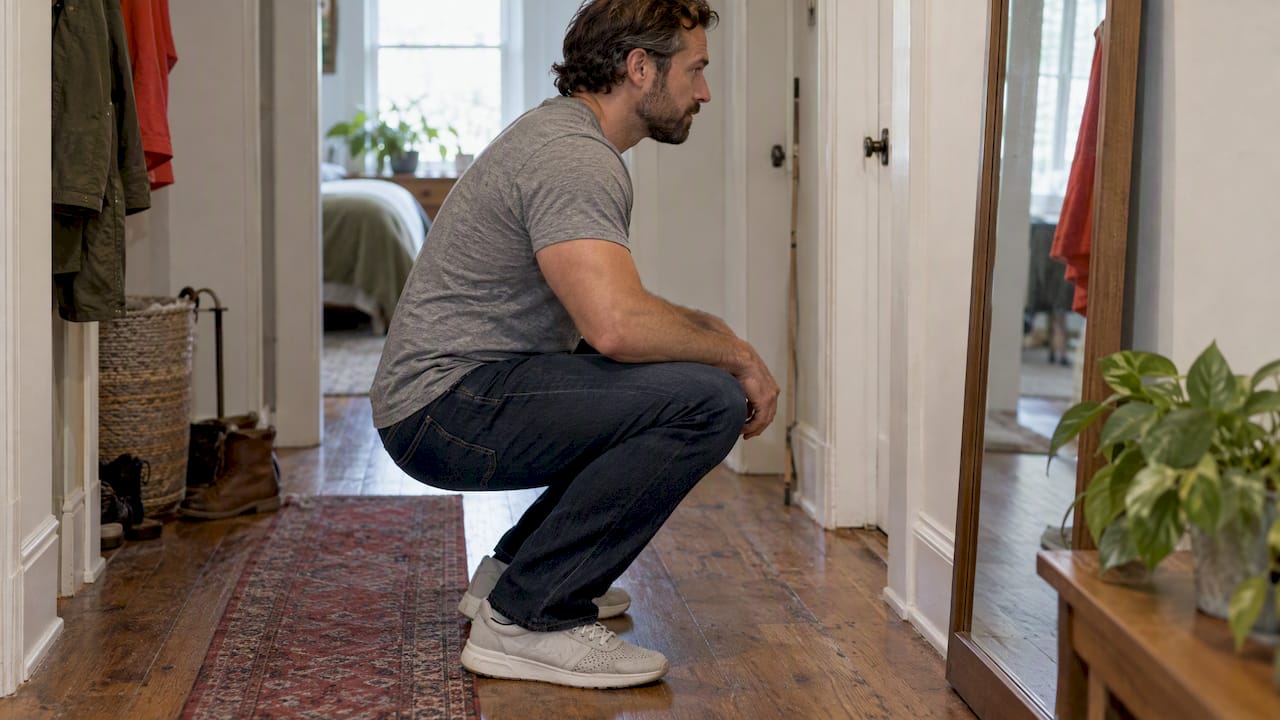
Pay attention to the initial feel of the fabric too. Rigid denim will feel stiffer right out of the gate and should loosen slightly with wear, so a pair that feels snug but not painful in rigid fabric is often fine. Stretch denim should feel comfortable immediately with no significant tightness anywhere, since it has little room to loosen further. Check the break by looking at how the hem sits over your shoe from the side, deciding whether you want a clean break just touching the shoe or more stacking at the ankle. A pair that passes the sit test, the squat test, and the mirror check from multiple angles is a safer bet than one judged on fit alone while standing still.
What the fit charts leave out
Most denim guides treat fit as a sizing problem, something you solve with the right waist and inseam numbers. That misses the bigger issue: two jeans with identical measurements can fit completely differently because of the top block and fabric, and no chart captures that. The conventional advice to “know your size” is only half useful if you never account for how rigid denim behaves differently from a stretch blend at the exact same measurements.
What actually matters is learning to read shape cues: thigh room, leg opening, and break, over trusting a fit name a brand assigned somewhat arbitrarily. Wrangler and Levi’s both use internal naming systems that sound precise but vary in what they actually produce on a body. The reader who tries on a straight fit, a tapered fit, and a relaxed taper in the same session will learn more about their own proportions than a dozen articles describing fits in the abstract. Start there before you start chasing a specific label.
— Alexander
Sources
- Levi’s Fit Guide: How to Measure Jeans | Off the Cuff – Levi’s
- The Complete Buying Guide to Levi’s Jeans: All Fits, Explained
- Everything you should know about men’s jeans before you blow yet more cash on a pair | British GQ
FAQ
What are the different types of denim fits?
The main denim fits are skinny, slim, straight, tapered, relaxed, loose or baggy, bootcut, and wide leg, each defined by how much room the cut leaves through the thigh and leg. Brands sometimes rename these, such as calling a relaxed taper “athletic,” so reading the shape description matters more than the label.
What does 32×30 mean in jeans?
32×30 means a 32 inch waist and a 30 inch inseam, with the inseam measured from the crotch seam to the leg opening. The waist number comes first and the inseam, which determines leg length, comes second.
Which is better, loose fit or straight fit?
Neither is objectively better since the right choice depends on your build and the look you want. Straight fit works as a versatile, neutral choice for most body types, while loose fit suits men who want maximum room and a relaxed silhouette.
How do I determine my jean fit?
Measure your waist, inseam, rise, thigh, and leg opening on a pair you already like, then compare those numbers against a brand’s size chart rather than relying on the fit name alone. Try the jeans on and test with a sit, a squat, and a few steps to confirm comfort and movement before deciding.

















Leave a Comment
Your email address will not be published. Required fields are marked with *