

Discover the top 10 types of kitchen countertops for 2026. Learn how each material impacts your kitchen’s style, durability, and maintenance.
Kitchen countertops are defined by their material composition, and that single choice shapes everything from daily maintenance to long-term resale value. The types of kitchen countertops available in 2026 range from engineered quartz and natural granite to budget-friendly laminate and trend-forward porcelain slabs. Each material carries a distinct set of trade-offs across durability, upkeep, aesthetics, and cost. The National Kitchen & Bath Association consistently identifies countertop selection as one of the top three decisions in any kitchen renovation. Getting it right means matching your lifestyle to the material, not just your design mood board.
1. What are the top kitchen countertop materials to consider?
The ten most popular kitchen countertop materials each serve a different homeowner need. Here is a clear breakdown of what each one brings to your kitchen.
- Quartz (engineered): Non-porous, low maintenance surface, consistent color and pattern, no sealing required. Best for busy households.
- Granite: Natural stone with unique veining, excellent heat resistance, requires periodic sealing. Priced at $40–$140 per sq ft installed.
- Porcelain: Heat and UV resistant, ideal for outdoor kitchens and modern interiors. Growing fastest in market share as of 2026.
- Marble: Luxurious appearance, prone to etching from acidic spills, requires sealing twice a year. Best for low-traffic or decorative kitchens.
- Quartzite: 100% natural stone with a marble-like look, very scratch resistant, but needs regular sealing to prevent staining.
- Laminate: Most budget-friendly option at $10–$50 per sq ft. Improved designs now mimic stone and wood convincingly.
- Butcher Block: Warm, natural wood surface. Great for food prep areas. Susceptible to water damage and heat without proper sealing.
- Soapstone: Dense, non-porous natural stone. Resists stains and bacteria naturally. Develops a patina over time that many homeowners love.
- Concrete: Fully customizable in color and shape. Requires sealing and can crack over time without proper installation.
- Recycled Glass: Eco-friendly option made from post-consumer glass set in cement or resin. Striking visual appeal, moderate durability.
Engineered quartz leads in popularity for family kitchens due to its low maintenance and consistent appearance. Porcelain is the fastest-growing choice for outdoor and modern kitchen applications. No single material is objectively the best. The right countertop depends on how you cook, how much upkeep you want, and what your budget allows.
2. How do durability and maintenance vary among kitchen countertop materials?
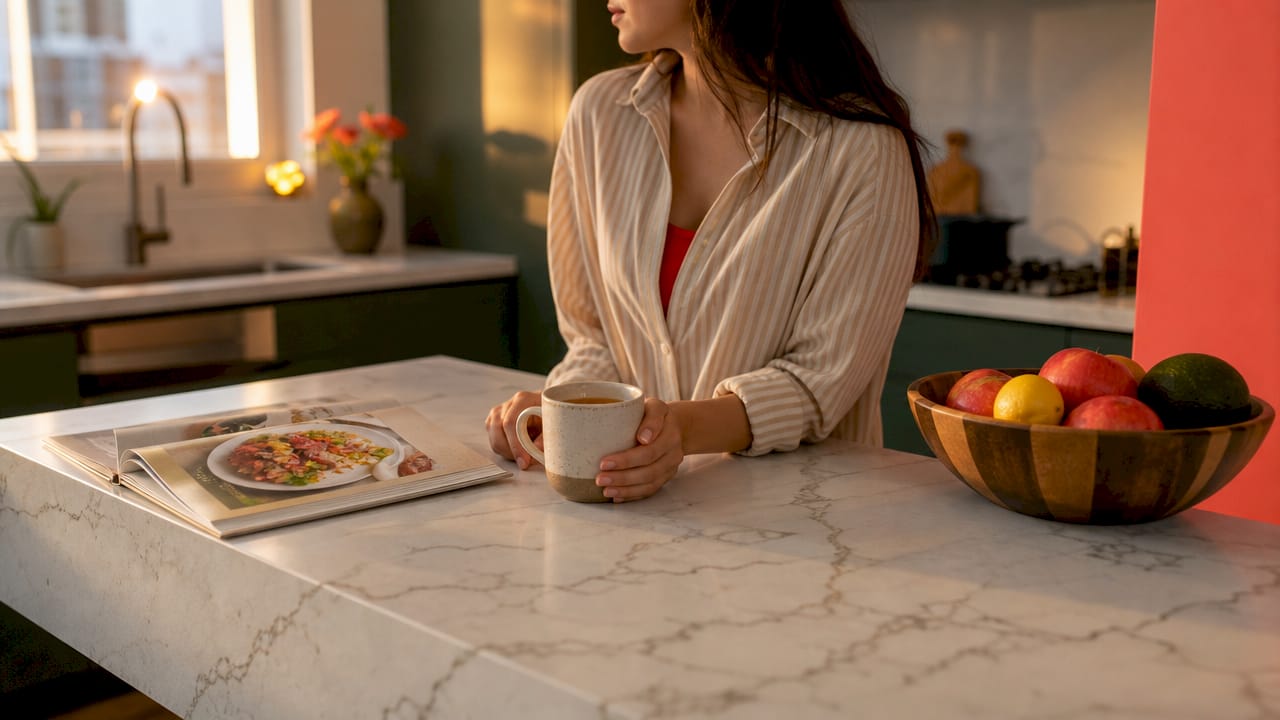
Durability and maintenance are the two factors homeowners most often underestimate before purchasing. A beautiful countertop that requires constant care can quickly become a source of frustration.
Resistance to heat, scratches, and stains
Porcelain and quartzite offer the highest resistance to both heat and scratches among all countertop materials. Laminate and butcher block sit at the opposite end, offering the lowest heat resistance. Granite handles heat well but can stain without proper sealing. Quartz resists stains and scratches effectively but is not heatproof. Always use trivets with quartz to avoid thermal shock damage.
Sealing requirements and maintenance frequency
Natural stones like marble and quartzite demand the most attention. Neglecting quartzite sealing causes stains within 12 months of installation. Marble requires sealing twice a year and etches easily from acidic spills like lemon juice or vinegar. Quartz requires no sealing at all because it is engineered to be non-porous. Soapstone and butcher block need periodic oiling rather than chemical sealers.
| Material | Heat Resistance | Scratch Resistance | Sealing Required | Maintenance Level |
|---|---|---|---|---|
| Quartz | Moderate | High | No | Low |
| Granite | High | High | Yes (annual) | Moderate |
| Porcelain | Very High | Very High | No | Very Low |
| Marble | Moderate | Low | Yes (twice yearly) | High |
| Quartzite | High | Very High | Yes (annual) | Moderate |
| Laminate | Low | Low | No | Low |
| Butcher Block | Low | Moderate | Yes (oiling) | Moderate |
| Soapstone | High | Moderate | No (oiling) | Low |
Pro Tip: If you want the look of marble without the upkeep, choose a quartz slab engineered to mimic marble veining. You get the aesthetic with a fraction of the maintenance commitment.
3. What are the cost considerations when selecting kitchen countertops?
Countertop costs vary widely, and the installed price tells a more honest story than the material price alone. Fabrication, edge profiles, cutouts for sinks, and labor all add to the final number.
Price ranges by material
Laminate starts as low as $10 per sq ft installed, making it the most accessible option for tight budgets. Granite runs $40–$140 per sq ft installed, placing it firmly in the mid-to-premium range. Premium natural stones like quartzite can exceed $200 per sq ft when rare slabs and complex fabrication are involved. Quartz typically falls between $50–$150 per sq ft installed, offering predictable pricing because slabs are consistent in size and pattern.
ROI and resale value
Kitchen renovations deliver 70–80% ROI for homeowners on average. Choosing a durable, visually appealing countertop material directly supports that return. Granite and quartz consistently rank among the top materials for resale appeal. Laminate, while practical, rarely adds perceived value in higher-end markets.
| Material | Installed Cost (per sq ft) | Long-Term Value | Sealing Cost Over 10 Years |
|---|---|---|---|
| Laminate | $10–$50 | Low | None |
| Quartz | $50–$150 | High | None |
| Granite | $40–$140 | High | Low |
| Marble | $75–$250 | High (luxury) | Moderate |
| Quartzite | $60–$200+ | High | Moderate |
| Porcelain | $55–$120 | High | None |
| Butcher Block | $30–$100 | Moderate | Low |
| Concrete | $65–$135 | Moderate | Moderate |
Pro Tip: Get quotes from at least three fabricators before committing. Natural stone pricing varies significantly based on slab origin, thickness, and edge finish. A simple eased edge costs far less than an ogee profile on the same granite slab.
Long-term cost of ownership and sealing frequency are key factors beyond the upfront price. A $50 per sq ft quartz countertop with zero sealing costs may outperform a $40 per sq ft granite slab that requires annual professional sealing over a decade.
4. Which countertop options are best for specific uses and lifestyles?
The best countertop for your kitchen depends on how you actually use the space. A home baker has different needs than a family with young children or someone who loves to entertain.
Heavy-use and family kitchens
Quartz is the top choice for families with kids. It resists stains from juice, coffee, and food coloring without requiring any sealing. Granite works well in heavy-use kitchens too, especially for homeowners who love the natural stone look and are willing to seal annually. Porcelain is nearly indestructible and works beautifully in modern kitchens with high traffic.
Bakers and cooking enthusiasts
Marble remains the gold standard for bakers because its naturally cool surface keeps pastry dough from warming up. The trade-off is real: marble etches from acidic spills and scratches more easily than other stones. Butcher block is another favorite for prep-heavy kitchens, offering a forgiving surface for chopping and a warm, inviting look. Pair butcher block with a stone or quartz section near the stove for heat resistance.
Entertainers and design-forward homeowners
Concrete and recycled glass countertops create a one-of-a-kind visual statement. Both materials suit homeowners who prioritize aesthetics and are comfortable with moderate maintenance. Quartzite delivers the dramatic veining of marble with significantly better durability, making it a strong choice for showpiece kitchens.
Outdoor kitchens and UV-exposed spaces
Porcelain slabs are heat and UV-resistant, making them the clear winner for outdoor kitchen installations. Granite also performs well outdoors. Quartz is not recommended for outdoor use because prolonged UV exposure can cause discoloration over time. For outdoor countertop ideas, durable material choices follow the same principles as outdoor furniture selection.
Quick reference by lifestyle:
- Families with kids: Quartz, porcelain
- Bakers: Marble, butcher block
- Entertainers: Quartzite, concrete, recycled glass
- Outdoor kitchens: Porcelain, granite
- Tight budgets: Laminate, butcher block
- Eco-conscious homeowners: Recycled glass, concrete with recycled aggregate
- Low-maintenance seekers: Quartz, porcelain, soapstone
Key Takeaways
The best kitchen countertop material is the one that matches your cooking habits, maintenance tolerance, and budget, not just the one that looks best in a showroom.
| Point | Details |
|---|---|
| Quartz leads for low maintenance | Engineered quartz requires no sealing and resists stains, making it ideal for busy households. |
| Porcelain wins outdoors | Porcelain’s heat and UV resistance makes it the top choice for outdoor kitchen installations. |
| Natural stone needs sealing | Marble and quartzite both require regular sealing; skipping it causes staining within 12 months. |
| Laminate suits tight budgets | At $10–$50 per sq ft installed, laminate offers the most affordable countertop option available. |
| Long-term cost matters | Sealing frequency and maintenance costs over 10 years often outweigh the upfront material price. |
Our team’s take on choosing the ideal kitchen countertop
Our team at Lizard’s Lunch has reviewed hundreds of home renovation decisions, and countertop selection is where we see the most buyer’s remorse. The pattern is almost always the same: a homeowner falls in love with marble in a showroom, installs it, and then panics the first time red wine hits the surface.
The misconception we encounter most often is that natural stone is inherently more durable than engineered materials. That is simply not true. Natural stone slabs have unique geological patterns with variations that can cause unexpected fabrication challenges and costs. Quartz, by contrast, is more predictable for fabricators because slabs are consistent. That predictability translates to fewer surprises on your final invoice.
Our honest recommendation: think about your kitchen workflow before you think about aesthetics. Do you cook every night? Do you have kids who will inevitably spill things? Do you want to spend a Sunday afternoon applying sealer twice a year? Answer those questions first, then pick your material. If you want natural stone character without the anxiety, quartzite gives you marble-like beauty with meaningfully better durability. If you want zero maintenance, quartz or porcelain will serve you well for decades.
The countertop you love at year ten is the one that still looks great because it was built for your actual life, not an idealized version of it. Pairing your countertop choice with smart kitchen upgrades can also extend the functional life of your renovation investment.
— Our Team at Lizard’s Lunch
More home renovation guidance at Lizardslunch
Choosing the right countertop is one piece of a larger renovation picture. At Lizardslunch, we cover the full range of home improvement decisions, from material selection to technology upgrades that make your space work harder for you. Whether you are planning a full kitchen overhaul or a focused surface refresh, our home improvement guides walk you through the decisions that matter most. For homeowners thinking about the bigger financial picture, our content on home upgrade ROI puts renovation spending in context. Lizardslunch is your go-to resource for making confident, well-informed decisions about your living space.
FAQ
What is the most durable kitchen countertop material?
Porcelain and quartzite offer the highest resistance to heat and scratches among all countertop materials. Porcelain is also UV-resistant, making it the top choice for both indoor and outdoor kitchens.
Which countertop requires the least maintenance?
Quartz requires no sealing and resists stains naturally because it is non-porous. Porcelain also requires no sealing and is extremely easy to clean.
What is the most affordable kitchen countertop option?
Laminate is the most budget-friendly countertop material, starting at $10 per sq ft installed. Modern laminate designs now convincingly mimic the look of stone and wood.
Does marble make a good kitchen countertop?
Marble works well in low-traffic or baker-focused kitchens but requires sealing twice a year and etches easily from acidic spills like lemon juice. It is not recommended for households with heavy daily cooking.
Is quartz or granite better for a kitchen?
Quartz is better for homeowners who want low maintenance and consistent appearance. Granite suits those who prefer natural stone character and are willing to seal it annually. Both materials deliver strong resale value.















Leave a Comment
Your email address will not be published. Required fields are marked with *