
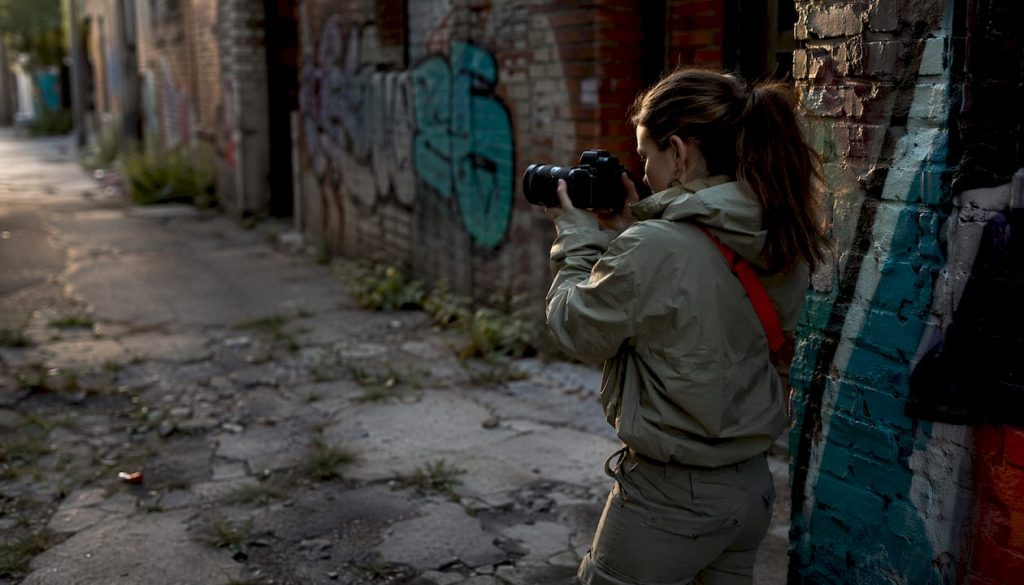
Discover what urban exploration is in this complete 2026 guide. Uncover hidden urban gems and learn about this fascinating subculture.
Urban exploration is defined as the intentional exploration of man-made, typically abandoned or hidden structures for photography, documentation, and experiencing the beauty of urban decay. Known widely as urbex, and also called urban spelunking, building hacking, or mousing, this growing global subculture blends adventure, historical curiosity, and artistic expression into one captivating pursuit. The community’s guiding principle is simple: “Take nothing but pictures, leave nothing but footprints.” Whether you are drawn to crumbling factories, forgotten hospitals, or rooftop vistas, urbex offers a window into the hidden layers of city life that most people never see.
What is urban exploration and why do people do it?
Urban exploration is the practice of accessing and documenting spaces that are off-limits, abandoned, or overlooked by the general public. These range from derelict industrial sites to active restricted infrastructure. The core motivation behind urbex is not thrill-seeking or vandalism. Research shows it functions more as a form of non-traditional archiving, where explorers document forgotten urban history that official records often miss.
The psychological pull is real and layered. Curiosity drives many explorers to ask what lies behind a boarded-up door or beneath a sealed subway grate. Others are motivated by a genuine love of architecture, history, and the strange beauty of decay. Photography is central to the practice. A rusted factory floor or a collapsed hospital corridor tells a story that no museum exhibit can replicate.
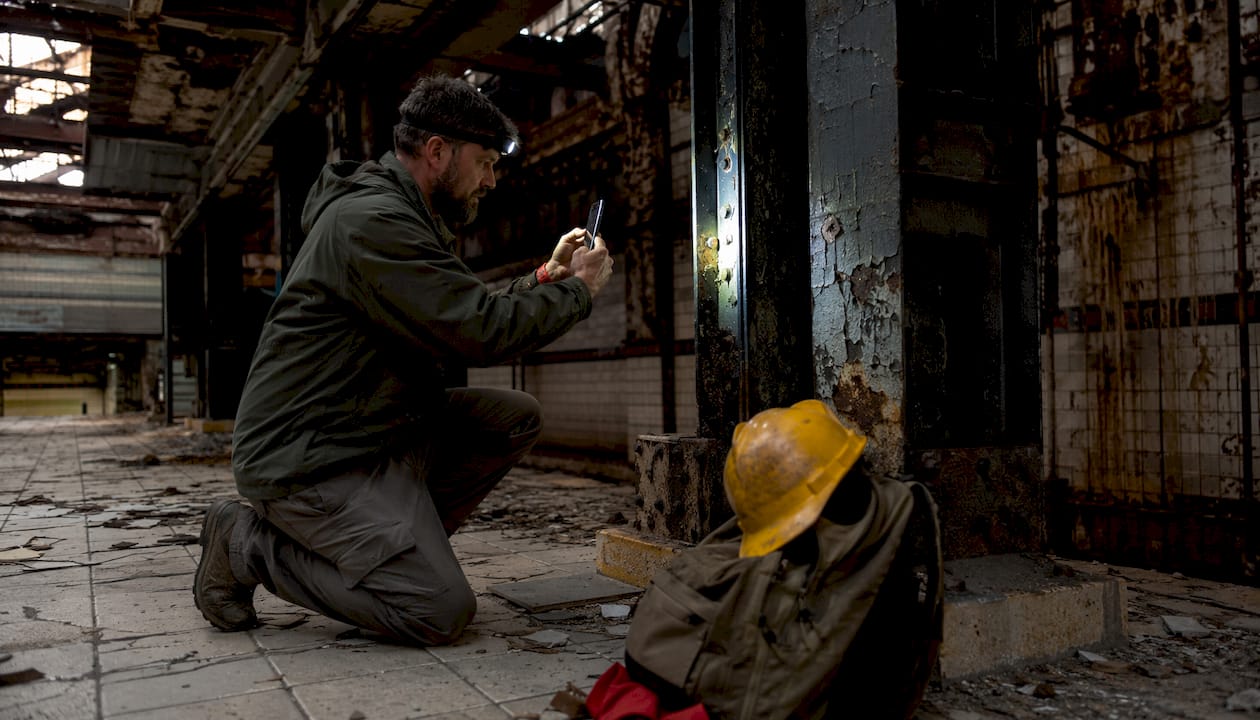
Urbex also carries significant cultural weight. Urban exploration offers unique insight into forgotten urban life cycles and social histories that traditional urban studies rarely capture. A shuttered textile mill, for example, holds evidence of labor history, community identity, and economic change all within its walls. Explorers who document these sites preserve a record that would otherwise disappear.
The community’s code of ethics separates true explorers from vandals. The urbex community distinguishes dedicated preservationists from those who damage or steal from sites. This distinction matters because it shapes how the public and law enforcement perceive the activity.
“The greatest misconception in urbex culture is equating exploration with vandalism. True explorers adhere strongly to preservation ethics, treating every site as a living archive rather than a playground.”
Common motivations among urban explorers include:
- Historical documentation: Capturing evidence of places before demolition or decay erases them entirely
- Artistic photography: Using dramatic lighting, texture, and decay as creative subjects
- Adventure and discovery: The thrill of accessing spaces most people never see
- Community connection: Sharing finds with a global network of like-minded explorers
- Cultural memory: Preserving the social and architectural stories embedded in forgotten structures
What types of places do urban explorers visit?
Urban exploration ranges from derelict structures to active restricted infrastructure, and the variety of sites is genuinely staggering. Each type offers a distinct experience, a different set of challenges, and its own photographic rewards.
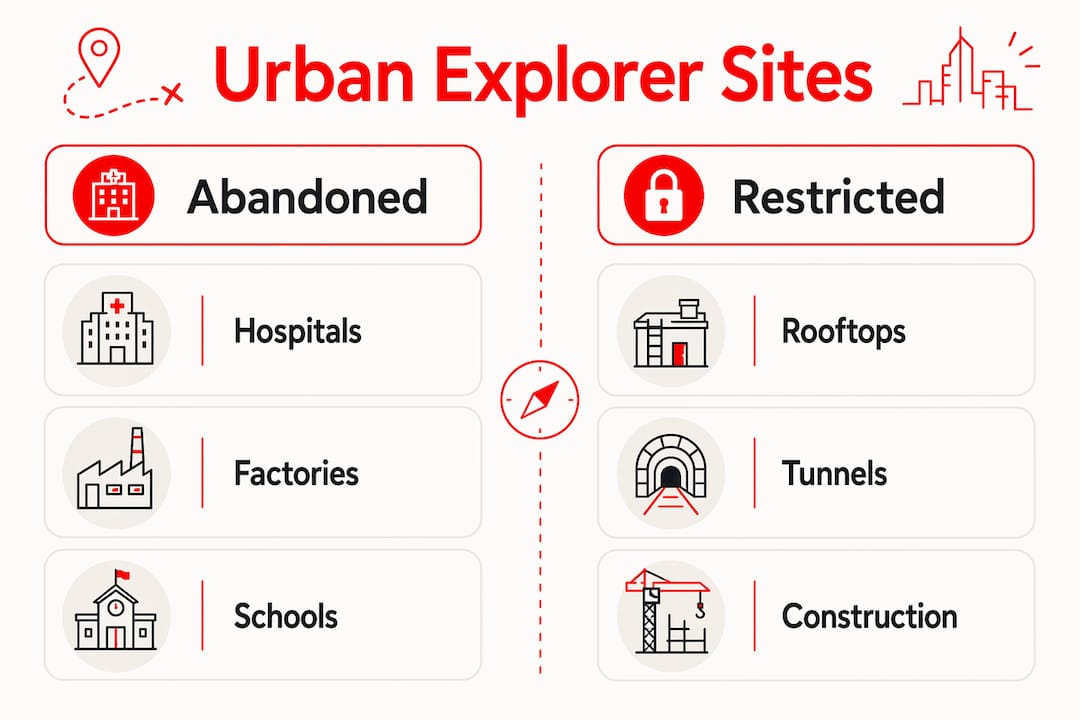
Abandoned hospitals are among the most sought-after destinations. They hold medical equipment, patient records, and architectural details frozen in time. Factories and industrial plants offer vast, cathedral-like spaces filled with rusted machinery and dramatic natural light. Tunnels, including old rail lines and utility corridors, attract explorers drawn to underground environments and the engineering history beneath city streets.
Rooftop exploration, sometimes called roof hacking, gives access to skyline views and architectural details invisible from street level. Storm drain exploration, known as draining, takes adventurers into the concrete arteries beneath cities. Subway stations, both active and decommissioned, reveal layers of transit history in their tile work, signage, and structural design.
| Site type | Primary appeal | Key risk |
|---|---|---|
| Abandoned hospitals | Medical history, frozen interiors | Asbestos, mold, unstable floors |
| Industrial factories | Scale, machinery, dramatic light | Structural collapse, toxic dust |
| Underground tunnels | Engineering history, isolation | Flooding, poor air quality |
| Rooftops | Skyline views, architecture | Falls, security response |
| Storm drains | Urban infrastructure, unique access | Flash flooding, confined spaces |
| Decommissioned subway stations | Transit history, tile art | Electrical hazards, active lines nearby |
Infiltration is a specific subtype where explorers access active but restricted spaces, such as construction sites or operational infrastructure. This carries higher legal risk than visiting purely abandoned sites. Urban spelunking refers specifically to underground exploration, borrowing the term from cave diving to describe the enclosed, disorienting nature of subterranean urbex.
Each site type demands different preparation. A rooftop visit requires awareness of wind and drop hazards. A tunnel requires lighting, navigation tools, and knowledge of water flow patterns. Matching your preparation to the site type is what separates a memorable experience from a dangerous one.
What are the risks and legal considerations in urban exploration?
Trespassing on private property can lead to criminal charges even without any intent to cause harm. Legal risks are significant and vary by jurisdiction. In some states, entering an abandoned building without permission is a misdemeanor. In others, it can escalate to felony charges depending on the property type, the presence of security, or prior warnings. Researching local trespassing laws before any visit is not optional. It is the baseline requirement for responsible urbex.
Physical hazards are equally serious. Abandoned structures deteriorate in ways that are not always visible. A floor that looks solid can collapse without warning. Ceilings shed debris. Staircases rot from the inside out. Beyond structural risks, environmental toxicity is a major concern that beginners consistently underestimate.
Respiratory protection is critical in abandoned industrial sites where asbestos, toxic dust, and mold are common. Veteran explorers treat these environments as hazardous zones with potential long-term health effects. A basic dust mask is not sufficient. High-grade respirators rated for particulate and chemical exposure are the standard among experienced urbexers.
Key physical and legal risks to understand before you go:
- Structural collapse: Floors, ceilings, and staircases in derelict buildings can fail without visible warning signs
- Toxic exposure: Asbestos, black mold, lead paint, and chemical residues are common in older industrial and medical sites
- Trespassing charges: Criminal liability exists even when no damage is caused or intended
- Isolation hazards: Getting trapped, injured, or lost in a remote or underground location with no cell signal
- Security response: Active sites may have guards, cameras, or motion sensors that trigger rapid law enforcement response
- Environmental hazards: Flooding in tunnels and drains, electrical hazards near active infrastructure
Checking neighborhood safety resources and local property records before visiting a site gives you a clearer picture of what you are walking into. Demolition zones, sites under active security contracts, and properties with environmental remediation orders all carry elevated risk. Respecting property rights and privacy is not just ethical. It is the practical difference between a great story and a criminal record.
How can you prepare for safe, ethical urban exploration?
The urbex golden rule, “Take nothing but pictures, leave nothing but footprints,” is the foundation of every responsible exploration. Community guidelines updated in 2026 also urge explorers to carry safety gear, avoid large groups, and keep specific locations confidential to protect sites from vandalism and overexposure. Following these principles is what keeps the hobby sustainable.
Gear selection is where preparation becomes concrete. Every explorer needs a reliable flashlight with backup batteries, a charged phone with offline maps downloaded, a first aid kit, and a high-grade respirator. Gloves protect against sharp debris and chemical residue. Sturdy boots with ankle support prevent the most common injuries. A portable battery pack keeps your phone alive during long visits.
Pro Tip: Avoid sharing exact location details on public social media. Sites that go viral attract crowds, vandals, and increased security. Share selectively within trusted communities to preserve the places you love.
Experienced explorers use satellite imagery and local property records to scout sites before visiting. This research reveals site conditions, ownership status, and whether a location is slated for demolition or active remediation. Showing up blind is how explorers end up in dangerous or legally compromised situations.
Follow these steps before and during every exploration:
- Research the site using satellite maps, property records, and local news to understand its current status and ownership
- Check local laws on trespassing and access for the specific jurisdiction where the site is located
- Assemble your gear including a respirator, flashlight, first aid kit, gloves, and a fully charged phone
- Use the buddy system and never explore alone, particularly in underground or structurally compromised environments
- Set a check-in schedule with someone outside the site who knows your location and expected return time
- Keep groups small to reduce noise, minimize impact, and lower the chance of attracting attention
- Leave the site exactly as you found it and take nothing, not even a small souvenir
The biggest safety risk in urbex is isolation. Explorers who use a buddy system and arrange check-in times dramatically reduce the danger from accidents, entrapment, or sudden medical emergencies. This single habit prevents more tragedies than any piece of gear.
For those interested in how urban environments shape culture and media, NYC’s cultural influence on urbex photography and documentation trends is worth understanding. Cities with dense architectural history produce the richest sites and the most active explorer communities.
Key Takeaways
Urban exploration is a preservation-driven practice that demands equal parts curiosity, preparation, and ethical commitment to be done safely and responsibly.
| Point | Details |
|---|---|
| Core definition | Urbex is the intentional exploration of abandoned or hidden man-made structures for documentation and discovery. |
| Ethics first | The golden rule is “Take nothing but pictures, leave nothing but footprints” — preservation drives the community. |
| Legal awareness | Trespassing laws vary by jurisdiction; research local regulations before every visit to avoid criminal charges. |
| Safety essentials | A buddy system, high-grade respirator, flashlight, and first aid kit are non-negotiable for every exploration. |
| Site research | Use satellite maps and property records to scout conditions, ownership, and demolition status before visiting. |
The hidden value of places most people walk past
Our team at Lizard’s Lunch has spent time studying what draws people to urbex, and the answer is rarely what outsiders expect. The most compelling thing about urban exploration is not the danger or the trespassing. It is the act of paying attention to spaces that the rest of the world has decided to forget.
There is something genuinely moving about standing in a room where people once worked, healed, or lived, and realizing that the physical evidence of their presence is still there. Peeling paint, a child’s shoe, a ledger left open on a desk. These details do not make it into history books. Urbex is the practice of noticing them before they disappear.
The ethical dimension of the hobby is also its most underappreciated strength. The community’s commitment to preservation, to leaving sites untouched and undisclosed, is a form of collective stewardship. It is rare to find a subculture that polices its own behavior this seriously. That self-regulation is what keeps the hobby alive and what earns it a degree of grudging respect even from property owners and law enforcement.
Our honest view is that the risk-reward calculation in urbex is personal and non-transferable. What feels like an acceptable risk to a seasoned explorer with proper gear and legal knowledge is genuinely dangerous for a beginner who shows up unprepared. The preparation section of this guide is not a formality. It is the difference between a transformative experience and a preventable tragedy.
If you are drawn to urbex, start with accessible, legally gray sites rather than heavily secured or structurally compromised ones. Build your knowledge, your gear, and your network before you push into more challenging territory. The best explorers are patient. The places worth seeing will still be there when you are ready.
— Our team at Lizard’s Lunch
Bringing urban character into your own space
The textures, materials, and raw beauty that urban explorers find in abandoned buildings have inspired some of the most compelling interior design trends of the past decade. Exposed brick, weathered wood, industrial metal fixtures, and layered paint effects all trace their aesthetic roots back to the kinds of spaces urbex enthusiasts photograph and document. If exploring abandoned places has sparked your creative eye, you can channel that same sense of character into your own home. Our team at Lizardslunch has put together a collection of home renovation ideas that draw on exactly this kind of raw, textured aesthetic. Whether you want to add an industrial edge to a kitchen or bring warmth through reclaimed materials, these guides give you a practical starting point.
FAQ
What is the urban exploration definition in simple terms?
Urban exploration, or urbex, is the practice of intentionally visiting abandoned, hidden, or restricted man-made structures to document and experience them. The activity prioritizes photography and historical preservation over thrill-seeking.
Is urban exploration illegal?
Urbex frequently involves trespassing, which is illegal in most jurisdictions even without intent to cause damage. Legal risk varies by location, so researching local trespassing laws before any visit is required.
What gear do you need for exploring abandoned places?
The core kit includes a high-grade respirator, a reliable flashlight with backup batteries, a first aid kit, gloves, sturdy boots, and a fully charged phone with offline maps. Veteran explorers treat abandoned sites as hazardous environments and gear up accordingly.
How do urban explorers find sites?
Experienced explorers use satellite imagery, local property records, and community networks to identify and vet sites. Checking demolition schedules and ownership status before visiting reduces both legal and physical risk.
What is the difference between urbex and urban spelunking?
Urban spelunking specifically refers to underground exploration, such as tunnels, storm drains, and subterranean infrastructure. Urbex is the broader term covering all types of abandoned or restricted man-made structures, both above and below ground.

















Leave a Comment
Your email address will not be published. Required fields are marked with *