
Transform your space and maximize value with essential home improvement tips. Discover high-ROI projects that make every dollar count!
Walking into a home improvement store is exciting, but it can also feel like standing at a crossroads with no map. You want to invest wisely, but with hundreds of possible projects competing for your time and budget, picking the right ones feels overwhelming. Here’s the thing: not all upgrades are created equal. Some projects practically pay for themselves, while others barely move the needle on your home’s value or daily comfort. This guide cuts through the noise and delivers the most practical, data-backed tips available, from high-ROI renovations to budget-friendly weekend wins, so every dollar you spend works harder for you.
Table of Contents
- Focus on projects with the best ROI
- Plan your renovation for success
- Master essential DIY skills and avoid common mistakes
- Seasonal and budget-friendly upgrades you can do now
- Expert renovation lessons: Finishing touches matter
- Our take: The real secret to lasting improvement
- Take your next step with Lizard’s Lunch home improvement resources
- Frequently asked questions
Key Takeaways
| Point | Details |
|---|---|
| Prioritize high-ROI projects | Garage doors and minor kitchen remodels consistently add the most value for your investment. |
| Plan before you demo | A clear budget and task sequence prevents costly setbacks and keeps projects manageable. |
| Build essential DIY skills | Mastering basic painting, plumbing, and tiling can save you hundreds and improve results. |
| Small upgrades, big impact | Low-cost fixes and seasonal maintenance instantly refresh your home and protect its value. |
| Finishing touches matter | Details like lighting, finishes, and fixture choices transform the look and feel of your space. |
Focus on projects with the best ROI
Now that you know the importance of picking profitable projects, let’s look at what actually gives your home and budget the maximum boost.
Return on investment, or ROI, simply means how much value a project adds compared to what you spend. In real estate, not every dollar you put in comes back to you at resale. But some projects come remarkably close, and a few actually exceed their cost. Understanding this principle is the foundation of smart home improvement.
The numbers tell a compelling story. According to renovation ROI data, garage door replacement delivers a stunning 194% ROI, with an average cost of $4,302 recouping $8,351 in added value. That means you’re nearly doubling your money on a single upgrade. It’s one of the most captivating examples of how curb appeal translates directly into dollars.
Kitchen remodels are another strong performer, but the scale matters enormously. A minor kitchen remodel returns about 96% ROI, costing roughly $27,492 while adding $26,406 in value. Compare that to a major upscale kitchen renovation, which typically delivers only around 60% ROI. The lesson? Midrange improvements almost always outperform luxury overhauls. Buyers appreciate updated kitchens, but they don’t necessarily pay a premium for custom cabinetry or imported stone.
Here’s a quick snapshot of how common projects stack up:
| Project | Avg. cost | Value added | ROI |
|---|---|---|---|
| Garage door replacement | $4,302 | $8,351 | 194% |
| Minor kitchen remodel | $27,492 | $26,406 | 96% |
| Curb appeal landscaping | $5,000 | $4,750 | 95% |
| Bathroom addition | $58,000 | $34,000 | 58% |
| Major kitchen remodel | $80,000 | $48,000 | 60% |
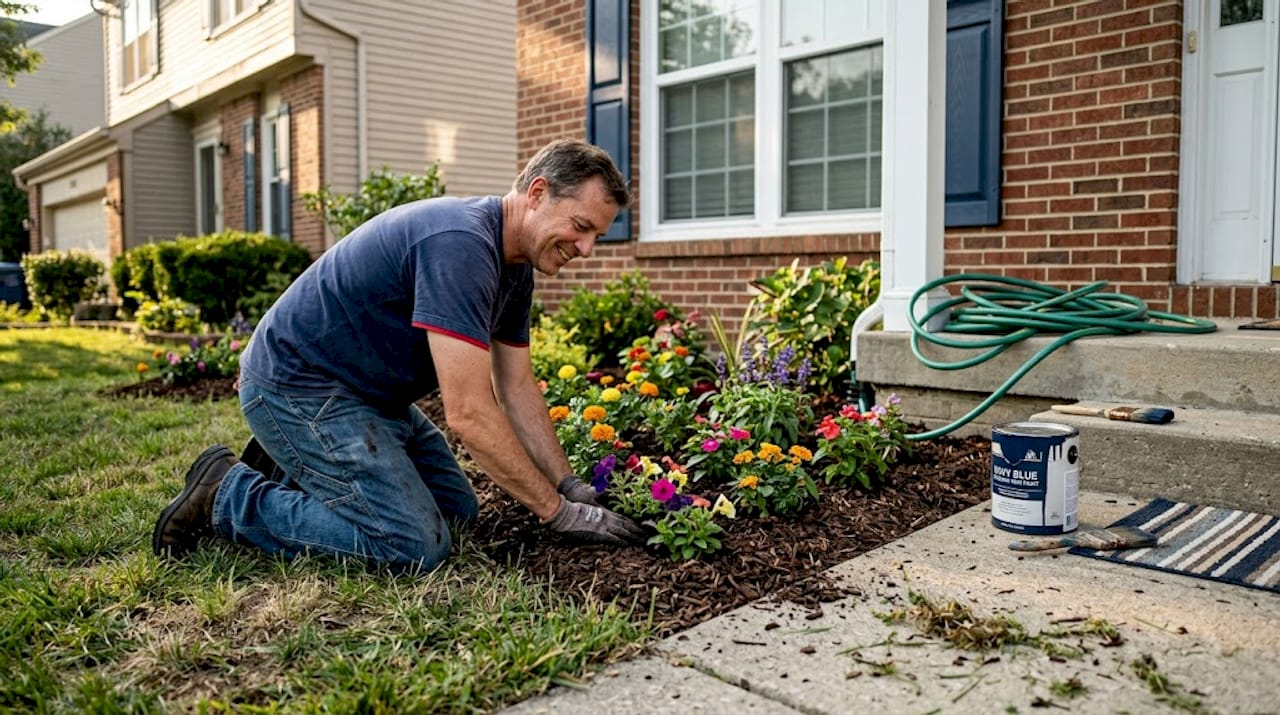
Curb appeal upgrades like fresh paint, new shutters, and tidy landscaping also deliver strong returns because they shape a buyer’s first impression before they even step inside. These projects are often low-cost and high-visibility, making them some of the most satisfying investments you can make.
When it comes to budgeting, always build in a contingency fund. A 15 to 20 percent buffer on your total project budget protects you from the surprises that almost every renovation brings, whether that’s a hidden water leak, outdated wiring, or a material backorder.
Here’s a quick breakdown of projects by ROI tier:
- High ROI (90%+): Garage door replacement, minor kitchen remodel, curb appeal upgrades, manufactured stone veneer
- Midrange ROI (60 to 89%): Deck addition, bathroom remodel, window replacement, roofing
- Lower ROI (below 60%): Luxury master suite addition, high-end bathroom overhaul, swimming pool installation
Pro Tip: Before committing to any major project, explore how it fits into the broader picture of real estate ROI in your local market. Regional trends can shift which upgrades pay off most in your specific neighborhood.
The most important takeaway here is that restraint often wins. A focused, well-executed midrange project almost always outperforms an expensive, sprawling renovation that overshoots your neighborhood’s price ceiling.
Plan your renovation for success
Once you’ve identified which projects add the most value, it’s crucial to map out your approach with organization and timing to keep stress and costs in check.
Think of renovation planning the way a contractor does: every decision made on paper is cheaper than every change made on-site. The sequence of your work matters just as much as the quality of your materials. Doing things out of order creates rework, delays, and unexpected costs that can turn a satisfying project into a frustrating one.
A proven renovation task sequencing approach follows this order:
- Planning and budgeting — Define scope, set a budget with a 10 to 30 percent contingency, and get multiple contractor quotes.
- Demolition — Remove what needs to go before anything new goes in. This reveals hidden issues early.
- Structural and mechanical rough-ins — Address HVAC first, then plumbing, then electrical. These systems run behind walls and must be in place before you close things up.
- Insulation and drywall — Once mechanical work passes inspection, seal and insulate before finishing surfaces.
- Finishes — Paint walls before installing cabinets or trim. It’s far easier to roll paint on bare walls than to cut in around finished woodwork.
- Flooring last — Always install flooring at the end to avoid scratches, dents, and damage from foot traffic and falling tools.
This sequence isn’t just a suggestion. Skipping steps or reversing the order leads to expensive do-overs. For example, painting after cabinets are installed forces tedious brush work and often results in drips on new surfaces.
Here’s a helpful comparison if you’re deciding between managing the project yourself or hiring it out:
| Factor | DIY project management | Hired general contractor |
|---|---|---|
| Cost | Lower (labor savings) | Higher (10 to 20% markup) |
| Time commitment | High (you coordinate everything) | Low (contractor handles scheduling) |
| Risk of errors | Higher without experience | Lower with vetted professionals |
| Permit handling | Your responsibility | Often included |
| Best for | Smaller, defined projects | Large, multi-trade renovations |
Permits and inspections are one of the most overlooked parts of renovation planning. Skipping permits might save time upfront, but it can create serious problems when you sell your home. Unpermitted work can kill a sale or require expensive remediation.
Pro Tip: Store all your renovation plans, permits, receipts, and contractor contacts digitally in a shared folder. This makes collaboration easier and gives you a complete record for insurance or resale purposes. Apps like Google Drive or Notion work beautifully for this.
Ordering materials early is another critical habit. Supply chain delays are real, and waiting until the last minute for tile, fixtures, or specialty hardware can stall your entire project for weeks. Order at least two to three weeks ahead of when you need items on-site. For more home improvement ideas and project planning inspiration, you’ll find a wealth of resources to keep your momentum going. You can also explore renovation planning tips from industry professionals to sharpen your approach before breaking ground.
Master essential DIY skills and avoid common mistakes
With a plan in place, the next success factor is knowing which tasks to tackle yourself and which to delegate.
DIY home improvement is one of the most rewarding things you can do as a homeowner. It saves money, builds confidence, and gives you a deep sense of ownership over your space. But it also comes with real risks if you overestimate your skills or rush through critical steps.
The good news is that several high-impact skills are genuinely learnable. According to The Spruce, key DIY skills that save you real money include:
- Painting — A steady hand or careful taping produces clean, professional-looking lines that dramatically refresh any room.
- Basic plumbing — Replacing a faucet or unclogging a drain are beginner-friendly tasks that plumbers charge $100 to $200 per visit to handle.
- Simple tiling — Backsplash installation is approachable for beginners and adds instant visual impact to kitchens and bathrooms.
- Light demolition — Removing old fixtures, tiles, or non-load-bearing walls is satisfying and requires minimal skill.
- Caulking — Sealing gaps around tubs, sinks, and windows prevents mold and moisture damage, and a tube of caulk costs just a few dollars.
“The best DIY projects are the ones where the learning curve is short and the visual payoff is immediate. Start there, build confidence, and work your way up.”
However, some tasks should always go to licensed professionals. Electrical panel work, gas line modifications, structural changes, and major plumbing reroutes carry safety and legal risks that aren’t worth taking on without proper training. Hiring a pro for these protects you, your family, and your investment.
Mistakes are where DIY projects get expensive. Common plumbing mistakes that cost homeowners dearly include over-tightening fittings (which cracks pipes), wrapping Teflon tape in the wrong direction (which causes leaks), and forgetting to shut off the water supply before starting work (which leads to flooding). These errors are entirely avoidable with a little preparation and patience.
Here’s a basic toolkit checklist to handle most beginner and intermediate DIY fixes:
- Cordless drill with a set of bits
- Level (a 4-foot level is ideal)
- Utility knife and extra blades
- Caulking gun and caulk
- Painter’s tape and drop cloths
- Adjustable wrench and pliers
- Stud finder
- Putty knife and spackle for patching walls
- Safety glasses and work gloves
Pro Tip: Before starting any plumbing task, take a photo of the existing setup. If something goes wrong or you need to reverse a step, that photo is invaluable. It’s a simple habit that saves a lot of stress.
If you’re interested in expanding your skills into the digital side of home improvement, exploring DIY smart home projects is a fantastic next step. Automating lights, thermostats, and security systems is more accessible than ever and adds both comfort and value to your home.
Seasonal and budget-friendly upgrades you can do now
Confident with your skills and plans, you’re ready for some quick wins — projects you can tackle right away for immediate results.
You don’t need a big budget or a full weekend to make a meaningful difference in your home. Some of the most satisfying upgrades cost less than $50 and take under an hour. These small wins build momentum and keep your home feeling fresh and well-maintained between larger projects.
Budget-friendly home fixes that deliver big impact include:
- Wi-Fi smart plugs — Control lamps and fans from your phone for around $15 each. Instant convenience, zero wiring required.
- Timer switches — Set ceiling fans or bathroom exhaust fans to run on a schedule, improving energy efficiency effortlessly.
- Peel-and-stick backsplash — Transform a kitchen or bathroom wall in an afternoon without grout or tile saw.
- Spray-painted hardware — Cabinet handles, drawer pulls, and hinges can be refreshed with metallic spray paint for under $10.
- Chalkboard paint — Turn a kitchen wall or pantry door into a functional message board.
- Bidet attachment — Install a bidet seat in about 20 minutes for $30 to $80. It’s a comfort upgrade that surprises most first-timers.
Seasonal maintenance is equally important. Staying ahead of the calendar prevents small issues from becoming expensive repairs.
| Season | Key task | Why it matters |
|---|---|---|
| Spring | Seal asphalt driveways after cleaning | Prevents cracking and extends driveway life |
| Spring | Pressure wash decks and patios | Removes mold and prepares surfaces for staining |
| Spring | Test soil pH before fertilizing | Ensures lawn treatments actually work |
| Fall | Repair gutters and downspouts | Prevents ice dams and water damage |
| Fall/Winter | Seal windows, doors, and siding | Cuts heating costs and blocks moisture |
| Fall/Winter | Trim trees near the house | Prevents branch damage during storms |
| Winter prep | Patch roof shingles and clean chimney | Avoids leaks and fire hazards |
Spring is the perfect time to inspect fence posts and replace any that are leaning, using fresh concrete to reset them securely. It’s also the ideal moment to pressure wash exterior surfaces and seal your driveway before summer heat sets in. Bob Vila’s April maintenance guide recommends allowing a 24-hour dry time after cleaning before applying driveway sealant, using a squeegee to work it into any cracks.
Fall preparation is where many homeowners fall short. Gutters clogged with leaves cause water to back up under your roofline, leading to ice dams in winter and costly ceiling damage. Sealing gaps around windows, doors, foundations, and siding is one of the highest-value maintenance tasks you can do, often cutting heating bills noticeably.
For more affordable home updates and everyday DIY tips that fit any schedule or budget, there’s always something new to discover and try.
Expert renovation lessons: Finishing touches matter
Your home is taking shape — now it’s time to look at the finishing touches and expert advice that truly set great spaces apart.
Here’s something most renovation guides skip entirely: the details that separate a good renovation from a stunning one rarely cost much. They’re about choices, proportion, and a little bit of design confidence. Professional designers and contractors share the same secrets, and once you know them, you’ll see them everywhere.
One of the most impactful upgrades is countertop thickness. Expert renovation tips from Country Living suggest that 2-inch thick countertops feel noticeably more luxurious than standard 1.25-inch slabs. Pairing materials also creates visual richness: think quartz countertops alongside a butcher block island. The contrast adds warmth and personality without looking chaotic.
Lighting fixtures are another area where sizing up pays off. Most homeowners choose fixtures that are too small for their space, which makes rooms feel underwhelming. Go one size larger than you think you need, and the room will feel more intentional and polished.
Here’s a list of finishing touches that make a big difference:
- Test paint samples in real lighting — A color that looks perfect in the store can look completely different under your home’s artificial light. Always test a large swatch on the wall and observe it at different times of day.
- Avoid refrigerators with external dispensers — They’re harder to keep clean and date a kitchen faster than almost any other feature.
- Use touch-up markers — Furniture and cabinet touch-up markers are inexpensive and erase years of wear in minutes.
- Clean faucet aerators regularly — The aerator is the small screen at the tip of your faucet. Removing and rinsing it every few months restores water pressure and extends fixture life.
- Mix metal finishes intentionally — Combining brushed nickel with matte black or warm brass creates a curated, layered look that feels designer without the designer price tag.
- Replace builder-grade light switches and outlets — Swapping standard white plastic covers for Decora-style or screwless plates is a $2-per-outlet upgrade that makes every room look more finished.
Pro Tip: When choosing paint colors for open-plan spaces, select one base color and use it in varying sheens (matte in living areas, eggshell in kitchens, semi-gloss in bathrooms) rather than switching colors entirely. It creates flow and cohesion throughout your home.
Small details also protect your investment long-term. Properly caulked seams around tubs and showers prevent moisture from seeping into walls, which is one of the most expensive repairs a homeowner can face. Cleaning range hood filters monthly keeps your kitchen air quality high and prevents grease buildup that’s both a fire hazard and an eyesore.
For more renovation advice that covers everything from material selection to layout decisions, you’ll find guides that speak directly to your skill level and project goals.
Our take: The real secret to lasting improvement
After all the data and details, here’s a lesson you’ll rarely hear but makes all the difference.
Most home improvement content focuses on the what: which projects, which materials, which tools. But the homeowners who feel most satisfied with their spaces have mastered the when and the why. They move with patience and intention rather than chasing the biggest possible transformation all at once.
The biggest mistake we see isn’t a botched tile job or a paint color gone wrong. It’s homeowners who lose sight of daily comfort while chasing resale value. A home is where you live, not just an asset to optimize. Over-improving for a future buyer while neglecting the things that would make your life better right now is a trade-off that rarely feels worth it in hindsight.
We’ve also seen the regret that comes from skipping the testing phase. Committing to an entire room of wallpaper, a bold floor color, or an open-concept layout without living with a small sample first is how expensive regrets happen. Small, tested changes let you learn what you actually love before you invest fully.
The most rewarding approach is building a cycle of continuous improvement. Tackle one project, learn from it, let it inform the next. This rhythm keeps your home evolving without overwhelming your budget or your weekends. It also means your home always reflects where you are right now, not just where you hoped to be five years ago.
Explore our home improvement philosophy and you’ll find that the best spaces aren’t built in a single renovation sprint. They’re shaped over time, with care, curiosity, and a willingness to start small and build confidently.
Take your next step with Lizard’s Lunch home improvement resources
Ready for help with your next upgrade? Let Lizard’s Lunch be your go-to source as you plan ahead.
Whether you’re just getting started or you’ve already got a project underway, Lizard’s Lunch is packed with guides, inspiration, and practical advice for every skill level. From beginner-friendly weekend fixes to more ambitious renovation plans, you’ll find step-by-step content that makes every project feel approachable and exciting. Browse more home improvement tips to discover your next favorite project, or dive into the world of connected living with our smart home setup guide and see how easy it is to automate your space for comfort and efficiency. Your best home is closer than you think, and we’re here to help you build it one great decision at a time.
Frequently asked questions
What home improvement project gives the highest return on investment?
Garage door replacement delivers the highest ROI at 194%, meaning the average project nearly doubles its cost in added home value. It’s one of the most financially rewarding single upgrades you can make.
Which home upgrades are best for a tight budget?
Low-cost fixes like Wi-Fi smart plugs, spray-painted hardware, peel-and-stick backsplashes, and timer switches all come in under $50 and deliver noticeable improvements. These are ideal starting points for homeowners who want impact without a big outlay.
What’s the right order for a home renovation?
Proper renovation sequencing starts with planning and budgeting, moves through demolition and mechanical rough-ins, then drywall, finishes, and flooring last. Following this order prevents costly rework and keeps your project on track.
Which DIY tasks should I avoid for safety?
Electrical panel work, gas lines, and structural modifications should always go to licensed professionals unless you have verified training and experience. The safety and legal risks simply aren’t worth the labor savings.
How can I prevent costly home maintenance issues?
Seasonal tasks like repairing gutters, sealing windows, trimming overhanging trees, and patching roof shingles before winter are among the most cost-effective ways to protect your home from expensive damage year-round.


















Leave a Comment
Your email address will not be published. Required fields are marked with *