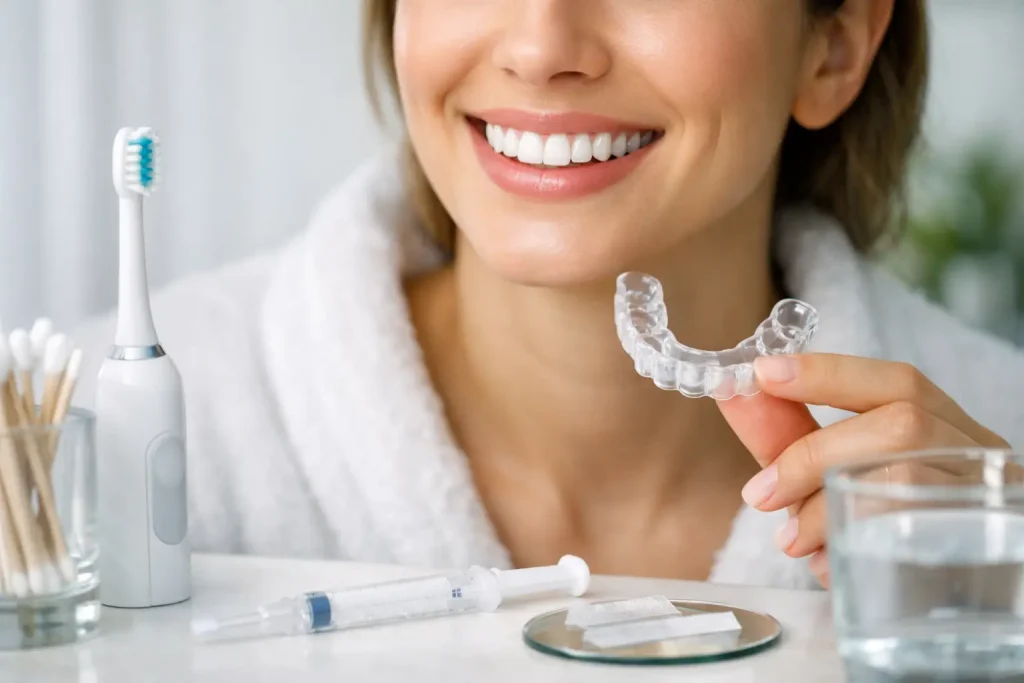
Learn how to whiten teeth safely at home with simple methods, smart product choices, and tips that help protect enamel and reduce sensitivity.
Coffee stains tend to show up at the worst time – right before photos, interviews, weddings, or any week when you suddenly notice your smile more than usual. If you’re wondering how to whiten teeth safely at home, the good news is that you have real options. The catch is that not every whitening trick online is gentle, effective, or worth the risk.
At-home whitening can work well for many people, but safe results depend on two things: using products that are designed for teeth, and knowing when to stop. A brighter smile is great. Burning your gums or making your teeth ache for a week is not.
How to whiten teeth safely at home without damaging enamel
The safest approach is usually the least dramatic one. Teeth whitening works by lifting or breaking down stains, most often with peroxide-based ingredients. That can be effective, but more isn’t always better. Higher strength, longer wear time, and frequent use can increase sensitivity and irritate your gums.
A safer plan starts with identifying what kind of staining you have. Surface stains from coffee, tea, red wine, tobacco, and dark sauces often respond well to whitening toothpaste, strips, or gels. Yellowing that has built up over time may also improve with these products, but deeper discoloration from medications, injury, or internal tooth changes often needs professional help. Home whitening can still help in some cases, just not always dramatically.
Before using any whitening product, make sure your mouth is in decent shape. If you have untreated cavities, cracked teeth, gum disease, exposed roots, or dental pain, whitening can make everything feel worse. Whitening products do not fix dental problems. They can spotlight them.
The best at-home whitening options
If your goal is a noticeable but sensible improvement, most people do best with one of three categories: whitening toothpaste, whitening strips, or tray-based whitening gels. Each has a different balance of convenience, strength, and sensitivity risk.
Whitening toothpaste
Whitening toothpaste is the mildest place to start. These formulas usually rely on gentle abrasives and sometimes low-level chemical stain removers to polish away surface discoloration. They won’t change the natural color of your teeth much, but they can make teeth look cleaner and brighter over time.
This is a solid option if your stains are mild or if you want to maintain results after other whitening treatments. It’s also usually the easiest choice for people with sensitive teeth. The trade-off is speed. You may need several weeks to notice a difference, and the results tend to be subtle.
Whitening strips
Whitening strips are one of the most popular answers to how to whiten teeth safely at home because they’re easy to find, relatively affordable, and often effective. They usually contain a peroxide gel that sits on the front surface of the teeth for a set amount of time each day.
Used as directed, strips can give visible results within days to a couple of weeks. The main downside is uneven contact. If your teeth are crooked, small, or differently shaped, the strips may not cover every area evenly. Some people also get gum irritation if the strip overlaps the gumline.
Tray-based whitening gels
Tray systems use a gel placed in a mouth tray and worn for a designated period. Some over-the-counter kits come with one-size trays, while others use more fitted designs. These can cover teeth more evenly than strips and may produce stronger results.
They also require more care. Too much gel can ooze onto the gums and cause irritation. A poorly fitting tray can do the same. If you choose a tray kit, less gel is usually better than more.
Ingredients and claims worth paying attention to
Hydrogen peroxide and carbamide peroxide are the most common whitening ingredients with a long track record in dental use. Many over-the-counter products rely on them in lower strengths than professional treatments, which helps balance safety and results.
Look for clear instructions and realistic claims. If a product promises extreme whitening overnight, that’s a red flag. So are vague ingredient lists or products that avoid saying exactly what the active ingredient is. In general, trusted retail brands with clear labeling are a safer bet than mystery powders, influencer hacks, or homemade pastes that sound too clever for their own good.
Charcoal toothpaste is a good example. It may help scrub off some surface stains, but it can also be abrasive, and there isn’t strong evidence that it whitens teeth in a meaningful or safe long-term way. Lemon juice, baking soda-heavy DIY mixes, and hydrogen peroxide rinses mixed at home can also be rough on enamel or soft tissue when used incorrectly. Natural does not automatically mean safe for teeth.
How to use whitening products without causing sensitivity
Sensitivity is the most common complaint with at-home whitening, and it can sneak up fast. Teeth may feel zingy when you drink something cold, or you may notice a dull ache after a few days of treatment.
A few small adjustments can make a big difference. Start with a shorter treatment schedule if the product allows it. Use a toothpaste made for sensitive teeth for a week before and during whitening. Avoid back-to-back whitening cycles just because you want faster results. If your teeth begin to hurt, take a break.
It also helps to keep the gel where it belongs. Wipe away excess product from the gums and don’t sleep in a treatment unless the instructions specifically say it’s safe to do so. More contact time can mean more irritation, not better whitening.
A simple routine that works for most people
If you’re trying to brighten your smile without overdoing it, keep it basic. Brush twice a day with a fluoride toothpaste. Floss daily. Use a whitening product exactly as directed, not more often. Rinse your mouth with water after coffee, tea, or red wine when you can, especially if brushing right away isn’t practical.
Timing matters too. Teeth can be slightly more vulnerable after acidic foods and drinks, so brushing immediately after orange juice or soda is not ideal. Give it a little time, then brush gently.
Who should be cautious with at-home whitening
Not everyone is a great candidate for DIY whitening. If you have crowns, veneers, fillings on front teeth, or bonding, whitening products won’t lighten those materials the way they lighten natural teeth. That can leave you with uneven color.
Pregnant or breastfeeding people should ask a dentist before using whitening treatments, mainly because safety data is limited for elective products. Teens should also be cautious and ideally get guidance first, since younger teeth can be more sensitive.
If you already have sensitive teeth, at-home whitening isn’t off-limits, but your margin for error is smaller. Mild products and shorter use periods tend to be the smarter move.
Signs it’s time to stop and call a dentist
A little temporary sensitivity can be normal. Sharp pain, gum whitening, burning, lingering aches, or visible irritation are not signs to push through. Stop using the product if your mouth feels worse each day instead of better.
It’s also worth getting professional advice if you’ve used a product correctly for a few weeks and see little to no change. That often means the staining is deeper, or that buildup and dental issues are getting in the way. A cleaning alone can make teeth look brighter before you spend more money on whitening.
What kind of results should you expect?
Safe whitening at home is usually about improvement, not perfection. You may lift a few shades, reduce yellowing, and clean up common stains. That’s a win. Teeth naturally vary in color, and the bright paper-white smile you see in ads is often edited, professionally treated, or enhanced by veneers.
The best result is one that looks healthy and believable. In many cases, a gradual change actually looks better than a dramatic jump. It also tends to be easier on your teeth.
For most people, the smartest answer to how to whiten teeth safely at home is to choose a proven over-the-counter product, follow directions like they matter, and resist the urge to stack methods. Whitening should feel controlled, not like a science experiment in your bathroom mirror.
A brighter smile is nice, but comfort counts too. If you can get both, that’s the version worth aiming for.
















Leave a Comment
Your email address will not be published. Required fields are marked with *