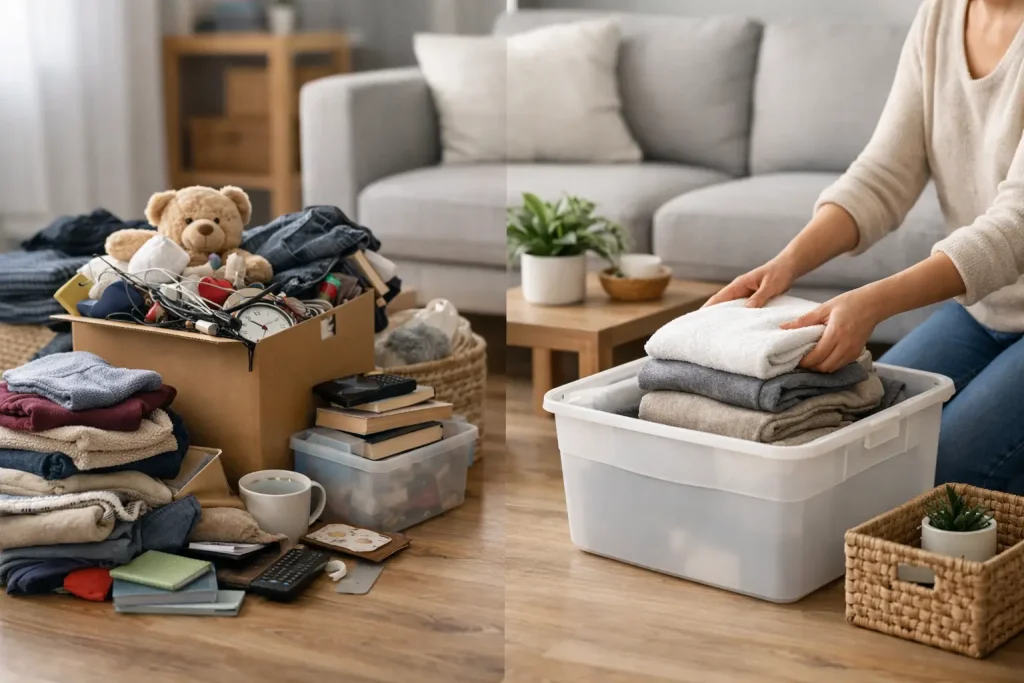
Learn how to declutter your home fast with simple room-by-room tactics, quick sorting rules, and realistic strategies that actually save time.
A messy home usually does not happen because you are lazy. It happens because life keeps moving – mail lands on the counter, laundry multiplies, kids leave trails, and the one chair in the bedroom becomes a full-time storage unit. If you are searching for how to declutter your home fast, the real goal is not perfection. It is getting visible results quickly without creating an even bigger mess halfway through.
The fastest way to declutter is to stop treating it like a weekend-long makeover. Big, dramatic cleanouts look great online, but in real homes they often stall out. A better approach is faster, lighter, and more practical: make decisions quickly, focus on high-impact areas first, and use a simple system you can repeat from room to room.
How to declutter your home fast without burning out
Speed matters, but so does momentum. If you empty every closet onto the floor, you may feel productive for an hour and overwhelmed for the next three. Fast decluttering works best when you limit what you pull out and finish one contained area before moving on.
Start with a timer. Give yourself 20 to 30 minutes for a single zone, like the kitchen counter, the entry table, one bathroom drawer, or the top of a dresser. Short bursts force quicker decisions, which is exactly what clutter fights against. When you know the session ends soon, you are less likely to get stuck reminiscing over old cards or trying to reorganize items you do not even need.
Use four categories and keep them consistent: keep, donate, trash, and relocate. That is enough structure to move fast without overthinking every object. If something belongs in another room, do not stop to put it away immediately unless it is on your path. Give yourself one small basket for relocation items and return them all at the end.
There is one trade-off here. If you move too fast, you may keep things you should let go of just to stay on schedule. That is fine for a first pass. Fast decluttering is often about reducing obvious excess first, then refining later if needed.
Start where clutter shows the most
If you want your home to feel calmer fast, begin with spaces you see constantly. Visible clutter creates more stress than hidden clutter, even if the hidden mess is technically worse.
The entryway, kitchen counters, coffee table, dining table, bathroom vanity, and bedroom floor are strong starting points. Clearing these areas gives you an immediate payoff. Your home looks better, and that visual win makes it easier to keep going.
This is also where a lot of low-value clutter lives. Paper piles, random chargers, expired coupons, empty product boxes, duplicate toiletries, and stray cups are easy decisions compared with sentimental keepsakes or old family photos. When your energy is high, use it on easy wins.
The five-minute surface reset
When time is tight, do a surface-only sweep first. Throw away obvious trash, stack papers into one pile, move dishes to the sink, and remove anything that clearly belongs somewhere else. You are not solving every storage problem yet. You are creating breathing room.
This works especially well before guests arrive, before a workweek starts, or when a room feels so chaotic that you cannot think clearly. A clear surface changes how a whole room reads.
Use a room-by-room strategy that favors speed
Trying to declutter your entire home in random order wastes time. Move in a simple sequence: public spaces first, private spaces second, storage areas last. That means living room, kitchen, bathrooms, and bedrooms before closets, garage, attic, or basement.
Why? Because the first group improves daily life fastest. Storage areas matter, but they are where decluttering projects often go to die. They contain more difficult decisions, more forgotten items, and more emotional baggage. Save them until you have built momentum.
In the living room, focus on flat surfaces, open shelves, and media clutter. Remove anything that belongs in another room, old magazines, dead remotes, tangled cords, and decor that no longer fits the space. In the kitchen, toss expired food, recycle takeout containers you never reuse, and cut down utensil duplicates. In bathrooms, expired medications, nearly empty products, and hotel toiletries are common clutter magnets.
Bedrooms need a slightly different lens. The fastest improvement usually comes from clothes. Pick up laundry, return clean items, and create one donation bag for pieces you never wear. Do not start trying on every shirt unless you have extra time. If it has not fit, flattered, or felt comfortable in a year, that is often enough information.
The one-touch rule speeds everything up
When you pick something up, decide on it once if possible. Trash it, donate it, put it back, or relocate it. What slows people down is touching the same object three or four times while avoiding a decision.
Paper is the biggest offender here. If you have a stack of mail, sort it immediately into recycle, shred, action, or file. Do not move the pile from counter to counter. Fast decluttering depends on fewer delays.
Make faster decisions with simple filters
A lot of clutter is delayed decision-making in physical form. You keep things because they might be useful, because you paid for them, or because dealing with them feels annoying. That hesitation costs space.
To move faster, use filters instead of debates. Ask yourself whether you use it now, whether you would buy it again today, and whether it realistically belongs in your current life. Those questions are more useful than asking whether an item is still technically good.
Be honest about duplicates. Most homes have too many mugs, storage containers, pens, cleaning products, reusable bags, and blankets. Keeping a reasonable number is practical. Keeping every extra just in case usually creates the clutter you are trying to escape.
Sentimental items are where speed can break down. If you hit something emotional, do not let it derail the whole session. Set those items aside in one small memory box and return to them later. Fast decluttering and deep emotional sorting are not always the same task.
What to do with the stuff immediately
One reason clutter comes back is that the discard pile never leaves. Donation bags sit in the hallway for a week, then slowly get raided back into the house.
Once you fill a trash bag, take it out. Once you create a donation bag, put it in your car or near the door with a deadline. If items need to be returned to other rooms, do a single lap through the house at the end of the session. Fast results depend on finishing the removal step, not just sorting items into neat little piles.
This is a smart time to use basic supplies that cut friction: sturdy trash bags, one laundry basket for misplaced items, and clear bins only if you already have them. You do not need a shopping trip to start decluttering. In fact, buying organizers too early can slow the process and tempt you to store things you should have removed.
How to keep clutter from bouncing back
Once you know how to declutter your home fast, the next challenge is keeping it from getting bad again. That part is less about motivation and more about setting limits.
Give common clutter categories a clear home. Mail needs one tray, not three random piles. Kids’ toys need a defined container. Kitchen gadgets need drawer boundaries. If a category constantly spills out of its space, that is often a sign you own too much of it.
It also helps to attach short reset habits to things you already do. Clear the counter while coffee brews. Do a living room pickup before bed. Toss junk mail before it reaches the kitchen. These small actions are boring, which is exactly why they work.
If you live with other people, aim for simple rules rather than perfect compliance. Shoes in one area, backpacks off the floor, dishes cleared nightly. You are looking for repeatable household habits, not a showroom.
When fast decluttering is not enough
Sometimes clutter points to a bigger issue. Maybe your storage is poor, maybe your home is too full for your current season of life, or maybe you are trying to manage too much stuff in too little time. In those cases, fast decluttering helps, but it will not solve the root problem by itself.
That is not failure. It just means you may need a second phase – better storage, stricter shopping habits, or a more intentional edit of what stays in your home. Quick wins are powerful, but they work best when they lead to better systems.
The best part of decluttering fast is not the before-and-after effect. It is that small pockets of order make daily life easier almost immediately. You find what you need, clean faster, and stop wasting energy on visual noise. Start with one visible area, finish it completely, and let that momentum carry the rest.















Leave a Comment
Your email address will not be published. Required fields are marked with *