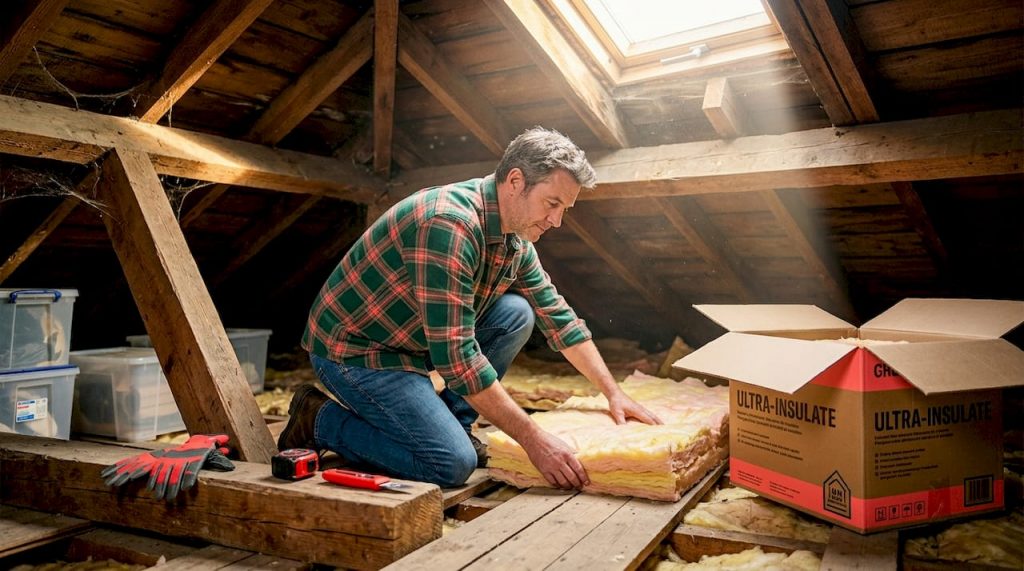
Discover the role of insulation in enhancing home comfort and lowering energy bills. Learn how to optimize your space year-round!
Most homeowners think insulation is a cold-weather fix, something you worry about only when the furnace is working overtime. That idea costs you real money every single month. The U.S. Department of Energy recommends R-values by climate zone, ranging from R-30 in the warmest southern zones all the way to R-60 in the coldest northern regions, because insulation works just as hard keeping summer heat out as it does keeping winter warmth in. Whether you are tackling a full renovation or a single-room upgrade, getting insulation right is one of the most rewarding home improvement projects you can take on. This guide gives you the science, the smart choices, and the practical steps to make it happen.
Table of Contents
- Why insulation matters: Beyond warmth and chill
- How insulation works: The science, simplified
- Where, what, and how much: Choosing insulation for your home
- Installation dos and don’ts: Practical steps and common pitfalls
- Why most insulation advice misses what really counts
- Take your home’s comfort and efficiency to the next level
- Frequently asked questions
Key Takeaways
| Point | Details |
|---|---|
| Insulation saves energy | Insulation reduces heating and cooling bills while boosting comfort in every climate. |
| Prioritize the attic | Upgrading attic insulation first delivers the highest return on investment for most homes. |
| Choose materials wisely | Different insulation types suit different needs and budgets, so compare options carefully. |
| Install with care | Proper installation and ventilation prevent mold and maximize effectiveness. |
| System approach works best | Pair insulation with air sealing and upgrades for top performance and value. |
Why insulation matters: Beyond warmth and chill
Think of your home as a thermos. A good thermos keeps hot drinks hot and cold drinks cold, not because it generates temperature, but because it resists change. Insulation does exactly that for your living space. When your home is well insulated, your heating and cooling systems spend less energy fighting against outdoor temperatures, and you feel the difference in both comfort and monthly bills.
Energy savings are the headline benefit, but they are far from the only one. When heat cannot easily escape in winter or invade in summer, your HVAC system cycles on and off less frequently. That means lower utility bills, less wear on your equipment, and a longer lifespan for your system overall. Some homeowners see heating and cooling costs drop by 15% or more after a targeted insulation upgrade. That is real money staying in your wallet each year.
Beyond temperature, better insulation delivers a surprising range of advantages that often go unnoticed until you experience them firsthand:
- Soundproofing: Dense insulation materials, especially cellulose and mineral wool, absorb sound waves, reducing noise between rooms and dampening street noise from outside.
- Air quality: Sealing gaps and adding insulation limits the entry of dust, pollen, and outdoor pollutants, which is a genuine benefit for allergy sufferers.
- Property value: A well-insulated home is more attractive to buyers and can command a higher resale price, especially as energy efficiency becomes a bigger purchasing factor.
- Reduced carbon emissions: When your home uses less energy, your carbon footprint shrinks, making insulation a quiet but meaningful environmental choice.
- Hot climate pairing: In warm regions, insulation works beautifully alongside radiant barriers in attic spaces, reflecting solar heat away before it can cook the rooms below.
“A well-insulated home is quieter, healthier, and more valuable. It uses less energy, produces fewer emissions, and stays comfortable regardless of what the weather is doing outside.”
Thinking about insulation as part of your broader home strategy also opens up exciting possibilities. When you combine efficiency improvements, you start to see the kind of returns that make a real difference. You can learn more about how to maximize home improvement ROI to see how insulation fits into the bigger picture. And if you are already thinking about major upgrades, consider how projects like a kitchen renovation ROI stack up alongside energy improvements.
How insulation works: The science, simplified
You do not need an engineering degree to understand insulation. Heat naturally moves from warm areas to cool ones. In winter, heat inside your home wants to escape through walls, ceilings, and floors. In summer, heat from outside pushes in through those same surfaces. Insulation slows that movement, giving you time and control.
Heat travels in three ways. Conduction is heat moving through solid materials, like warmth traveling through a metal spoon. Convection is heat carried by moving air or liquid. Radiation is heat traveling as infrared energy through space, like the warmth you feel from the sun even on a cold day. Good insulation addresses all three modes, though different materials and strategies target each one differently.
The number that ties all of this together is the R-value. R-value measures thermal resistance, meaning how well a material slows heat flow. Higher R-value equals more resistance, equals better insulation. The number you need depends on where you live and which part of your home you are insulating.
The Department of Energy divides the U.S. into eight climate zones and recommends R-values accordingly. Here is a simplified look at those targets for attics and walls:
| Climate zone | Example locations | Attic R-value | Wall R-value |
|---|---|---|---|
| Zone 1 | South Florida, Hawaii | R-30 | R-13 |
| Zone 2 | Houston, Phoenix | R-38 | R-13 to R-15 |
| Zone 3 | Atlanta, Dallas | R-38 to R-49 | R-13 to R-15 |
| Zone 4 | Baltimore, Seattle | R-38 to R-49 | R-13+R-5ci |
| Zone 5 | Chicago, Denver | R-49 | R-20 or R-13+R-10ci |
| Zone 6 | Minneapolis, Burlington | R-49 to R-60 | R-20+R-5ci |
| Zone 7 | Northern Minnesota, Alaska border | R-49 to R-60 | R-21+R-5ci |
| Zone 8 | Interior Alaska | R-49 to R-60 | R-21+R-10ci |
Note: “ci” means continuous insulation installed on the exterior of wall studs.
Insulation alone does not complete the picture. Air sealing is the essential partner. Even the highest R-value material loses much of its effectiveness if air can freely move through gaps around outlets, light fixtures, plumbing penetrations, and attic hatches. Think of it this way: a thick wool sweater keeps you warm, but if it has large holes, wind cuts right through. Sealing those gaps first, then adding insulation, is the formula that delivers real results. Pair this with smart energy efficient tech improvements for a truly high-performing home.
Pro Tip: Before buying insulation materials, use a kitchen incense stick or a smoke pen near outlets, window frames, and door jambs on a windy day. Watch where the smoke moves. Those are your air leaks, and sealing them is your highest-priority first step.
Where, what, and how much: Choosing insulation for your home
Not all insulation upgrades deliver equal results. Knowing where to start and what material to use makes the difference between a satisfying project and a frustrating one. The good news is that a clear priority order exists, and it maps closely to where homes typically lose the most energy.
Prioritizing by location
Start at the top and work your way down. Attic and ceiling insulation consistently delivers the highest return on investment of any insulation upgrade, because heat rises and an under-insulated attic is essentially an open door for your heating dollars to escape. After the attic, focus on exterior walls, then floors over unconditioned spaces like garages and crawl spaces, and finally basements and crawl space walls.
Here is a quick priority checklist to assess your home:
- Check your attic insulation depth. For most zones, you should see at least 10 to 14 inches of insulation. If you can see the tops of the joists, you definitely need more.
- Feel your walls on a cold day. If interior walls feel noticeably cold to the touch, they may have little or no insulation.
- Look at your energy bills over the past year. Unusually high heating or cooling costs compared to similar homes point to insulation gaps.
- Inspect your basement rim joists, which are the boards at the top of your foundation wall. These are a surprisingly common source of heat loss and are easy to address with rigid foam or spray foam.
- Check for visible gaps around pipes, wires, and ducts where they pass through walls, floors, or ceilings.
Comparing insulation materials
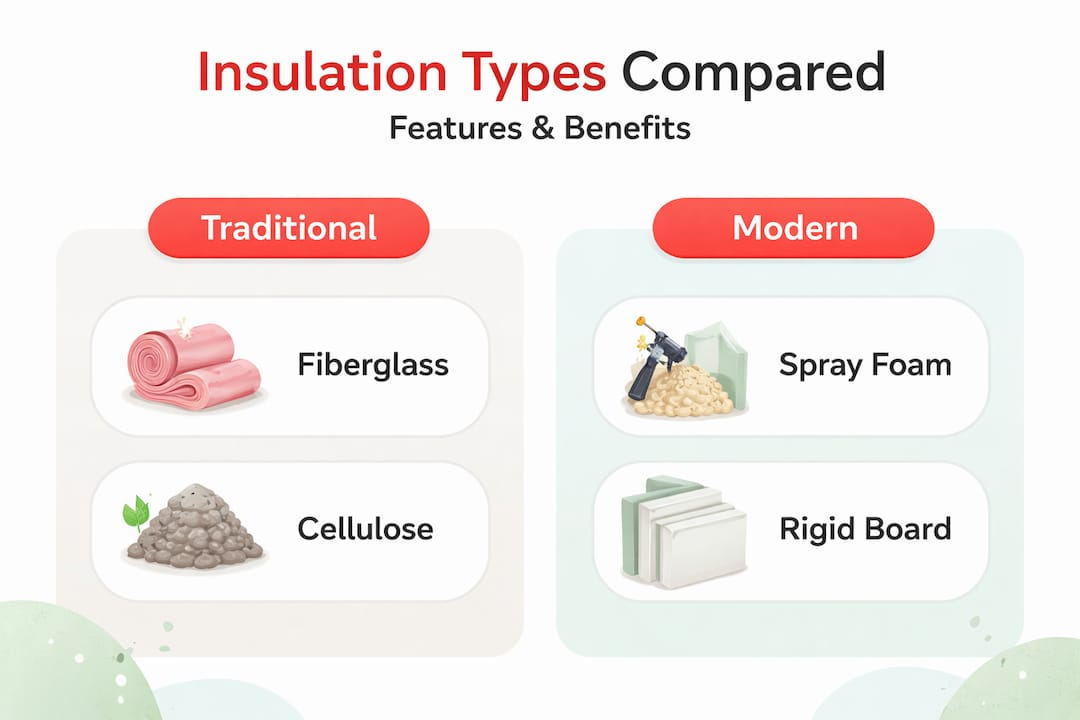
Different materials suit different situations. Here is a clear comparison of the most common options available to homeowners:
| Material | R-value per inch | Cost range (per sq ft) | Install method | Best for | Watch out for |
|---|---|---|---|---|---|
| Fiberglass batts | R-2.9 to R-3.8 | $0.30 to $0.50 | DIY friendly | Walls, floors, attic floors | Compressing reduces R-value |
| Blown-in cellulose | R-3.2 to R-3.8 | $0.50 to $1.00 | DIY or pro | Attics, existing walls | Settles slightly over time |
| Closed-cell spray foam | R-6.0 to R-7.0 | $1.50 to $3.50 | Professional | Rim joists, crawl spaces | High cost, off-gassing during install |
| Open-cell spray foam | R-3.5 to R-3.8 | $0.50 to $1.50 | Professional | Attic rafters, interior walls | Not a moisture barrier |
| Rigid foam board | R-3.8 to R-6.5 | $0.25 to $1.50 | DIY or pro | Basement walls, exterior sheathing | Requires fire covering indoors |
| Mineral wool batts | R-3.0 to R-3.3 | $0.50 to $1.20 | DIY friendly | Walls, soundproofing | Slightly higher cost than fiberglass |
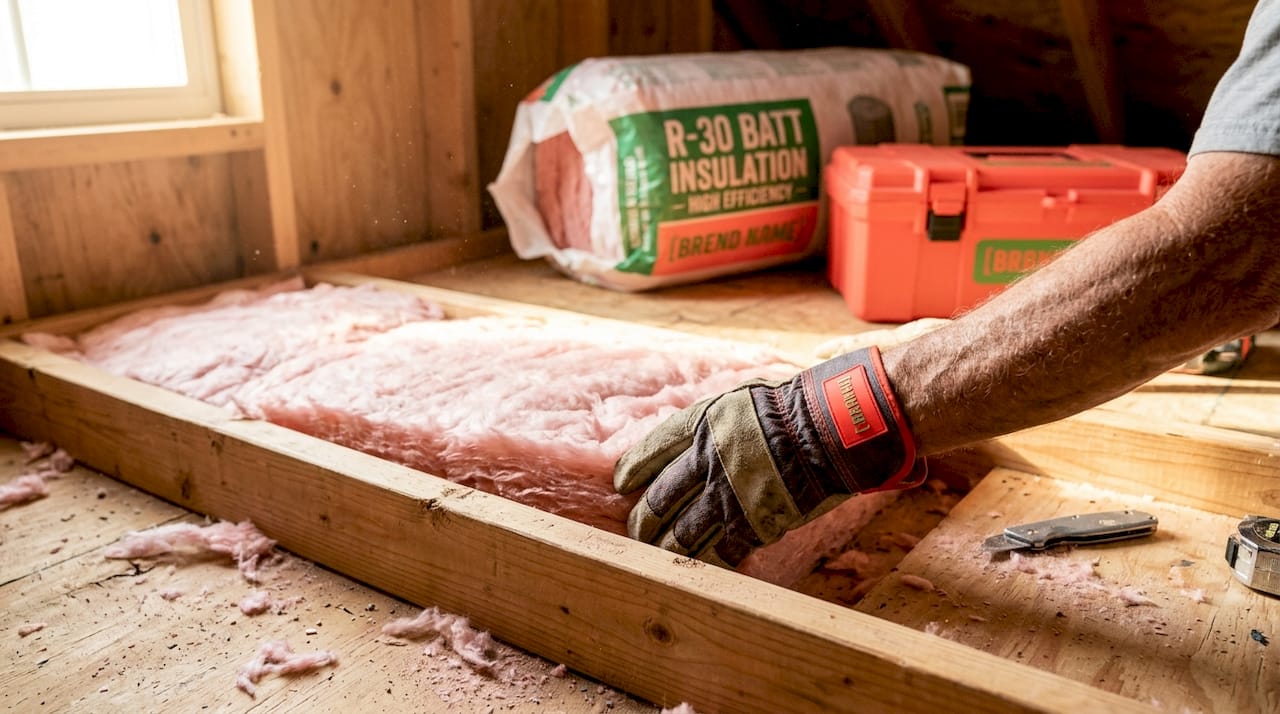
Fiberglass batts are the classic go-to for budget-conscious DIYers. They are widely available, easy to cut to size, and work well in standard stud cavities. The key is installing them correctly without compressing them, since squished fiberglass loses a significant portion of its rated R-value.
Blown-in cellulose is made from recycled paper treated with fire retardant, making it an eco-friendly choice. It fills irregular spaces beautifully, which makes it ideal for existing attics where you want to add depth without a major teardown. You can rent blowing machines from most home improvement stores.
Closed-cell spray foam is the performance champion for moisture and air sealing in tight or tricky spaces. It is genuinely excellent for rim joists and crawl space walls. But it is costly and requires a professional installer, because the chemicals involved need careful handling and the application technique matters enormously.
Rigid foam board is versatile and moisture-resistant, making it a smart choice for basement walls and exterior applications. Just remember that it requires a fire-rated covering, like drywall, when used indoors.
Pro Tip: When insulating an attic, do not just pile in more material. First seal every penetration and gap with canned spray foam or acoustic caulk. A properly air-sealed attic with a moderate R-value almost always outperforms a poorly sealed attic stuffed with extra insulation.
Explore more home improvement projects on our site to find guides that complement your insulation upgrade.
Installation dos and don’ts: Practical steps and common pitfalls
Getting the right material at the right R-value is only part of the job. How you install it determines whether you get the full benefit or leave a significant amount of performance on the table. Whether you are doing this yourself or hiring a contractor, understanding the process helps you make better decisions at every step.
Step-by-step DIY insulation guide
Follow this sequence for a safe, effective project:
- Gear up first. Wear a long-sleeved shirt, gloves, safety glasses, and an N95 respirator or better. Fiberglass and cellulose particles irritate skin, eyes, and lungs. Do not skip this step.
- Air seal before you insulate. Use canned spray foam for gaps larger than a quarter inch and acoustical caulk for smaller cracks. Pay special attention to top plates, recessed lights, attic hatch frames, and any penetrations for pipes or wires.
- Install vapor barriers correctly. In colder climates, a vapor barrier typically goes on the warm side of the insulation, which is the interior side of a wall or the ceiling side of a floor. Check local building codes, because placement rules vary by climate zone.
- Place batts without compressing. Fit fiberglass or mineral wool batts snugly between joists or studs. They should fill the cavity completely but not be squeezed. An inch of compression can reduce effective R-value by 20% or more.
- Layer for higher R-values. In an attic, run one layer of batts between the joists and a second layer perpendicular on top. This cross-layering covers the joists themselves, which are thermal bridges that conduct heat even when the cavities beside them are insulated.
- Keep vents clear. In vented attics, install baffles or cardboard chutes at each rafter bay along the eaves before adding insulation. Blocking soffit vents causes moisture problems that can rot your roof deck over time.
When to call a professional
Some jobs truly are better left to the pros. Prioritizing attic insulation for highest ROI is sound advice, but complex attic geometries, significant mold or moisture problems, or the need for closed-cell spray foam all call for professional expertise. Spray foam professionals carry specialized equipment and know how to handle the two-part chemical systems safely. They also understand how to handle ventilation adjustments that an unvented or hot roof design requires.
Common mistakes that cost you comfort
Watch out for these pitfalls that show up frequently in DIY insulation projects:
- Compressing fiberglass: This is the number-one DIY error. A batt rated R-15 that gets squeezed into a cavity meant for R-13 actually performs at R-11 or less. Always match the batt to the cavity depth.
- Blocking attic vents: Covering soffit or ridge vents traps moisture and can lead to mold, wood rot, and reduced insulation performance. Always maintain the ventilation channel.
- Missing air leaks: Adding inches of fluffy insulation over unsealed penetrations is like putting a warm hat on while leaving your jacket unzipped. The air leaks dominate the heat loss.
- Ignoring rim joists: These small sections at the top of your foundation wall are responsible for a disproportionate share of heat loss in many homes, yet they are often overlooked entirely.
- Not checking existing insulation condition: Old insulation can be compressed, wet, or pest-damaged, all of which dramatically reduce its effectiveness. Always inspect before adding new material on top.
Pro Tip: Schedule any insulation project alongside a ventilation check. A building inspector or energy auditor can use a blower door test to locate air leaks with precision and confirm that your attic ventilation is performing correctly, protecting both your insulation and your roof.
Why most insulation advice misses what really counts
Here is something the standard insulation guides rarely tell you plainly: more insulation is not always better. In fact, the single most common mistake homeowners make is adding thickness without fixing the underlying problems that make insulation ineffective in the first place.
We have seen beautifully insulated attics with 16 inches of blown-in cellulose that still perform poorly, because no one bothered to seal the attic hatch, the recessed lights, or the gaps around plumbing stacks. Air leakage accounts for 25% to 40% of heating and cooling losses in a typical home. No amount of extra insulation material compensates for free-flowing air moving through gaps.
The “more is better” myth also leads DIYers to over-insulate finished basement walls while neglecting the rim joist, which is actually the biggest thermal weak point in most basements. Or they pile up insulation in an attic and accidentally cover the soffit vents, creating the ideal conditions for condensation, mold, and roof damage.
What really counts is a systems view. Insulation, air sealing, and ventilation are three parts of a single system. Change one without addressing the others and you often create new problems while solving old ones. The DOE’s climate zone recommendations are a guide, not a ceiling. In many cases, hitting the minimum recommended R-value with excellent air sealing outperforms exceeding that R-value with poor air sealing.
The other underrated factor is location-specific ROI. Spending $3,000 on closed-cell spray foam in a wall cavity may give you far less return than spending the same amount air-sealing and insulating your attic and rim joists. Targeting where the real losses are happening, rather than applying a blanket upgrade everywhere, is the approach that delivers genuine, lasting results.
If you are serious about maximizing returns, think about insulation as part of a broader property strategy. Our real estate section explores how energy improvements connect to home value and smart ownership decisions. The most effective insulation projects are not the biggest or most expensive ones. They are the most strategically placed ones.
Take your home’s comfort and efficiency to the next level
Insulation is one of the most rewarding upgrades you can make, but it is just the beginning of what is possible when you approach your home with a clear, strategic mindset. The right combination of efficiency upgrades, smart technologies, and DIY skills can transform your home into a genuinely comfortable, energy-saving space that holds its value for years. Whether you are ready to maximize home improvement investments or want to explore innovative tech for home upgrades that pair beautifully with insulation work, Lizard’s Lunch has the guides and inspiration to keep you moving forward. And if you love hands-on projects, our collection of DIY home decor tutorials will keep the creative energy going long after the insulation is done.
Frequently asked questions
How do I know if my home needs more insulation?
You likely need more insulation if your energy bills are unusually high, rooms feel drafty or have noticeable temperature swings, or you see ice dams forming at your roof edge in winter. The DOE’s climate zone guide gives you a clear benchmark to compare against what you currently have.
What’s the best insulation for DIY projects?
Fiberglass batts and blown-in cellulose are both excellent, budget-friendly options that most homeowners can install themselves. Closed-cell spray foam offers superior air and moisture sealing but is costly and really is best handled by a professional installer.
How much insulation do I need in my attic?
The answer depends on your climate zone. The DOE recommends R-30 for Zone 1 in the deep south, R-49 for Zone 5 in the Midwest, and R-49 to R-60 for the coldest northern zones. Check the table in this article to find your zone’s target.
Does insulation help with noise control?
Absolutely. Dense insulation materials, particularly cellulose and mineral wool, absorb sound energy effectively. Better insulation reduces noise transmission between rooms and from outside, creating a noticeably quieter, more peaceful home environment.
Can I combine insulation with other upgrades for even more savings?
Yes, and you should. Combining insulation with thorough air sealing and a ventilation check is the formula that unlocks the full benefit of your investment, avoiding moisture problems while delivering maximum comfort and energy efficiency.


















Leave a Comment
Your email address will not be published. Required fields are marked with *