
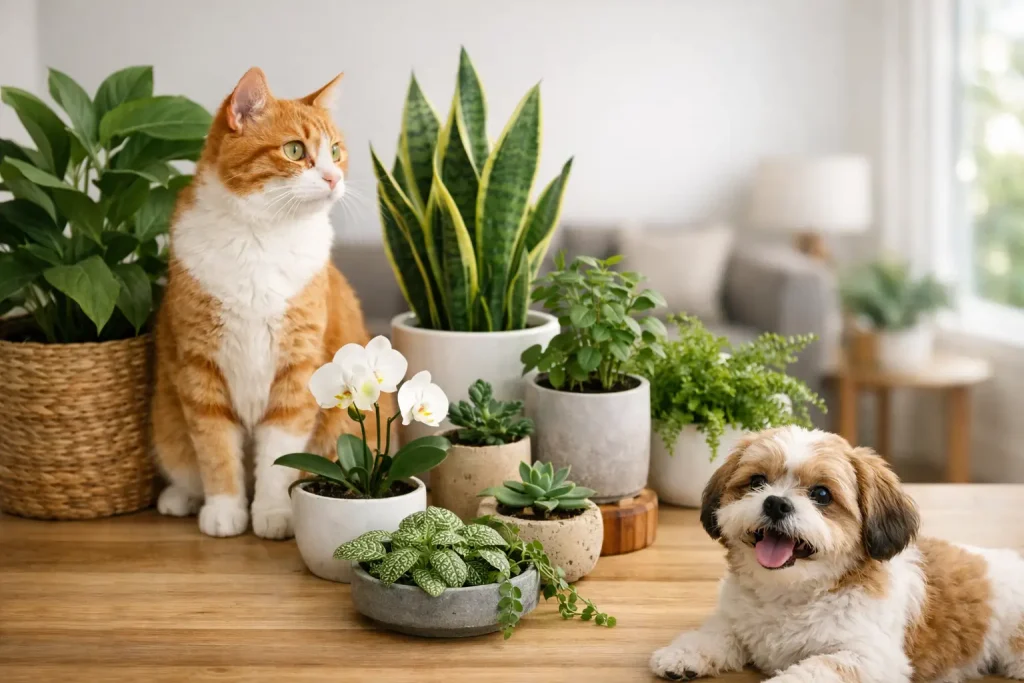
Looking for pet friendly plants? These 12 low-risk houseplants can brighten your home while helping keep curious cats and dogs safer indoors.
The moment a cat decides your fern is lunch or your dog starts sniffing a new leaf like it owes him money, your plant choices stop being just about style. If you share your home with animals, pet friendly plants are less of a decor trend and more of a smart filter for everything you bring through the door.
That matters because plenty of popular houseplants can irritate a pet’s mouth, upset the stomach, or cause more serious issues if chewed. A safer plant lineup won’t replace supervision or a quick call to your vet when something looks wrong, but it can reduce the odds that your living room turns into an accidental hazard zone. The good news is that you do not have to settle for boring greenery to get there.
What makes plants pet friendly?
In everyday use, pet friendly plants usually means varieties that are considered non-toxic or low-risk for cats and dogs. That does not mean edible, and it definitely does not mean your pet should snack freely. Even non-toxic plants can still cause mild vomiting or digestive trouble if a determined chewer eats enough of them.
The bigger point is risk reduction. If you know your cat climbs shelves and samples leaves, or your puppy treats every pot like a backyard project, plant safety should carry as much weight as appearance, price, and care level. It is also worth remembering that plant labels can be vague. “Pet safe” is not a universal legal standard, so it helps to buy from reputable sellers and double-check the exact species name.
12 pet friendly plants worth bringing home
Some plants earn their keep by being attractive, easy to live with, and less likely to create a problem if your pet gets curious. These picks work well for many homes, although the right fit still depends on your light, schedule, and how mischievous your animals tend to be.
Spider plant
Spider plants are one of the easiest entry points into pet-safe indoor gardening. They handle a range of conditions, grow quickly, and send out arching baby shoots that make hanging baskets look fuller over time.
Cats, unfortunately, often find them very entertaining. That is the trade-off. They are considered a safer option, but the dangling leaves can be irresistible, so you may still want to place them out of easy reach if your cat turns every plant into a toy.
Areca palm
If you want a room to feel brighter and more polished fast, an areca palm does the job. Its feathery fronds bring height and texture without the toxicity concerns tied to some other palms and palm-like plants.
It does best in bright, indirect light and likes a bit more consistent care than ultra-low-maintenance options. For pet owners who want a larger statement plant, though, it is one of the strongest choices.
Parlor palm
Parlor palms have been popular for years because they are forgiving and adaptable. They fit apartments, offices, and low-light corners better than many larger tropical plants.
They are also a practical answer for homes with pets. You get that soft, classic indoor-plant look without choosing something known for being risky around cats and dogs.
Calathea
Calatheas are favorites for people who want foliage with pattern and color rather than plain green leaves. Varieties can show off stripes, deep purple undersides, or bold markings that look almost painted.
They are generally considered pet friendly, but they can be a little fussy. Dry air, inconsistent watering, and harsh sun can all make them look unhappy fast. If you love the look and do not mind giving them some attention, they offer a safer way to add personality to your plant shelf.
Prayer plant
Prayer plants are related to calatheas and share that same decorative appeal. Their leaves fold up at night, which gives them their common name and adds a little movement to the room.
They stay fairly compact, making them useful for desks, side tables, and smaller spaces. For pet owners with limited square footage, that smaller footprint can be a real advantage.
Peperomia
Peperomia is less one plant than a whole category of useful options. Some have thick, glossy leaves, others are rippled or trailing, and many stay compact enough for shelves and windowsills.
That variety is the selling point. If you want pet friendly plants that do not all look the same, peperomias give you room to mix shapes and textures without making your collection harder to manage.
African violet
Not every safer plant has to be leafy and green. African violets bring actual blooms into the mix, usually in purple, pink, blue, or white, and they are a good fit for homes that want color without cut flowers constantly coming and going.
They prefer bright, indirect light and a bit of a routine. Once you figure out their sweet spot, they can flower repeatedly and make a windowsill feel much more finished.
Boston fern
Boston ferns have that lush, full look people chase when they want a home to feel fresh and lived-in. They are especially good in bathrooms, kitchens, or other spaces where humidity is naturally higher.
They do need moisture and can get crispy if neglected. That is the main compromise. If you are not consistent with watering, another option may be easier. If you are, they deliver a lot of visual payoff.
Ponytail palm
Despite the name, ponytail palm is not a true palm, but it is often grouped with them in home decor. Its swollen trunk and fountain-like leaves give it a sculptural look that works well in modern spaces.
It is also easiergoing than it looks. Because it stores water in its base, it can handle a bit of neglect better than many houseplants. For busy households, that can be a major plus.
Baby rubber plant
Baby rubber plant is a type of peperomia, but it deserves its own mention because it is especially beginner-friendly. The leaves are thick, shiny, and clean-looking, which makes it blend easily with almost any decorating style.
It stays manageable and does not ask for much beyond decent light and moderate watering. If you want something simple that still looks polished, this is a smart buy.
Orchid
Orchids can feel intimidating at first, but they are not impossible. Many common house orchids are considered a safer choice for pets, and when they bloom, they make a bigger visual impact than most compact plants.
The caveat is care. They need the right potting medium and prefer a more specific watering rhythm than beginner plants. If you like a slightly more hands-on option, they can be worth it.
Haworthia
If you love the look of succulents but want to avoid some of the riskier favorites, haworthia is a strong alternative. It has the same tidy, architectural appeal and works well on desks, shelves, and sunny spots.
It is slow-growing, compact, and relatively easy to maintain. That combination makes it especially useful for small homes, dorm-style setups, or anyone who tends to forget a watering now and then.
How to choose pet friendly plants for your space
The best plant is not always the prettiest one at the garden center. Start with your conditions. Bright apartment with south-facing windows? You have options. Dim living room and a packed schedule? Go simpler and more forgiving.
Next, think about your pet’s habits. A plant that is technically safer can still become a mess if your dog likes digging in soil or your cat launches onto every bookshelf. In those homes, hanging planters, higher stands, or heavier pots may matter just as much as the species itself.
It also helps to consider maintenance honestly. High-humidity plants can look incredible, but if your air is dry and you do not want to mist or monitor moisture, they may become frustrating. A healthy, easy plant usually beats a dramatic one that struggles every month.
A few popular plants to be careful with
This is where shoppers get tripped up. Some of the most common houseplants are not ideal around pets, including certain lilies, pothos, sago palm, aloe vera, and snake plant. They are widely sold, often easy to care for, and heavily featured in decor content, which can make them seem harmless by default.
That does not mean every household must avoid every questionable plant forever. Some people keep toxic plants in rooms pets never enter or on truly inaccessible shelves. But if you want a lower-stress setup, choosing safer varieties from the start is usually easier than constantly trying to outsmart a curious animal.
Smart plant safety habits still matter
Even with pet friendly plants, placement counts. Falling pots, spilled soil, fertilizer exposure, and standing water in trays can all cause trouble. Decorative moss, pebbles, or plant food spikes may create their own issues too, even when the plant itself is considered non-toxic.
If your pet chews a plant and then starts acting unusual, do not assume “pet friendly” means impossible to react to. Watch for vomiting, drooling, lethargy, or irritation around the mouth, and contact your veterinarian if something seems off. It is always better to be cautious than impressed by your own internet research.
A home with pets does not have to miss out on greenery. It just needs plants chosen with the same practical mindset you would use for food, furniture, or cleaning products. Pick options that suit your light, match your routine, and give your animals a little less temptation to turn your decor into a snack.
















Leave a Comment
Your email address will not be published. Required fields are marked with *