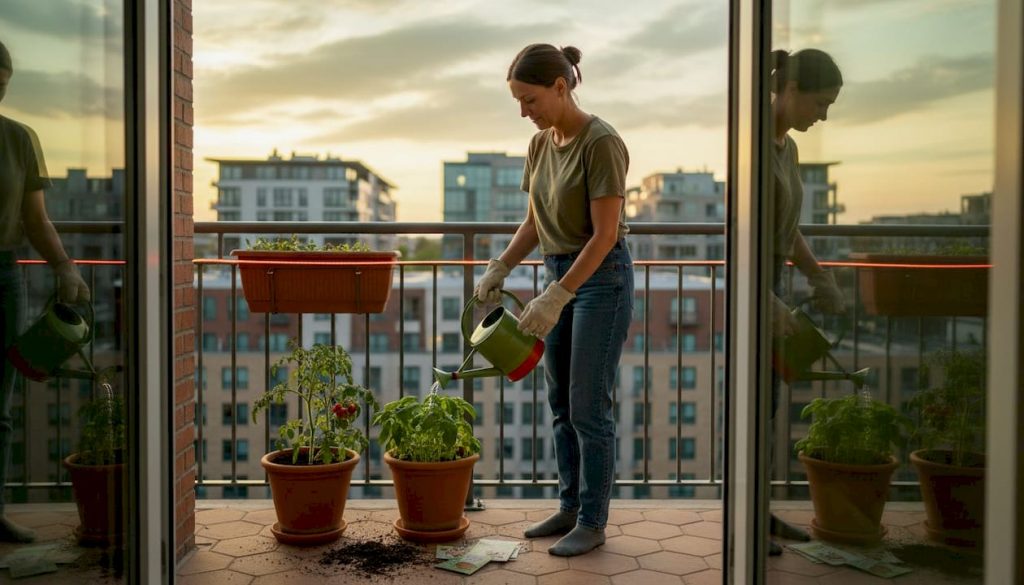
Discover what is urban gardening and how to create your own green oasis in the city. Transform your space with our practical guide!
You don’t need a sprawling backyard or a rural plot to grow your own food and surround yourself with lush greenery. Urban gardening is quietly transforming apartment balconies, rooftops, and tiny city lots into vibrant, productive green spaces all over the world. Whether you’re renting a studio with a single south-facing window or you own a townhouse with a small patio, this guide will walk you through exactly what urban gardening is, how it works, its genuine benefits and real limitations, and how you can start growing today.
Table of Contents
- Understanding urban gardening: Definition and scope
- Urban gardening in action: Adapting to city constraints
- Benefits of urban gardening: More than just food
- Challenges and limitations of urban gardening
- How to get started with urban gardening
- Urban gardening’s bigger impact: Beyond plants in pots
- Transform your space: Smart solutions and next steps
- Frequently asked questions
Key Takeaways
| Point | Details |
|---|---|
| Urban gardening defined | It means growing plants—especially food—within city spaces from balconies to rooftops. |
| Adaptation is key | Success relies on customizing your approach for city-specific light, space, and soil challenges. |
| More than food | Urban gardening boosts community, health, and environment beyond just fresh produce. |
| Know the challenges | Awareness of soil, pollution, and time constraints helps you manage risks and start smart. |
| Easy steps to begin | Small, simple projects can help you learn and enjoy benefits even in tight city quarters. |
Understanding urban gardening: Definition and scope
After introducing the topic, it’s vital to define exactly what urban gardening encompasses and where it typically unfolds in city settings.
Urban gardening is the practice of growing vegetables, fruit, and other plants within urban areas, whether that’s on apartment balconies, in backyards within cities, or in schools and community spaces. That definition is broader and more exciting than most people realize. Urban gardening isn’t just a potted tomato on a fire escape. It’s a whole movement reshaping how cities interact with nature, food, and community.
What makes urban gardening distinct from traditional gardening is largely about context and constraints. A rural gardener works with acres of open land, established soil, and natural rainfall patterns. An urban gardener works with a 50-square-foot balcony, containers, artificial grow lights, and sometimes the constant hum of traffic below. The goals differ too. Rural gardening often focuses on large yield and crop rotation, while urban gardening tends to prioritize personal use, community access, mental well-being, and beautifying limited spaces.
Urban agriculture encompasses cultivating, processing, and distributing food in or around urban areas, with activity taking place on rooftops, balconies, vacant lots, and indoor spaces. Urban gardening fits within this broader ecosystem but is generally smaller in scale and more personal in focus. Think of urban gardening as the neighborhood-level, hands-on version of the larger urban agriculture movement.
Common forms of urban gardening
Urban gardening takes many exciting forms, each suited to different spaces and skill levels:
- Container gardening: Growing plants in pots, planters, window boxes, or fabric grow bags. Perfect for balconies and patios.
- Raised bed gardening: Elevated frames filled with quality soil, ideal for small backyards or rooftops. They make it easy to control soil quality and drainage.
- Vertical gardens: Plants grown on walls or trellises to maximize limited floor space. Ideal for narrow balconies or fences.
- Hydroponics: A soil-free system where plants grow in nutrient-rich water. Can be used entirely indoors and produces surprisingly high yields.
- Community gardens: Shared plots on vacant land or parks where multiple residents grow food and plants together.
| Urban gardening space | Typical use |
|---|---|
| Apartment balcony | Herbs, leafy greens, cherry tomatoes, compact flowers |
| Rooftop | Raised beds for vegetables, fruit trees in large containers |
| Small backyard | Mixed garden beds, fruit bushes, raised planters |
| Window sill | Herbs, microgreens, small succulents |
| Indoor room | Hydroponics, grow-light setups, indoor herb gardens |
| Community lot | Shared vegetable plots, pollinator gardens, food forests |
Pairing your garden with thoughtful outdoor lighting ideas can also make small urban spaces feel magical and extend the time you spend enjoying them in the evenings.
Urban gardening in action: Adapting to city constraints
With the basics and contexts clear, we can now focus on how real urban gardeners adapt their methods to work around common limitations found in cities.
Urban environments present a genuinely different set of challenges compared to rural or suburban settings. Tall buildings cast shadows. Wind on rooftops can be fierce and damaging to delicate plants. Temperatures in cities often run higher than surrounding areas due to the urban heat island effect, where concrete and pavement absorb and radiate heat. And most city dwellers don’t have the luxury of open, nutrient-rich ground soil.
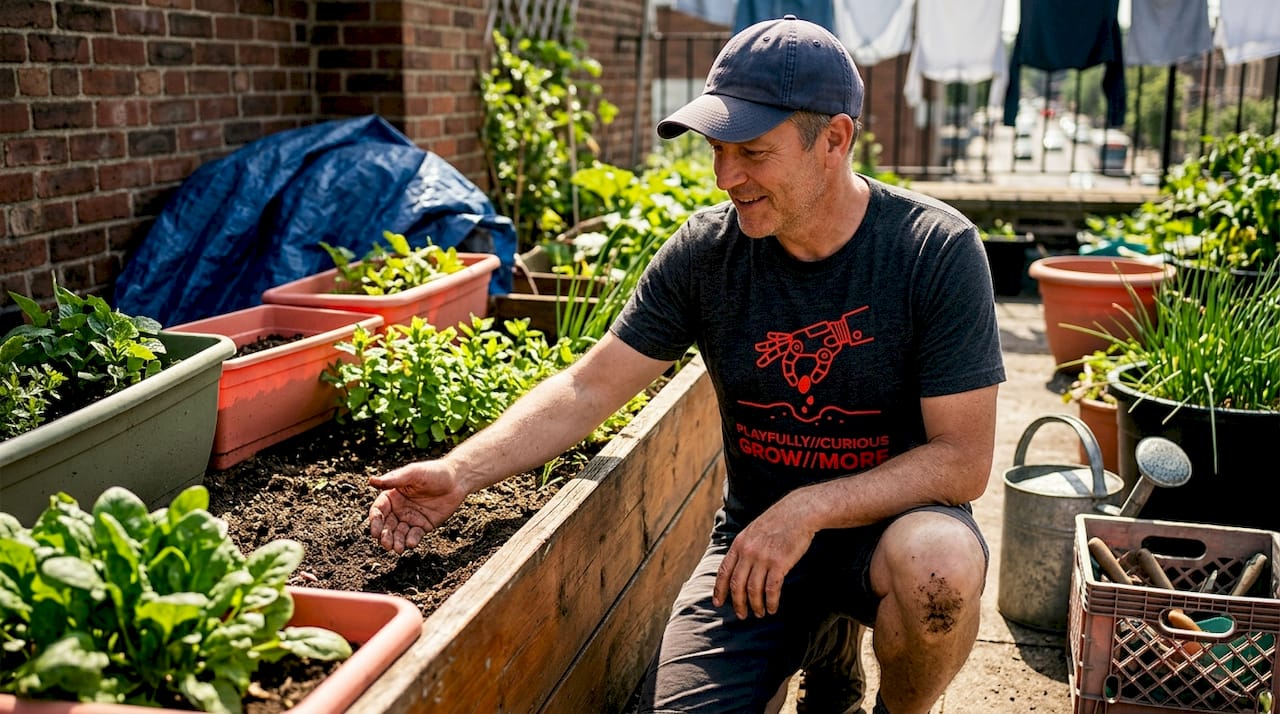
Successful urban gardening depends on adapting to constraints of light, wind, temperature, and moisture, with experts recommending you observe and measure these factors carefully before planting anything. This is the step most beginners skip, and it’s the reason so many first attempts end in frustration.
Steps to assess your microclimate before planting
Understanding your specific conditions is the single most powerful thing you can do before spending money on plants or containers. Here’s a simple process to follow:
- Track sunlight for one week. Note which areas of your balcony, rooftop, or yard receive direct sun and for how many hours. Morning sun and afternoon sun affect plants differently.
- Observe wind patterns. Stand in your gardening space on a breezy day. High-rise balconies can experience dramatically stronger winds than ground-level yards, which can damage plants and dry out containers quickly.
- Check water access. Identify how you’ll water your plants. Rooftop and balcony gardens often require carrying water or installing drip irrigation, which affects which setups are practical.
- Test or assess your surface. If you’re using containers, check weight limits on balconies. If you’re working in a small yard, get a basic soil test kit to check pH and contamination levels.
- Research what thrives in your zone. The USDA Plant Hardiness Zone map helps you understand your climate. Cross-reference that with the light and wind conditions you’ve observed to build a shortlist of ideal plants.
| Factor | Urban challenge | Rural comparison | Adaptation |
|---|---|---|---|
| Sunlight | Shaded by buildings | Generally open exposure | Use mirrors, reflective surfaces, or grow lights |
| Wind | Strong gusts at height | Moderate, more predictable | Install windbreaks, choose sturdy containers |
| Soil quality | Often contaminated or absent | Natural, established topsoil | Use containers or raised beds with fresh mix |
| Space | Severely limited | Extensive open land | Vertical systems, compact and dwarf plant varieties |
| Temperature | Higher due to heat islands | More moderate and stable | Water more frequently, use shade cloth in summer |
Pro Tip: Start with a few easy-to-grow herbs like basil, chives, or mint, or leafy greens like spinach and lettuce, to test your microclimate and container setup before investing in more demanding crops like tomatoes or peppers.
Exploring home improvement tech solutions can also help you automate watering and lighting for your garden, making the day-to-day maintenance much more manageable.
Benefits of urban gardening: More than just food
Knowing how urban gardening works, it’s important to examine what motivates people and communities to take part, revealing why the movement is about far more than just producing food.
The appeal of growing your own herbs and tomatoes is obvious. Fresh, flavorful produce from just outside your door is genuinely satisfying. But urban gardening rewards you in ways that go well beyond the harvest basket.
Personal and environmental benefits
The personal gains from urban gardening are rich and well-documented. Fresh food from your own space means knowing exactly what went into growing it, no pesticide surprises, and no plastic packaging to throw away. Many urban gardeners also report meaningful savings on fresh herbs especially, since grocery store herbs are notoriously expensive relative to how easy they are to grow at home.
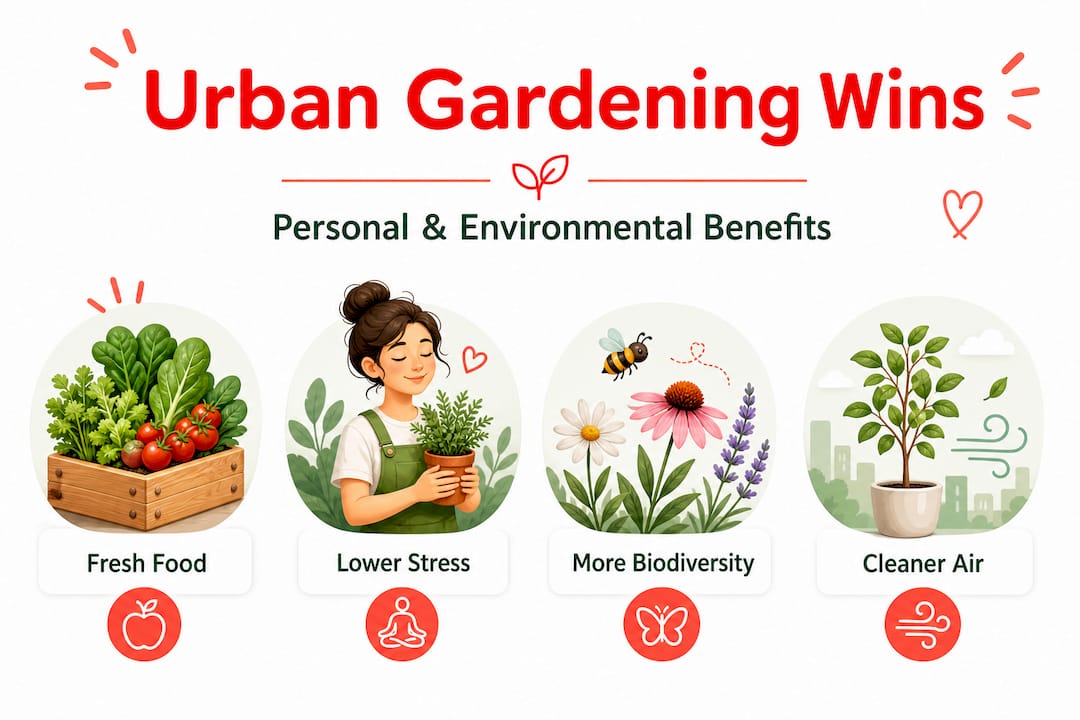
On the environmental side, even a balcony full of containers adds small pockets of biodiversity to the city. Flowering plants attract bees and butterflies, supporting pollinators that cities desperately need. Green surfaces also cool the surrounding air slightly, offering a modest but real counter to the urban heat island effect. Every rooftop garden and planted wall also intercepts rainfall, reducing the volume of stormwater that flows directly into overwhelmed city drainage systems.
Social and mental health benefits
Community gardens provide improved access to healthy foods, mental health benefits, and social cohesion, though outcomes vary by context and the full range of impacts can be difficult to quantify uniformly across different settings.
“Urban gardening and community garden programs show measurable improvements in fresh food consumption, psychological well-being, and neighborhood connection, though the depth and consistency of these benefits can vary depending on location, support resources, and community involvement.”
That variability is actually instructive. It tells us that gardening works best when it’s connected to the specific needs and culture of a community. A garden that fits into its neighborhood thrives; one that’s imposed without community buy-in often doesn’t.
Here are the key social, mental health, and neighborhood benefits that consistent research points to:
- Reduced stress and anxiety: Tending plants, even briefly, has been linked to lower cortisol levels and improved mood.
- Increased sense of purpose: Watching seeds germinate and plants grow creates genuine feelings of accomplishment.
- Stronger neighborhood ties: Community gardens become gathering spaces, breaking down social isolation in dense urban environments.
- Improved food security: Growing even a portion of your own produce adds resilience to your household food supply.
- Environmental education: Gardens spark curiosity, especially in children, about ecology, seasons, and where food comes from.
- Beautification of shared spaces: A well-tended garden transforms dull, unused urban spots into welcoming, attractive areas.
Integrating home improvement ideas like vertical planters and stylish raised beds can make your garden a visual centerpiece of your home rather than an afterthought.
Challenges and limitations of urban gardening
While the benefits are compelling, potential growers need a realistic look at the limits and risks to avoid disappointment and foster safe, successful projects.
Urban gardening is genuinely rewarding, but it comes with a set of challenges that you need to prepare for honestly. Rushing in without awareness of these obstacles is how well-meaning beginners end up with dead plants and wasted money.
Real risks and practical barriers
Urban soils can be low quality and contain contaminants, creating real health risks without precautions, and urban agriculture itself can be expensive and time-intensive, making it difficult to develop and maintain for many households.
Soil contamination is arguably the most serious risk in urban gardening. Many city lots, particularly those near old buildings, roads, or former industrial sites, carry elevated levels of lead, arsenic, or other heavy metals in the ground. Growing root vegetables directly in untested urban soil can expose you to those toxins through the food you eat.
Here are the most common urban gardening barriers to watch for:
- Contaminated soil: Ground soil in cities may contain lead, heavy metals, or chemical residues from past land use.
- Air pollution exposure: Plants in high-traffic areas absorb some air pollutants, and leafy greens grown close to busy roads may accumulate particulates.
- Limited sunlight: Buildings block light predictably during winter months, making year-round growing difficult in many city spaces.
- Cost of setup: Quality containers, potting soil, irrigation systems, and grow lights represent a real upfront investment.
- Pest pressure: Urban gardens attract aphids, whiteflies, fungus gnats, and other pests, sometimes in concentrated ways.
- Landlord or zoning restrictions: Renters may face lease restrictions on rooftop or balcony gardens, and some cities have zoning rules that limit certain types of urban agriculture.
- Weather volatility: Urban heat, frost, and unpredictable weather patterns can be more extreme than in rural areas.
- Time commitment: Even small gardens require consistent watering, monitoring, and maintenance, which can be hard to sustain during busy urban lives.
Pro Tip: Use raised beds or containers with fresh, certified potting mix rather than digging directly into city ground soil. This single step dramatically reduces your contamination risk and gives your plants a much healthier growing environment from day one.
Understanding these challenges isn’t meant to discourage you. It’s meant to help you plan smarter. Checking out real estate insights can also help you understand property and lease considerations if you’re thinking about larger garden installations.
How to get started with urban gardening
Understanding the challenges makes it easier to start strong. Here’s how you can create a thriving garden even in a small urban setting.
Starting an urban garden doesn’t require a massive investment or years of experience. The most successful urban gardeners began small, stayed curious, and learned from their specific environment rather than trying to copy a one-size-fits-all approach.
Practical urban garden methodology typically starts with a careful microclimate assessment, followed by choosing the container and bed types and irrigation approaches that fit those specific measurements and constraints.
Your first steps toward a thriving urban garden
- Observe your space for at least a few days. Track sunlight, wind, and temperature at different times of day before buying anything.
- Set a realistic goal. Decide whether you want fresh herbs for cooking, a few vegetable crops, or a mix of food and ornamental plants. Clarity here shapes every decision that follows.
- Choose your growing method. Match the method to your space: containers for balconies, raised beds for small yards, vertical planters for walls and fences, or a hydroponic kit for indoor growing.
- Start with beginner-friendly plants. Herbs like basil, parsley, and mint are nearly foolproof. Leafy greens like lettuce, arugula, and spinach grow quickly and reward beginners fast. Cherry tomatoes and radishes are also excellent starting points.
- Source quality soil. Buy a good potting mix with adequate drainage, perlite content, and ideally some slow-release fertilizer built in. Never use soil scooped from a city park or an unknown yard.
- Set up a simple watering routine. Container gardens dry out faster than in-ground beds. Plan for daily watering in warm months and use self-watering containers or drip systems if your schedule is irregular.
- Track what works and what doesn’t. Keep a simple notebook or use a free app to log planting dates, watering schedules, and observations. This turns your first season into research for a better second season.
- Connect with a community. Join a local community garden, attend a city gardening workshop, or find an active online forum. Other urban gardeners in your city are your most valuable resource, since they’re working with the same climate, soil challenges, and pest pressures you are.
Pro Tip: Join a local gardening group or an online community specific to your city before you plant anything. Real growers in your area know which plants thrive, which pests to watch for, and where to find the best deals on containers and supplies.
The timeline from first assessment to first harvest can be as short as four weeks for fast-growing lettuce or as long as a full season for peppers and tomatoes. Patience is part of the process, and each harvest, no matter how small, builds your confidence and skill.
Urban gardening’s bigger impact: Beyond plants in pots
Most conversations about urban gardening focus on yields and logistics. That’s understandable, but it misses something genuinely exciting about what’s happening when cities start to grow green.
Urban gardening is not just gardening in a city. It’s a practice designed specifically around urban constraints, including space, light, soil quality, water access, and building realities, and it serves multiple roles at once: food production, beautification, and community engagement wrapped into one activity.
Conventional wisdom treats urban gardening as a compromise, a smaller, less satisfying substitute for real gardening. We’d push back on that strongly. The constraints of urban gardening don’t diminish it. They actually spark innovation. Vertical growing systems, hydroponics, and modular container designs have all been pushed forward by the creativity of urban growers working with limited space. These innovations are now influencing agriculture far beyond city limits.
There’s also something profound about what happens to a person when they grow food in an environment not designed for it. It reframes your relationship with your home, your neighborhood, and your daily routine. A balcony that was once just a storage spot becomes a living, producing space. A vacant city lot transforms into a community meeting place that feeds people and builds relationships simultaneously.
Urban gardeners are also, whether they think of themselves this way or not, environmental advocates in action. Every rooftop turned green, every wall covered in climbing vegetables, and every community plot carved out of an empty lot is a small but real vote for a different kind of city. One that’s more resilient, more connected, and more alive. Transforming your space through gardening isn’t just aesthetic improvement. It’s a statement about how you want to live.
The ripple effects are real. When one household on a block starts growing food visibly, neighbors get curious. Seeds get shared. Conversations start. Communities that garden together tend to be more connected and more engaged overall. That’s a powerful return on a few pots of herbs.
Transform your space: Smart solutions and next steps
Having explored what urban gardening is and why it matters, it’s time to discover even more ways to elevate your urban living experience and make every corner of your space work beautifully for you.
At Lizard’s Lunch, we love helping you find creative, practical ways to make your home and outdoor spaces truly shine. From creative outdoor lighting that makes your garden glow after dark to home improvement tech ideas that automate watering and simplify maintenance, we’ve got guides designed to help your gardening journey go further. You can also explore our ROI-focused home upgrades section for ideas that boost both your enjoyment and your property’s value. Your urban garden is just the beginning of a greener, more vibrant home life.
Frequently asked questions
How is urban gardening different from urban agriculture?
Urban gardening is often small-scale and personal or community-oriented, while urban agriculture can include larger-scale food production, processing, and distribution within or near cities.
Can you start urban gardening without any outdoor space?
Yes. You can use window sills, wall planters, or indoor hydroponic systems, since urban gardening includes growing plants in spaces as small as apartment balconies or indoor school rooms.
What are the safest ways to avoid soil contamination in city gardens?
Use raised beds or containers with clean bagged potting soil, and avoid growing edible plants directly in untested city ground, since urban soils may contain lead and other harmful contaminants.
Does urban gardening really save money on food?
It can meaningfully reduce grocery bills for fresh herbs and salad greens, but actual savings depend on your setup costs, how much you grow, and local produce prices.
How do I deal with pests in an urban garden?
Inspect plants regularly, choose pest-resistant varieties when possible, and use non-toxic options like neem oil, sticky traps, or insecticidal soap to manage common urban pests like aphids and whiteflies.

















Leave a Comment
Your email address will not be published. Required fields are marked with *