
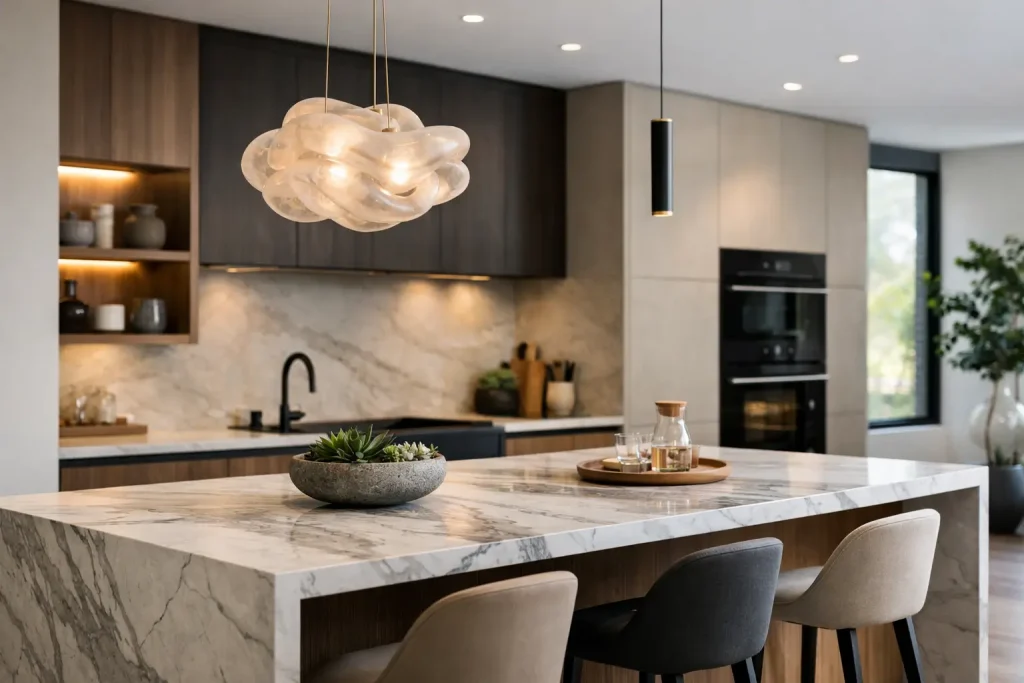
Kitchen design trends 2026 favor warm woods, hardworking layouts, concealed storage, and layered lighting. See what is worth the investment for your home.
A kitchen can look dated surprisingly fast when a renovation chases one viral finish instead of fixing how the room works. The kitchen design trends 2026 point in a more useful direction: spaces with warmth, practical storage, flexible prep zones, and materials that still look good after real meals, real messes, and years of use.
That does not mean every kitchen needs a full remodel. Many of the strongest ideas can be introduced through cabinetry color, lighting, hardware, a better pantry setup, or a countertop choice made with daily maintenance in mind. Here is what is gaining ground and how to decide which changes make sense for your home.
Kitchen Design Trends 2026: Warm, Useful, and Personal
The cool gray, ultra-minimal kitchen has not disappeared, but it is no longer the default aspiration. Homeowners are leaning toward rooms that feel collected, comfortable, and specific to the people who use them. Think wood grain rather than flat white, softer contrast rather than a black-and-white formula, and visible personality without countertop clutter.
The common thread is longevity. A kitchen should support weekday breakfasts, homework at the island, holiday cooking, and the occasional takeout night without demanding constant upkeep. That favors classic forms with interesting details over highly themed looks that may feel tired in two years.
Warm woods return with a refined finish
Natural wood cabinetry is one of the clearest shifts for 2026. White oak remains popular, especially in lighter or medium tones, but walnut, alder, rift-cut oak, and stained woods are also appearing in more kitchens. The look is less rustic cabin and more tailored warmth: clean door profiles, restrained grain, and thoughtful proportions.
Wood is especially effective when a kitchen has hard surfaces everywhere else. Stone, tile, metal, and glass can make a large room feel cold; cabinetry with visible grain restores some visual balance. It also works well as a secondary finish, such as a wood island paired with painted perimeter cabinets.
The trade-off is cost and variation. Real wood veneer and solid wood tend to cost more than laminate, and natural grain will not look perfectly uniform from door to door. For many homeowners, that variation is the point. If you prefer a highly consistent appearance, a quality wood-look alternative may be a better fit.
Color moves toward earthy, complex neutrals
Warm white is replacing stark white, while mushroom, clay, putty, olive, muted blue-green, and deep brown are giving painted cabinets more depth. These colors feel grounded without making a kitchen dark, particularly when paired with pale walls, natural light, and lighter counters.
The safest way to use a stronger cabinet color is not necessarily to put it everywhere. A dark green or brown island can anchor an otherwise light kitchen. Lower cabinets in a deeper shade can hide scuffs better than white, while upper cabinets stay light enough to keep the room open.
Before committing, view samples in morning, afternoon, and evening light. A color that looks soft in a showroom can turn yellow, gray, or nearly black in a particular home. Paint samples are inexpensive; repainting a full cabinet set is not.
Statement stone becomes more intentional
Dramatic veining is still a major kitchen feature, but the best applications feel deliberate rather than excessive. A striking slab on the island, a full-height backsplash behind the range, or a stone shelf detail can add presence without overwhelming the room.
Quartzite, marble, quartz, porcelain slab, and sintered stone each offer a different balance of cost, appearance, and care. Marble develops patina and can etch when exposed to acidic foods. That is appealing to some cooks and frustrating to others. Quartz is generally easier to maintain but may not offer the same natural movement. Porcelain slabs handle heat well and can create a clean, low-grout backsplash, though fabrication requires experienced installers.
For a lower-commitment version of this trend, reserve the showpiece material for a smaller area and use a quieter, durable surface for the busiest prep zones.
Layouts Are Being Asked to Work Harder
A beautiful kitchen that creates traffic jams at the refrigerator is not a successful kitchen. In 2026, layout decisions are increasingly focused on zones rather than one oversized, do-everything island.
A prep zone needs landing space near the refrigerator and sink. A cooking zone needs room for utensils, oils, pans, and a safe place to set hot dishes. A beverage area keeps coffee makers, water glasses, and snacks away from the main cook. Separating these routines can make an average-size kitchen feel noticeably easier to use.
The kitchen island gets more specialized
Oversized islands are not going away, but their purpose is changing. Instead of a giant rectangle with a sink in the center, homeowners are using islands for one clear job: uninterrupted prep space, casual dining, baking, serving, or storage.
If an island includes seating, leave enough aisle space for stools and people moving behind them. In a tight layout, a smaller peninsula or a narrow worktable may function better than forcing in a massive island. The right choice depends on circulation, not just square footage.
Rounded corners and softened edges are also appearing more often. Curved island ends, radius cabinet details, and arched openings take some of the boxiness out of modern kitchens. They can be particularly helpful in homes with young children, though custom curved cabinetry may raise the budget.
Pantry storage becomes a design priority
Deep, disorganized cabinets are losing favor. Pullout pantry units, drawer inserts, appliance garages, tray dividers, and dedicated recycling drawers make a kitchen calmer because frequently used items have a clear home.
Concealed storage is most valuable when it solves a known annoyance. A mixer lift makes sense for an enthusiastic baker; it wastes money for someone who uses a mixer twice a year. Likewise, an appliance garage is useful only if it is wide enough, powered safely, and easy to access. Start by noticing what stays on your counters for a week. That is the storage problem worth solving.
Lighting Gets Layered, Not Louder
One ceiling fixture cannot adequately light a kitchen. The most functional rooms combine ambient light for overall visibility, task lighting for prep work, and accent lighting for atmosphere.
Under-cabinet lighting has become close to essential, especially with darker counters or cabinetry. It reduces shadows on the work surface and makes the kitchen more inviting after sunset. Toe-kick lighting and lit glass cabinets can add a polished effect, but they are optional. Prioritize work areas before decorative glow.
Pendant lights remain popular over islands, although oversized fixtures are becoming more selective. In a kitchen with a low ceiling or a busy view, smaller pendants, flush mounts, or sculptural semi-flush fixtures can provide style without blocking sightlines. Install dimmers wherever possible. Bright light is useful for chopping; softer light is better when the kitchen becomes the place everyone gathers after dinner.
Details That Make a New Kitchen Feel Less Generic
The smaller choices are where personal taste can show up without making a remodel feel like a short-lived trend. Mixed metals are common, but they work best when there is a clear hierarchy. For example, use unlacquered brass for cabinet hardware and a darker bronze or black for lighting, rather than mixing four finishes at random.
Decorative range hoods are also becoming a focal point. Plaster-like finishes, wood cladding, fluted details, and painted hoods can break up a wall of cabinetry. Ventilation performance still matters more than the finish, especially for households that cook frequently. Confirm that the hood is appropriately sized, vents effectively, and is not so loud that nobody wants to turn it on.
Backsplashes are stretching higher, often to the ceiling or around windows, but small-format tile has not vanished. Handmade-look tile, vertical stacking, soft checkerboard patterns, and lightly textured finishes offer character. Just remember that highly textured tile and very tight grout lines require more cleaning near a range.
What to Skip if You Want Staying Power
Not every trend deserves a permanent place in a renovation budget. Extremely specific novelty shapes, overly glossy finishes, and open shelving with no nearby closed storage can look great in photos but become demanding in daily life. Open shelves collect grease and dust, and they require attractive, matching items to stay visually calm.
Smart features need the same scrutiny. Touchless faucets can be convenient when hands are messy, while integrated charging drawers can reduce counter clutter. But proprietary screens, app-only controls, and complicated appliance ecosystems may be less appealing when repairs are needed. Choose technology that improves a task, not technology that adds another setting to manage.
How to Use 2026 Kitchen Trends Without Overdoing Them
Start with the parts of your current kitchen that slow you down. If storage is the daily frustration, spend on drawers and pantry organization before buying dramatic pendants. If the room feels cold, wood accents, warmer paint, and layered light can deliver more impact than replacing every cabinet.
For a major renovation, invest first in layout, cabinetry construction, ventilation, lighting, and counters that suit your maintenance tolerance. These are costly to change later. Save the more trend-sensitive choices for hardware, wall color, stools, and a distinctive light fixture.
The most satisfying 2026 kitchen will not be the one that copies every showroom display. It will be the one where the morning coffee routine, weeknight dinner rush, and Sunday cooking project all have a little more room to happen.
















Leave a Comment
Your email address will not be published. Required fields are marked with *