
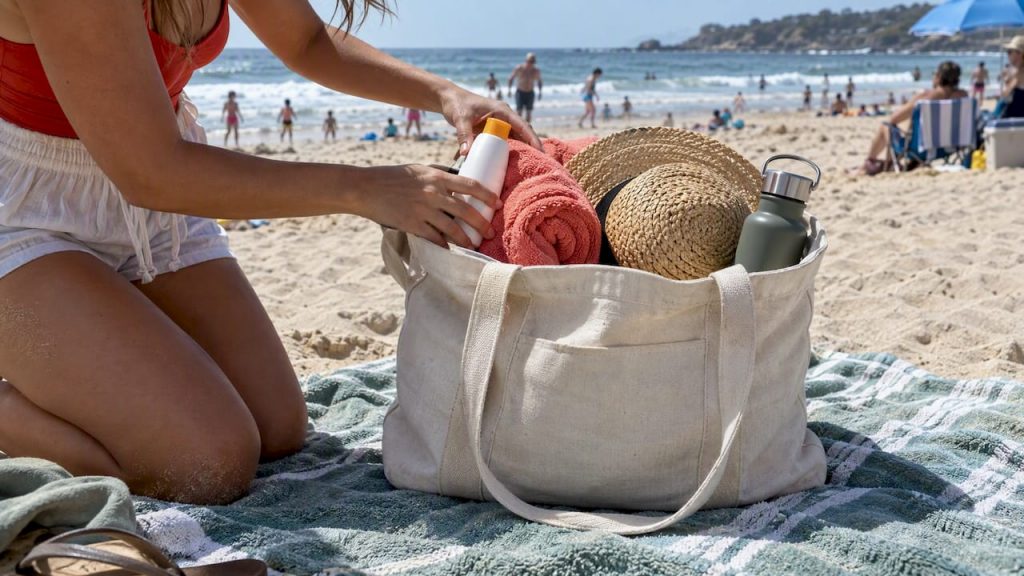
A practical beach packing list for Canadian travellers: gear, clothing, sun safety, kids’ essentials and carry-on rules, so nothing gets left behind.
The best beach days start at home, with a bag that already holds everything you will want by 2 p.m.: shade, water, sun protection, a dry towel and a snack that has not been crushed. This beach packing list covers a single afternoon at the lake, a family week on the coast and a flight to somewhere warm. It is built around what Canadian health sources say about sun and water safety, so the practical items sit beside the fun ones.
TL;DR
- Pack in layers of protection: shade, a hat, UPF clothing, sunglasses and a broad-spectrum, water-resistant sunscreen of SPF 30 or higher.
- Check the UV Index, not just the temperature. Sand and water reflect UV rays, and cloudy days still count.
- Bring more water than you think you need, plus easy snacks, a cooler and a trash bag.
- With kids, add a sun hat, swim layers and a plan for constant adult supervision near the water. Flotation toys are no substitute.
- Flying? Liquids in carry-on are limited to 100 ml each, so put full-sized sunscreen in checked baggage.
Table of Contents
- First, decide what kind of beach trip you are packing for
- The beach gear that makes the day comfortable
- What to wear and what to pack in your suitcase
- Sun protection: the part of the list you cannot skip
- Water, snacks and staying cool
- The family beach packing list
- Packing a beach bag for a day trip
- Flying to the beach: what to pack in your carry-on
- Our perspective: pack less stuff, more protection
- Work with us
- Common beach packing mistakes to avoid
- Frequently asked questions
- Sources
First, decide what kind of beach trip you are packing for
One list does not fit every trip. A two-hour dip at a city beach needs a tote. A week at a resort needs a suitcase and a plan. Before you pack, answer three questions:
- How long will you be there? A few hours means one bag. A full day means shade, food and a way to haul it all.
- How far is the car? If you are walking a long boardwalk or dune path, weight matters. A wagon or a backpack can change the whole day.
- Who is coming? Babies, toddlers and school-age kids each add their own gear, covered in the family section below.
Once you know the answers, use the lists below as a menu. Tick what applies and skip the rest.
The beach gear that makes the day comfortable
This is the hardware: the things that turn a patch of sand into a comfortable spot.
Shade and seating
- Beach umbrella or pop-up shade tent. Shade is your first line of sun defence, not your last. A tent with sand pockets or stakes holds up better in wind than an umbrella with a thin pole.
- Beach chairs. Low-slung chairs are easier on the back than sitting on a towel for hours. Pick ones with a shoulder strap.
- Large beach blanket or sand-free mat. Mesh or tightly woven mats let sand fall through instead of hiding in your lunch.
- Towels. One per person, plus one spare for the car ride home. Quick-dry microfibre towels pack smaller than cotton ones.
Carrying and hauling
- A big tote or mesh bag for towels and toys that you do not mind getting sandy.
- A dry bag or zippered pouch for phones, keys and wallets. Even a splash from a wave or a leaking bottle can ruin a phone.
- A beach wagon or folding cart, worth its space if you have kids, a cooler and a tent to move across soft sand.
Food and drink
- An insulated cooler with ice packs. Frozen water bottles do double duty as ice packs and cold drinks later.
- Refillable water bottles. More on how much below.
- Snacks that survive heat: fruit, sandwiches kept cold, crackers, nuts (check for allergies and local rules first), cut veggies.
- Reusable utensils, napkins and a trash bag. Leave the beach cleaner than you found it.
- A small container of wipes or a jug of fresh water for rinsing hands and feet before the car.
Fun and downtime
- Sand toys, buckets and small shovels.
- A soft flying disc, paddle ball set or beach ball.
- A book, an e-reader in a sealed pouch or a downloaded playlist.
- Snorkel and mask if the water is clear enough where you are going.
- A portable speaker, kept at a courteous volume.
What to wear and what to pack in your suitcase
Beach clothing is simple, but a few details separate a comfortable day from a sunburnt one.
Swim and sun layers
- Two swimsuits or pairs of trunks per person. One can dry while the other is on. Wet fabric left in a bag gets smelly quickly.
- A rash guard or UV swim shirt. It protects shoulders and backs, the spots that burn first, and spares you from reapplying sunscreen over as much skin.
- A cover-up. A loose linen shirt, kimono or light dress works for the walk to lunch.
- A wide-brimmed hat. Canada’s UV guidance suggests a hat that covers your face and ears when the UV Index is moderate to high, along with tightly woven clothes, such as linen, over your skin.
- UV-protective sunglasses. Look for a label that says they block UV, and keep a hard case in the bag.
- Water shoes or sandals. Hot sand and rocky shores are tough on bare feet.
If you want clothing that you will actually keep wearing past the first hour, our guide to lab-tested UPF sun protection clothing walks through what to look for in fabrics and fit.
Dry clothes for after
- A change of underwear and a dry top for each person.
- A light sweater or hoodie. Evenings near water cool down fast, especially on Canadian coasts and lakeshores.
- Flip-flops for the car, so you are not tracking sand through the footwell.
For a beach vacation, add these
- Two or three casual outfits for evenings.
- Pajamas, a light jacket and one pair of long pants.
- A small day pack or tote for excursions.
- A reusable tote for wet swimsuits on the way back to the room.
- Phone charger, power bank and a waterproof phone pouch.
Sun protection: the part of the list you cannot skip
It is easy to treat sunscreen as one more item on the checklist. It deserves more care than that. The Government of Canada notes that most cases of skin cancer are preventable, and a beach is where exposure runs high.
Sunscreen: what to buy and how to use it
- Choose broad-spectrum, water-resistant, SPF 30 or higher. Health Canada guidance says to apply it about 30 minutes before going out and to reapply generously every two hours, and straight after swimming, sweating or towelling off.
- Cover the forgotten spots: ears, the tops of feet, the back of the neck, the part in your hair and the backs of knees.
- Pack a lip balm with SPF. Lips burn too.
- Patch test new products, especially for kids. HealthLinkBC advises that mineral sunscreens with zinc oxide or titanium dioxide are often a gentler option for sensitive skin.
If you are unsure which product suits your skin or your child’s, ask a pharmacist or your family doctor before the trip.
Check the UV Index, not just the temperature
A cool, breezy day can still bring a high UV Index. The Government of Canada recommends limiting time in the sun when the index is 3 or higher, and peak hours run from about 11 a.m. to 3 p.m. Look up the local UV forecast before you leave, then plan around it. That could mean a morning swim, a long lunch in the shade and an evening walk.
Sunscreen is also just one layer. Health sources are clear that a high SPF does not mean you can stay out longer. Combine it with shade, clothing and a hat. Intentional tanning is never a safe choice, so leave the tanning oil at home.
Your sun-smart kit in one place
| Item | Why it earns its spot |
|---|---|
| Broad-spectrum SPF 30+ sunscreen | Core skin protection, reapplied every two hours |
| SPF lip balm | Protects lips that sunscreen often misses |
| Wide-brimmed hat | Shades face, ears and neck |
| UV-blocking sunglasses | Protect eyes from glare off sand and water |
| UPF shirt or rash guard | Covers skin without constant reapplication |
| Shade tent or umbrella | Lowers exposure during peak hours |
| Aloe or after-sun gel | Soothes skin if you do catch too much sun |
Water, snacks and staying cool
Heat sneaks up at the beach, with a breeze that hides how much you are sweating. Bring far more water than feels necessary. For children aged one and older, HealthLinkBC recommends 1 to 1.5 litres (4 to 6 cups) of water a day in hot weather, and notes that thirst is not a reliable signal. Offer fluids regularly instead of waiting for a child to ask. On a beach day, adults and teens will likely need more than that, so pack accordingly.
The same guidance says to skip carbonated, caffeinated and sugary drinks, which do not hydrate as well. Keep the juice boxes as a treat and send water along as the main drink.
A few practical tips:
- Freeze half your water bottles the night before.
- Keep the cooler in the shade and open it as little as possible.
- Pack salty snacks along with fruit. Both help when you have been in the sun.
- Bring a small towel to dampen and drape over your neck on hot afternoons.
- Check local rules on alcohol and glass before you go. They vary by beach and municipality, and bylaws can change.
The family beach packing list
Beach days with kids are joyful, noisy and a little chaotic. A good bag keeps the chaos manageable.
For babies and toddlers
- Wide-brimmed sun hat with a chin strap, and a long-sleeved UV top
- Swim diapers and a changing mat
- Extra diapers and wipes, plus a sealable bag for dirty ones
- A small pop-up tent for naps in the shade
- Bottles, formula or snacks kept cold
- A lightweight stroller or wagon for the walk. If you are still choosing one, our guide to how to choose a baby stroller lays out the features that matter.
Packing for little ones follows the same logic as any childcare bag: spare clothes, comfort items, labelled bottles and a routine. If it helps to see how a nursery organizes this kind of kit, this nursery packing checklist is a handy reference for thinking through spare clothing and daily essentials.
For school-age kids
- Two swimsuits each and a rash guard
- Goggles, snorkels or a boogie board if you will be near gentle waves
- Sand toys, a net bag and a bucket for shell hunting
- A towel they can claim as their own
- A reusable water bottle with a name on it
- A small waterproof bag for their own treasures
If you are replacing outgrown swim gear, our tips for shopping for children’s clothes online can save you a few returns.
Water safety belongs on the list too
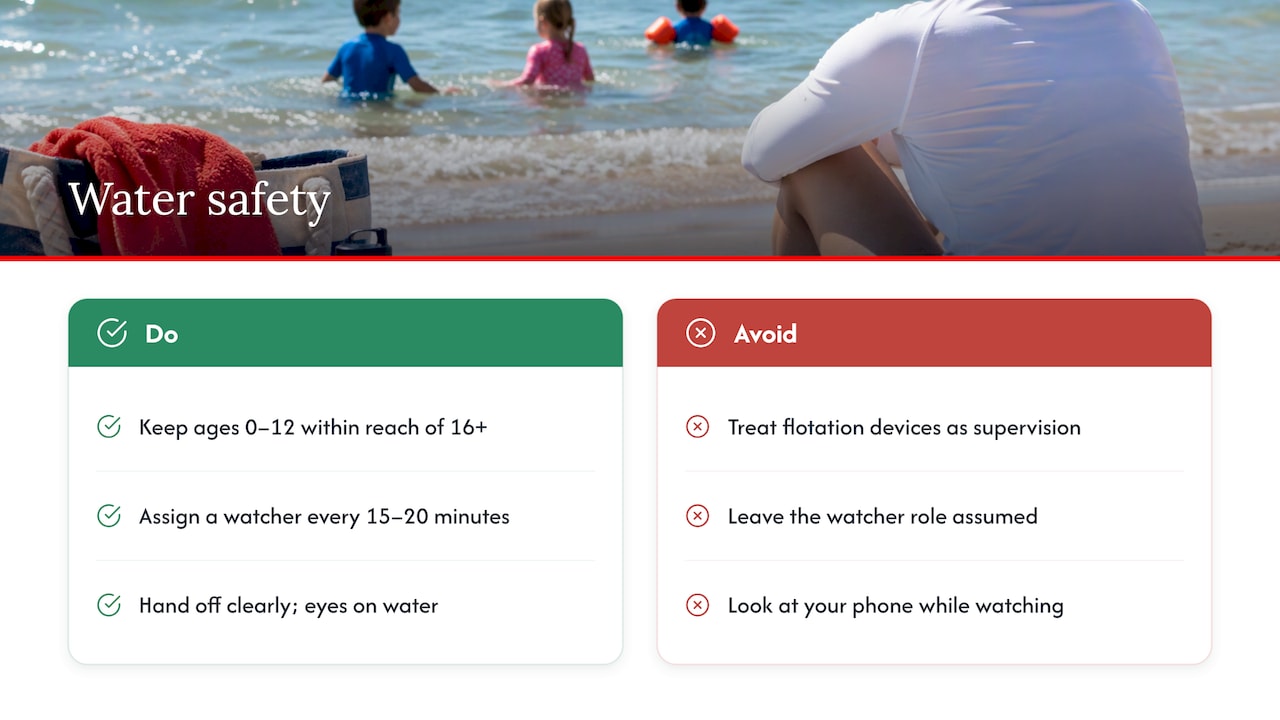
This is the one item you cannot buy. HealthLinkBC notes that a young child can drown in as little as 2.5 cm (1 inch) of water, and that flotation devices and baby seats are not substitutes for supervision. Their recommendation is that children aged 0 to 12 stay within arm’s reach of an adult who is at least 16 years old whenever they are near water.
In practice, it helps to agree on who is the designated watcher for each 15 or 20 minutes, so the job is never assumed. Hand off clearly, phone down, eyes on the water.
Model the habits you want them to copy
Canadian health experts point out that children copy what adults do. If you put on a hat, sit in the shade and reapply sunscreen without fuss, they are far more likely to do the same. Make it part of the fun: a hat-and-shades photo before you leave the car works wonders.
Packing a beach bag for a day trip
Sometimes you just want the short list. Here is the lean version for a single outing.
- [ ] Sunscreen and SPF lip balm
- [ ] Hat and sunglasses
- [ ] Towels
- [ ] Swimsuits and a spare set
- [ ] Water bottles, frozen if possible
- [ ] Snacks and a small cooler
- [ ] Shade tent or umbrella
- [ ] Blanket or mat
- [ ] Dry bag for phone and keys
- [ ] Trash bag
- [ ] Cover-up, sweater or hoodie
- [ ] Sandals or water shoes
- [ ] Basic first aid items: bandages, antiseptic wipes, tweezers
- [ ] Cash or card for parking
If the beach is part of a bigger outing, our roundup of Toronto day trips for every kind of traveler can help you pair a swim with something else worth seeing nearby.
Flying to the beach: what to pack in your carry-on
A beach vacation by plane changes the packing math. Here is what to think about.
Liquids and sunscreen
In carry-on bags, liquids, aerosols and gels are limited to containers of 100 ml or 100 g. Full-sized sunscreen, aloe gel and after-sun lotion are best kept in your checked bag, where you can bring the size you need. Check the official page on what you can’t bring on a plane before you fly, since rules change. It also lists restrictions on inorganic powders such as baby powder, which many beach travellers overlook.
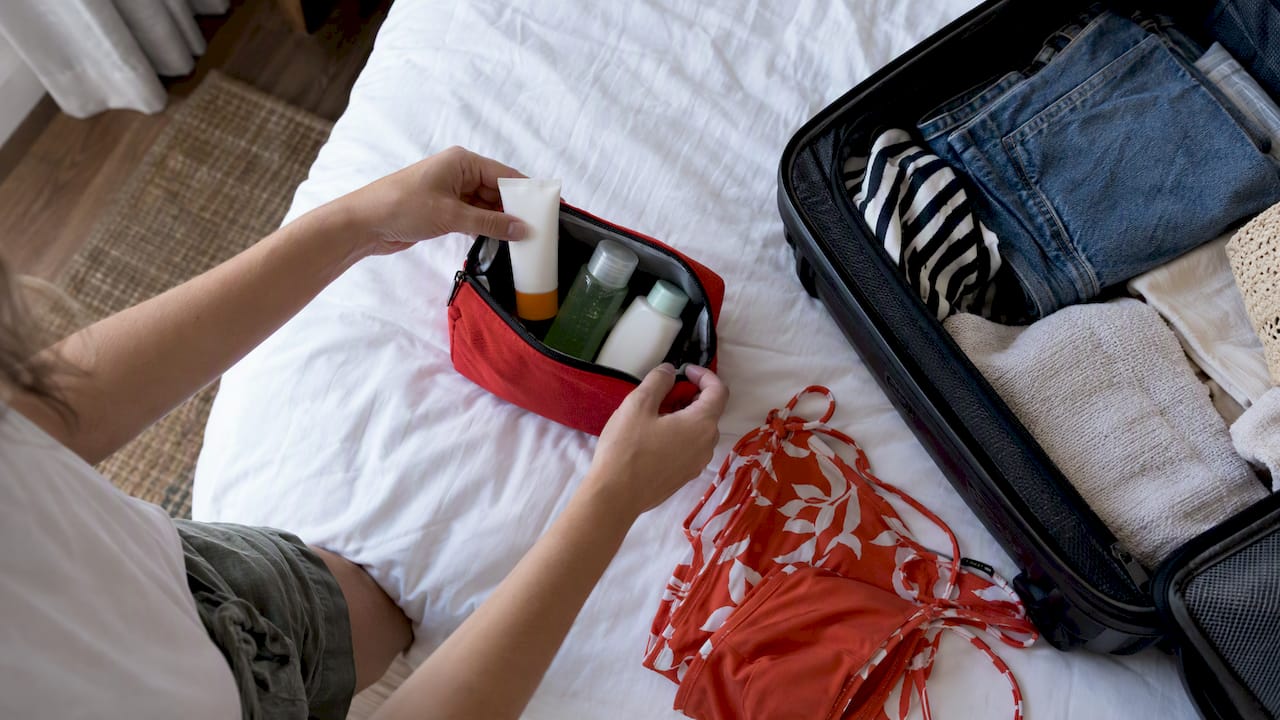
If you are travelling with only a carry-on, buy sunscreen at your destination or decant into small containers. Our guide on how to pack a carry-on efficiently shows how to fit a beach week into one bag.
What belongs in your personal item
- Passports and travel documents
- Medications in original packaging
- A swimsuit and a change of clothes, in case your checked bag is delayed
- Sunglasses, a hat and a small SPF lip balm
- Phone, charger and power bank
- An empty reusable water bottle to fill after security
- Snacks for the plane
- Any baby essentials you cannot go without
Toiletries for the suitcase
- Shampoo, conditioner and body wash, or hotel-supplied versions
- Deodorant, toothbrush and toothpaste
- Aloe vera or after-sun gel
- Moisturizer and lip balm with SPF
- Hair ties and a wide-tooth comb
- Any prescription or over-the-counter medications you use
- Insect repellent, if your destination calls for it
Our perspective: pack less stuff, more protection
We cover travel, health and gear across our site, and the beach is one place where we see people over-pack the wrong things. The tote is stuffed with toys and speakers, yet the hat is forgotten and the water runs out by noon. Our advice is to build your list in order of risk: sun, water, shade and food first, comfort second, fun third.
We also believe a packing list should be a living document. After each trip, note what you never touched and what you wished you had. Within two or three outings you will have a personal checklist that beats any generic one, including this one. Keep it on your phone, and edit it every season.
Finally, we like to pack for the whole day, not the first hour. The morning is easy. It is the 3 p.m. slump, with hot sand, tired kids and a drained cooler, that tells you whether your bag was truly ready.
— Alexander
Work with us
If you run a travel, outdoor or family brand and want to reach readers who are planning trips like this one, we offer banner ads and guest post opportunities. You can see the details on our advertise with us page.
Common beach packing mistakes to avoid
- Relying on sunscreen alone. It works best alongside shade, clothing and avoiding peak hours.
- Skipping reapplication. Health Canada guidance calls for it every two hours and after water contact.
- Forgetting the UV forecast. Cloud cover does not mean low UV.
- Packing one swimsuit. Damp fabric and a long afternoon are a poor match.
- Bringing too little water. Plan for more than you think you will drink.
- Leaving valuables on the sand. Use a dry bag you keep within sight, or leave them at home.
- Trusting floaties. They are toys, not safety equipment.
- Forgetting a trash bag. You will want it before you leave.
Frequently asked questions
What are the absolute essentials to bring to the beach?
Sunscreen with SPF 30 or higher, a hat, sunglasses, towels, plenty of water and some form of shade. Add a change of clothes and a bag for trash. Everything else, from toys to speakers, is optional.
What should I pack for a family beach day with young kids?
Bring a sun hat and UV swim top for each child, sunscreen you have patch tested, swim diapers if needed, spare clothes, water and snacks. Add a shade tent and a wagon or stroller for hauling. Most important, plan for an adult within arm’s reach of every child near the water.
Can I bring sunscreen in my carry-on?
Only in containers of 100 ml or 100 g or less, inside your liquids bag. Larger bottles belong in checked baggage. Always confirm current rules on the Transport Canada page before you fly.
How often should I reapply sunscreen at the beach?
Health Canada guidance says to reapply generously every two hours, and right after swimming, sweating or drying off with a towel. Water-resistant formulas still need reapplying. If you have questions about a skin condition or a reaction, talk with your doctor or pharmacist.
What should I pack for a beach vacation versus a day trip?
A day trip needs the essentials: sun protection, water, food, shade and a towel. A vacation adds clothing, toiletries, documents, chargers and evening outfits. Pack your day bag separately within your luggage so it is ready the moment you arrive.
Sources
- Skin cancer, Canada.ca
- Sun safety basics, Canada.ca
- Ultraviolet (UV) index and sun safety, Canada.ca
- Sun Safety for Children, HealthLinkBC File #26
- Safety for Infants and Young Children During Extreme Heat, HealthLinkBC File #35b
- Child Safety: Preventing Drowning, HealthLink BC
- What you can’t bring on a plane, Transport Canada











Leave a Comment
Your email address will not be published. Required fields are marked with *