
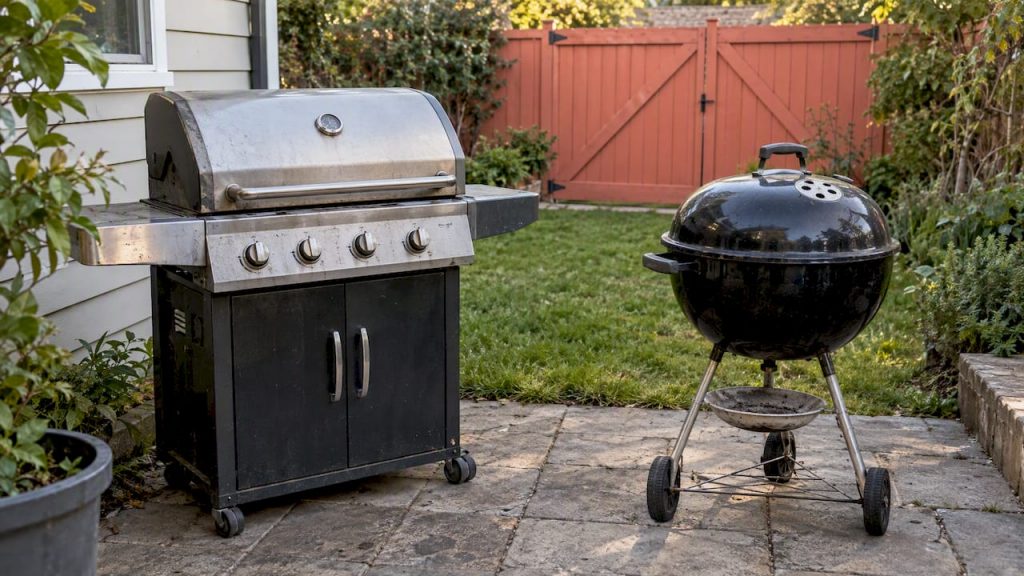
Gas or charcoal? Compare flavor, real fuel costs in Canada, cleanup, health and safety, plus where pellet grills fit, so you can choose with confidence.
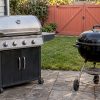
Choose gas if you want dinner on the table in 15 minutes with almost no cleanup. Choose charcoal if you love tending a fire and want the deepest sear and the most flexible heat zones. Both cook a fantastic burger. The real question is how you cook on a Tuesday night in March, not on the one perfect July Saturday you picture when you shop.
This guide walks through the differences that matter in a Canadian backyard: flavor (and where it really comes from), what fuel costs, how much work each grill demands, what the science says about smoke and health, and where pellet grills fit in the picture. By the end you will know which grill suits your habits.
TL;DR
- Gas wins on speed, control and cleanup. It is the better weeknight grill and the safer choice for your lungs.
- Charcoal wins on searing power, low-and-slow flexibility and the ritual of cooking over fire. It costs less to buy but asks more of you every time.
- Flavor comes mostly from drippings vaporizing on hot surfaces, not from the fuel itself. Wood chips add real smoke to either grill.
- Fuel costs hinge on one habit: refill your propane tank instead of exchanging it.
- Pellet grills sit between the two: set-and-forget convenience with wood-smoke flavor, at a higher price.
Table of Contents
- The quick comparison
- Flavor: what actually makes grilled food taste grilled
- Heat, control and searing
- What each grill really costs in Canada
- Cleanup and upkeep
- Health and safety: what the research says
- Where pellet grills fit
- Our perspective
- How to choose: a short decision guide
- Work with us
- FAQ
- Sources
The quick comparison
Here is the whole decision on one screen before we dig into each row.
| Factor | Gas grill | Charcoal grill |
|---|---|---|
| Time to cook-ready | About 10 minutes of preheating | Roughly 15 to 25 minutes to get coals ashed over |
| Temperature control | Dial, instant | Vents and coal placement, takes practice |
| Searing | Very good with a proper preheat | Excellent, hotter and more intense |
| Low-and-slow cooking | Possible, but limited smoke | Strong, especially with a two-zone setup |
| Typical starting price | Around $450 for a quality model | Around $200 |
| Cleanup | Grease tray and grates | Ash disposal plus grates |
| Inhalation exposure | Much lower | Much higher |
| Best for | Frequent, fast cooking | Weekend cooks who enjoy the process |
The price figures come from a Canadian consumer roundup of grill and propane costs, and they describe where quality models tend to start, not a ceiling. You can spend far more on either type.
Flavor: what actually makes grilled food taste grilled
The most common belief in this debate is that charcoal itself gives food a smoky taste. The science is a little different. Both charcoal and propane are carbon-based fuels, and the signature grilled flavor comes mostly from fats, proteins and sugars dripping onto the hot surface and vaporizing. That vapor rises and coats the food. Researchers who studied barbecue emissions describe this in their analysis of PAHs and BTEX from grills.
What does charcoal change? It offers more glowing surface area for drippings to hit, which tends to produce more assertive smoke. Burning lump or briquettes also releases a wider range of flavor compounds than propane does. That is why a steak off a charcoal grill often tastes bolder, and why many people never switch.
But gas is not flavorless. A properly preheated gas grill with clean grates browns meat well, and the drippings hit the burner covers or flavor bars and flare up just as they do over coals, only less so. If you want distinct smokiness from a gas grill, add a foil pouch or a small smoker box of wood chips. The same trick works on charcoal when you want something beyond the basic fire.
Flavor without the fuel debate
Marinades matter nearly as much as the fire. A bright, acidic mix with a little sugar caramelizes quickly and gives you char on any grill. If you like a boozy, citrusy twist, this tequila lime steak marinade is one way to get deeper crust and brightness before the meat even hits the grates. Pat the steak dry before it goes on, since surface moisture steams instead of sears.
Heat, control and searing
Gas gives you a knob. Turn it, and the burner responds within a minute. You can run one side on high and the other on low, close the lid, and walk away for a few minutes without the temperature wandering. For chicken thighs, vegetables, fish, sausages and anything that benefits from steady heat, that predictability is a real advantage.
Charcoal gives you a fire to manage. You control heat by how much fuel you light, how you pile it and how you open the vents. The reward is intensity. A full chimney of coals spread under the grate can deliver a harder sear than most backyard gas grills, and a banked pile on one side makes a natural two-zone setup: sear over the coals, then slide the meat to the cool side to finish gently.
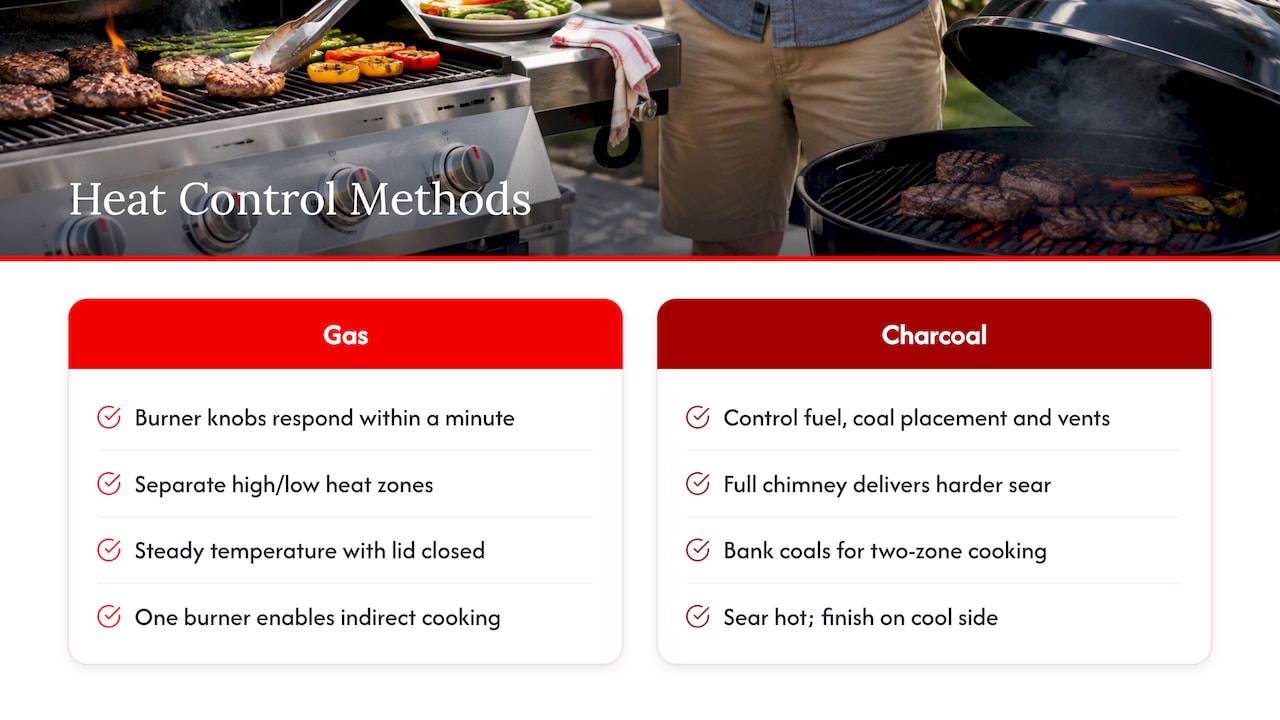
For low-and-slow work like ribs, pork shoulder or a whole chicken, charcoal is more natural. You add a few chunks of hardwood, set the vents, and hold 110 to 135 degrees Celsius for hours. It takes attention, but the reward is a long, smoky cook. Gas can do indirect cooking too, using only one burner, though it holds smoke less convincingly.
Two cooking scenarios
A Wednesday after work. You get home at 5:45, the kids are hungry, and you want chicken and corn. With gas you light it, scrape the grates, and you are cooking by 6:00. With charcoal you are lighting a chimney while everyone circles the kitchen. Gas wins by a mile.
A Sunday afternoon with friends. You have two racks of ribs, a cold drink, and nowhere to be. Charcoal turns the cook into the event. This is where the extra effort pays off.
What each grill really costs in Canada
Sticker price is only the start. Here is how the numbers break down.
Buying the grill
A charcoal setup can start around $200, while quality gas grills tend to begin around $450, according to that same Canadian cost roundup. At the budget end, a gas grill often means thin metal, uneven burners and a shorter life. If you can only afford a bargain gas grill, a sturdy charcoal kettle usually outlasts it.
Buying the fuel
Propane price depends on how you fill the tank. As of the May 2026 survey, an exchange at a typical gas station or hardware store runs $28 to $35, while refilling the same tank at a warehouse club or truck rental depot lands between $14 and $18, per the RedFlagDeals price check. Another national overview from PiggyBank puts a typical 20 lb refill between $20 and $30 across Canada, and notes it fluctuates through the year with the price of propane itself.
So the exact figure depends on where you live and where you fill. What stays consistent is the gap between refilling and exchanging.
The exchange trap
Many exchange cabinets hand you a tank holding 15 lb of propane, not the full 20 lb that a refill provides. You pay more for less. The same source suggests you refill your own tank at a dedicated station instead of exchanging, unless the tank has reached its 10-year certification limit and needs replacing. Look at the date stamped on the collar of your cylinder to see where yours stands.
A simple rule of thumb: if you grill weekly through the season, a refill habit saves you real money across a summer. If you grill twice a year, the difference is small and convenience may be worth it.
Charcoal over a season
Charcoal is sold by the bag, and a single long cook can use a good share of one. Prices vary widely by brand and by briquette versus lump. Because you burn through fuel on every cook, heavy users often find the gap in upfront price shrinks over time. Light users, who grill a handful of times a summer, will likely come out ahead with charcoal.
Cleanup and upkeep
Gas grills are cleaner day to day. Brush the grates while they are hot, empty the grease tray periodically, and give the burners a once-a-season check. Grease buildup is the main hazard, so do not skip the tray.
Charcoal means ash. You have to let it cool completely, which takes hours, then dispose of it safely in a metal container. Ash left to sit in a kettle gets damp and corrodes the bottom. It is not a chore most people mind, but it is a chore.
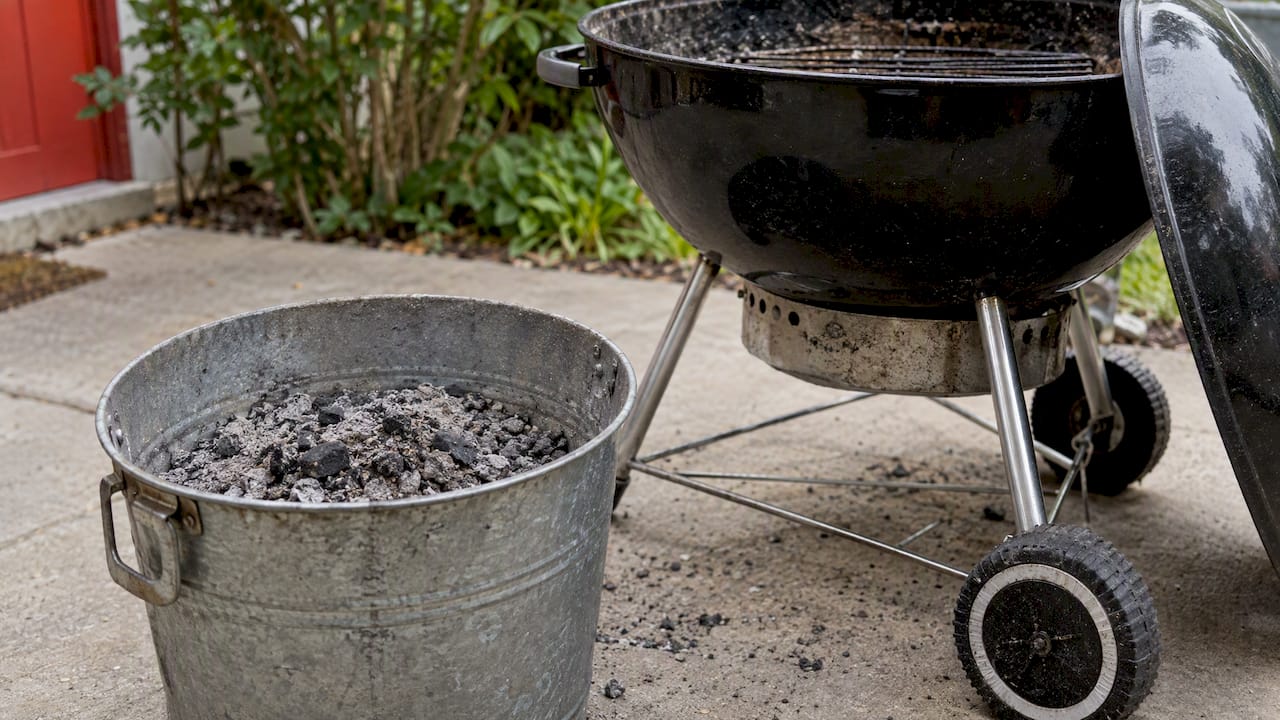
Both types last longer when you keep them covered and clean the grates after each cook.
Health and safety: what the research says
This is where the two grills differ most, and it is worth being plain about it.
Smoke and combustion byproducts
Studies of barbecue emissions find that burning charcoal, especially briquettes, releases far more polycyclic aromatic hydrocarbons (PAHs) and BTEX compounds (benzene, toluene, ethylbenzene and xylenes) than gas. In the peer-reviewed study on inhalation risk, summed PAH concentrations for gas grills were reported below 0.002 micrograms per cubic meter, versus as high as 21.52 for charcoal briquettes. The authors note that charcoal emissions can exceed commonly used lifetime cancer risk thresholds, while propane emissions were negligible by comparison. Briquettes often contain binders and additives that are not disclosed, and lump charcoal varies in purity.
That does not mean an occasional charcoal cookout is dangerous for everyone. Exposure depends on how often you cook, how close you stand, the wind, and how fully the fuel is burning. The study notes that fully burning fuel helps protect people from inhalation exposure. But if you have asthma, lung disease or young children around the grill, gas is the more cautious choice, and your family doctor can tell you what applies to your situation.
Carbon monoxide: never indoors
Both grill types produce carbon monoxide. Health Canada’s page on carbon monoxide explains that the gas is odorless, tasteless and colorless, and that only a CO alarm can detect it. Charcoal and gas grills are for open outdoor spaces only: not garages, not covered porches with walls on three sides, not tents. Keep the grill well away from doors, windows and vents so fumes do not drift inside.
If you want to understand how this gas gets into houses and how to catch it early, this explainer on carbon monoxide in homes is worth a read before the season starts. Install a CO alarm on each level and near sleeping areas, and test it when you change your clocks.
Reducing risk on either grill
- Trim excess fat and avoid letting drippings flare constantly.
- Do not char meat black. Scrape off burned bits.
- Use a lid and good airflow so fuel burns fully.
- Stand upwind when you light a charcoal chimney.
- Let the fire reach a clean-burning state before food goes on.
Where pellet grills fit
Many readers also ask how pellet grills compare, so here is the short version. A pellet grill burns compressed hardwood pellets, fed by an auger into a fire pot, and uses electronics to hold a set temperature. You pick 107 degrees Celsius or 230, close the lid and let it run. Because the fuel is wood, you get real smoke flavor without managing a fire.
Versus gas: pellet grills give you more smoke flavor and excellent low-and-slow results, but they usually cost more up front, need electricity to run the controller and auger, and tend to be less aggressive at high-heat searing. Gas is faster, cheaper and better for quick, hot cooking. Retail buying guides, including one from a big-box home retailer, make the same general point: gas shines for searing steaks, while pellet grills produce good results across a range of temperatures.
Versus charcoal: a pellet grill trades the hands-on fire for automation. You lose some of the ritual and extreme sear, but you gain consistency and a far easier overnight cook.
Versus propane in particular: if you are weighing a pellet model against a propane one, ask what you cook most. Burgers and chicken on short notice point to propane. Brisket, ribs and smoked salmon point to pellets.
Pellet grills also depend on dry pellets stored well, and a power outlet nearby. Check both before you buy.
Our perspective
Our team at Lizard’s Lunch has spent a lot of time looking at how people really use their gear, and a pattern keeps showing up: the grill you use most is the grill that is easiest to start. People buy for the weekend they imagine, then reach for what is convenient. So we suggest you shop for the average Tuesday.
If you will grill more than once a week, we point most readers toward gas, with a refill habit for the tank and a small box of wood chips for smoke. If cooking over fire is the hobby itself, buy a solid charcoal kettle and enjoy every minute. Do not buy an expensive grill of either type before you know how you cook. And if you are curious about a plug-in option for a balcony or condo with strict rules, our comparison of an electric grill versus a gas grill covers that ground.
The happiest grillers we hear about are not the ones with the priciest equipment. They are the ones who matched the tool to the routine.
— Alexander
How to choose: a short decision guide
Work through these questions in order.
- How often will you grill? Weekly or more: gas. A few times a season: either, and charcoal costs less to start.
- How much time do you have on a typical night? Under 30 minutes from arrival to dinner: gas.
- What do you want to cook? Fast, hot items like burgers, chicken, vegetables: gas. Long smoked cooks: charcoal or pellet.
- Where will the grill sit? Check your building or condo rules. Many multi-unit buildings restrict charcoal and sometimes propane on balconies, so confirm with your property manager or local fire department before buying.
- Who is around the grill? Kids, pets, or anyone with breathing issues: lean gas and keep the grill well away from where people gather.
- What is your budget? Under $300: a good charcoal kettle beats a weak gas grill. Around $450 and up: quality gas becomes realistic.
A note on winter
Canadian grilling does not stop when snow arrives for many people. Gas handles cold better because you can adjust the burner to make up for heat loss, and you do not have to light coals in a freezing wind. Charcoal still works, but needs more fuel and more patience. Keep any grill clear of snow-covered decks and away from the house wall, and never move a hot or lit grill indoors.
Work with us
We publish guides like this one to help readers choose well. If you run a brand or service that serves homeowners, cooks or outdoor lovers, you can reach our readers through banner placements or a guest article. Details are on our advertising page.
FAQ
Is it healthier to grill with gas or charcoal?
Research points to gas as the lower-exposure choice. Studies measuring grill emissions found much higher PAH and BTEX levels from charcoal, especially briquettes, than from propane. If you use charcoal, cook outdoors only, stand upwind and avoid heavy flare-ups. Anyone with a lung condition should ask their doctor.
Which is better for cooking, gas or charcoal?
It depends on the job. Gas is better for quick, repeatable cooking and easy temperature control. Charcoal is better for intense searing and long smoky cooks. Most home cooks who grill often are happier with gas.
Is it cheaper to have a charcoal grill or a gas grill?
Charcoal is cheaper to buy, with setups starting around $200 against $450 for quality gas models. Fuel cost over time depends on how often you cook and how you buy propane. Refilling a tank usually costs far less than exchanging it.
What are the disadvantages of using a charcoal grill?
Charcoal takes longer to light, is harder to control, produces more smoke and requires ash disposal. It also releases more combustion pollutants than gas. Many people accept those trade-offs for the flavor and the sear.
Can I use either grill in a garage or on a covered porch?
No. Both produce carbon monoxide, which is odorless and can be deadly in enclosed spaces. Use them only in open outdoor areas, away from doors, windows and vents.















Leave a Comment
Your email address will not be published. Required fields are marked with *