
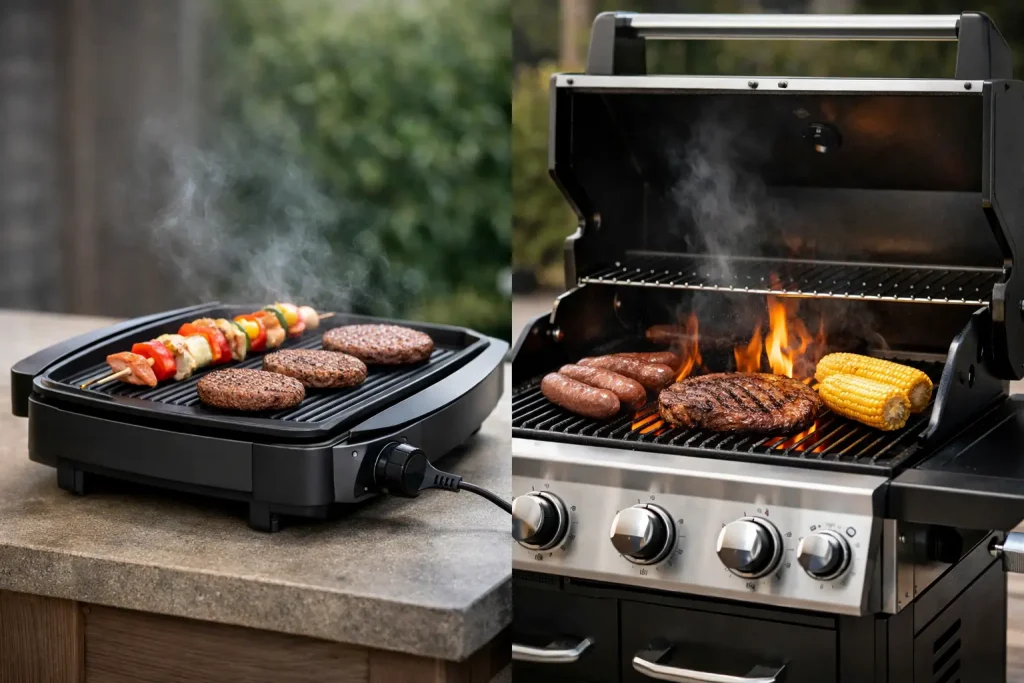
Electric grill vs gas grill: compare heat, flavor, cost, convenience, and cleanup so you can choose the right grill for your space and budget.
Apartment balcony with a no-flame rule? Backyard cookouts every weekend? That single detail can decide the whole electric grill vs gas grill debate before you even compare features. Still, if both are on the table, the better pick comes down to how you cook, where you cook, and how much grill flavor you actually expect.
This is one of those purchases where the wrong choice gets annoying fast. A grill that heats too slowly, needs more maintenance than you want, or simply does not fit your space can turn a fun buy into something that collects dust. The good news is that both electric and gas grills have clear strengths, and neither is automatically better for every household.
Electric grill vs gas grill at a glance
If convenience is your top priority, electric grills are hard to beat. They are generally easier to start, simpler to clean, and more practical for smaller spaces. Many are also a smart workaround for people who live in condos or apartments where charcoal and open-flame gas grilling are restricted.
Gas grills win when you want stronger heat, more traditional grilled flavor, and better performance for larger meals. They are usually the first choice for people who entertain often, cook outdoors regularly, or care about searing burgers and steaks with more authority.
That means the real question is not which grill is best in the abstract. It is which one matches your home, your cooking habits, and your expectations.
How heat and cooking performance compare
Gas grills usually deliver more power
Gas grills are built for high-heat cooking. They preheat relatively quickly, recover temperature better after the lid opens, and can handle thicker cuts of meat with more confidence. If you like a deep sear on steaks, crisp edges on burgers, or the ability to cook multiple foods at once, gas usually feels more capable.
Another plus is control. Most gas grills have multiple burners, which makes it easier to create heat zones. You can keep one side hotter for searing and another side lower for gentler cooking. That flexibility matters if you grill chicken, vegetables, and sausages in the same session.
Electric grills favor consistency over raw heat
Electric grills can absolutely cook burgers, hot dogs, chicken breasts, vegetables, and even fish well. Where they tend to fall short is maximum temperature and that classic open-flame intensity. You may still get browning and grill marks, but the overall result is often closer to controlled roasting with grill-style contact than backyard barbecue power.
For many people, that is completely fine. If your goal is weeknight convenience and dependable results, electric grills often feel less fussy. They are especially appealing for beginners who do not want to manage propane tanks, burner flare-ups, or changing outdoor conditions.
Flavor differences are real, but not always huge
Gas gets closer to the classic grill taste
Part of what people mean by grill flavor is heat intensity, but part of it is also what happens when fat drips onto hot components and creates smoke. Gas grills can produce more of that familiar outdoor grilled character, especially with heavier grates and higher temperatures.
That said, gas is not charcoal. If someone is chasing a deep smoky barbecue profile, neither electric nor standard gas is the full answer without extra accessories or techniques.
Electric can still taste good
Electric grilling does not mean bland food. Seasoning, marinades, surface browning, and proper cook time still matter more than people sometimes admit. Vegetables, seafood, chicken skewers, and thinner cuts of meat can turn out very well on an electric grill.
The trade-off is that the flavor is usually cleaner and less smoky. For some households, especially those cooking lighter meals or grilling indoors or on compact patios, that is not a downside. It is simply a different style of cooking.
Space, safety, and where you can actually use it
This is where electric often pulls ahead.
If you live in an apartment, townhouse, or building with fire restrictions, an electric grill may be the only realistic option. Many communities ban propane grills on balconies or limit open flames near structures. Electric models are often allowed because they do not use combustible fuel in the same way.
They also tend to be smaller and easier to store. Some can sit on a countertop, tabletop, or compact outdoor stand without taking over the whole patio. For city dwellers or anyone with limited outdoor space, that matters more than an extra bump in heat output.
Gas grills need more room and more caution. You are dealing with propane or a natural gas hookup, open flame, and ventilation needs. For suburban backyards and larger patios, that is usually no big deal. For small shared spaces, it can be a dealbreaker.
Startup, cleanup, and day-to-day convenience
Electric is simpler for quick meals
With an electric grill, the routine is straightforward. Plug it in, preheat, cook, and clean up once it cools. There is no fuel tank to refill, no ignition issues to troubleshoot, and usually fewer parts involved in routine maintenance.
This makes electric a strong fit for people who grill casually rather than ceremonially. If you want grilled chicken on a Tuesday without turning it into a project, electric is appealing.
Gas asks for a little more effort
Gas grills are still convenient compared with charcoal, but they do require more upkeep than electric models. You need to monitor fuel levels, clean burners and grates, and occasionally deal with grease management in a larger system. Assembly is often more involved too.
For frequent grillers, that extra effort is worth it. For occasional users, it can feel like more machine than they need.
Cost over time: upfront price and ongoing expenses
Electric often costs less to get started
In many cases, electric grills have a lower entry price than full-size gas grills. There are premium electric options, of course, but for small households or first-time buyers, it is often easier to find an affordable electric model that covers the basics.
Operating costs can also be predictable since you are using household electricity rather than replacing propane tanks.
Gas can offer better long-term value for heavy use
Gas grills range widely in price, from budget-friendly models to premium backyard centerpieces. If you grill often and cook for several people, a gas grill may justify its higher upfront cost with better capacity and performance.
Propane refills add an ongoing expense, and replacement parts can show up over time. Still, if the grill gets used every week for years, many buyers find the investment worthwhile.
Which grill is better for different types of cooks?
Choose electric if convenience rules your decision
Electric is usually the better choice for apartment residents, small-space households, beginner grillers, and people who mostly cook simple meals for one to four people. It also makes sense if easy cleanup ranks near the top of your wish list.
An electric grill can be the right answer when grilling is part of your regular meal routine, not a weekend event. Think salmon fillets, veggie skewers, turkey burgers, and quick chicken dinners.
Choose gas if grilling is part of your lifestyle
Gas makes more sense for backyard cooks, frequent hosts, larger families, and anyone who wants stronger searing power. If you care about heat control, capacity, and a more traditional grilled finish, gas is usually the better fit.
It is also the stronger option for people who like to grill full meals outdoors. When corn, burgers, chicken thighs, and peppers all need space at once, gas gives you more breathing room.
Electric grill vs gas grill for specific foods
Burgers and steaks generally favor gas because of the higher heat. Chicken works well on both, though gas gives you more room for indirect cooking. Vegetables are great on either type, especially if you use a grill basket or skewers. Fish often does very well on electric grills because the heat can feel a bit more controlled and less aggressive.
If your menu leans heavily toward thick red meat and cookout classics, gas will probably make you happier. If it leans toward mixed weeknight meals, electric may cover everything you need.
The better choice depends on your constraints
A lot of shopping advice treats this as a head-to-head contest with one winner. Realistically, the best grill is often the one that fits your building rules, your patio size, your cooking style, and your patience for maintenance.
If you want stronger heat, more authentic grill character, and room to cook big outdoor meals, go with gas. If you want a practical, cleaner, easier option that suits tighter spaces and simpler cooking, electric is the smarter buy.
Before you focus on BTUs, wattage, or fancy extras, ask a simpler question: will this grill make you want to use it often? That answer usually points you to the right one.


















Leave a Comment
Your email address will not be published. Required fields are marked with *