
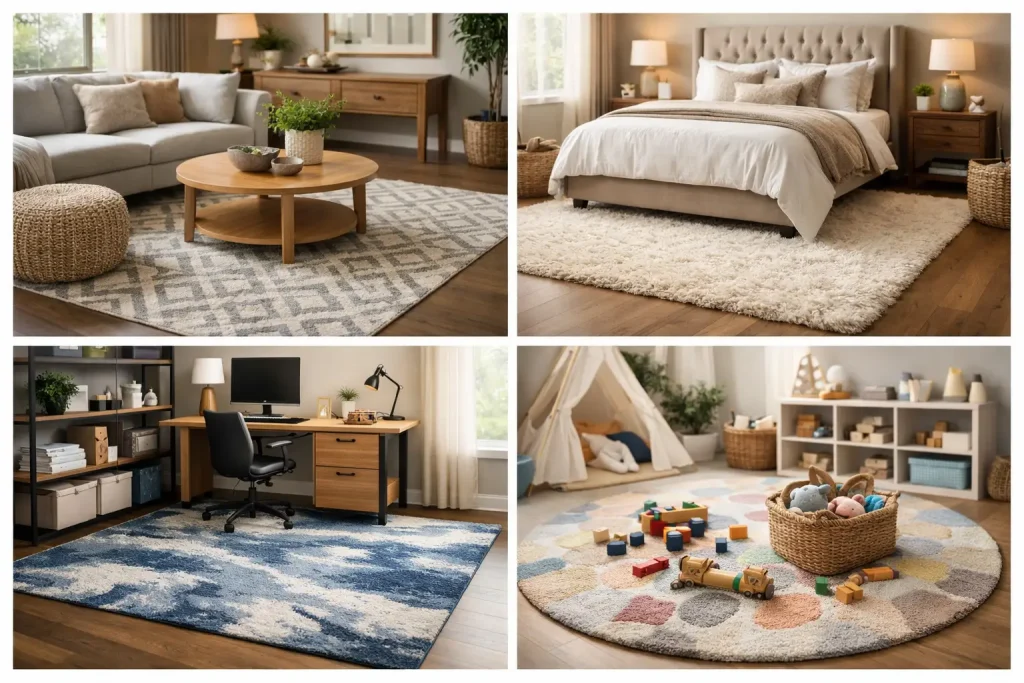
Use this guide to choosing area rugs to find the right size, material, color, and pile for rooms that look balanced, comfortable, and polished every day.
A rug that is too small can make a well-furnished living room look oddly unfinished. One that is too large can swallow the floor plan and hide the room’s best features. This guide to choosing area rugs starts with the practical details that make the biggest visual difference: size, placement, material, color, and how your household actually lives.
An area rug is not just a soft layer underfoot. It can define a seating zone in an open layout, bring warmth to a bedroom, protect hardwood floors, and give a plain room a finished look. The right choice depends less on finding the prettiest pattern and more on matching the rug to the room’s proportions and daily demands.
Start With Size, Not Style
Size is the decision that deserves the most attention. A beautiful rug in the wrong dimensions will still make the room feel off. Before browsing colors or patterns, measure the furniture grouping and mark possible rug edges with painter’s tape. This lets you see how much floor will remain exposed and whether walkways will feel comfortable.
Living room rug sizing
In most living rooms, the goal is to connect the main seating pieces. Ideally, the front legs of the sofa and chairs should sit on the rug, while the back legs can remain on the floor. This creates a cohesive conversation area without requiring a wall-to-wall look.
For a compact apartment living room, an 5-by-8-foot rug may work if it reaches under the front legs of the seating. Larger rooms often need an 8-by-10-foot or 9-by-12-foot option. A common mistake is choosing a rug that only fits beneath the coffee table. Unless the space is especially small, that arrangement tends to make furniture look like it is floating apart.
Leave roughly 8 to 18 inches of visible floor between the rug and the walls. The exact amount depends on the room, but consistent spacing usually looks intentional.
Dining room rug sizing
Dining room rugs need extra room for pulled-out chairs. Measure the table, then add at least 24 inches on every side. A chair should stay fully on the rug when someone sits down or gets up. If chair legs catch on the edge, the rug is too small for the job.
Round tables often look great with round rugs, especially in a breakfast nook or entry dining area. Rectangular tables usually pair best with rectangular rugs, though an oversized square rug can work beneath a square table.
Bedroom rug sizing
A bedroom rug should provide a soft landing when you get out of bed. For a queen or king bed, a large rug placed under the lower two-thirds of the frame is a classic approach. It should extend beyond both sides and the foot of the bed.
If a large rug is not in the budget, use runners on each side of the bed or place a narrower rug across the foot. This can create comfort without covering most of the floor. Just make sure the runners are long enough to feel purposeful rather than like small bath mats beside the bed.
Choose a Material That Fits Real Life
The best rug material is rarely the same for every room. Consider foot traffic, pets, children, allergies, cleaning habits, and whether the rug will sit near an exterior door. A pale wool rug may be a smart investment in a quiet bedroom but a stressful choice below a toddler’s snack table.
Wool is a popular all-around material because it feels soft, holds its shape, and naturally resists some dirt. It is often more expensive than synthetic options and may shed when new, but a quality wool rug can last for years with regular care.
Cotton rugs are lightweight, casual, and often washable. They are useful in kitchens, kids’ rooms, and relaxed spaces, although they can wear out faster in high-traffic areas. Natural-fiber rugs made from jute, sisal, or seagrass add texture and a relaxed, organic feel. They are durable but can feel rough under bare feet, and their weave may not suit homes where spills are frequent.
Synthetic materials such as polypropylene, polyester, and nylon are practical choices for busy households. Many are stain-resistant, budget-friendly, and easy to clean. They may not have the same depth or longevity as wool, but they are often the better choice for entryways, playrooms, patios, and dining spaces where accidents are likely.
Pick the Right Pile Height
Pile refers to the height and density of a rug’s fibers. It affects comfort, cleaning, and how easily furniture moves across the surface.
Low-pile and flatweave rugs are usually the easiest to vacuum and work well beneath dining tables, in hallways, and near doors. They are also a smart choice for homes with rolling office chairs or people who use mobility aids. High-pile rugs feel plush and inviting in bedrooms and low-traffic lounges, but they can trap crumbs, pet hair, and dust more easily.
Medium-pile rugs sit in the middle, offering softness without the maintenance demands of a shag. If you like the look of a thicker rug but need a practical option, look for a dense, low-to-medium pile rather than long loose fibers.
Use Color and Pattern With a Plan
A rug can either anchor the room or become its main visual statement. If your sofa, artwork, curtains, and accent pillows already include several colors or prints, a solid or subtly textured rug may bring welcome balance. In a neutral room, a patterned rug can supply personality without asking you to repaint walls or replace furniture.
For a room that gets heavy use, medium tones and patterned designs are forgiving. They hide everyday dust, minor stains, and pet hair better than stark white, deep black, or very pale solid colors. That does not mean every busy household needs a dark rug. A cream rug with a faded multicolor pattern can still look light and airy while being more practical than a solid ivory surface.
Think about undertones, too. A beige rug can lean warm, cool, gray, gold, or pink. Compare samples with your flooring, sofa, and wall color in daylight and at night. Store lighting can make a rug look dramatically different from the way it will appear at home.
Match Rug Shape to the Layout
Rectangular rugs are versatile because most rooms and furniture groupings are rectangular. Still, a different shape can solve a design problem or soften a space. Round rugs work especially well beneath round dining tables, in foyers, nurseries, and rooms with curved furniture. They can break up a boxy floor plan and draw attention to a central light fixture.
Runners are designed for narrow spaces, including hallways, galley kitchens, laundry rooms, and bedsides. Leave a strip of floor visible on both long sides so the runner does not look wall-to-wall. In a long hallway, a runner that is too short can look just as awkward as one that is too narrow.
Do Not Skip the Rug Pad
A rug pad is one of the least exciting purchases in this process, but it has a major effect on comfort and safety. Pads prevent slipping, add cushioning, reduce wear, and help a rug lie flat. They can also protect floors from dye transfer or rough backing.
Choose a pad designed for your floor type. Some rubber-backed pads can discolor certain finishes, while felt pads offer more cushioning under heavy rugs. For outdoor rugs, use a pad made to resist moisture and mildew. Trim the pad so it sits about 1 inch inside the rug’s edge and stays out of sight.
A Quick Check Before You Buy
Before committing, confirm four things: the rug dimensions work with the furniture, the pile suits the room’s traffic, the material matches your cleaning tolerance, and the color works under your home’s lighting. Also check the care instructions. A bargain is less appealing if professional cleaning is the only realistic way to handle a routine spill.
For online purchases, review the listed dimensions carefully and expect slight variation in handmade rugs. Order a sample when available, especially for a large living room or a rug with a strong color. It is easier to return a small swatch than an oversized rolled rug that does not work with the space.
The best area rug should make the room feel more comfortable and more connected without making daily life harder. Measure twice, choose for the way you live, and let the rug support the room rather than compete with it.
















Leave a Comment
Your email address will not be published. Required fields are marked with *