
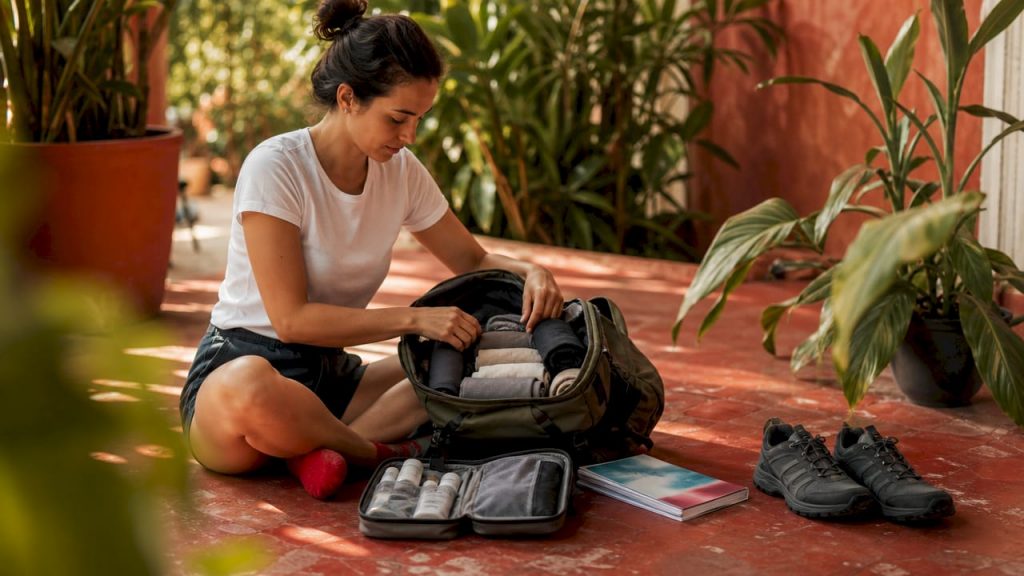
Discover the ultimate guide to packing light. Learn minimalist travel tips for 2026 and travel effortlessly with just a carry-on!
Packing light is defined as carrying only versatile essentials that fit within a single carry-on or backpack, eliminating the weight and cost of checked luggage. This minimalist packing guide covers the practical rules, fabric choices, and organization methods that let you travel freely for 7–14 days with a bag under 40 liters. Baggage fees for overweight or checked luggage can exceed $100 per leg, making carry-on-only travel one of the smartest financial decisions a traveler can make. The strategies here apply whether you are heading out for a long weekend or a two-week backpacking trip across multiple climates.
What is the best guide to packing light for minimalist travelers?
The core principle of packing light is simple: bring only what you will use, not what you might need. Two widely used benchmarks help travelers stick to that principle. The first is the 5-7-2 rule, which limits you to 5 tops, 2 bottoms, and 7 pairs of underwear and socks. The second is the Rule of Three, which cuts that further to 3 tops, 3 bottoms, and 3 pairs of shoes. Both rules force deliberate choices and prevent the “just in case” mindset that fills most bags with unused items.
Standard carry-on dimensions are 22 inches × 14 inches × 9 inches, and backpacks between 38–45 liters fit comfortably within airline carry-on policies. Staying within that volume is the physical constraint that makes every other packing decision easier. When your bag has a hard limit, you stop debating and start choosing.
Which bag size works best for packing light?
The right bag is the foundation of any lightweight packing strategy. A bag that is too large invites overpacking. A bag that is too small creates frustration. For most minimalist travelers, a backpack or soft carry-on in the 38–45 liter range hits the sweet spot.
Backpack vs. soft suitcase vs. hard shell
Backpacks distribute weight across your shoulders and hips, leaving your hands free. That matters when you are navigating cobblestone streets, train stations, or hiking trails. Soft suitcases offer easier packing access and lay flat, but they roll rather than carry. Hard-shell suitcases protect fragile items but add significant base weight before you pack a single item.
For true minimalist travel, a well-fitted backpack with a padded hip belt wins. It keeps you mobile, fits in overhead bins, and slides under seats on budget carriers. You can read more about top carry-on backpacks to find options that match your trip style.
Features that support light packing
- Minimal external pockets: Fewer pockets mean less temptation to fill them.
- Lightweight frame or frameless design: Saves 0.5–1 pound of base weight.
- Clamshell opening: Lets you pack and unpack without digging.
- Hip belt and sternum strap: Transfers weight off your shoulders on long travel days.
- Compression straps: Cinch the bag down when it is not fully loaded.
Pro Tip: Before buying a bag, load it with 20 pounds of household items and walk around for 20 minutes. Comfort under load reveals far more than any product description.
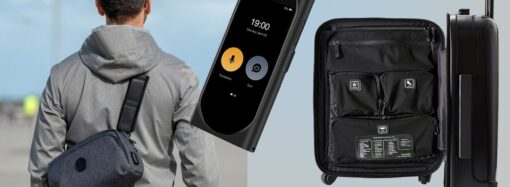
Some travelers also benefit from smart luggage features like built-in organization panels and USB charging ports, which reduce the need to carry extra accessories.
How do you build a minimalist capsule wardrobe for travel?
A capsule wardrobe is a curated set of clothing items that all work together, so every piece pairs with every other piece. For travel, this means choosing a single color palette, neutral tones, and fabrics that perform across multiple days and climates.
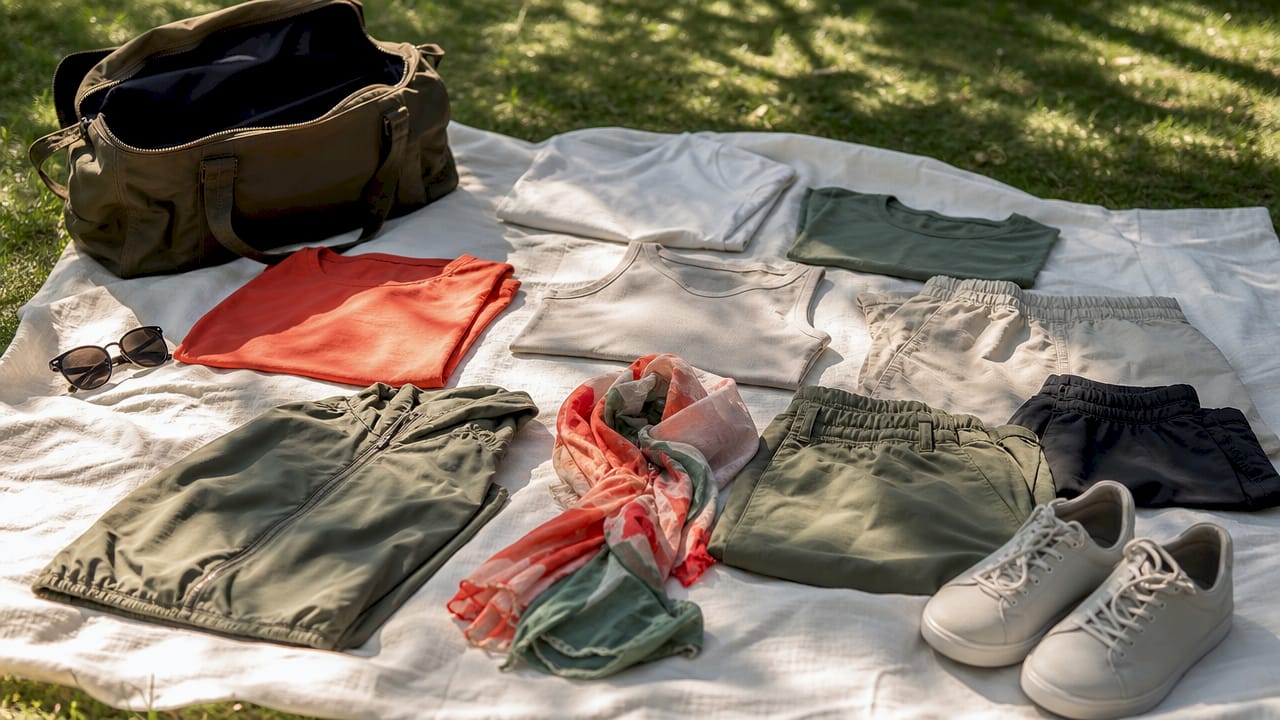
The Rule of Three strategy limits travelers to 3 tops, 3 bottoms, and 3 pairs of shoes while prioritizing versatile, quick-drying, and odor-resistant fabrics. That constraint sounds tight until you realize that most travelers wear the same two or three outfits on repeat anyway.
Why fabric choice changes everything
Merino wool is the gold standard for minimalist travel clothing. It dries overnight and resists odors, meaning you can wear a merino shirt two or three times before it needs washing. That single property can cut your clothing count in half. Synthetic fabrics like nylon and polyester dry even faster than merino but do not manage odor as well. Cotton is the worst choice for minimalist travel. It absorbs moisture, dries slowly, and adds weight when wet.
Building your travel wardrobe by the numbers
- Tops: 3–5 items that layer. A base layer, a mid-layer, and a light outer layer cover most climates.
- Bottoms: 2 pairs maximum. One casual, one that works for both hiking and dinner.
- Shoes: 2 pairs. One comfortable walking shoe and one pair of sandals or dress shoes depending on your destination.
- Underwear and socks: 5–7 pairs. Quick-dry materials only.
- Accessories: One scarf that doubles as a blanket, one hat, and one packable rain jacket.
The key to making a capsule wardrobe work is sticking to one color family. Navy, gray, and olive all mix well. When every item pairs with every other item, you never feel like you are wearing the same outfit twice, even if the individual pieces repeat.
Pro Tip: Lay out every item you plan to pack, then remove one third of it. You will almost always find you can live without those items, and your back will thank you.
What are the best packing methods to maximize space?
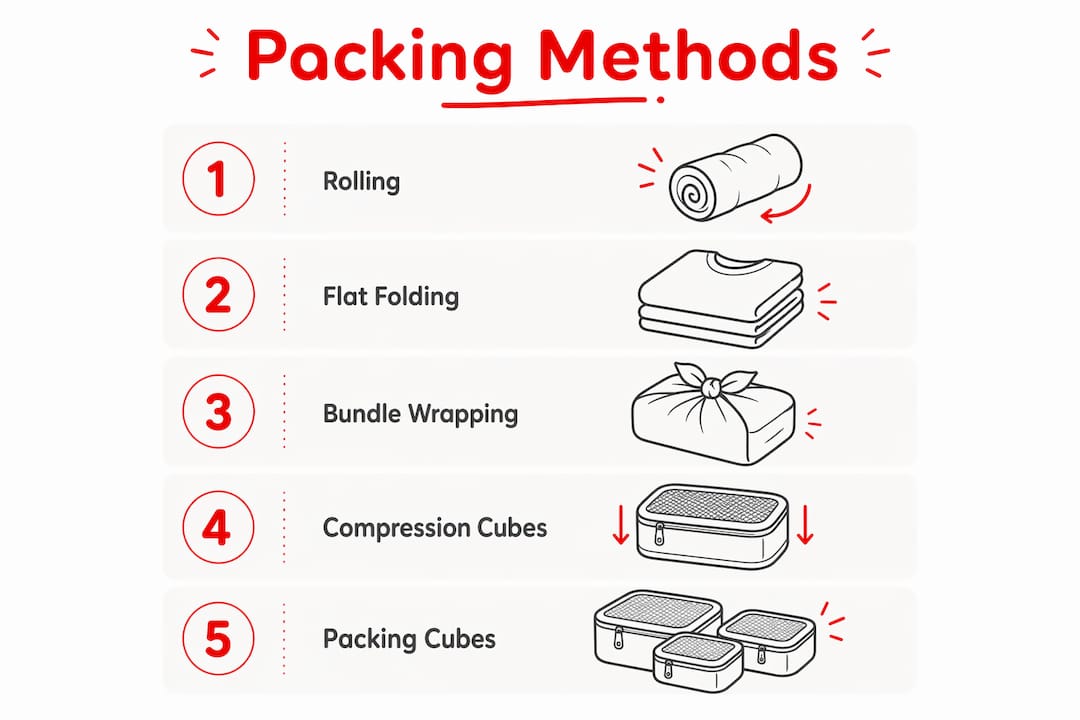
The way you pack matters as much as what you pack. Three main methods dominate minimalist travel: rolling, flat folding, and bundle wrapping. Each has strengths depending on the clothing type and bag shape.
| Method | Best for | Pros | Cons |
|---|---|---|---|
| Rolling | T-shirts, jeans, casual wear | Saves space, reduces wrinkles | Can unroll and create mess |
| Flat folding | Dress shirts, structured items | Keeps shape, easy to stack | Uses more vertical space |
| Bundle wrapping | Full outfits | Minimizes wrinkles dramatically | Slower to pack and unpack |
| Compression cubes | All clothing types | Organizes by category | Does not compress without secondary zipper |
The truth about packing cubes
Standard packing cubes do not compress clothing. Their value is organization, not volume reduction. They let you separate tops from bottoms, clean from dirty, and find items without unpacking your entire bag. That is genuinely useful. But if you buy standard cubes expecting to shrink your load, you will be disappointed.
True compression cubes include a secondary zipper that squeezes air out of the packed clothes. Rolling clothes into compression cubes effectively manages volume for long trips. The combination of rolling and compression is the most space-efficient method available without vacuum sealing.
Pro Tip: Pack your heaviest items closest to your back and your most-used items at the top. This keeps the bag balanced and saves you from unpacking everything to find your passport.
How does doing laundry mid-trip reduce what you pack?
Laundry is the most underused tool in minimalist packing. Travelers who plan one laundry session mid-trip can halve their clothing needs for trips of two weeks or longer. That single habit transforms a 45-liter bag into a genuinely comfortable experience.
Handwashing and quick-dry fabrics
Jacquie Whitt, a long-term minimalist traveler, emphasizes handwashing as a core habit for successful light packing. Sink washing works for underwear, socks, and merino wool items. You wash them in the evening and hang them to dry overnight. By morning, they are ready to wear. Merino wool can be worn multiple times before washing, which reduces laundry frequency even further.
For longer trips, a local laundromat costs a few dollars and cleans everything in one session. Planning that stop into your itinerary removes the anxiety of running out of clean clothes.
- Sink washing: Works for underwear, socks, and merino items. Use a small packet of travel soap.
- Laundromat: Best for full clothing resets on trips over 10 days.
- Hotel laundry service: Convenient but expensive. Reserve for emergencies.
- Dryer sheets: Pack two or three in your bag to keep clothes smelling fresh between washes.
Wear your heaviest items on travel day
Wearing heavy items during transit frees 2–3 liters of carry-on space without adding a single gram to your bag. Boots, a heavy jacket, and jeans are ideal candidates. You wear them onto the plane, stow the jacket in the overhead bin, and your bag stays light. This one habit alone can make the difference between fitting within carry-on limits and checking a bag.
“The goal is not to pack everything you might need. The goal is to need everything you pack.”
Replacing “what if” items with confidence in your ability to buy or borrow on-site is the mindset shift that separates experienced minimalist travelers from beginners. Most destinations have pharmacies, grocery stores, and clothing shops. If you forget something, you can almost always find it locally for a reasonable price.
What are the most common mistakes when packing light?
Most travelers pack more than they need, and deliberate planning and reassessment after each trip improves packing efficiency over time. Recognizing the patterns that lead to overpacking is the first step toward breaking them.
- Packing for hypothetical scenarios: Carryology experts warn against packing for hypothetical needs, recommending strict item selection based on expected use. If you cannot name a specific day you will use an item, leave it behind.
- Treating packing cubes as compression tools: Standard cubes organize. Only compression cubes with a secondary zipper reduce volume. Buying the wrong type and expecting compression results in wasted space.
- Ignoring base weight: A heavy bag before you add clothes is a problem. Weigh your empty bag before purchasing. Anything over 3 pounds is working against you.
- Not testing your pack before departure: Walk around your home with a fully loaded bag for 30 minutes. You will quickly discover what needs to be removed.
- Never reassessing after trips: The items you did not touch are the items to cut next time. Keep a running list of unused items after every trip.
Pro Tip: After every trip, photograph the contents of your bag before unpacking. Compare that photo to your original packing list. The gap between what you packed and what you used is your next packing list.
Key takeaways
Packing light requires choosing versatile clothing, using proven quantity rules like the 5-7-2 or Rule of Three, and organizing with the right tools to stay within a 40-liter carry-on for trips up to two weeks.
| Point | Details |
|---|---|
| Use a quantity rule | Apply the 5-7-2 or Rule of Three to cap clothing and prevent overpacking. |
| Choose merino wool | Merino resists odors and dries overnight, cutting your clothing count significantly. |
| Understand packing cubes | Standard cubes organize; only compression cubes with a secondary zipper reduce volume. |
| Plan mid-trip laundry | One laundry session mid-trip can halve your clothing needs for two-week trips. |
| Wear heavy items on travel day | Boots and jackets worn during transit free 2–3 liters of carry-on space. |
What our team has learned from years of minimalist packing
Our team at Lizard’s Lunch has spent a lot of time thinking about what actually works when it comes to packing light, and the honest truth is that the first trip is always the hardest. You second-guess every decision. You add “just one more” item until the bag is full. Then you arrive at your destination and realize you wore three of the twelve things you packed.
The turning point comes when you start treating each trip as a test. After every journey, we go back through what we actually used versus what we carried. That habit, more than any packing rule or gear upgrade, is what sharpens your list over time. The 5-7-2 rule is a great starting point, but your personal version of it will look different after five or six trips.
One thing that consistently surprises travelers is how little they miss the items they left behind. The anxiety of “what if I need this?” fades fast once you realize that most destinations have everything you could possibly need within walking distance. The freedom of moving through an airport without checking a bag, of fitting everything into an overhead bin, of not waiting at baggage claim while your fellow passengers scatter into the city, that feeling is worth every deliberate packing decision you make.
Minimalist packing is also deeply connected to a broader minimalism lifestyle philosophy. When you practice owning less at home, packing less on the road becomes natural rather than forced. The two habits reinforce each other in a genuinely satisfying way.
— Our Team at Lizard’s Lunch
Minimalist living and travel go hand in hand
The principles behind packing light extend well beyond the airport. At Lizardslunch, we cover the full picture of simple, intentional living, from travel efficiency to everyday lifestyle choices that reduce clutter and increase freedom. If this guide sparked something for you, our guide to minimalism lifestyle goes deeper into the philosophy and practical habits that make light living sustainable long-term. You will find concrete strategies for simplifying your home, your wardrobe, and your daily routines in ways that directly support how you travel. Less stuff at home means less temptation to overpack on the road.
FAQ
What is the best bag size for packing light?
A backpack or carry-on between 38–45 liters fits within standard airline carry-on dimensions of 22 inches × 14 inches × 9 inches and is the recommended size for minimalist travel on trips up to two weeks.
How many clothes should I pack for a 2-week trip?
The 5-7-2 rule recommends 5 tops, 2 bottoms, and 7 pairs of underwear and socks. Planning one mid-trip laundry session lets you cut that count further without running out of clean clothes.
Do packing cubes actually save space?
Standard packing cubes organize clothing by category but do not compress it. Only compression cubes with a secondary zipper reduce volume. Both types improve accessibility and prevent bag chaos.
What fabric is best for minimalist travel clothing?
Merino wool is the top choice because it resists odors and dries overnight, allowing multiple wears between washes. Synthetic fabrics like nylon and polyester dry faster but manage odor less effectively. Avoid cotton for travel.
How do I stop overpacking?
Apply a strict quantity rule like the Rule of Three, remove any item you cannot assign to a specific planned use, and review your packing list after every trip to cut items you did not touch.













Leave a Comment
Your email address will not be published. Required fields are marked with *