

Discover what is minimalism lifestyle and how it can transform your life by reducing clutter and enhancing fulfillment through intentional living.
Minimalism lifestyle is defined as the intentional practice of simplifying your possessions, commitments, and daily choices to focus on what genuinely adds value to your life. This is not about living with bare walls or counting your belongings. It is a philosophy of purposeful living, championed by advocates like Joshua Becker of Becoming Minimalist and Courtney Carver of Be More with Less, that reduces mental clutter and creates space for real fulfillment. Research shows that cluttered spaces increase anxiety and depression symptoms by 84%. That single statistic reveals why so many people are drawn to simpler living.
What is minimalism lifestyle at its core?
Minimalism lifestyle, also called intentional living or simple living, is built on one central idea: own and do only what serves your life. Joshua Becker defines it as intentionality over possessions, not a race to own the fewest items. That distinction matters enormously for beginners who assume minimalism means deprivation.

The minimalism lifestyle definition separates into two categories that are often confused. Aesthetic minimalism is the visual style you see in interior design magazines: white walls, sparse furniture, and clean lines. Lifestyle minimalism goes deeper. It asks you to evaluate every object, commitment, and habit against one question: does this add real value to my life?
Here is what the core principles of minimalist living look like in practice:
- Intentionality: Every purchase and commitment gets evaluated before it enters your life, not after.
- Mindful consumption: You buy less, but you buy better. Quality over quantity is the operating rule.
- Personal gatekeeping: You control what comes in, not just what goes out. This is the principle most beginners overlook.
- Ongoing evaluation: Minimalism is a dynamic, ongoing process, not a one-time declutter event.
- Subjective standards: Your version of minimalism looks different from your neighbor’s. There is no universal item count.
Pro Tip: Before buying anything non-essential, wait 48 hours. If you still want it after two days, it may genuinely add value. If you have forgotten about it, you have your answer.
Embracing minimalism also means recognizing what it is not. It is not about punishing yourself or living without comfort. The current trend in 2026 leans toward “personalized minimalism,” where spaces stay cozy and meaningful, not sterile. Think of it as curating your life the way a great editor curates a magazine: keeping only what earns its place on the page.
What are the proven benefits of minimalism for mental health?
The benefits of minimalism for mental health are measurable, not just philosophical. People living in minimalist environments fall asleep 18 minutes faster and experience 23% more deep sleep. Better sleep alone improves mood, focus, and long-term health in ways that no supplement can replicate.
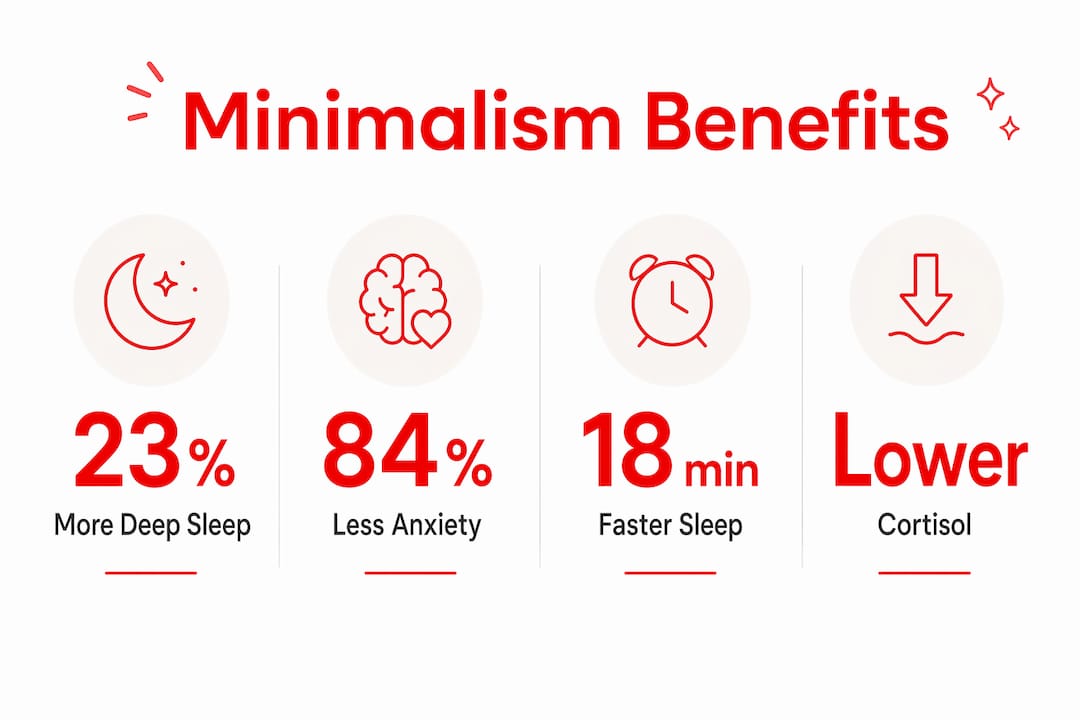
Clutter creates a constant low-level cognitive load. Your brain registers every unfinished task, every misplaced item, and every visual distraction as an open loop. Studies link minimalism with lower cortisol levels and higher life satisfaction through intentional living. Cortisol is your primary stress hormone, and chronically elevated levels are connected to weight gain, poor immunity, and reduced longevity.
Decision fatigue is another hidden cost of excess. Each item you own requires maintenance, storage decisions, and ongoing mental attention. Fewer possessions reduce fatigue and sharpen focus. That is why many high-performing individuals, from Steve Jobs to Barack Obama, famously simplified their wardrobes. Fewer trivial decisions preserve mental energy for what actually matters.
“Minimalism can significantly reduce stress and busyness, helping individuals prioritize what matters most to their health and happiness.” — Courtney Carver, Be More with Less
The relational benefits are just as real. When your home and schedule are not overloaded, you have more time and presence for the people you love. Minimalism creates breathing room in your calendar, not just your closet.
| Benefit | What the Research Shows |
|---|---|
| Sleep quality | 18 minutes faster sleep onset, 23% more deep sleep |
| Anxiety and depression | 84% higher risk in high-clutter environments |
| Stress hormones | Lower cortisol levels linked to intentional living |
| Decision fatigue | Fewer possessions reduce daily mental load |
| Life satisfaction | Higher satisfaction scores tied to mindful consumption |
The pattern across all this research points to one conclusion: a simpler environment produces a calmer, clearer mind. You do not need to overhaul your entire home to feel the difference. Even reducing clutter in one room creates a measurable shift in how you feel when you walk into it.
How does minimalism lifestyle support environmental sustainability?
Minimalism and environmental responsibility are natural partners. A study of 444 participants found that few-belongings minimalists have significantly smaller ecological footprints and produce less waste than their higher-consumption counterparts. Buying less means manufacturing less, shipping less, and discarding less.
The connection runs through every consumption category. Minimalists buy fewer clothes, which directly reduces textile waste. The fashion industry is one of the largest polluters on the planet, and a minimalist wardrobe of well-chosen, durable pieces sidesteps that system almost entirely. The same logic applies to food, electronics, and household goods.
| Minimalism Subtype | Environmental Impact |
|---|---|
| Few-belongings minimalism | Smallest ecological footprint, least waste produced |
| Digital minimalism | Reduces device turnover and e-waste |
| Wardrobe minimalism | Cuts textile waste and fast-fashion consumption |
| Food minimalism | Reduces packaging waste and food spoilage |
| Commitment minimalism | Lowers transport-related carbon output |
Mindful consumption is the mechanism that connects simple living to sustainability. When you pause before every purchase and ask whether an item genuinely serves your life, you naturally buy fewer things that end up in landfills. This is not about sacrifice. It is about spending money and resources on things that last and matter. You can explore more about eco-friendly consumption habits to see how these principles scale beyond the home.
The environmental case for minimalism is also a financial one. Buying less means spending less. Many people who adopt a minimalist lifestyle report significant savings within the first year, money that can go toward experiences, savings, or causes they care about.
How can you practically adopt and sustain a minimalist lifestyle?
Starting a minimalist lifestyle does not require a weekend purge of everything you own. Domain-specific minimalism is the most sustainable entry point. Pick one area of your life, such as your wardrobe, your digital files, or your kitchen, and apply minimalist principles there first. Success in one domain builds the confidence and habits you need to expand.
Here is a practical sequence for beginners:
- Choose one domain. Start with your wardrobe or your desk. Avoid starting with sentimental items, which are the hardest to evaluate.
- Sort by value, not sentiment. Ask: does this item serve my current life? Not: did it serve my life five years ago?
- Remove what does not serve you. Donate, sell, or recycle. The goal is to move things out, not just reorganize them.
- Apply the one-in, one-out rule. Every time something new enters your space, something old leaves. This prevents clutter rebound and keeps your space stable over time.
- Add a waiting period for new purchases. A 48-hour or 30-day waiting period for non-essential items filters out impulse buying before it becomes clutter.
- Revisit your space seasonally. Needs change. A quarterly review keeps your environment aligned with your current life, not a past version of it.
The biggest reason minimalism fails long-term is not the initial declutter. It is the failure to control what comes back in. Permanent shifts in consumption habits are the real work of minimalism. Decluttering alone is a temporary fix. Gatekeeping is the permanent solution.
Pro Tip: Create a “maybe box” for items you are unsure about. Seal it and store it for 30 days. If you never open it, you have your answer. Most people find they do not miss a single thing inside.
Courtney Carver’s approach at Be More with Less emphasizes starting with your values, not your closet. When you know what matters most to you, every decluttering decision becomes easier. You are not asking “should I keep this?” You are asking “does this support the life I actually want?” That reframe changes everything. For practical decluttering strategies, Lizardslunch has a detailed guide on how to declutter fast that walks you through the process room by room.
Balancing minimalism with hobbies and personal interests is also worth addressing directly. Minimalism does not mean giving up the things you love. A passionate photographer keeps their camera gear. A home cook keeps their knives. The point is to remove what you do not use, not what you genuinely value. Minimalism is permission to keep the best and release the rest.
Key takeaways
Minimalism lifestyle works because intentional gatekeeping of what enters your life produces lasting mental clarity, better sleep, and a smaller environmental footprint.
| Point | Details |
|---|---|
| Core definition | Minimalism is intentional living focused on value, not a possession count. |
| Mental health impact | Clutter raises anxiety risk by 84%; minimalist spaces improve sleep and lower cortisol. |
| Sustainability link | Few-belongings minimalists produce measurably less waste and have smaller ecological footprints. |
| Sustainable adoption | Start in one domain and apply one-in, one-out rules to prevent clutter from returning. |
| Personalized approach | Your minimalism is unique to your values; there is no universal standard to meet. |
Why minimalism is not what most people think it is
I have watched people approach minimalism the wrong way more times than I can count. They spend a weekend throwing things away, feel great for two weeks, and then slowly watch the clutter creep back. The problem is not their commitment. The problem is that they treated minimalism as a destination rather than a practice.
The real shift happens when you stop asking “what should I get rid of?” and start asking “what do I actually want my life to feel like?” That question changes your relationship with every purchase, every commitment, and every item that crosses your threshold. It is a mindset shift, not a cleaning project.
What I find most compelling about the overconsumption problem in modern life is how invisible it has become. We accumulate things, subscriptions, obligations, and digital noise without noticing, until the weight of it all starts to feel normal. Minimalism is the practice of noticing again.
The people I have seen thrive with simple living are not the ones who own the fewest things. They are the ones who are most honest about what genuinely serves them. One person’s minimalism includes a full bookshelf and a garden. Another’s includes a capsule wardrobe and a single houseplant. Both are valid. Both are intentional. And that intentionality, as explored in the principles of minimalism in design, is what makes the difference between a cluttered life and a clear one.
Start small. Pick one corner of your home and make it exactly what you want it to be. Then let that feeling guide the rest.
— Alexander
Upgrade your space the minimalist way
A minimalist lifestyle often starts at home, and the right home improvements can make simplicity feel beautiful rather than bare. Thoughtful upgrades, like better storage solutions, cleaner layouts, and functional design choices, create spaces that support calm and clarity without sacrificing comfort. You do not need to renovate everything at once. Small, intentional changes add character and purpose to every room. Lizardslunch has curated a collection of home renovation ideas that align perfectly with minimalist values, helping you build a home that feels both personal and uncluttered. For tech-forward upgrades that keep your space functional without adding visual noise, explore the best home improvement tech ideas that complement a simpler way of living.
FAQ
What is the minimalism lifestyle definition in simple terms?
Minimalism lifestyle is the practice of intentionally keeping only what adds genuine value to your life, covering possessions, commitments, and habits. It is not about owning as little as possible but about owning and doing only what matters to you.
How do i start a minimalist lifestyle as a beginner?
Begin with one domain, such as your wardrobe or workspace, and remove anything that does not serve your current life. Applying a one-in, one-out rule from day one prevents clutter from returning after your initial declutter.
Does minimalism mean i have to give up things i love?
No. Minimalism means releasing what you do not use or value, not what you genuinely love. A passionate cook keeps their kitchen tools; a reader keeps their books. The goal is clarity, not deprivation.
What are the biggest mental health benefits of minimalism?
Research links minimalist environments to 23% more deep sleep, lower cortisol levels, and an 84% reduction in anxiety and depression risk compared to high-clutter spaces. The primary driver is reduced cognitive load from fewer visual and physical distractions.
How does minimalism help the environment?
A study of 444 participants found that minimalists with fewer belongings produce significantly less waste and carry smaller ecological footprints. Buying less means less manufacturing, less packaging, and less waste across every consumption category.


















Leave a Comment
Your email address will not be published. Required fields are marked with *