
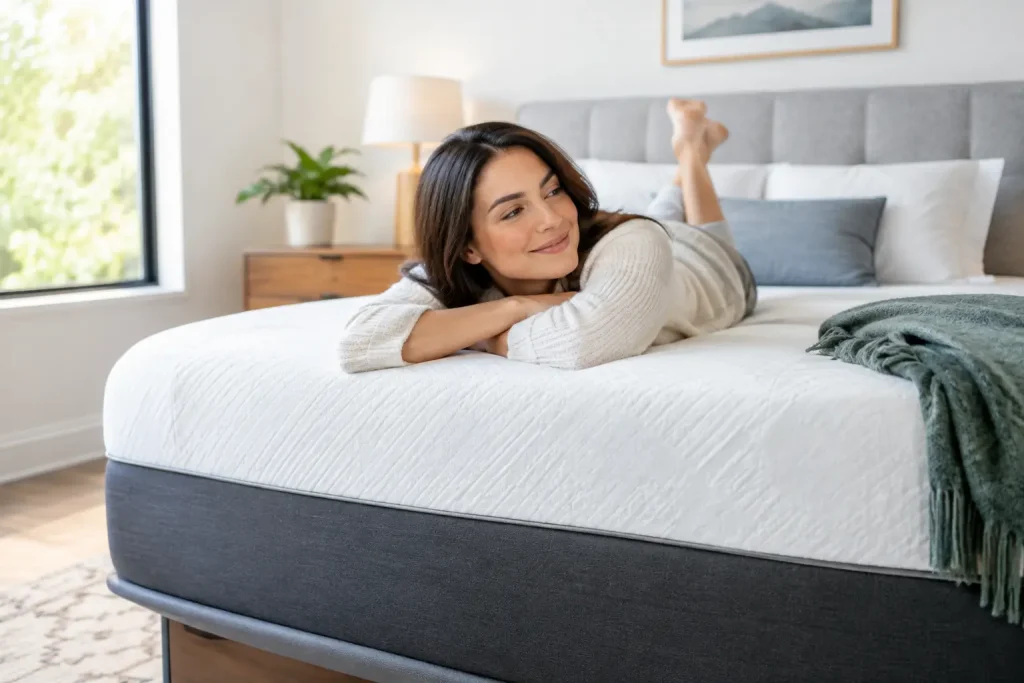
A mattress review can reveal comfort, support, cooling, and value. Use this practical guide to compare mattress types and buy confidently while shopping.
That plush mattress that felt perfect for five minutes in a showroom can feel very different after a week of tossing, turning, and waking up warm. A useful mattress review looks beyond first impressions to help shoppers judge what matters at 2 a.m.: pressure relief, support, motion isolation, temperature control, and whether the price makes sense for the materials.
The best mattress is not a universal winner. It is the one that fits your body, sleep position, bedroom setup, and budget. Here is how to read reviews more intelligently and narrow the crowded mattress market to options that are genuinely worth considering.
What a Mattress Review Should Actually Tell You
A mattress review should explain how a bed feels, who is likely to enjoy it, and where its compromises show up. A simple five-star score is rarely enough. One person may love a deep, slow-moving memory foam feel, while another may find the same surface difficult to move around on.
Look for reviews that separate comfort from construction. Comfort is subjective, but construction gives useful clues about durability and performance. Details such as foam density, coil design, edge support, cover materials, and overall height can tell you more than broad claims like “luxury comfort” or “premium sleep.”
Firmness Is Personal, Not Precise
Most brands use a 1-to-10 firmness scale, with 1 feeling extremely soft and 10 feeling exceptionally firm. That scale is helpful for comparison, but it is not a scientific measurement. A 6 out of 10 from one company may feel closer to a 7 from another.
Body weight, sleeping position, and personal preference all change the experience. A heavier sleeper may sink further into a medium mattress and find it softer, while a lightweight sleeper may barely engage the comfort layers and experience it as firmer. Treat firmness labels as a starting point, not a promise.
Match the Mattress to How You Sleep
Side sleepers often need extra pressure relief around the shoulders and hips, making medium to medium-soft mattresses a common fit. Back sleepers usually do well with medium-firm support that keeps the hips from dipping too far. Stomach sleepers often prefer a firmer, flatter surface that helps prevent excessive arching through the lower back.
Combination sleepers have another consideration: ease of movement. A mattress with a responsive surface, such as latex or coils paired with lighter foams, can make changing positions easier than deeply contouring foam. Couples should also consider motion transfer and edge support, especially if one person gets in and out of bed at a different time.
Mattress Review Guide: Compare the Main Types
Material is usually the biggest driver of a mattress’s feel. There is no single superior construction, but each category has predictable strengths and trade-offs.
- Memory foam mattresses contour closely to the body and are often excellent at absorbing motion. They can be a smart choice for side sleepers and couples, though some sleepers dislike their slower response or warmer feel.
- Innerspring mattresses use a coil-based support system and often feel bouncy, breathable, and familiar. They can offer good airflow, but lower-cost versions may transfer more movement and wear out sooner than higher-quality hybrids.
- Hybrid mattresses combine coils with foam, latex, or other comfort layers. They are popular because they can balance pressure relief with airflow, edge support, and easier movement. The downside is that quality varies widely, and hybrids can cost more.
- Latex mattresses tend to feel buoyant, durable, and naturally responsive. They are often a strong match for hot sleepers and people who dislike the stuck-in-the-bed sensation of memory foam. Latex can be expensive, and its springy feel is not for everyone.
Airbeds with adjustable chambers are another option, particularly for couples with different firmness needs. Their customization can be appealing, but moving parts and higher pricing make warranty terms more significant than they are with a simpler foam or coil mattress.
Read the Specs Behind the Marketing
Mattress brands are good at describing sleep in dramatic language. Focus on the details that affect everyday use instead.
For foam mattresses, look for information on the comfort layers and the support core. Higher-density foams generally hold up better, although density alone does not guarantee comfort. For hybrid and innerspring models, pay attention to the coil type, coil gauge, zoning, and whether the perimeter has reinforced support.
Cooling claims also deserve a closer look. Gel infusions, phase-change covers, perforated foams, and cooling fibers may improve the surface feel, but they cannot completely overcome a heat-trapping design or warm bedroom. Hot sleepers typically benefit most from breathable covers, open coil systems, and less sink-in comfort layers.
Edge support matters more than many shoppers expect. Weak edges can make a queen or king bed feel smaller because you naturally avoid sitting or sleeping near the perimeter. This is especially relevant for couples, people with limited mobility, and anyone who uses the edge of the bed while getting dressed.
Trial Periods and Warranties: Read the Fine Print
A long sleep trial can reduce the risk of ordering a mattress online, but it is not a reason to buy without research. Many companies require a break-in period before they allow a return, often because new foams and fabrics need time to settle. Your body may also need a few weeks to adjust if you are switching from an old, sagging bed to a more supportive one.
Before ordering, check whether returns are free, whether pickup is included, and whether the company charges a return or processing fee. Also confirm whether the mattress must be used with a specific foundation or frame to maintain warranty coverage.
Warranties are useful, but they usually cover manufacturing defects rather than normal softening or a comfort preference change. Pay close attention to the stated sag depth required for a claim. A warranty that covers only very deep indentations may offer less practical protection than it first appears.
How to Shop Without Overpaying
Mattress pricing can be confusing because brands run frequent sales and use high reference prices. Instead of reacting to a countdown timer, compare the final checkout price against the mattress’s materials, return policy, and expected lifespan.
A good budget mattress can be a sensible choice for a guest room, first apartment, or temporary move. For a primary bed, spending more may be worthwhile when it buys better support, stronger edges, a more durable comfort system, or a trial policy that gives you room to decide. Expensive does not automatically mean better, though. Some premium pricing reflects branding, elaborate covers, or features you may never notice.
If you share a bed, involve both sleepers before ordering. A compromise model with medium firmness, solid motion isolation, and reliable edge support often works better than choosing the favorite feel of only one person. If preferences are dramatically different, consider a split setup or an adjustable airbed rather than forcing one mattress to serve two incompatible sleep styles.
Red Flags in a Mattress Review
Be cautious when reviews rely only on generic praise, never identify drawbacks, or treat every sleeper as though they have the same needs. A credible review should say who may not like the mattress. For example, a soft foam model may be excellent for pressure relief but a poor fit for stomach sleepers. A firm hybrid may sleep cool and feel supportive but may not cushion sensitive shoulders.
Also watch for vague material descriptions. Terms like proprietary foam, breathable technology, or advanced support can sound impressive without explaining what is actually inside the mattress. When specifications are hard to find, comparing value becomes much harder.
The right mattress should make bedtime easier, not turn shopping into a second job. Start with your sleep position and comfort preference, verify the construction and return terms, then choose the option whose trade-offs you can live with for years, not just the one with the loudest sale.


















Leave a Comment
Your email address will not be published. Required fields are marked with *