
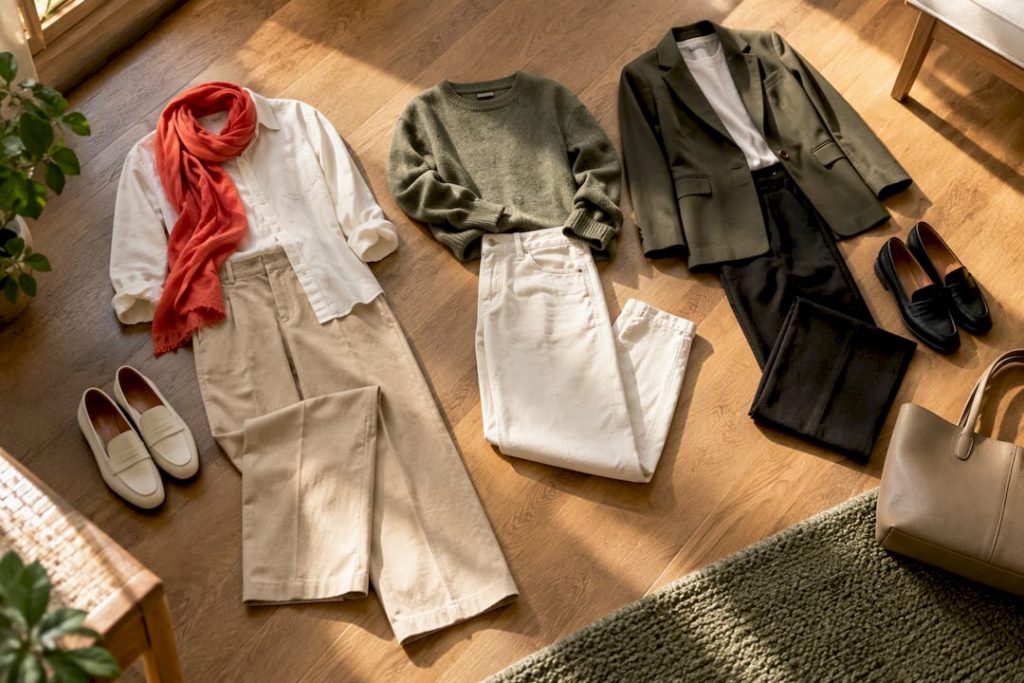
Capsule wardrobe essentials with 12, 15 and 25 item templates, outfit formulas, and a printable checklist to build a timeless, easy-to-wear closet.
A capsule wardrobe is a curated collection of versatile, high-quality clothing built around a handful of core categories: tees, button-downs, knitwear, trousers or jeans, a blazer, outerwear, shoes, and a small set of accessories. The magic is in how these pieces mix and match, turning a compact closet into dozens of outfit combinations. Fewer decisions each morning, better cost-per-wear, and a closet that finally makes sense.
TL;DR:
- A capsule wardrobe should include core categories like a white and black tee, a button-down shirt, dark jeans, tailored trousers, and a blazer for maximum versatility.
- Building a 12-piece capsule is ideal when starting, with options to expand to 15 or 25 pieces based on lifestyle needs, including multiple knit layers and accessories.
- Prioritize natural fabrics like cotton, wool, and linen, and ensure fit through tailoring to maximize durability and style coherence.
- Coordinate outfits with simple formulas such as pairing a white tee with jeans for casual days or a button-down with trousers for work.
- Avoid trend-chasing and keeping unnecessary “just in case” pieces to maintain a functional, minimalist wardrobe.
Table of Contents
- What are the core categories every capsule wardrobe needs?
- How many pieces make a capsule and what should you copy?
- What fit, fabric, and color rules keep everything working together?
- How do you turn capsule pieces into complete outfits?
- How do you adapt one capsule across all four seasons?
- What buying and care habits protect your investment?
- How can you build your own capsule step by step?
- The mistakes that quietly sabotage a capsule wardrobe
- Where this guide’s information comes from
- Grow your own audience with a smarter content strategy
- Sources
- FAQ
What are the core categories every capsule wardrobe needs?
Building a capsule starts with knowing which categories deserve a spot before you touch a shopping cart. Editorial guides consistently point to the same foundation: a white T-shirt, a button-down shirt, straight-leg jeans, a blazer, a good coat, versatile knitwear, and a pair of neutral shoes form the backbone of a working capsule wardrobe. Everything else fills in around those anchors.
Here is what to prioritize, category by category, and what to look for when you buy:
- A white tee and a black tee. Cotton or a cotton-modal blend holds its shape better than cheap jersey, and a slightly structured neckline (crew or V) works under blazers and alone with jeans.
- A button-down shirt in white or light blue. Cotton poplin looks polished for work and can be worn open over a tee for a casual weekend layer.
- One or two knit sweaters. A merino or cashmere-blend crewneck in a neutral like camel or gray pairs with trousers for the office or jeans for the weekend.
- Straight-leg or slim jeans in a dark wash. Dark denim reads dressier and pairs with heels, flats, or sneakers without looking mismatched.
- Tailored trousers. Wool-blend or ponte knit trousers in black or navy move from desk to dinner with a simple top swap.
- A blazer. This is the single hardest-working piece in most closets: thrown over a tee it looks intentional, worn with trousers it looks like a meeting.
- A versatile dress or skirt. A midi wrap dress or A-line skirt in a solid neutral covers events a blazer and trousers cannot.
- A quality outerwear piece. A wool coat or a trench in a neutral shade layers over everything else and tends to be the piece worth spending the most on.
- Shoes: one neutral sneaker, one heel or loafer, and weather-appropriate boots. Leather or leather-blend uppers last longer and resole better than synthetic alternatives.
- Accessories: a structured bag, a scarf, and simple jewelry. These are the fastest way to change the mood of an outfit without buying new clothes.
If you are starting from nothing, buy in this order: a white tee, dark jeans, a blazer, and white sneakers. Those four items alone can produce a week of outfits, and everything else layers on from there.
How many pieces make a capsule and what should you copy?
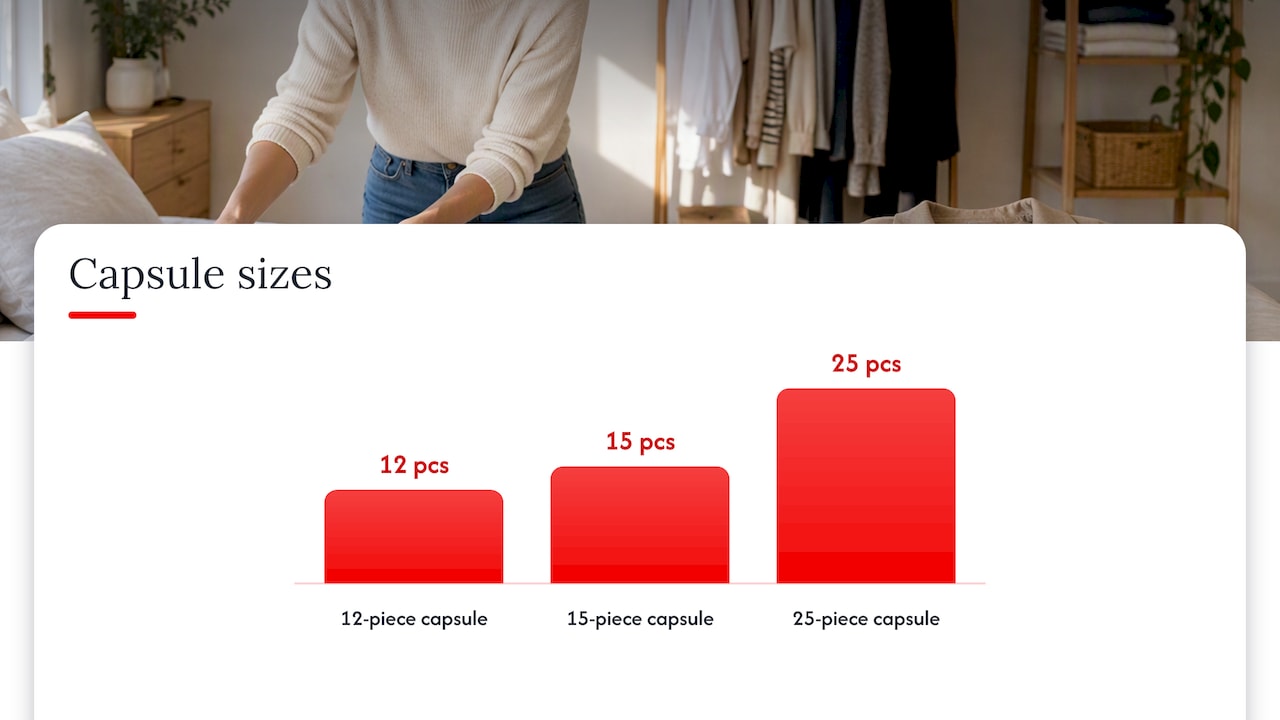
Capsule size depends on lifestyle more than any fixed rule. A tight 12-piece capsule suits someone testing the concept or packing for a trip; a 15-piece version adds room for a dress and a second pair of shoes; a 25-piece capsule fits someone who wants variety across work, weekend, and evening without buying constantly. Lands’ End frames the broader category as a small, intentional collection, typically 25 to 50 pieces, that mix and match into dozens of outfits.
A sample 12-piece capsule:
- White tee, black tee, one striped or patterned tee for variety.
- White button-down shirt.
- Gray crewneck sweater.
- Dark straight-leg jeans.
- Black tailored trousers.
- Navy blazer.
- Wrap dress in a solid neutral.
- Trench coat.
- White sneakers.
- Black loafers or low heels.
- Ankle boots.
- A structured neutral tote bag.
A 15-piece version adds a second knit, a lightweight cardigan for layering, and a scarf, giving more range for temperature swings and evening plans. None of these counts include underwear, sleepwear, or workout gear, which sit outside the capsule entirely.
What fit, fabric, and color rules keep everything working together?
Fit is where most capsules succeed or fail. Check the shoulder seam on jackets (it should sit right at the edge of your shoulder), sleeve length (hitting the wrist bone), and trouser break (a slight fold at the shoe, no bunching). Editors consistently point to tailoring as the fix that upgrades a piece more than buying something new, and a good tailor can adjust a blazer’s shoulders or hem trousers for less than the cost of a replacement.
- Choose natural fibers like cotton, wool, and linen for structure and breathability; save synthetics for activewear only.
- Wash knitwear cold and lay flat to dry to prevent stretching.
- Dry-clean blazers and coats no more than a few times a season to preserve the fabric.
- Steam instead of iron delicate fabrics like silk blends.
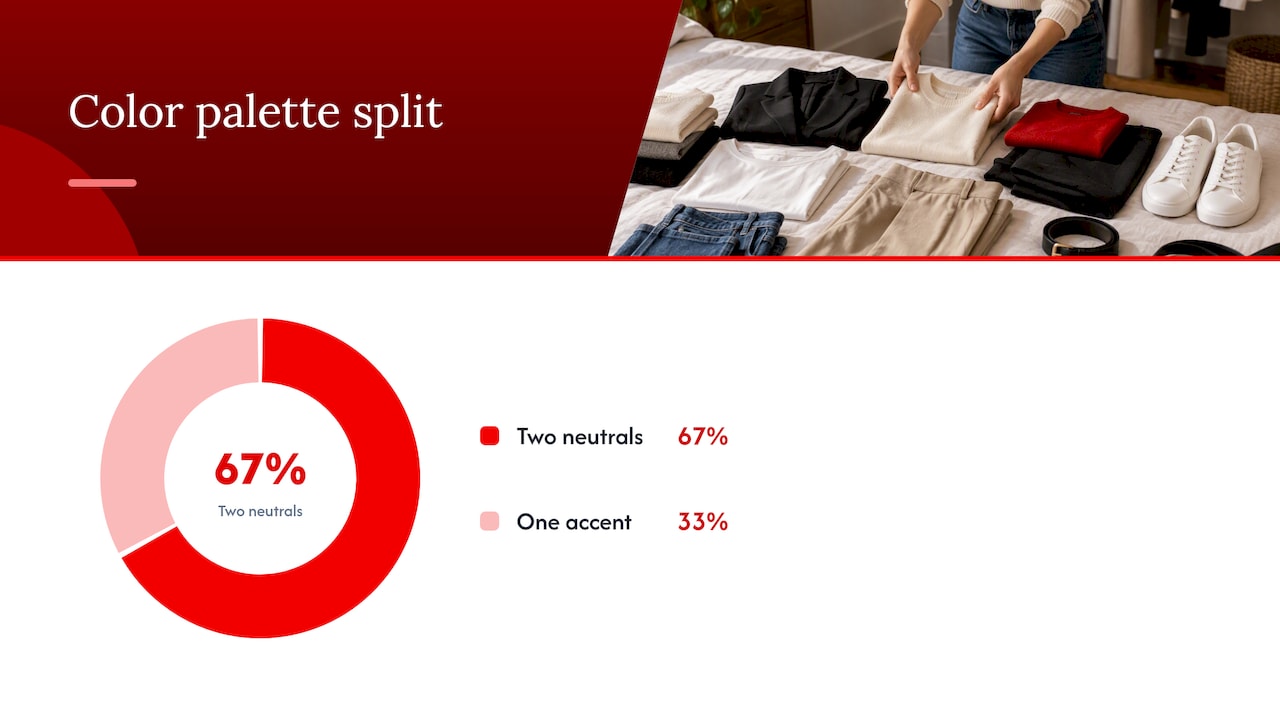
For color, a tight palette of two neutrals plus one accent (say, black, camel, and burgundy) is a practical method for making everything interchangeable, a strategy Glamour’s capsule guide leans on heavily. Before buying anything new, hold it against three existing pieces: if it does not pair easily with at least two, skip it.
Pro Tip: Photograph your existing wardrobe laid flat before you shop. It is the fastest way to spot gaps and duplicates you already own.
How do you turn capsule pieces into complete outfits?
Outfit formulas remove the guesswork once the pieces are in place.
- Everyday: White tee, dark jeans, white sneakers, structured bag.
- Work: Button-down, tailored trousers, loafers, blazer layered on top.
- Day-to-night: Swap flats for heels and add a statement earring to shift a work outfit into dinner-ready.
- Weekend: Sweater, jeans, ankle boots, trench coat over the top.
- Travel (7 days): Build around a 12-piece core: two tees, one button-down, one sweater, jeans, trousers, a dress, a blazer, and one pair of shoes doing double duty for walking and dinner.
Our fashion styling tips guide covers more pairing combinations, and our guide to packing light walks through fitting this exact core into a carry-on.
How do you adapt one capsule across all four seasons?
A capsule does not need to double in size each season, just layer differently. Think in three tiers: a base layer (tee, tank), a mid layer (sweater, button-down), and an outer layer (blazer, coat). Swapping fabric weight, not swapping the whole wardrobe, is what carries a capsule from July to January.
- Store heavy wool knits and swap in linen or lightweight cotton for warmer months.
- Add a lightweight jacket or cardigan for spring and fall transitions.
- Keep one weatherproof coat and one pair of waterproof boots as year-round anchors.
- Rotate sandals in and boots out rather than buying entirely new shoe categories.
Compressing a bulky coat for travel is its own skill. This guide on fitting a coat into a carry-on has practical folding techniques worth trying before a seasonal trip.
What buying and care habits protect your investment?
The best capsule pieces earn their keep through repeated wear, not low price tags.
- Check seams, buttons, and stitching density before buying, in store or online.
- Read fabric content on the label: a blend under 5% synthetic in a “wool” sweater is a red flag.
- Calculate cost-per-wear: a $120 blazer worn 60 times costs $2 per wear, cheaper over time than a $40 blazer worn five times before it loses shape.
- Use a 30-wear threshold as a gut check: if you cannot picture wearing something 30 times, skip it.
Pro Tip: Keep a small sewing kit at home for loose buttons and use a fabric shaver on knitwear the moment pilling starts, before it spreads.
How can you build your own capsule step by step?
The process breaks into five steps: audit what you own, purge what does not fit or flatter, choose a color palette, plan your outfit combinations, then buy or alter the gaps.
- A printable checklist should include item slots by category, tailoring notes, and outfit pairing slots to fill in as you go.
- Pair this process with our guide on decluttering a closet for the purge step.
- Our men’s 25-piece capsule guide offers a longer build timeline if you prefer a gradual approach.
The mistakes that quietly sabotage a capsule wardrobe
Trend-chasing, ignoring fit, and keeping “just in case” pieces are the three habits that turn a capsule back into clutter. A realistic starting point is 12 pieces, adding deliberately as gaps appear. The fastest win: take one piece you already own to a tailor this week.
— Alexander
Where this guide’s information comes from
- British Vogue’s capsule wardrobe guide for staple lists and tailoring advice.
- Glamour’s capsule wardrobe story for sample lists and the color-palette method.
- Lands’ End’s workwear capsule guide for practical 12-piece examples.
- Academic research on capsule wardrobe adoption covering wellbeing and sustainability links.
Grow your own audience with a smarter content strategy
Building a capsule wardrobe works because fewer, better choices beat constant buying, and the same principle applies to growing a brand online. If your business needs more visibility without piecing together a dozen scattered tactics, our Banner Ads and Guest Post options put your message in front of readers already looking for lifestyle and shopping guidance. Reach out to explore placement options and find the fit that matches your goals.
Sources
- How To Build A Capsule Wardrobe That Stands The Test Of Time | British Vogue
- 15 Capsule Wardrobe Essentials for Every Woman in 2026 | Glamour
- Building A Capsule Wardrobe of Work Apparel | Lands’ End | Lands’ End
- Study on capsule wardrobe adoption, wellbeing, and sustainability
FAQ
What is the 3-3-3 rule for a capsule wardrobe?
The 3-3-3 rule is a minimalist styling method where you choose three tops, three bottoms, and three pairs of shoes to wear for three months. It is a stricter variation of the capsule concept meant to test how few pieces you actually need in daily rotation.
What is the 5-4-3-2-1 rule for packing?
Definitions vary, but a common version suggests packing 5 tops, 4 bottoms, 3 pairs of shoes, 2 dresses, and 1 jacket for an extended trip. It works well alongside a 12 to 15-piece travel capsule built around a single color palette.
What should you pack for a 7-day trip using a capsule wardrobe?
A 7-day trip works well with a 12-piece core: two tees, one button-down, one sweater, jeans, trousers, a dress, a blazer, and two pairs of shoes. Mixing and layering these pieces can produce a distinct outfit for each day without checking a bag.
What are the 37 items typically listed in a capsule wardrobe?
There is no single official item count; the number varies by source and lifestyle. Most versions expand the core categories, tees, knitwear, trousers, blazers, dresses, outerwear, shoes, and accessories, into more color and fabric options rather than adding new categories.
How many pieces should a beginner start with?
Beginners often start smaller than they expect, around 12 pieces built on one color palette. This keeps the process manageable and makes it easier to spot real gaps before buying more.
















Leave a Comment
Your email address will not be published. Required fields are marked with *