
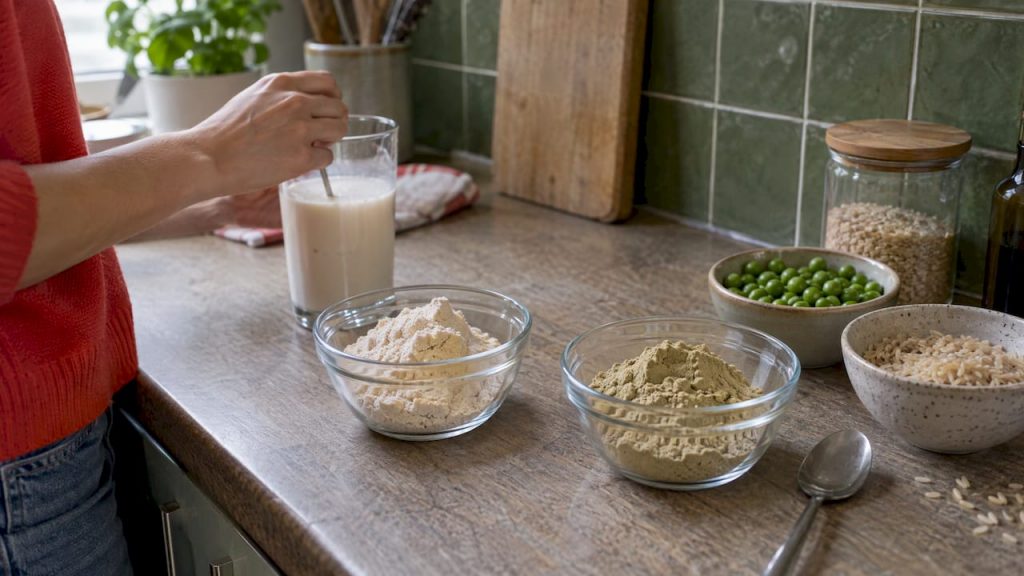
Plant protein vs. whey, compared on muscle growth, leucine, digestion and dose, so you can pick the powder that fits your training and your stomach.
Both can help you build muscle, recover after training and hit your daily protein target. Whey is faster and naturally richer in leucine. Plant protein, especially a pea or soy blend taken in a slightly larger scoop, can match it over the long run, and it suits anyone who avoids dairy. The better choice is the one that fits your stomach, your diet and your routine, because the best powder is the one you will actually use every day.
Below, we walk through what the research says, what changes in the scoop, and how to choose with confidence.
TL;DR
- Whey digests quickly and is naturally high in leucine, the amino acid that switches on muscle building.
- Plant proteins can produce comparable strength and muscle gains when your total daily protein and leucine are matched.
- Plant powders may need a slightly bigger serving or a blend of sources (pea plus rice, for example) to match whey.
- Whey contains lactose; plant proteins do not, which makes them a gentle option for sensitive stomachs.
- Pick on your goals, digestion, diet and taste, then stay consistent. Consistency beats the “perfect” powder.
Table of Contents
- The short answer: it depends on your body and your plate
- Plant protein vs. whey at a glance
- Can you still build muscle with plant protein?
- Pea protein vs. whey
- Why leucine matters, in plain words
- Digestion, lactose and who should skip whey
- The downsides people raise about plant protein powder, and how to handle them
- Which is healthier?
- Protein and your bones
- How to choose: a simple decision guide
- Timing and daily total
- Perspective
- Looking to share your expertise with our readers?
- FAQ
- Sources
The short answer: it depends on your body and your plate
If you want the most efficient, fastest-digesting scoop and dairy sits well with you, whey is a proven choice. If you are vegan, lactose-sensitive, or simply prefer plant-based eating, a well-made plant protein gets you to the same place.
A review of protein supplementation notes that animal proteins are generally complete, while plant proteins may be lower in digestibility or amino acid completeness and may need higher intake or blending (Current Perspectives on Protein Supplementation). That is a recipe note, not a verdict. A pea and rice blend, or a soy-based powder, handles most of it for you.
The same review concludes that when total intake and leucine thresholds are matched, plant proteins and blends can deliver comparable long-term adaptations. So the real question is less “which is better?” and more “which is better for me?”
Plant protein vs. whey at a glance
| Factor | Whey | Plant protein (pea, soy, blends) |
|---|---|---|
| Source | Milk | Peas, soy, rice, hemp, seeds |
| Digestion speed | Rapid | Moderate for pea; varies by blend |
| Leucine | Naturally high | Lower per gram unless blended or fortified |
| Amino acid profile | Complete | Often complete in blends or soy |
| Lactose | Contains lactose | Lactose-free |
| Typical serving needed | Standard scoop | Sometimes a slightly larger scoop |
| Suits vegans | No | Yes |
The digestion speed and leucine points come from the same protein supplementation review: whey is rapid and leucine-rich, while pea is moderate-digesting. Everything else in the table is a general feature of how each product is made.
Can you still build muscle with plant protein?
Yes. This is the question behind most searches, and the evidence is encouraging, with a few details worth knowing.
Trials that show comparable results
- In healthy sedentary adults doing resistance training, pea protein produced improvements in strength and muscle mass comparable to whey after 84 days.
- A 2020 randomized trial found that soy and whey supplements matched for 2 g of leucine produced comparable gains in lean body mass and strength over 12 weeks.
- In resistance-trained adults, a 2024 study showed that a plant-based protein blend stimulated post-exercise myofibrillar protein synthesis at rates equivalent to whey. Myofibrillar protein synthesis is the process of building new muscle fibres.
The nuance
Not every analysis lands in exactly the same place. A meta-analysis of trials published through June 2023 found lower muscle mass gains with plant than animal protein, especially in younger adults, but no significant difference in strength. That is a useful clue about how to use plant protein well. The gap tends to show up when intake is not matched, so the fix is a practical one: reach your total protein target and get enough leucine.
Nutrition researchers say the same thing. The lower anabolic response to plant protein can be reduced by higher total intake, blending sources or fortifying with leucine. Nutrition experts quoted by Health also point out that plant proteins may need larger doses or complementary sources to match animal proteins.
In short: plant protein works, and a little planning makes it work even better.
Pea protein vs. whey
Pea is the most popular single-source plant powder, so it deserves its own comparison.
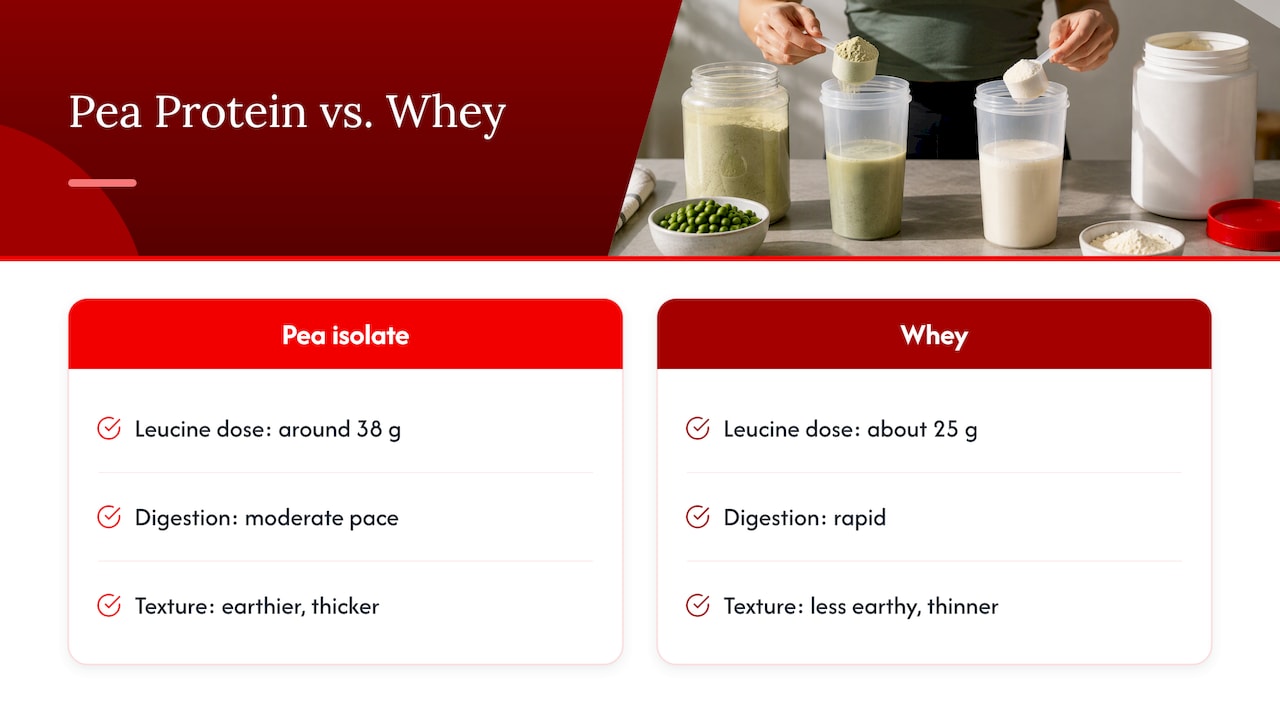
Speed. Whey is rapid. Pea digests at a moderate pace, which some people find keeps them fuller for longer. For most lifters, a few minutes of difference does not change the outcome, because muscle repair unfolds over many hours.
Leucine. Leucine is the trigger amino acid for muscle protein synthesis. According to the protein supplementation review, to reach the same leucine threshold as whey, athletes may need slightly larger doses of plant protein (around 38 g of pea isolate versus about 25 g of whey) or may add free leucine. That is a modest difference, easy to handle with a heaping scoop or a blend.
Recovery and performance. A 2023 study of soccer athletes found that while pea protein produced different metabolic marker profiles than whey, there was no meaningful difference in recovery or performance outcomes. So for athletes who train hard and want a plant option, pea is a viable alternative.
Real-world feel. Pea tends to be a bit earthier and thicker than whey. A good blend, a blender and a banana, a spoonful of nut butter or a splash of cold coffee usually smooth that out.
Why leucine matters, in plain words
Think of muscle building as a construction site. Protein supplies the bricks, and leucine is the foreman who tells the crew to start working. Without enough leucine in a meal, the crew stays idle, even if bricks are on hand.
Whey naturally contains a lot of leucine per scoop, so it clears the bar easily. Plant proteins contain less per gram, so there are three simple ways to close the gap:
- Take a bigger serving. Moving from a 25 g scoop to something closer to 35 to 40 g of a pea isolate is the approach discussed in the research above.
- Blend sources. Combining complementary proteins improves the amino acid profile.
- Add leucine. Some powders are fortified with free leucine to reach a target dose. If you want a deeper look at how to hit a leucine target, see our guide to protein powder types and leucine.
The 2020 soy and whey trial above used a 2 g leucine match. That number is a helpful anchor when you compare labels.
Digestion, lactose and who should skip whey
Whey comes from milk, so it contains lactose. Health notes that lactose can cause gastrointestinal distress in people with lactose sensitivity or intolerance, while plant-based proteins are inherently lactose-free.
If a whey shake leaves you bloated, gassy or rushing to the bathroom, plant protein is an easy switch. People managing a true milk allergy need a different level of care. Milk allergy is not the same as lactose intolerance, and a dietitian can help you build a safe, dairy-free plan. This overview of milk allergy symptoms and dairy-free eating is a good starting point for the diet side of it.
A few other reasons readers choose plant protein:
- They follow a vegan or plant-forward diet.
- They want to cut back on dairy for personal or ethical reasons.
- They like the idea of a lower-impact pantry staple.
If you are choosing for a specific medical reason, such as a kidney condition, a skin condition that your dermatologist links to dairy, or a diagnosed allergy, talk to your doctor or a registered dietitian before you settle on a powder. They know your history; a general article does not.
The downsides people raise about plant protein powder, and how to handle them
Readers often ask what the catch is. Here is how we would frame it: these are the things to look for when choosing a plant powder well.
Amino acid completeness. Some single-source plant proteins are lower in one or two essential amino acids. Blends, such as pea with rice, fill in the gaps, and soy is generally a strong single-source option. Research on plant proteins also shows that soaking, fermenting or combining plant proteins with other sources can improve their amino acid profile and digestibility. Many powders already use these techniques, so look for blends and read the label.
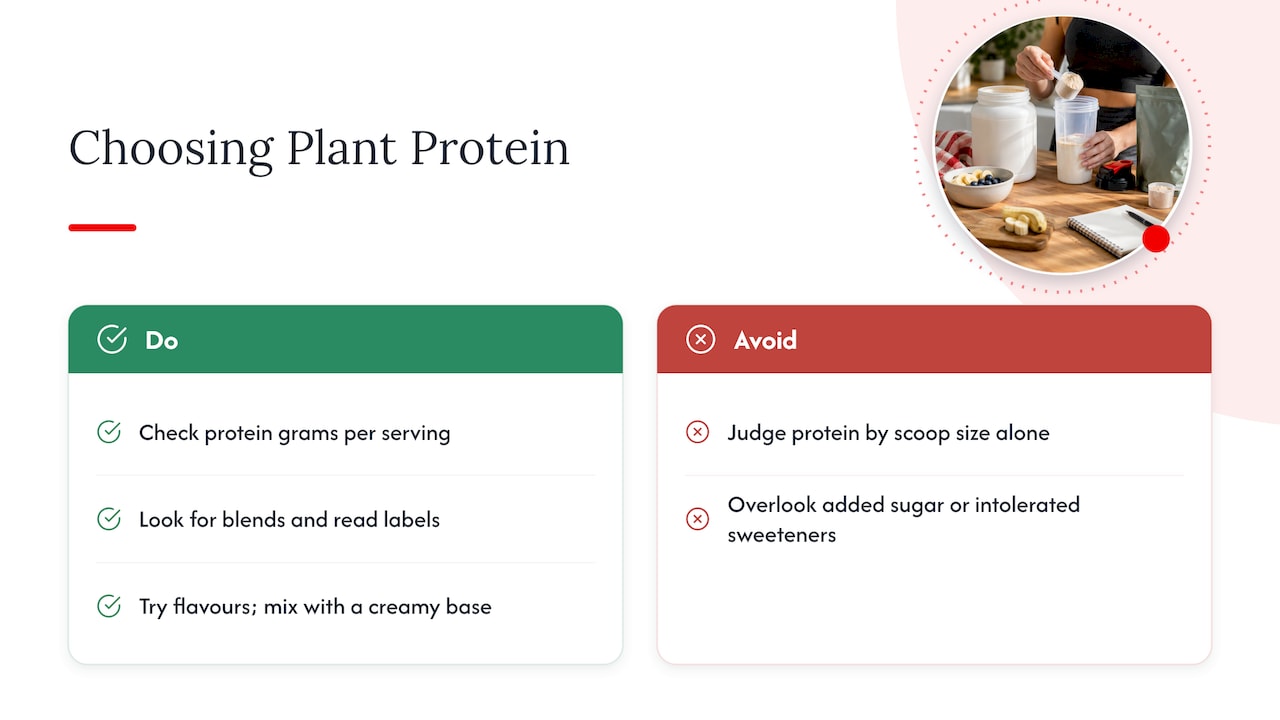
Serving size. You may need a slightly larger scoop to reach the same leucine. Read the grams of protein per serving, not just the scoop size.
Texture and flavour. Plant powders can be grittier or more earthy. Try a few flavours and mix with a blender or a creamy base.
Label quality. Check the ingredient list for added sugar, sweeteners you do not tolerate, and the true protein grams per serving.
None of this is a reason to avoid plant protein. It is a quick checklist that helps you land on a powder you enjoy.
Which is healthier?
“Healthier” depends on what you are comparing. One recent roundup notes that whey tends to deliver more potassium and calcium, while vegan powders tend to contain more iron, and that whey carries more cholesterol (Healthline-style comparisons vary by brand). Because brands differ so much, the nutrition panel on the tub tells you more than the category does.
A practical approach to “healthy”:
- Choose a powder with a short, recognizable ingredient list.
- Check protein per serving against calories and added sugar.
- Favour products that list their protein sources clearly.
- Treat powder as a convenient addition to meals, not a replacement for them.
Whole foods still do the heavy lifting. A bowl packed with legumes, grains and seeds can supply a generous protein dose, and a ready-made example such as a 25 g plant protein bowl shows how far food alone can go before the shaker comes out.
Protein and your bones
Protein is not only about muscle. Bones are living tissue that depend on adequate protein along with calcium, vitamin D and loading exercise. If you are weighing powders for long-term health, it helps to read a plain-language look at protein and bone density evidence, and to speak to your clinician if you have osteopenia or osteoporosis.
How to choose: a simple decision guide
Use these questions in order.
- Does dairy upset your stomach? If yes, start with plant protein.
- Do you follow a vegan or dairy-free diet? Plant protein, ideally a blend or soy.
- Do you want the fastest digestion after training and tolerate dairy? Whey is a natural fit.
- Do you want to keep it simple on leucine? Whey reaches the threshold in a standard scoop; with plant, aim for a blend, a larger serving or a leucine-fortified powder.
- Do you care about taste and texture? Sample single-serve packs or small tubs first.
- Is budget a factor? Compare price per gram of protein, not price per tub.
Worked example
Say you train four days a week and want about 25 to 30 g of protein after a session.
- Whey route: One standard scoop in water or milk. Done.
- Plant route: A scoop and a half of a pea and rice blend, or a soy powder, in a smoothie with oats and fruit. Check that the label shows enough protein per serving and, if listed, leucine.
Both routes work. The second takes one extra thought at the scoop, and the first requires comfortable digestion of dairy.
Timing and daily total
The powder matters less than the pattern. A few habits make the biggest difference whichever you choose:
- Spread protein across the day. Aim for a solid serving at each meal rather than loading it all at dinner.
- Pair powder with resistance training. The trials above all combined supplements with lifting.
- Hit your total first. A powder is a convenience tool for reaching your target, not a magic extra.
- Be patient. The pea trial ran 84 days, and the soy and whey trial ran 12 weeks. Changes in muscle take weeks, not days.
If you are recovering from an injury or surgery, protein needs can differ. This guide to protein needs during rehabilitation is worth a read, and your physiotherapist or doctor can set a number that fits your situation.
Perspective
We read a lot of protein research, and the pattern is reassuring. Whey is a fast, leucine-rich option that many people love. Plant protein is a smart, flexible alternative that rewards a little label reading.
What we find most useful for readers is moving the conversation away from a winner-takes-all debate. If your digestion is happy with dairy, whey is a straightforward pick. If it is not, or you simply prefer plants, a blend with enough protein and leucine per serving can carry you through your training just as well.
Our advice is to match the powder to your life: your diet, your stomach, your schedule and your taste buds. Then look for the options that make the habit effortless, because the powder that tastes good and sits well is the one you will keep using.
Alexander
Looking to share your expertise with our readers?
We publish guides across health, fitness, tech, travel and lifestyle, and we welcome brands and writers with something useful to say. If you offer wellness, nutrition or fitness expertise, you can explore a guest post or banner placement on our advertising page and reach readers who are actively comparing their options.
FAQ
Which is healthier, plant protein or whey protein?
Neither wins outright. Whey offers more potassium and calcium on average, while plant powders tend to offer more iron, and both support muscle when your daily total is on target. The nutrition label of the specific product tells you more than the category, so compare protein per serving, added sugar and ingredients.
Can you still build muscle with plant protein?
Yes. Trials of pea, soy and plant blends alongside resistance training have shown strength and muscle gains comparable to whey when intake and leucine are matched. Using a slightly larger serving or a blend helps you get there.
What are the downsides to plant protein powder?
The main things to manage are a lower leucine content per gram, a slightly bigger serving size and a more earthy texture. Blends, soy-based powders and leucine-fortified products address the first two, and a blender or creamy base handles the third.
Why do some people avoid whey protein?
Whey contains lactose, which can cause digestive discomfort for people with lactose sensitivity or intolerance. Plant proteins are lactose-free. If you have a diagnosed milk allergy or a skin or medical condition linked to dairy, ask your doctor or a registered dietitian before choosing a powder.
Is pea protein as good as whey?
For most people who train regularly, pea protein is a strong alternative. Trials have found comparable strength and muscle outcomes and no meaningful difference in recovery or performance in athletes. You may need roughly 38 g of pea isolate to match the leucine in about 25 g of whey.
Sources
- Current Perspectives on Protein Supplementation
- Efficacy of Pea Protein Supplementation in Combination with Resistance Training
- No Significant Differences in Muscle Growth and Strength (soy vs. whey)
- Plant protein blend ingestion stimulates post-exercise myofibrillar protein synthesis
- Effect of Plant Versus Animal Protein on Muscle Mass
- Are plant-based and omnivorous diets the same for muscle
- We Asked Nutrition Experts Which Type of Protein Is Best
- Whey Protein vs. Plant Protein: Which Is Better
- Comparison of the effects of pea protein and whey protein in soccer athletes
- Plant Proteins: Assessing Their Nutritional Quality
- Milk allergy symptoms and dairy-free diet
- Protein and bone density evidence
- 25 g plant protein bowl
- Protein needs during rehabilitation















Leave a Comment
Your email address will not be published. Required fields are marked with *