
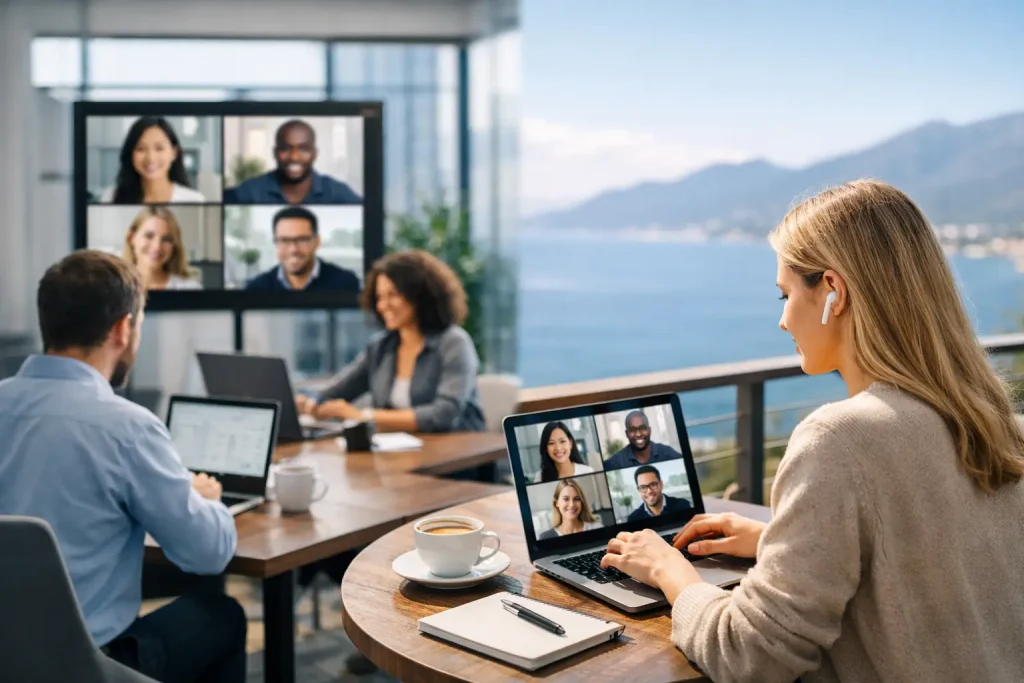
Remote work trends are redefining hiring, schedules, office space, and career growth. Learn what workers and employers can expect as teams change plans.
The most revealing remote work trends are no longer about whether people can work from home. That question has been answered. The bigger question is what work looks like when employees split their time among home offices, company hubs, client sites, and sometimes entirely different states.
For workers, that shift affects everything from commute costs to promotion opportunities. For employers, it changes recruiting, real estate, cybersecurity, management, and payroll rules. The companies getting it right are not simply declaring themselves remote or demanding everyone return to a desk. They are building work policies around the jobs people actually need to do.
Remote Work Trends Are Moving Toward Flexibility With Structure
The early remote-work era made flexibility the headline. Now, flexibility is becoming more specific. Many employers are setting clear expectations for when teams should be together, which meetings require video, and how quickly employees should respond during working hours.
That may sound less freewheeling than the fully remote promises of a few years ago, but it can make work easier to manage. A marketing team may come in for campaign planning once or twice a month, for example, while completing focused writing, reporting, and vendor work remotely. A product team may reserve in-person days for workshops and use remote days for individual tasks.
This is why hybrid work remains the practical middle ground for many businesses. It gives employees more control over their schedules while preserving time for relationship building and fast decision-making. Still, hybrid only works when it is designed intentionally. A vague policy such as “come in when it makes sense” often creates confusion and can favor employees who live near headquarters.
The office is becoming a destination, not a default
Companies are rethinking what an office is for. Rows of assigned desks matter less when people come in only a few days each month. In their place, employers are putting more emphasis on meeting rooms, quiet focus areas, project tables, and spaces where teams can socialize without turning every visit into a mandatory all-day meeting.
For employees, this creates a useful test: if a commute is required, the day should offer something that cannot be replicated from a laptop at home. That could be training, collaboration, leadership access, or a meaningful team event. Simply sitting on video calls from a company desk is a fast way to make office days feel pointless.
Hiring Is Less Local, But Not Fully Borderless
Remote work has expanded the talent pool. A small business in one city can recruit a skilled designer, accountant, customer success manager, or software developer from another region without paying relocation costs. Workers also have more chances to seek roles beyond their immediate commute radius.
Yet “work from anywhere” has limits. Hiring across state lines can bring different tax withholding rules, wage laws, leave requirements, workers’ compensation obligations, and benefit considerations. International remote work adds immigration, data-security, and local employment-law issues. For that reason, many companies are narrowing broad work-from-anywhere language into approved-state or approved-country policies.
This does not erase the value of remote hiring. It simply means companies need to treat location as an operational detail, not an afterthought. Job seekers should read location language closely before accepting an offer. A role labeled remote may still require living in a particular state, attending quarterly meetings, or working a set time zone.
Pay is becoming more transparent, but geography still matters
Salary ranges are appearing in more job postings, and that is a meaningful improvement for candidates. At the same time, employers continue to use different compensation models. Some pay one national rate for a role. Others adjust pay based on the employee’s location, local labor market, or cost of living.
Neither model is automatically fairer in every situation. A national rate may simplify hiring and feel easier to understand, while location-based pay can reflect regional market differences. The key is clarity. Candidates should ask how compensation is set, whether a move could affect pay, and what raises are tied to performance versus market adjustments.
Remote Career Growth Needs More Than Good Work
One of the tougher realities of remote work is visibility. Excellent work still matters most, but people who rarely interact with decision-makers can be overlooked when stretch assignments, promotions, and leadership opportunities arise. This is not an argument for constant office attendance. It is a reason to make accomplishments and career goals easier to see.
Remote employees can help themselves by documenting completed projects, sharing concise progress updates, and scheduling purposeful conversations with managers. Instead of hoping a supervisor notices a contribution, explain the result: a process that saved time, a customer issue that was resolved, a campaign that improved performance, or a training guide that helped new hires ramp up faster.
Managers have an even bigger responsibility. Promotions should not go to the person seen most often in the hallway. Strong leaders use clear performance criteria, distribute high-value assignments fairly, and create regular opportunities for remote employees to present their work. When career development depends on physical proximity, hybrid teams quickly develop a two-tier culture.
AI Is Changing Remote Work, Not Replacing It
AI tools are becoming part of the remote-work toolkit, especially for drafting routine communications, summarizing meetings, organizing research, and creating first-pass project materials. Used well, these tools can reduce the administrative work that makes distributed teams feel buried in messages and status updates.
But the trade-off is real. Teams need rules about what information can be entered into AI platforms, who reviews AI-generated output, and when human judgment is required. Customer data, financial details, legal documents, and internal strategy should never be treated casually just because a tool is convenient.
For workers, the most durable advantage is not simply knowing how to write a prompt. It is knowing how to verify answers, spot weak reasoning, protect sensitive information, and turn a rough draft into useful work. Those are skills that matter in an office, at home, or anywhere else.
The Home Office Is Becoming a Practical Benefit
A reliable home setup is no longer a luxury for many remote employees. It is basic work infrastructure. Employers are increasingly recognizing that a laptop alone may not be enough for productive, healthy work over the long term.
Support can take different forms: an equipment stipend, a company-provided monitor, an ergonomic chair allowance, a coworking option, or reimbursement for a portion of internet service. The right choice depends on the role and budget. A full-time remote employee handling detailed spreadsheets may benefit from multiple monitors, while a field-based worker may get more value from a mobile hotspot and secure device management.
Employees should also think beyond aesthetics. Good lighting improves video calls, but posture, keyboard placement, noise levels, and a dependable internet connection have a larger impact on daily comfort. Small upgrades can prevent a lot of frustration over a year.
What Workers and Employers Should Watch Next
The next phase of remote work will likely be less about one universal policy and more about matching work arrangements to the work itself. Jobs that require hands-on service, equipment, patient care, or on-site operations will remain location-dependent. Knowledge work may continue moving toward flexible schedules, distributed teams, and more deliberate in-person gatherings.
For workers, the best opportunity is to evaluate a role beyond the word “remote.” Ask how often travel is expected, whether the team works across time zones, how performance is measured, and what support is provided for career growth. For employers, the smartest move is to make policies specific enough that people can plan their lives and flexible enough that teams can do their best work.
The most successful workplaces will not treat remote work as a perk or the office as a punishment. They will give people a clear reason for each, then make both work better.


















Leave a Comment
Your email address will not be published. Required fields are marked with *