

Discover why travel off-peak can save you money and enhance your experience. Enjoy lower prices and fewer crowds for a memorable trip!
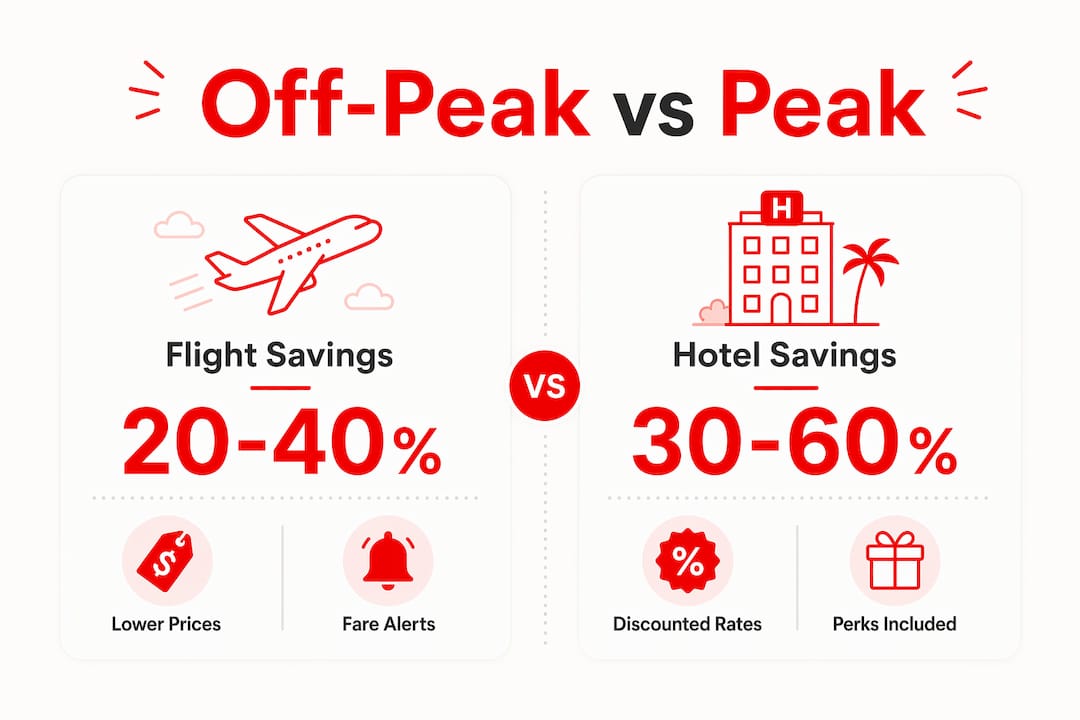
Off-peak travel is defined as visiting a destination during its low or shoulder season, when tourist numbers drop and prices fall sharply across flights, hotels, and activities. The advantages of traveling off-peak are both financial and experiential: hotel costs drop 30–60% and flights run 20–40% cheaper compared to peak periods. At the same time, 40–60% fewer tourists means shorter lines, easier reservations, and a calmer pace that peak-season travelers simply never get. If you want to stretch your budget and experience a destination the way locals actually live it, traveling during off-peak times is the clearest path forward.
Why travel off-peak for financial savings?
Off-peak travel delivers its most obvious win in your wallet. Peak season costs spike 50% or more above low-season rates, and that gap shows up across every line item of your trip budget.

Flight savings that add up fast
Airfare is the single largest variable cost for most trips. Flying during low-demand periods cuts ticket prices by 20–40% on popular routes. Midweek flights, particularly on Tuesdays and Wednesdays, consistently price lower than weekend departures because business and leisure demand both fall mid-week. Booking six to eight weeks before an off-peak departure often captures the lowest fares before airlines adjust inventory upward.
Pro Tip: Set fare alerts for your target destination starting three months out. Prices during shoulder season fluctuate more than in peak, which means patient travelers catch genuine drops rather than manufactured “sales.”
Hotel discounts and unexpected perks
Hotels cut rates by 30–50% during low season, and some properties go as high as 60% off their peak rack rates. Lower occupancy also means front desk staff have more flexibility. Room upgrades and late checkouts become genuine possibilities rather than paid add-ons, simply because the hotel has inventory to spare. A standard room booked at an off-peak rate sometimes comes with a suite-level upgrade at no extra charge.
Transportation and activity costs
The savings extend well beyond flights and beds. Car rentals price lower during off-peak periods, and rental companies frequently waive fees for additional drivers or reduce deposit requirements when demand is soft. Surge pricing for taxis and rideshares disappears when tourist volume drops. Tour operators and local guides often reduce group rates or offer private experiences at prices that would be impossible in high season.
Here is a quick breakdown of where off-peak savings hit hardest:
- Flights: 20–40% cheaper on major routes, especially midweek
- Hotels: 30–60% rate reductions with upgrade potential at lower occupancy
- Car rentals: Lower base rates, fewer add-on fees, and better deposit terms
- Tours and activities: Discounted group rates or affordable private options
- Dining: Restaurants compete harder for customers, and prix-fixe deals appear more often
For travelers who want a concrete starting point, the cheap weekend trip ideas guide at Lizardslunch covers domestic destinations that reward off-peak timing with real dollar savings.
How does off-peak travel improve the experience?
The financial case is clear, but the experiential shift is what converts most travelers into off-peak loyalists. Destinations reveal their true rhythm when they are not performing for peak-season crowds. That is a fundamentally different kind of trip.
What fewer crowds actually feel like
With 40–60% fewer tourists on the ground, the practical differences are immediate. Attractions that require timed entry during peak season become walk-in experiences. Restaurants that book out weeks in advance suddenly have tables available the same evening. Museums feel like they belong to you rather than to a tour group of forty people blocking every exhibit.
The slower pace changes how you move through a place. You linger at a market stall because there is no crowd pushing you forward. You take a second lap through a gallery because the room is quiet. That kind of unhurried exploration is what most travelers say they wanted but rarely get during peak season.
Authentic local engagement
“Off-peak travel is not just a discount. It is a fundamentally different way to experience a destination’s authentic culture and daily rhythm. When the tourist performance stops, the real place begins.”
Local businesses, restaurant owners, and guides have more time for genuine conversation when they are not managing peak-season volume. A café owner in Lisbon in november has time to recommend a neighborhood market. A guesthouse host in Kyoto in february can sit and explain the history of a nearby temple. These interactions are the ones travelers remember for years, and they happen naturally when the crowds thin out.
Balancing trade-offs honestly
Off-peak travel does carry real trade-offs. Some attractions close for maintenance during low season. Weather can be unpredictable, and certain outdoor activities become unavailable. Service levels at some resorts drop when staff numbers are reduced. The key is researching these specifics for your chosen destination before you book, not after. A flexible itinerary that builds in alternative plans handles most of these situations without stress.
Here is a practical sequence for evaluating any off-peak destination:
- Confirm which attractions stay open year-round versus which close seasonally
- Check average weather conditions for your target month, not just the best-case scenario
- Read recent traveler reports from the same period in prior years
- Identify at least two backup activities in case your first choice is unavailable
- Pack for variable conditions, since off-peak weather shifts more than peak-season forecasts suggest
Pro Tip: A minimalist packing approach works especially well for off-peak trips. Variable weather means you need layers rather than a single-season wardrobe, and a lighter bag keeps you flexible when plans change.
What are the environmental benefits of traveling off-peak?
Off-peak travel is one of the most practical forms of sustainable tourism available to individual travelers. The environmental and social benefits are real, measurable, and often overlooked in conversations about responsible travel.
Reducing pressure on infrastructure and nature
Per-capita resource consumption drops when visitor numbers spread across the year rather than concentrating in a few peak months. Hotels implement energy-saving measures during low-occupancy periods. Popular natural sites recover between visitor cycles. Coastal ecosystems, mountain trails, and historic sites all experience less physical wear when foot traffic is distributed more evenly.
“Off-peak tourism helps reduce environmental degradation by spreading demand throughout the year, giving infrastructure and natural resources time to recover between high-traffic periods.”
The benefits extend to urban environments as well. Overcrowded streets, overloaded public transit, and strained waste management systems are direct results of concentrated peak-season tourism. Traveling outside those windows reduces your individual contribution to those pressures.
Supporting local economies year-round
- Steady employment: Tourism workers in seasonal destinations often face unemployment outside peak months. Off-peak visitors provide income that stabilizes livelihoods year-round.
- Reduced boom-bust cycles: Local businesses benefit from consistent revenue rather than a frantic peak followed by months of near-zero income.
- Cultural preservation: Communities under less tourist pressure have more capacity to maintain traditions and cultural practices on their own terms rather than packaging them for peak-season consumption.
- Infrastructure investment: Governments and municipalities in tourist-dependent regions can plan infrastructure spending more effectively when revenue is not concentrated in a single quarter.
Choosing to travel during low season is a direct vote for a more sustainable tourism economy. The individual savings you capture are real, and the collective impact of more travelers making that choice compounds over time.
What practical strategies make off-peak trips work?
Planning an off-peak trip requires a bit more research than booking a standard peak-season package, but the payoff is worth the effort. The right preparation turns potential pitfalls into non-issues.
Research the local calendar before you book
Local school holidays and regional events can turn a supposedly quiet period into an unexpected crowd spike. A beach town that is calm in september for international tourists may be packed with domestic families during a national school break. A city that looks off-peak on a global calendar may host a major festival that fills every hotel and doubles prices for a week.
The fix is simple: check the local school holiday calendar, regional event listings, and national public holidays for your destination before finalizing dates. This single step separates travelers who genuinely experience off-peak conditions from those who accidentally book into a local peak.
- Search the destination’s official tourism board website for event calendars
- Cross-reference with local school term dates for the specific country or region
- Check hotel availability across your target dates. A sudden gap in availability signals a local event
- Ask in travel forums specific to your destination. Locals and frequent visitors flag these patterns quickly
- Build a two-week window of flexibility into your planning so you can shift dates if a conflict appears
Book early to capture off-peak perks
Lower demand does not mean you should wait until the last minute. Booking early in the off-season secures the best room categories, preferred tour slots, and any early-bird discounts that properties offer to guarantee occupancy. Last-minute deals exist, but they come with uncertainty about availability and room quality.
Pro Tip: Use price-tracking tools to monitor flight and hotel rates for your target dates over a four-to-six week window. Off-peak pricing is dynamic, and a brief dip often signals the right moment to book.
Use technology to stay ahead of deals
Travel deal aggregators, fare alert services, and hotel loyalty apps all perform better for off-peak travelers because there is less competition for the deals they surface. Setting alerts for specific routes and dates costs nothing and removes the need to check prices manually every day. Pairing fare alerts with a travel tech gadget setup keeps you connected and organized without adding bulk to your bag.
Key Takeaways
Off-peak travel cuts costs by 20–60% across flights, hotels, and transport while delivering fewer crowds, more authentic experiences, and a measurable positive impact on local communities and environments.
| Point | Details |
|---|---|
| Significant cost savings | Flights drop 20–40% and hotels 30–60% compared to peak season rates. |
| Fewer crowds, better access | 40–60% fewer tourists means walk-in access to restaurants and attractions normally booked weeks ahead. |
| Authentic local experiences | Destinations reveal their true culture and rhythm when not managing peak-season tourist volume. |
| Environmental and social benefit | Spreading tourism across the year reduces infrastructure strain and supports year-round local employment. |
| Smart planning is required | Check local event calendars and school holidays to confirm true off-peak conditions before booking. |
Our team’s honest take on off-peak travel
Our team at Lizard’s Lunch has spent years writing about travel, and the pattern we keep seeing is this: the travelers who report the most satisfying trips are almost never the ones who went during peak season. They are the ones who went in october instead of july, or in february instead of december, and came back with stories that felt genuinely theirs rather than shared with ten thousand other visitors.
The financial savings are real and worth pursuing on their own. But the deeper shift is in how you relate to a place when it is not performing for a crowd. We have found that off-peak travel forces a kind of presence that peak-season tourism actively discourages. You cannot rush through an empty cathedral the same way you rush through a crowded one. You slow down. You notice things.
The trade-off most people worry about, which is weather, is almost always overstated. A rainy afternoon in a city you have to yourself is more memorable than a sunny afternoon spent waiting in line. The unpredictability is part of what makes the experience feel real rather than curated.
Our strongest recommendation is to treat the shoulder season as your default starting point. It delivers the best balance of favorable conditions, fair pricing, and genuine access. The vacation budget tips we cover elsewhere on the site pair naturally with off-peak timing to make the financial case even stronger.
The mindset shift is the hardest part. Once you make it, going back to peak-season travel feels like paying more for less.
— Our team at Lizard’s Lunch
What Lizardslunch covers for smarter travel planning
Lizardslunch publishes guides and resources across travel, tech, and lifestyle to help you make better decisions before and during your trips. Whether you are mapping out a budget-friendly domestic getaway or planning a longer international trip around shoulder-season timing, the site’s travel section covers the practical side of getting more from every dollar you spend. The tourist trap avoidance guide is a strong companion read for off-peak travelers who want to spend their time and money on experiences that actually deliver. For travelers who want to go further on less, the vacation budget guide at Lizardslunch lays out the financial strategies that work alongside off-peak timing to keep your trip costs genuinely low.
FAQ
What is off-peak travel?
Off-peak travel means visiting a destination during its low or shoulder season, when tourist numbers are lower and prices for flights, hotels, and activities drop significantly compared to peak periods.
How much can you save by traveling off-peak?
Hotel rates fall 30–60% and flights run 20–40% cheaper during off-peak periods, with additional savings on car rentals, tours, and dining.
What is the difference between shoulder season and low season?
Shoulder season sits between peak and low season, offering a balance of reasonable weather, fewer crowds, and fair pricing. Low season is the quietest and cheapest period but may come with weather risks or attraction closures.
How do I find the true off-peak period for a destination?
Check the destination’s local school holiday calendar and regional event listings, since local events can cause unexpected price spikes even during globally recognized low seasons.
Is off-peak travel better for the environment?
Yes. Spreading tourism across the year reduces per-capita resource consumption, eases pressure on natural sites and infrastructure, and supports more stable year-round employment in tourism-dependent communities.


















Leave a Comment
Your email address will not be published. Required fields are marked with *