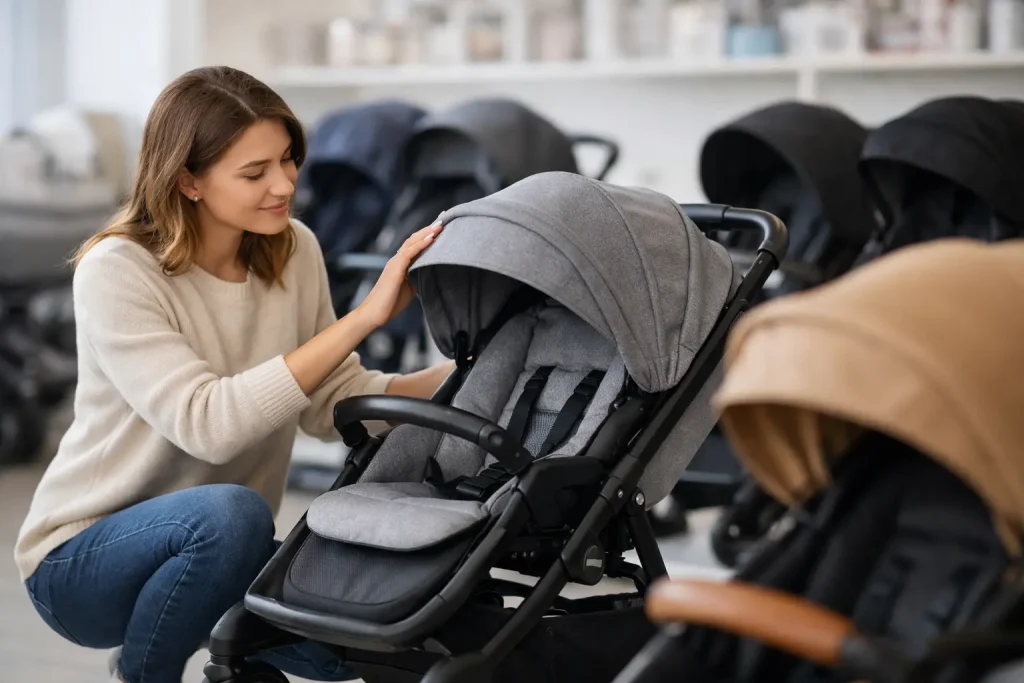
Learn how to choose a baby stroller for your lifestyle, budget, and baby’s age with practical tips on safety, size, wheels, and features.
That dreamy stroller aisle can turn into a reality check fast. One model folds with one hand, another promises all-terrain performance, and a third seems to require an engineering degree just to adjust the seat. If you’re wondering how to choose a baby stroller without overspending or ending up with something awkward to use every day, the best approach is to start with your real life, not the marketing.
A stroller is one of those baby purchases that sounds simple until you realize how many versions exist. Full-size strollers, lightweight strollers, jogging strollers, travel systems, modular designs, double strollers – each one solves a different problem. The right pick depends less on what looks impressive in the store and more on where you’ll use it, how often you’ll lift it, and how long you want it to last.
How to choose a baby stroller for your lifestyle
Before comparing cup holders and canopy size, think about your weekly routine. A stroller for city sidewalks, apartment living, and frequent car trips is not the same stroller that works best for suburban walks, park trails, or daily runs.
If you drive most places, trunk space matters. A bulky stroller might feel smooth and luxurious, but that benefit fades quickly if you dread lifting it in and out of the car. If you live in a walk-up apartment, weight and folded size may matter more than premium suspension. If you’ll use the stroller at malls, stores, and airports, easy steering and a quick fold become major quality-of-life features.
This is where many parents make an expensive mistake. They buy for the occasional outing instead of the everyday one. A stroller that handles your normal routine well will get far more value than one built for a handful of special situations.
Start with your baby’s age and stage
Not every stroller works from day one. Some are newborn-ready because the seat fully reclines, some accept an infant car seat, and others are better once your baby has stronger head and neck control.
If you’re shopping before birth, check whether the stroller is safe for newborn use right away. That may mean a bassinet attachment, a near-flat recline, or compatibility with an infant car seat. If your child is already several months old, you may be able to skip certain newborn-focused features and save money.
It also helps to think ahead. Some strollers are excellent for the first six months but less useful as your child grows heavier and more curious. Others are less compact but offer a higher weight limit, more seat support, and better long-term value. If you want one stroller to handle multiple stages, flexibility matters.
Full-size, lightweight, jogging, or travel system?
For most families, the choice comes down to a few main categories.
A full-size stroller usually offers the most comfort, storage, and durability. These are often the easiest to push and the most versatile, but they can also be heavier and harder to store. They make sense if this will be your main everyday stroller.
A lightweight stroller is easier to carry, fold, and stash in smaller spaces. It’s great for errands, travel, and grandparents’ houses, but it may offer less padding, smaller wheels, and less storage underneath. For some families, it’s a perfect secondary stroller. For others, especially those with limited space, it may be the smartest main choice.
A travel system includes a stroller and an infant car seat that click together. That setup is especially convenient in the newborn stage because you can move a sleeping baby from car to stroller without unbuckling and re-seating them. The trade-off is that some travel system strollers are bulkier than parents expect, and the infant seat will only be useful for a limited time.
A jogging stroller is built for runners and rougher terrain, with larger wheels and stronger suspension. If you don’t actually jog or walk on uneven ground often, it may be more stroller than you need. They can be fantastic performers, but they’re usually bigger and less convenient in tight indoor spaces.
Safety features matter more than extras
When figuring out how to choose a baby stroller, safety should narrow the list quickly. A good stroller should feel stable, lock securely when open, and have brakes that engage easily and stay put.
Look for a five-point harness that fits snugly and adjusts without a fight. Check whether the frame feels solid or wobbly when pushed. Test the brakes, especially if you live in an area with hills or uneven sidewalks. If the stroller reclines, make sure the mechanism locks clearly into place.
Canopies, snack trays, and phone holders are nice. Stability, secure straps, and dependable brakes are not optional. It’s also worth checking whether the stroller has a wide enough base to resist tipping if you hang a diaper bag on the handle, because many do not handle extra weight well.
Wheels and suspension can make or break the ride
Wheel size affects more than appearance. Small plastic wheels may be fine for smooth indoor floors and quick errands, but they tend to struggle on cracked sidewalks, grass, gravel, or curbs. Larger rubber or foam-filled wheels usually handle bumps better and create a smoother ride.
Suspension matters too, especially if you’ll spend time outdoors. A stroller with decent shock absorption is easier to push and more comfortable for the baby. You don’t need mountain-bike performance for neighborhood walks, but you also don’t want every sidewalk seam to feel like a speed bump.
Swivel front wheels help with turning in tight spaces, while lockable wheels can improve control on rougher terrain. This is one of those details that sounds minor until you’re steering one-handed through a coffee shop or across a parking lot.
Folding, lifting, and storing should feel easy
In the store, almost any stroller can seem manageable. The real test is whether you can fold it quickly while holding a diaper bag, watching traffic, or dealing with a fussy baby.
One-hand fold claims are popular, but they vary a lot in real life. Some are truly simple. Others still require a sequence of buttons, levers, or a surprising amount of force. If possible, test the fold yourself. Then check whether it stands on its own when folded and whether it fits in your trunk without removing wheels or accessories.
Weight matters more than many shoppers expect. A stroller that feels only slightly heavy in a showroom can feel much heavier after a long day or on apartment stairs. If multiple caregivers will use it, make sure everyone can comfortably lift and unfold it.
Storage and comfort features are worth a closer look
Everyday convenience features can be surprisingly important, especially once the stroller becomes part of your routine. Under-seat storage is one of the biggest ones. A basket that actually fits a diaper bag, jacket, or grocery items is far more useful than one that looks roomy but becomes inaccessible when the seat reclines.
For your child, check the seat padding, recline options, footrest, and canopy coverage. A larger canopy can make a big difference during summer walks and naps on the go. For you, adjustable handlebar height can help if caregivers are different heights.
Cup holders and parent organizers are nice, but don’t let them distract from the basics. It’s usually easier to add a simple accessory later than to fix poor steering, awkward folding, or uncomfortable seating.
Budget smarter, not just cheaper
Baby gear pricing climbs fast, and stroller marketing often makes expensive features sound essential. Sometimes they are. Often they are just nice-to-have upgrades.
A higher price can mean better materials, smoother handling, and longer use, but it does not automatically mean better fit for your family. Some parents need a premium all-purpose stroller because they walk daily and use it constantly. Others will be happier with a mid-range model that folds easily, fits the car, and covers the basics well.
It helps to separate must-haves from wish-list features. If your non-negotiables are lightweight design, newborn compatibility, and a compact fold, focus there first. If a stroller nails those needs, luxury fabric and extra accessories may not matter much.
Try before you buy if you can
Photos and reviews help, but strollers are physical products in a very real way. Push it. Turn it. Fold it. Lift it. Adjust the harness. See how easily the seat reclines and whether the storage basket is actually reachable.
If you’re shopping online, read reviews with a filter. Pay close attention to complaints about wheel durability, tipping, difficult folding, and poor customer support. Those issues tend to matter more than comments about color or style.
The best stroller is rarely the one with the longest feature list. It’s the one that fits your space, your routine, your baby’s stage, and your patience level on a busy Tuesday afternoon.
Choosing well usually comes down to one question: will this stroller make leaving the house easier or harder? If the answer is easier, you’re probably on the right track.














Leave a Comment
Your email address will not be published. Required fields are marked with *