Discover essential insights about Raleigh Landscape Services. Learn how to choose the right team for your lawn and garden needs effectively!
If you’ve ever called two different Raleigh landscape services and gotten wildly different quotes, advice, and plant suggestions, you’re not imagining things. The local landscape industry covers a wide range of specialties, and not every company is equipped to handle Raleigh’s particular mix of clay-heavy soils, hot summers, seasonal pest pressure, and evolving water restrictions. Whether you’re looking for a full garden overhaul, consistent lawn care, or simply someone to take seasonal maintenance off your plate, knowing what to ask for and what to expect will save you both money and frustration.
Table of Contents
- Key takeaways
- Raleigh landscape services explained: design, installation, and maintenance
- Raleigh lawn care: fertilization, aeration, and pest control
- Designing for Raleigh’s climate, soil, and water rules
- Understanding pricing for Raleigh landscape projects
- My take on finding the right landscaping partner in Raleigh
- Trusted Raleigh lawn care from DM Landscape
- FAQ
Key takeaways
| Point | Details |
|---|---|
| Know your service type | Landscape design, installation, and maintenance are distinct services; understanding each helps you hire the right team. |
| Timing your lawn care matters | Season-timed fertilization, aeration, and pest control deliver far better results than generic year-round programs. |
| Native plants cut costs long-term | Piedmont-adapted plants like oakleaf hydrangea need less water and maintenance than traditional ornamentals. |
| Get detailed specs before you sign | Proposals with plant schedules and irrigation zone maps protect you from surprise costs and mismatched expectations. |
| Budget realistically for your scope | Most Raleigh residential landscape projects run between $5,000 and $15,000 depending on size and hardscape inclusion. |
Raleigh landscape services explained: design, installation, and maintenance
Most homeowners treat these three categories as one big blur. They’re not. And confusing them is one of the fastest ways to end up disappointed with a project.
Landscape design is the planning phase. A qualified designer visits your property, assesses sun exposure, drainage, and soil conditions, and produces a scaled plan complete with plant schedules and installation specifications. This plan is what design proposals with specs are built on, giving you something concrete to hand to any contractor for accurate bidding. Design fees vary, but they are worth every penny when they prevent costly surprises during installation.
Landscape installation is where the plan becomes reality. This phase typically covers:
- Planting trees, shrubs, perennials, and groundcovers as specified
- Building hardscape features like patios, pathways, retaining walls, and garden borders
- Installing irrigation systems sized to your plant zones
- Adding outdoor lighting for both function and atmosphere
Landscape maintenance keeps everything thriving after installation. Maintenance packages typically include mowing, trimming, edging, fertilization, pest control, and seasonal cleanups. Many Raleigh companies bundle these services into weekly or bi-weekly programs, with optional add-ons like shrub pruning and aeration scheduled around local seasonal needs.
One of the smartest moves you can make as a homeowner is to find a company that handles all three phases. When the same team designs, installs, and maintains your property, accountability is clear and transitions are smooth. Raleigh Pro Landscape, for example, offers full design plus maintenance packages that carry a project from concept to ongoing care without you having to manage multiple contractors.
Pro Tip: Ask any landscaping company in Raleigh whether they provide written installation specifications with their design proposals. If they say no, that is a red flag. You need that document to compare bids fairly and confirm the finished job matches what you paid for.
Raleigh lawn care: fertilization, aeration, and pest control
Raleigh’s climate is genuinely unique. You’re dealing with humid summers, mild winters that still surprise with late freezes, and a pest calendar that keeps you busy from March through November. Generic lawn care programs built for the Northeast or Midwest simply do not translate here. The most effective Raleigh lawn care programs are built around local timing and local biology.
Here is how a well-structured annual program tends to look for Raleigh lawns:
- Early spring pre-emergent application. This targets crabgrass and annual weeds before they germinate. Timing to soil temperature matters more than the calendar date, and a local specialist monitors this precisely.
- Late spring fertilization. Warm-season grasses like Bermuda and Zoysia get their primary nutrition push now. Cool-season fescue gets a lighter touch to avoid heat stress.
- Summer pest and weed control. Fire ants, grubs, and ticks become active. Turf Wizards notes that targeted treatment timing, rather than blanket applications, is what separates effective programs from wasteful ones.
- Fall aeration and overseeding. Core aeration breaks up Raleigh’s compacted clay and allows nutrients and water to reach roots. Overseeding with fescue works best when done in September and October, before soil temperatures drop below 50°F.
- Late fall winterization fertilization. A potassium-rich treatment builds root strength through the cooler months for warm-season grasses.
Organic lawn care is gaining real traction in Raleigh, and for good reason. NaturaLawn’s organic-based treatments target pests and diseases without synthetic chemicals, which is increasingly attractive to families with pets and young children. The trade-off is that organic programs can take one to two seasons to show full results, so patience is part of the plan.
On pest management specifically, fire ants and mosquitoes are the two complaints heard most often in Raleigh neighborhoods. Both respond well to barrier treatments applied by professionals who understand the local pest cycles. Grub control, timed to Japanese beetle egg-laying season in July, prevents significant root damage that often gets blamed on drought.
Pro Tip: If your lawn has dead patches that appear in late summer, resist the urge to blame heat. Grub damage looks identical to drought stress. A professional can pull back a small section of turf to check for larvae before you water a problem that water cannot fix.
Designing for Raleigh’s climate, soil, and water rules
Here is something many homeowners discover after they’ve already spent money: a beautiful design that ignores Raleigh’s clay soil and summer drought cycles will look stunning for one season and struggle for the next five. Great landscape design in Raleigh starts with site conditions, not aesthetics.
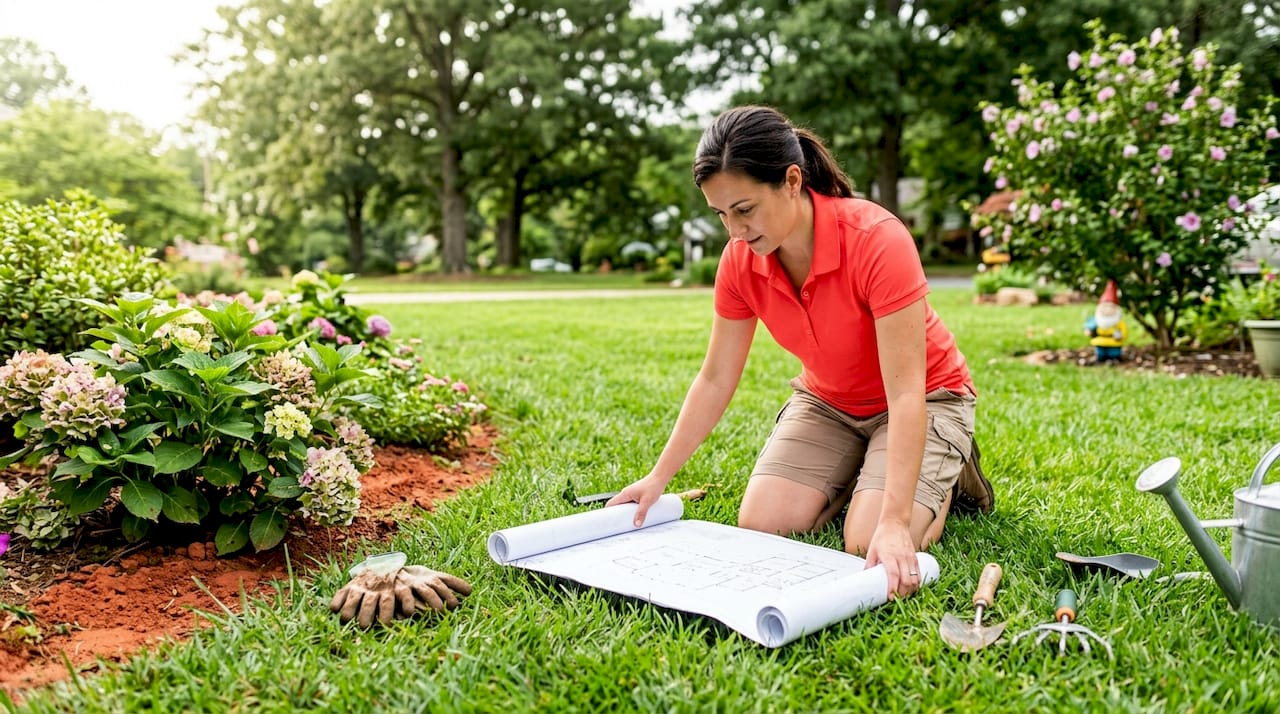
The comparison below shows how plant selection and design approach affect long-term performance:
| Design approach | Water needs | Maintenance level | Performance in Raleigh clay |
|---|---|---|---|
| Traditional ornamentals (azalea, boxwood) | Moderate to high | High pruning and disease management | Moderate; susceptible to root rot |
| Native Piedmont plants (oakleaf hydrangea, black-eyed Susan) | Low once established | Low | Excellent; naturally adapted |
| Turf-heavy lawn design | High irrigation required | Weekly mowing essential | Poor during drought or water restrictions |
| Water-wise mixed bed design (mulched beds, reduced turf) | Low to moderate | Seasonal cleanup only | Outstanding; resilient during dry spells |
Raleigh Water has an active restriction program that limits sprinkler usage based on drought conditions. Smart irrigation controllers automate schedule adjustments when restriction stages change, keeping your system compliant without you having to remember to reprogram it manually. If your current irrigation system uses a basic timer, upgrading to a smart controller is one of the highest-return investments you can make in your landscape.
Soil drainage deserves more attention than it usually gets in initial design conversations. Raleigh’s red clay holds water beautifully in spring but becomes concrete-hard in summer. Plants that cannot tolerate wet feet in March and dry conditions in August will fail regardless of how beautiful they look at the nursery. A good designer will amend planting areas or specify raised bed construction to account for this drainage challenge before a single plant goes in the ground.
If you’re curious about urban gardening strategies that work in similar clay-heavy environments, those principles translate well to Raleigh’s residential context too.
Understanding pricing for Raleigh landscape projects
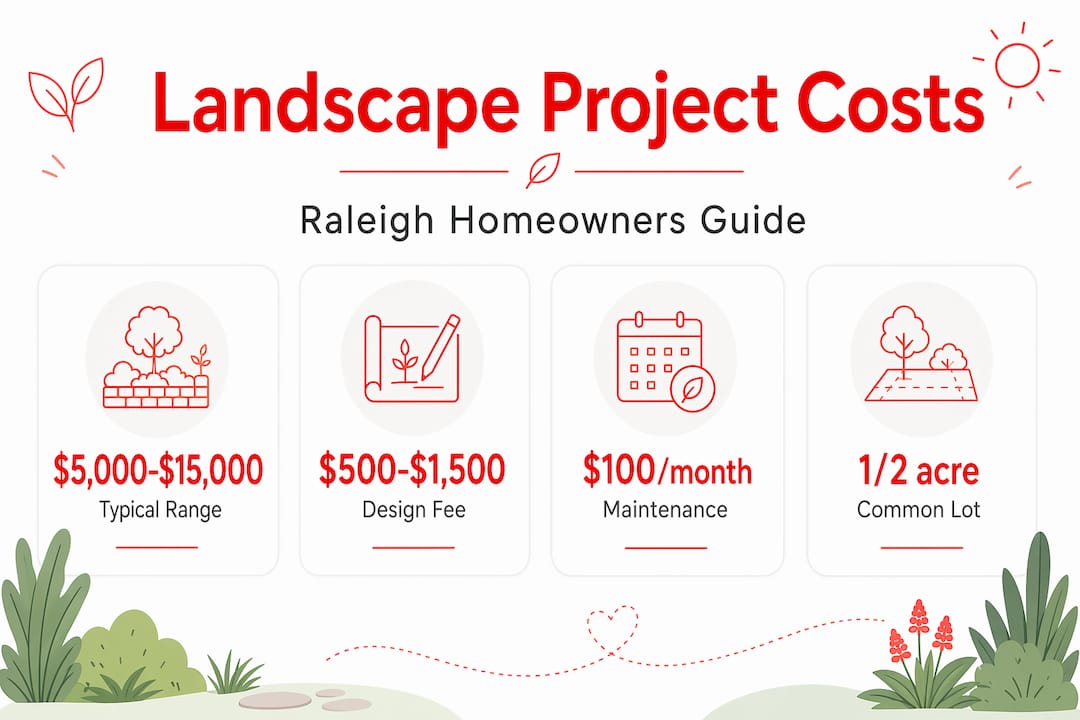
One of the most common anxieties homeowners bring to their first landscape consultation is not knowing whether a quote is fair. The table below gives you realistic benchmarks for typical Raleigh projects so you can evaluate bids with confidence.
| Service type | Typical price range | Key cost drivers |
|---|---|---|
| Design consultation and plan | $500 to $2,500 | Property size, plan complexity, plant schedule detail |
| Basic landscape refresh (planting only) | $2,500 to $6,000 | Plant sizes and quantities, bed prep required |
| Full residential installation | $5,000 to $15,000 | Hardscape, irrigation, lighting, scope |
| Major property transformation | $15,000 to $25,000+ | Full hardscape, custom features, large plant material |
| Monthly maintenance package | $150 to $500 per month | Property size, service frequency, add-ons |
Most residential projects in Raleigh fall in the $5,000 to $15,000 range for a combined front and backyard installation. The biggest cost swings come from hardscape inclusions. Adding a flagstone patio, a retaining wall, or a decorative pathway can double a budget quickly. Getting a design plan with explicit installation specs before you solicit bids is the single best way to compare apples to apples across multiple contractors.
Maintenance packages scale predictably with property size. A half-acre lot with standard beds and a lawn will typically run $200 to $350 per month for full-service care. Smaller urban lots with minimal turf can come in under $200. Larger properties with multiple garden zones, irrigation management, and seasonal plantings will push toward the top of the range.
One pricing note worth knowing: plant sizes drive costs more than plant quantities. A single 15-gallon specimen shrub can cost as much as eight one-gallon perennials. When budget is a constraint, ask your designer about phasing the project over two seasons. Install the bones in year one and fill in the detail planting in year two. You get a complete design executed properly without breaking the budget all at once. You can also explore home upgrades that maximize ROI to see how landscaping fits into a broader home improvement strategy.
My take on finding the right landscaping partner in Raleigh
I’ve talked with enough Raleigh homeowners to know that the biggest source of dissatisfaction with landscaping projects isn’t the cost. It’s the mismatch between expectation and reality, and that almost always traces back to one thing: hiring a company that doesn’t understand Raleigh’s specific conditions.
I’ve seen gorgeous garden plans installed beautifully in spring, then half-dead by August because no one accounted for the clay drainage or the specific sun exposure in that yard. The plants looked right on paper. They just weren’t right for that particular piece of Raleigh soil.
What I’ve learned is that local knowledge isn’t a nice-to-have. It’s the whole game. A company that has been managing Raleigh lawns through multiple seasons understands that fescue needs overseeding every fall without fail, that Bermuda goes dormant and looks alarming in winter, that the city’s water restrictions can change quickly and your irrigation needs to adapt. These aren’t things you learn from a manual. You learn them from seasons of hands-on experience in this specific climate.
My honest advice: don’t hire a landscaper based on photos alone. Ask them what grass types they typically work with in Raleigh. Ask what native plants they recommend for your sun and soil conditions. If they can’t answer those questions with specificity, move on. The best landscapers in Raleigh will talk about your site conditions before they talk about their portfolio.
I also think the integration point is underrated. The companies that design, install, and maintain consistently deliver better long-term results. When one team is accountable for the full arc of the project, they have every incentive to install it right the first time.
— Alexander
Trusted Raleigh lawn care from DM Landscape Inc
When you’re ready to move from research to results, DM Landscape is a name Raleigh homeowners can count on. Specializing in professional lawn care and landscape maintenance for small to medium properties as well as community spaces, DM Landscape brings the kind of localized expertise that makes a real difference in how your outdoor space performs season after season. Their services cover everything from routine mowing and fertilization to full seasonal maintenance programs tailored to Raleigh’s specific climate demands.
Thinking about outdoor lighting upgrades to complement your landscape? Or exploring whether a full yard transformation qualifies as one of those home upgrades that boost value? Both are worth pairing with the right maintenance foundation. DM Landscape helps Raleigh homeowners protect and grow the investment they’ve made in their outdoor spaces, with care programs that keep properties looking their best through every season.
FAQ
What services do Raleigh landscape companies typically offer?
Most Raleigh landscape services cover three main categories: design planning, installation of plants and hardscape, and ongoing maintenance such as mowing, fertilization, and pest control. Many companies bundle all three into integrated packages.
How much does a residential landscape project cost in Raleigh?
Most front and backyard landscape installations in Raleigh range from $5,000 to $15,000, with basic planting refreshes starting around $2,500 and large property transformations exceeding $25,000 depending on scope and materials.
What are the best plants for Raleigh’s climate and soil?
Native Piedmont plants like oakleaf hydrangea, Eastern red cedar, and black-eyed Susan perform best in Raleigh’s clay soils, requiring less irrigation and maintenance once established compared to traditional ornamentals.
When should I aerate and overseed my Raleigh lawn?
The best window for core aeration and fescue overseeding in Raleigh is mid-September through mid-October, when soil temperatures drop into the 50s and conditions favor strong germination before winter.
How do Raleigh water restrictions affect irrigation systems?
Raleigh Water restrictions limit sprinkler use during drought stages, and smart irrigation controllers can automatically adjust watering schedules to stay compliant without manual reprogramming.
















Leave a Comment
Your email address will not be published. Required fields are marked with *