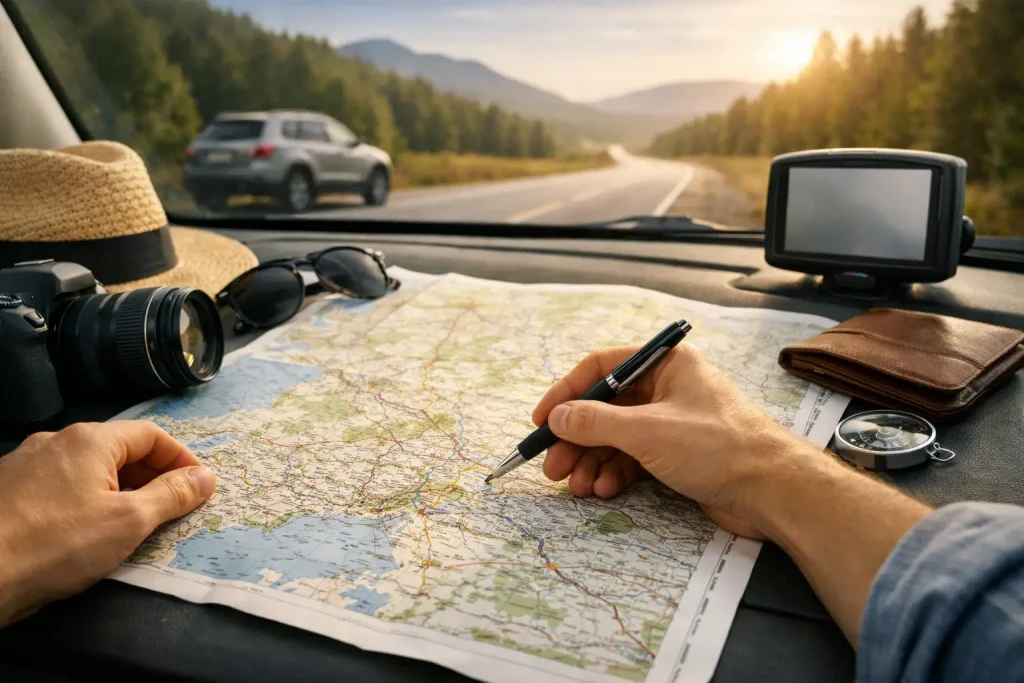
Learn how to plan a road trip with smart budgeting, route mapping, packing tips, and timing advice so your drive feels fun, not frantic.
You do not realize how much a road trip depends on planning until you are 90 miles from the nearest town, your phone battery is dropping, and everyone in the car suddenly has a strong opinion about lunch. That is why learning how to plan a road trip is less about making a perfect itinerary and more about building a trip that can handle real life.
The best road trips feel loose and fun on the surface, but there is usually solid prep underneath. A good plan helps you avoid expensive mistakes, wasted hours, and the kind of stress that turns a scenic drive into a long argument. Whether you are heading out for a weekend loop or crossing multiple states, the basics are the same.
How to plan a road trip without overplanning
Start with the kind of trip you actually want. That sounds obvious, but a lot of road trip problems begin when the route, budget, and pace do not match the people going. A couple looking for quiet national park stops will plan very differently than a family traveling with young kids or a group trying to fit in food stops, nightlife, and photo-worthy detours.
Pick a clear trip style before you map anything. Maybe your goal is scenic driving, fast point-to-point travel, cheap adventure, or hitting several bucket-list attractions in one run. Once you know that, decisions get easier. You can tell which stops are worth the time and which ones only look good on a map.
It also helps to decide how structured you want the days to be. Some travelers like every hotel and attraction booked ahead. Others want one overnight stop confirmed and room to improvise. Neither approach is automatically better. If you are traveling during peak summer dates, around national parks, or on holiday weekends, flexible can quickly become expensive.
Set the route first, then shape the schedule
A road trip route should be realistic before it is ambitious. People often underestimate drive time because they only count the hours shown on a map. Real trip time includes gas stops, bathroom breaks, traffic, meals, weather delays, and the fact that not every road is built for easy cruising.
A useful rule is to cap most driving days at what your group can comfortably handle, not what is technically possible. Six hours behind the wheel might feel easy for one driver and exhausting for another. If you are traveling with children, pets, or older adults, comfort usually matters more than squeezing in one extra stop.
After you sketch the route, look for natural anchor points. These are the stops that shape the trip, such as a national park reservation, a concert, a family visit, or a hotel in a popular town. Build around those first. Then fill in the smaller stops that give the drive personality, like roadside diners, short hikes, quirky museums, or scenic overlooks.
If you are figuring out how to plan a road trip through several states, avoid the trap of trying to do too much. Covering more ground is not always better. A packed schedule can leave you with lots of windshield time and very little memory of where you were.
Budget for more than gas
Gas is the obvious road trip expense, but it is rarely the only one that sneaks up on people. Lodging, parking, tolls, attraction tickets, snacks, and restaurant meals can add up fast, especially on longer trips. If you are renting a car, add mileage limits, insurance, and possible one-way drop fees.
The easiest way to build a road trip budget is to separate fixed costs from flexible ones. Fixed costs include lodging, major tickets, and vehicle prep. Flexible costs include food, side attractions, souvenirs, and unplanned stops. That split gives you room to adjust without losing control of the overall number.
It also pays to decide where you want to spend and where you want to save. Maybe you want a nicer hotel every third night so the trip feels less tiring. Maybe you are fine with budget motels but want to spend more on great meals or one premium experience. A road trip does not need to be cheap to be smart, but it should feel intentional.
Make sure the car is ready
A road trip plan can fall apart quickly if the vehicle is not in shape for the distance. Even a newer car deserves a quick check before a long drive. Tires, brakes, fluids, windshield wipers, lights, and battery health are the big basics. If your car is due for maintenance soon, take care of it before you leave instead of hoping it can wait.
Tire condition matters more than many drivers think. Long highway stretches, hot pavement, and fully loaded cars put extra stress on tires. Check tread, pressure, and the spare. If your vehicle does not have a spare, know what emergency kit or roadside support you have instead.
It is also smart to think about comfort, not just mechanics. Clean out the car, make room for luggage, and keep the cabin organized enough that essentials are easy to reach. Chargers, water, tissues, sunglasses, medications, and paper towels will get used more than you expect.
Book the things that are hard to replace
Not every part of a road trip needs to be reserved in advance, but some things are risky to leave until the last minute. Popular hotels in small tourist towns, campground spots, national park entry reservations, and rental cars can sell out earlier than people expect.
The trick is to book the pieces that could derail the trip if they disappear. If a destination has limited lodging, reserve it. If you are driving through areas with long stretches between towns, secure your overnight stops early. If your route is flexible and options are abundant, you can leave more breathing room.
This is where timing matters. Shoulder season often gives you a better balance of lower prices and easier availability. Peak season can still be worth it for weather or events, but you will want a firmer plan.
Pack for convenience, not just quantity
Overpacking is common on road trips because the car feels like free storage. Then halfway through the trip, everyone is digging through bags for chargers, clean socks, and sunscreen. Pack in a way that makes daily life easier.
Keep one small bag or bin for items you need during the drive and another for overnight essentials. If you are moving hotels often, you do not want to unload half the trunk every evening. Soft bags are often easier to stack than hard suitcases, especially in smaller vehicles.
Food planning matters too. A cooler can save money and reduce random fast-food stops, but only if you stock it with things people will actually eat. Water, fruit, simple snacks, and a few low-mess options usually go further than an overly ambitious grocery haul.
Build in breaks and backup plans
The difference between a good road trip and a draining one often comes down to pace. Breaks are not wasted time. They help drivers stay alert, keep passengers happier, and make the trip feel less like a chore.
Plan for short stops even on straightforward driving days. Scenic pull-offs, coffee shops, local diners, and stretch breaks can reset the mood fast. This matters even more if you are traveling with kids, who usually do better with predictability than endless promises that you are almost there.
Backup plans are just as useful. Weather changes. Roads close. Attractions fill up. A simple second-choice stop, alternate route, or indoor activity can save the day. You do not need a full contingency binder. You just need enough awareness to pivot without panic.
Use tech, but do not depend on it completely
Maps apps are great, but signal gaps are still real in mountain areas, deserts, and parts of rural America. Download offline maps before you leave. Save hotel addresses, park confirmation details, and any must-hit locations where service may be weak.
It also helps to share the route with someone not on the trip, especially for longer drives. That is less about drama and more about practicality. If plans shift, someone back home knows your general path.
And while playlists matter, do not underestimate the basics. Car charger, backup cable, phone mount, and battery pack are simple upgrades that solve a lot of small problems.
Leave room for the trip to surprise you
A strong plan should support spontaneity, not kill it. Some of the best road trip moments are the unplanned ones – a town festival you did not know about, a scenic detour, a pie shop with a full parking lot, a sunset stop that turns into the favorite memory of the trip.
That is why the best answer to how to plan a road trip is not to control every mile. It is to handle the decisions that matter most, then leave enough room for the road to do its job.
If your route is realistic, your budget makes sense, and your car is ready, the rest gets easier. Give yourself structure where it helps and flexibility where it counts. That is usually the difference between a trip you survive and one you want to do again.

















Leave a Comment
Your email address will not be published. Required fields are marked with *