
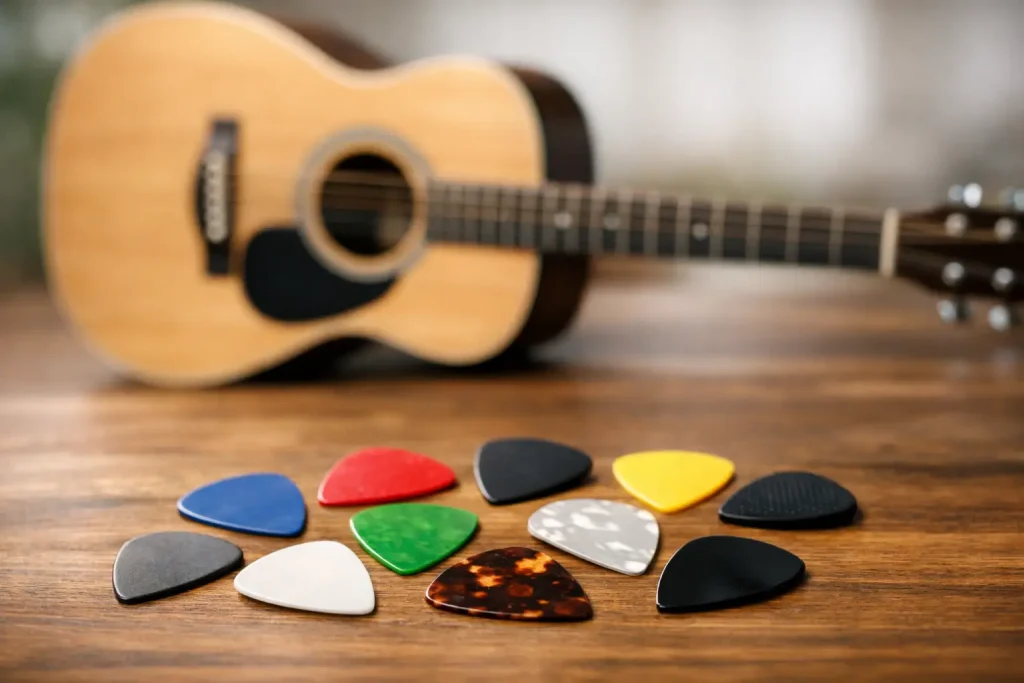
Find the best beginner acoustic guitar with smart tips on size, sound, playability, and budget so your first guitar feels easy to learn on.
A lot of first guitars get abandoned for one simple reason – they fight back. The strings feel too stiff, the neck feels too wide, or the body is so bulky that practicing turns into a chore. If you’re shopping for the best beginner acoustic guitar, the goal is not finding the most famous brand or the flashiest finish. It’s finding a guitar that makes you want to pick it up again tomorrow.
That usually means looking past marketing terms and focusing on three things that matter right away: comfort, playability, and value. Beginners do not need a premium instrument, but they do need one that stays in tune, feels manageable in the hands, and sounds good enough to make progress rewarding. A cheap guitar that is hard to play can slow you down more than most people realize.
What makes the best beginner acoustic guitar?
The best beginner acoustic guitar is usually the one that feels easiest to play for your body size, your musical taste, and your budget. That answer is less exciting than naming one universal winner, but it is the truth.
Playability comes first. A beginner-friendly guitar should have a neck that feels comfortable in the fretting hand and an action, which is the distance between the strings and the fretboard, that is not painfully high. If the strings take too much pressure to press down, basic chords can feel impossible. Many entry-level guitars improve dramatically with a simple setup, so even a solid budget pick may need minor adjustment out of the box.
Body size matters more than many first-time buyers expect. A full-size dreadnought gives you a big, classic acoustic sound, but it can feel awkward for smaller players or anyone practicing on a couch. Concert, auditorium, and parlor-style bodies are often easier to hold and can make practice more comfortable. A guitar you can physically relax with is often a better long-term choice than one that only looks impressive.
Then there is tone. Beginners should not obsess over tiny sound differences, but they should know the basics. Dreadnoughts tend to sound louder and bassier. Smaller bodies usually sound more balanced and controlled. If you want to strum along to pop, country, or folk songs, almost any decent acoustic can work. If you want more fingerpicking detail, a smaller body may feel more responsive.
Best beginner acoustic guitar types for different players
A smart way to shop is to match the guitar style to the person using it. That narrows the field quickly.
For most adults: a dreadnought or concert acoustic
If you are an average-sized adult and want the most flexible option, a dreadnought or concert acoustic is the safest place to start. Dreadnoughts are common, affordable, and great for strumming. Concert models trade some low-end power for comfort and balance. For many beginners, that trade-off is worth it.
A dreadnought is often the better buy if you want a big, familiar acoustic sound. A concert body is often the better buy if you care more about comfort during long practice sessions. Neither is automatically better. It depends on whether you value power or ease of handling.
For teens and smaller adults: concert, parlor, or 3/4 size
Smaller players should not feel pressured into a full-size guitar if it feels too big. A concert or parlor guitar can be much easier to manage, and a 3/4 size model may be the right fit for younger teens or very petite adults. The downside is that smaller guitars can sound less full than larger ones, but many beginners are better served by comfort than by maximum volume.
For absolute ease: acoustic-electric can help
An acoustic-electric model includes built-in electronics so you can plug into an amp or tuner system. That does not automatically make it better for beginners, but it can be useful. Built-in tuners are convenient, and amplification is helpful if you plan to perform, take lessons, or record casually.
The trade-off is price. If your budget is tight, spending extra on electronics may mean giving up better overall build quality. For many first-time players, a standard acoustic and a separate clip-on tuner is the smarter move.
10 strong picks for a beginner acoustic guitar
There is no single best beginner acoustic guitar for everyone, but these models are popular for good reasons and cover a range of budgets and needs.
Yamaha FG800
This is one of the safest first-guitar choices on the market. It has a dreadnought body, solid sound for the price, and a reputation for consistent quality. It can feel a bit large for some players, but it delivers excellent value and tends to outlast the beginner stage.
Yamaha FS800
Think of this as the friendlier sibling to the FG800. It has a smaller concert-style body, which makes it easier for many beginners to hold. If comfort is your top priority, this is often a better first pick than a full dreadnought.
Fender CD-60S
A common choice for beginners who want a recognizable brand and a warm, full acoustic tone. It is widely available and usually easy to find in starter bundles. Like many dreadnoughts, it may feel a little bulky for smaller players.
Fender CC-60S
This model takes a similar approach but in a more comfortable concert body. It is a practical option for players who want a smoother learning curve without giving up a familiar, versatile sound.
Epiphone DR-100
The DR-100 is often priced aggressively, which makes it appealing for budget-conscious shoppers. It offers the classic big-body acoustic feel and a respectable tone for the money. The catch is that lower-cost models can vary a bit, so setup matters here.
Ibanez AW54
If you want a guitar that looks and feels a step above entry-level basics, this one stands out. It often appeals to beginners who already know they are serious about learning. It may cost more than a bare-bones starter guitar, but the improved feel can justify the jump.
Ibanez PF2MHOPN
A budget option with a stripped-down look that many buyers like. It is simple, affordable, and fine for learning the basics. Just keep expectations realistic – at this price, build quality and factory setup may not be perfect.
Taylor BT2 Baby Taylor
A compact guitar with strong brand recognition and an easy-to-handle size. This is a favorite for smaller players, travelers, and beginners who want a more premium small-body option. Its smaller size is a plus for comfort, though not everyone will love the reduced low-end response.
Martin LX1 Little Martin
Another small-bodied standout, especially for players who want portability without a toy-like feel. It is easy to play and well made, but it sits at a higher price point than many starter guitars. Better for buyers who want to invest early rather than go as cheap as possible.
Cordoba Mini II Acoustic
A smart pick for players interested in nylon-string feel or a more compact format. It is not the standard steel-string acoustic most beginners picture, but it can be very approachable. If your goal is pop strumming with bright steel-string tone, look elsewhere. If you want softer string tension, it deserves a look.
How much should you spend?
For most shoppers, the sweet spot is around $200 to $400. Below that, quality gets more inconsistent, and poor setup becomes more common. Above that, you often get nicer materials, better finish work, and a more polished feel, but you do not need to spend big to start well.
If your budget is under $200, focus on trusted entry-level brands and leave room for basics like a tuner, extra strings, and possibly a setup. If your budget is closer to $300 or $400, you can usually get a guitar that feels good enough to keep for years.
Starter bundles can be useful, but they are not always the best deal. Sometimes the guitar is decent and the accessories are throw-ins. Sometimes the entire package is built around hitting a low price. Read the bundle for what it really includes, not just the headline number of accessories.
What to check before you buy
A guitar can look great online and still feel wrong in person. If possible, hold a few body sizes before deciding. Sit with the guitar. Reach around it. Try a basic chord shape, even if you do not know how to play yet. Comfort is not a small detail. It is the whole game at the beginning.
Pay attention to the neck and string height. If the strings feel unusually hard to press, the guitar may need setup work. Check tuning stability too. A beginner guitar does not need to be perfect, but it should not go wildly out of tune every few minutes.
Used guitars can be a smart buy if you know what to look for. You may get a better instrument for the same money, but condition matters. Cracks, warped necks, and lifting bridges can turn a bargain into a headache. If you are unsure, buying new from a reputable seller is usually easier.
The best beginner acoustic guitar is the one you’ll keep playing
A first guitar should lower the barrier to practice, not raise it. That means choosing a model that fits your body, your budget, and the kind of music that keeps you interested. A big dreadnought can be great. A smaller concert guitar can be even better. A bargain can work, but only if it still feels playable.
If you are stuck between two decent options, choose the one that feels easier in your hands. Motivation is fragile at the start, and comfort buys you more practice than a fancy spec sheet ever will. The right guitar is the one that makes 10 minutes turn into 30 without you noticing.















Leave a Comment
Your email address will not be published. Required fields are marked with *