
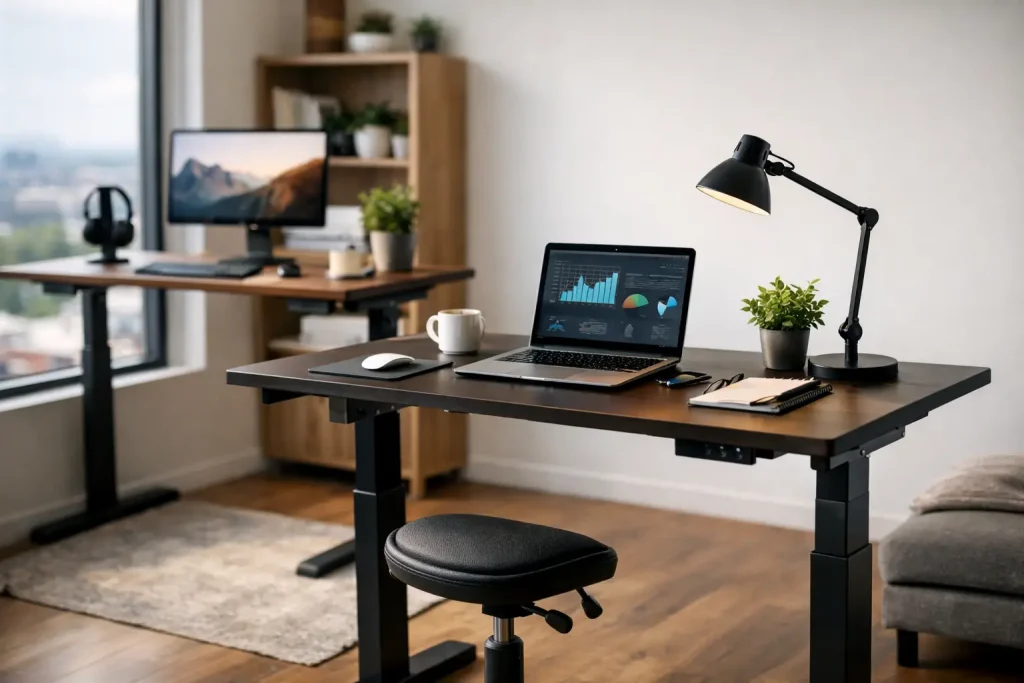
Find the best standing desks for remote work productivity, with smart picks for small spaces, dual monitors, budgets, and long workdays.
That 3 p.m. slump often has less to do with motivation and more to do with your setup. If your chair feels like a trap and your desk keeps you parked for hours, upgrading to one of the best standing desks for remote work productivity can make your day feel less draining and a lot more focused.
A good standing desk does not magically turn every work-from-home day into a perfect routine. It does, however, make movement easier, reduce the friction of changing positions, and help your workspace fit the way you actually work. That matters whether you are answering emails in a studio apartment, running a business from a spare bedroom, or balancing meetings, spreadsheets, and a second monitor at the kitchen-office hybrid.
What makes the best standing desks for remote work productivity?
The short answer is stability, usable space, and a height range that fits your body. The longer answer is that the right desk depends on what slows you down now. If your screen shakes every time you type, that is a productivity problem. If your desktop is too small for your laptop, notepad, and coffee, that is also a productivity problem.
Motor quality matters because remote workers tend to raise and lower desks often, not just once in the morning. Quieter motors feel less disruptive during video calls, and memory presets save time if more than one person uses the desk or if you switch between sitting and standing several times a day. Cable management is another underrated feature. A cluttered desk can make a home office feel more cramped than it really is.
Materials and weight capacity matter too, especially if you use dual monitors, a desktop tower, speakers, or a heavy monitor arm. Some affordable desks look great in photos but wobble under a realistic work setup. Others sacrifice looks for performance. That trade-off is worth thinking through before you buy.
Best standing desks for remote work productivity: top picks
Uplift V2
The Uplift V2 is one of the easiest desks to recommend if you want a strong all-around option. It is known for solid stability, a broad range of desktop sizes, and lots of customization. That makes it appealing for remote workers who know their desk is not just a laptop stand but the center of the workday.
It is not the cheapest option, and add-ons can push the price up fast. Still, if you want something that can grow with your setup, from a simple single-screen station to a more serious home office, it earns its reputation.
Fully Jarvis
The Jarvis has long been popular for a reason. It has a clean design, smooth height adjustment, and enough surface options to suit both compact and larger rooms. For people who care about aesthetics as much as function, this one often lands in the sweet spot.
The trade-off is that price can feel a little high compared with newer competitors, especially once you add accessories. But for many buyers, the polish and dependable performance justify it.
FlexiSpot E7
If value is high on your list, the FlexiSpot E7 stands out. It offers strong lifting capacity, good stability, and features that feel closer to premium models than budget desks. For remote workers who want an electric standing desk without overspending, this is one of the smartest buys.
It may not have the same premium brand cachet as some rivals, but that matters less when the desk performs well day after day. For a practical shopper, that is often a fair exchange.
Vari Electric Standing Desk
Vari has built a strong following by making desks that are easy to assemble and simple to live with. The electric standing desk is especially appealing if you want a straightforward, polished option without a long customization process.
Its simplicity is part of the appeal, but also the limitation. If you want unusual sizes or highly specific finishes, you may find the options narrower than with other brands. For many home offices, though, Vari gets the basics right.
Branch Duo Standing Desk
The Branch Duo is designed for people who want their office furniture to blend into the home rather than look overly corporate. It has a softer, more modern appearance that works well in apartments, bedrooms, and multi-use spaces.
This desk makes a lot of sense if style matters and your setup is relatively light. If you run multiple heavy monitors or need maximum stability at taller heights, there are stronger performers. But for everyday remote work, it is a compelling option.
Secretlab Magnus Pro
If cable clutter drives you crazy, the Magnus Pro deserves a look. It is built with cable management front and center, and that alone can make a workspace feel cleaner and more productive. It also has a distinctly premium, tech-forward feel.
The desk is especially attractive for users with lots of gear, but its design may be more specialized than some buyers need. It also takes up visual space, so it is better in a dedicated office than a tiny shared corner.
IKEA Idasen
The Idasen is a sensible choice for buyers who want a standing desk from a familiar retailer with a more understated look. It is generally well regarded for stability and durability, which are two things that matter more than flashy features over time.
It can be a bit less exciting on the spec sheet, and not every shopper will love the app-driven elements. But if you want dependable function and a cleaner Scandinavian style, it is easy to understand the appeal.
SHW Electric Height Adjustable Desk
For shoppers with a tighter budget, the SHW desk is one of the more approachable entry points. It gives you the core standing desk experience without a premium price tag, and that can be enough if your needs are basic.
You should keep expectations realistic. Lower-cost desks often have less stability, fewer finish options, and more limited long-term durability. Still, for a first standing desk in a lighter-use setup, it can do the job.
Fezibo Electric Standing Desk
Fezibo has become a common pick for budget-conscious buyers who still want features like electric adjustment and storage options. Some models include shelves or drawers, which can help in small spaces where every inch counts.
That said, the brand’s quality can feel more variable depending on the specific model. It is worth reading specs carefully and matching the desk to a lighter setup rather than assuming every version performs like a premium frame.
Herman Miller Renew Sit-to-Stand Desk
For buyers who want a premium office-furniture feel, the Renew is a serious contender. Build quality and long-term performance are the main draw here, especially if your desk is part of a larger investment in a comfortable home office.
The obvious downside is cost. This is not the desk for someone casually testing the standing-desk idea. It makes more sense for people who work from home full time and plan to keep the desk for years.
How to choose the right desk for your space and work style
Start with size, not features. A desk that is too large can overwhelm a room, while one that is too small becomes annoying every single day. Measure for width and depth, and do not forget to account for wall trim, outlets, filing cabinets, and the room needed for a chair to roll back.
Next, think about your equipment. A laptop-only setup opens up far more options than a dual-monitor arrangement with speakers and accessories. If you use monitor arms, check the desktop thickness and weight support. If you type heavily, stability should rank near the top of your list.
Height range matters more than many people realize. A desk should let your elbows rest comfortably at about 90 degrees whether sitting or standing. Taller users, shorter users, and households that share a desk should pay extra attention here. A desk that technically adjusts may still not fit well enough to feel comfortable.
Noise and speed are quality-of-life features that become more important over time. A slower desk is not necessarily a dealbreaker, but a loud motor during back-to-back calls can get old quickly. Presets are also worth having if you change positions regularly.
A standing desk helps productivity, but only if you use it well
Buying a standing desk is the easy part. Building better work habits around it is what actually improves productivity. Standing all day is not the goal, and neither is treating the desk like a wellness trophy. The real benefit comes from changing positions often enough to stay more alert and less stiff.
A practical rhythm works better than an ambitious one. Try standing for part of a meeting, sitting for focused writing, then raising the desk again after lunch when energy usually dips. If you are new to standing desks, shorter standing intervals are easier to stick with than forcing yourself upright for hours.
Comfort accessories can make a bigger difference than people expect. An anti-fatigue mat helps during longer standing stretches, and a monitor arm can improve posture by keeping screens at a better height. Even the best desk can feel underwhelming if the rest of the setup is fighting against it.
The best pick is the one that fits your room, your gear, and your actual habits. A sleek premium desk is not automatically better than a simpler model that you can afford, assemble, and use every day without frustration. If your current setup keeps you glued to the chair and distracted by discomfort, a well-chosen standing desk is one of the few home office upgrades that can pay off every single workday.


















Leave a Comment
Your email address will not be published. Required fields are marked with *