
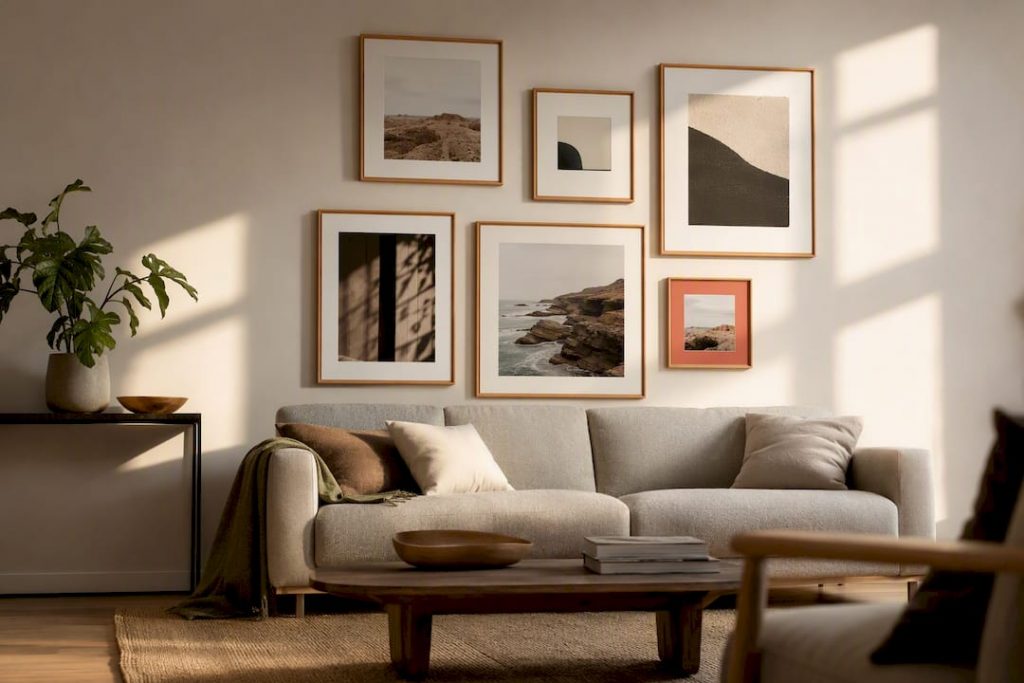
Shop wall art by room with a curated shortlist, format recommendations, and exact sizing and hanging math you can test before you buy.
The quickest way to pick wall art is to match the format to the room: canvas or a large print for an anchor piece, framed prints for classic or formal spaces, and independent-artist marketplaces for something nobody else on the block has. Start with Society6 or Desenio for style-forward, budget-friendly picks, and Fine Art America or Art.com when you need custom sizing or built-in framing. From there, sizing math and hanging technique matter more than which retailer you pick.
TL;DR:
- Use the two-thirds width rule to select art that balances with your furniture and hang the center at around 57-60 inches from the floor for best visual impact.
- Prioritize measuring and mockup testing via painter’s tape or photos to prevent sizing mistakes before drilling or purchasing.
- Opt for durable formats like canvas, metal, or acrylic for longevity, especially in humid areas, while understanding their different textures and protection levels.
- Confirm print dimensions, resolution, and fade resistance claims, particularly if hanging near windows, and check mounting hardware compatibility beforehand.
- Build gallery walls from the largest piece first and arrange outward, ensuring proper spacing and hardware matching to wall type and weight.
Table of Contents
- Where to Shop for Wall Art: A Curated Shortlist
- Wall Art Formats and Materials: What Lasts and What Doesn’t
- What Size Wall Art Should You Buy?
- Pre-Purchase Checklist: What to Confirm Before You Buy
- Wall Art Trends Worth Considering
- How to Hang a Gallery Wall Without Regret
- Expert Shortcuts Our Team at Lizard’s Lunch Relies On
- Where This Guide’s Recommendations Came From
- Why Most Wall Art Advice Skips the Part That Matters
- A Different Way to Personalize Your Space
- Sources
Where to Shop for Wall Art: A Curated Shortlist
Every marketplace has a personality. Knowing which one matches your project saves you from scrolling through thousands of options that were never right for your wall in the first place.
- Society6 works best for independent-artist prints and designs you will not find at a big-box store, including ready-made gallery-wall sets for buyers who want a curated look without picking six separate pieces.
- Fine Art America specializes in custom sizes and archival-quality reproductions, with custom orders hand-crafted and shipped in about 2 to 3 business days.
- Art.com pairs a large print catalog with integrated framing services, so you can order a print, frame, and mounting hardware in a single checkout instead of juggling three vendors.
- Desenio leans into trend-forward prints and curated gallery-wall sets with multiple size tiers, which makes it a fast option when you want a finished look without designing the layout yourself.
Prices vary widely by size and material, but posters and small prints tend to sit at the budget end, while framed canvas and custom archival prints push into mid-range and higher pricing depending on dimensions.
Wall Art Formats and Materials: What Lasts and What Doesn’t
Format changes both the look and the lifespan of a piece. Canvas prints (often gallery-wrapped over a wood frame) give texture and a modern, frameless edge. Framed paper prints suit classic or gallery-style rooms and protect the print behind glass or acrylic. Metal prints handle humidity well and work in kitchens or bathrooms where paper would warp. Acrylic face-mounts add depth and a glossy, almost three-dimensional look. Tapestries and textiles bring softness to a room and are forgiving for renters who cannot drill. Original paintings or one-of-a-kind pieces cost more but carry no reproduction limits.
Ink and material matter for longevity. Fine Art America prints with archival inks and claims they can resist fading for up to 75 years indoors under normal conditions, which is worth asking about before you buy any photo or fine-art reproduction.
- Canvas: textured, frameless, casual to mid-formal.
- Framed paper prints: classic, protected, works under glass.
- Metal or acrylic: humidity-resistant, modern finish.
- Tapestries: soft, renter-friendly, no drilling required.
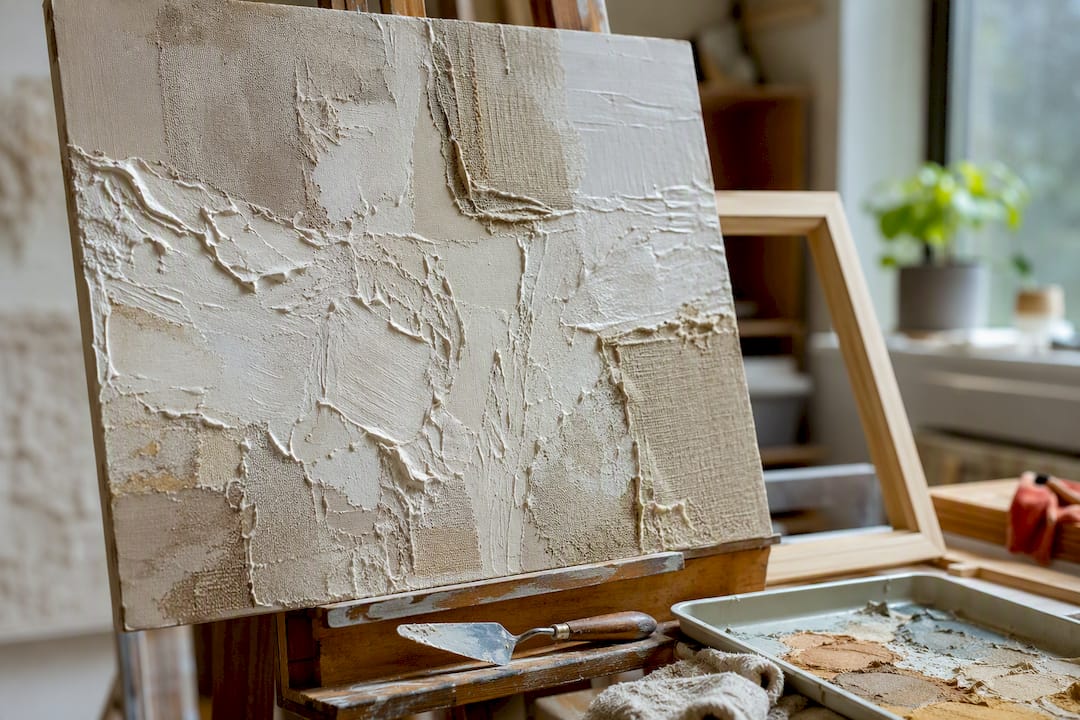
Float frames, mats, and gallery wrap all change how expensive a piece looks, often for a modest cost difference. If you’re testing a look before committing, textured DIY canvas projects can mimic a pricier finish for very little money.
What Size Wall Art Should You Buy?
Size is where most wall art purchases go wrong, and the fix is mostly arithmetic.
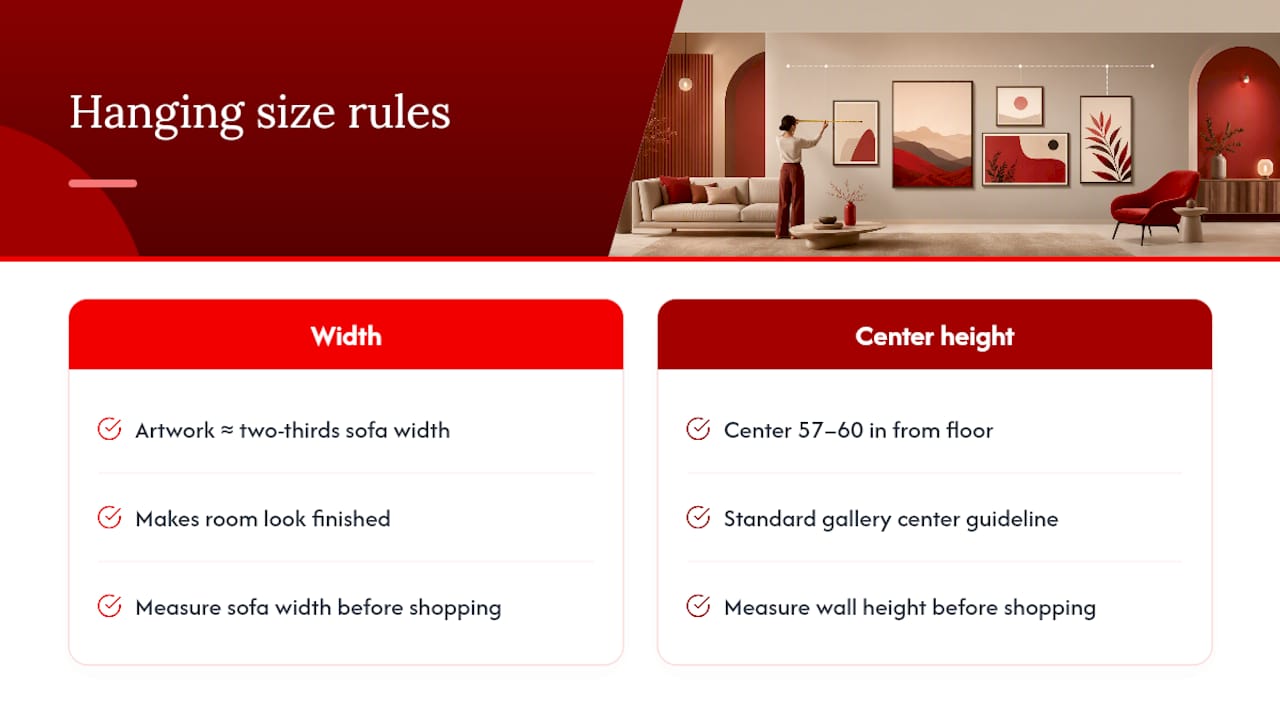
- Center art at eye level. The generally accepted guideline puts the center of a piece around 57 to 60 inches from the floor, which is roughly average eye height for a standing adult.
- Leave 6 to 8 inches above furniture. Hanging art directly over a sofa, bed, or console should sit close enough to feel connected but not crowd the piece below it.
- Use the two-thirds rule for width. Measure your sofa or console and aim for artwork (or a gallery arrangement) that spans roughly two-thirds of that width. An 84-inch sofa points you toward a 56-inch spread of art.
- Choose one anchor piece for a simple room, or build a gallery wall when you have several favorites you don’t want to choose between.
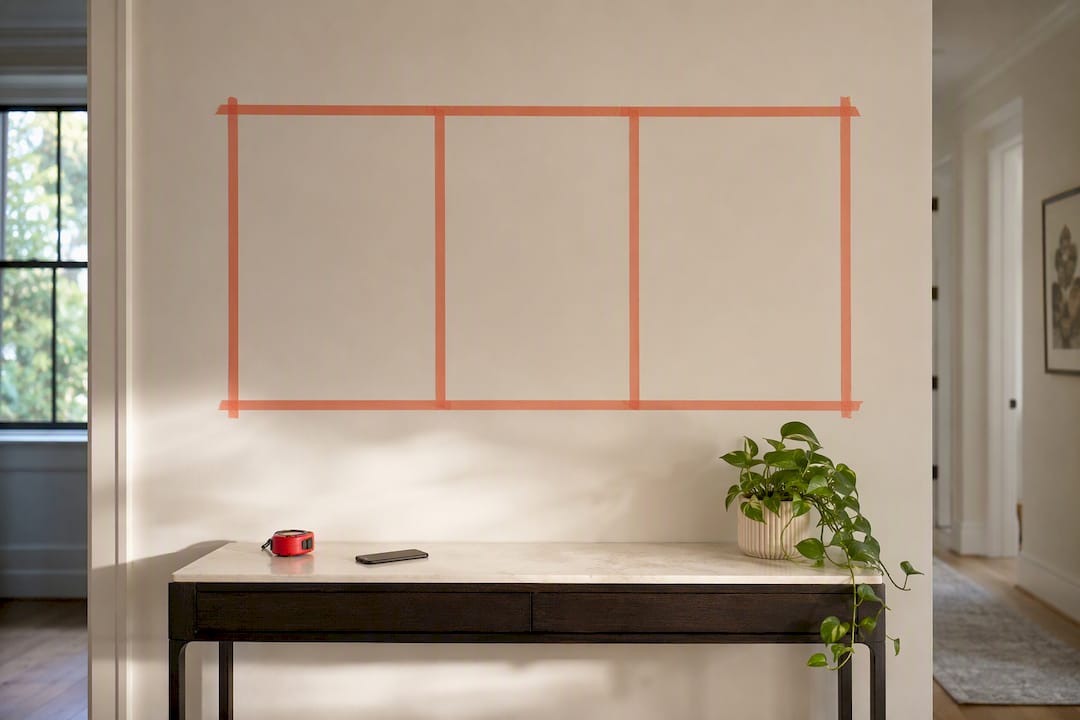
Pro Tip: Tape the exact dimensions of your planned piece onto the wall with painter’s tape before you buy. Standing back and looking at the taped outline for a day catches sizing mistakes that measuring tape alone misses.
Pre-Purchase Checklist: What to Confirm Before You Buy
A few minutes of checking before checkout prevents most wall art regrets.
- Confirm the exact physical dimensions, not just the frame size listed in the thumbnail.
- If you’re printing a personal photo, check the original file’s resolution; low-ppi images pixelate badly once blown up to 24 by 36 inches or larger, so ask the printer for a proof or sample crop first.
- Ask about archival or fade-resistant ink claims, especially for anything hanging near a window.
- Check what mounting hardware ships with the piece, since sawtooth hangers and D-rings need different wall anchors.
- Read the return policy and shipping window before ordering, and look for customer photos showing true color and scale, since online listings often shift both.
Wall Art Trends Worth Considering
Minimalist abstracts, vintage photography, and tactile mixed-media pieces are dominating mood boards right now, alongside a rise in small-batch prints from independent artists rather than mass reproductions. The safest way to chase a trend without regretting it in two years: keep your frames and mats neutral, and let a single statement piece or color carry the trend instead of repainting the whole room around it. Testing a look with an affordable print before committing to an original is the lower-risk path, and a DIY textured canvas is one of the cheapest ways to try a tactile, mixed-media look before buying the real thing.
How to Hang a Gallery Wall Without Regret
Building a gallery wall rewards patience more than talent.
- Lay every piece on the floor first and arrange them until the composition feels balanced, adjusting spacing to roughly 1 to 2 inches between frames for a cohesive, gallery-style look.
- Pick your largest piece as the anchor, then build the rest of the arrangement outward from it rather than starting with small pieces and hoping they average out.
- Match hardware to wall type and weight. Heavier or oversized pieces need two mounting points and anchors rated above the piece’s actual weight, and the right choice differs across drywall, studs, and masonry.
- Photograph the floor mockup before you pick up a drill, so you have a reference to follow once the pieces are off the ground.
Pro Tip: Take a photo of your wall on your phone, then sketch the planned layout over it with a basic photo-editing app. It’s a faster gut check than eyeballing painter’s tape outlines, especially for a five-plus piece gallery wall.
Expert Shortcuts Our Team at Lizard’s Lunch Relies On
Our team at Lizard’s Lunch leans on a few shortcuts that save both money and wall damage. Painter’s tape mockups and phone-photo layout sketches catch sizing mistakes before they become drill holes. For longevity, favor archival inks, keep prints out of direct sun, and choose humidity-safe finishes like metal or acrylic for bathrooms and kitchens. If you’re deciding between two durable formats, our breakdown of acrylic versus metal prints walks through the trade-offs in more depth, and our guide to making a small bedroom look bigger covers how scale and placement affect a room’s proportions.
Where This Guide’s Recommendations Came From
This guide draws on how leading marketplaces describe their own production and design approach.
- Fine Art America for production timelines, customization, and archival ink claims.
- Society6 for independent-artist variety and ready-made gallery-wall sets.
- Art.com for framing services and catalog breadth.
- Desenio for trend-focused print sets and room-specific filtering.
Why Most Wall Art Advice Skips the Part That Matters
Most wall art guides spend paragraphs on trends and almost nothing on math, and that’s backwards. A piece can be the exact right style and still fail a room if it’s 20 inches too small for the sofa behind it. The two-thirds rule and the 57 to 60 inch center guideline do more to make a room look finished than any amount of trend chasing.
The conventional wisdom also oversells originals and undersells archival prints. A well-made print with fade-resistant ink, properly framed, holds up for decades and costs a fraction of an original. Save the splurge for a piece you’ll actually build a room around, not every wall in the house.
If there’s one thing to prioritize first, it’s measuring before you shop. Walk in with your sofa width, your wall height, and a rough sense of two-thirds math, and you’ll rule out half the pieces that would have looked wrong the moment they arrived.
— Alexander
A Different Way to Personalize Your Space
Marketplaces like Society6, Fine Art America, Art.com, and Desenio are built for buying finished pieces, but wall art collections are only one layer of a home that actually feels like yours. If you’re rethinking a room from the ground up, rather than filling one wall, this guide covers the bigger picture: how your space, habits, and daily routines fit together. Our guide on minimalist living is a useful next stop if you’re trying to figure out what belongs on your walls at all before you spend a dollar on prints. Unlike a print shop, we’re not selling you the piece. We’re helping you decide what your space actually needs first, so the art you eventually buy earns its spot on the wall.


















Leave a Comment
Your email address will not be published. Required fields are marked with *