
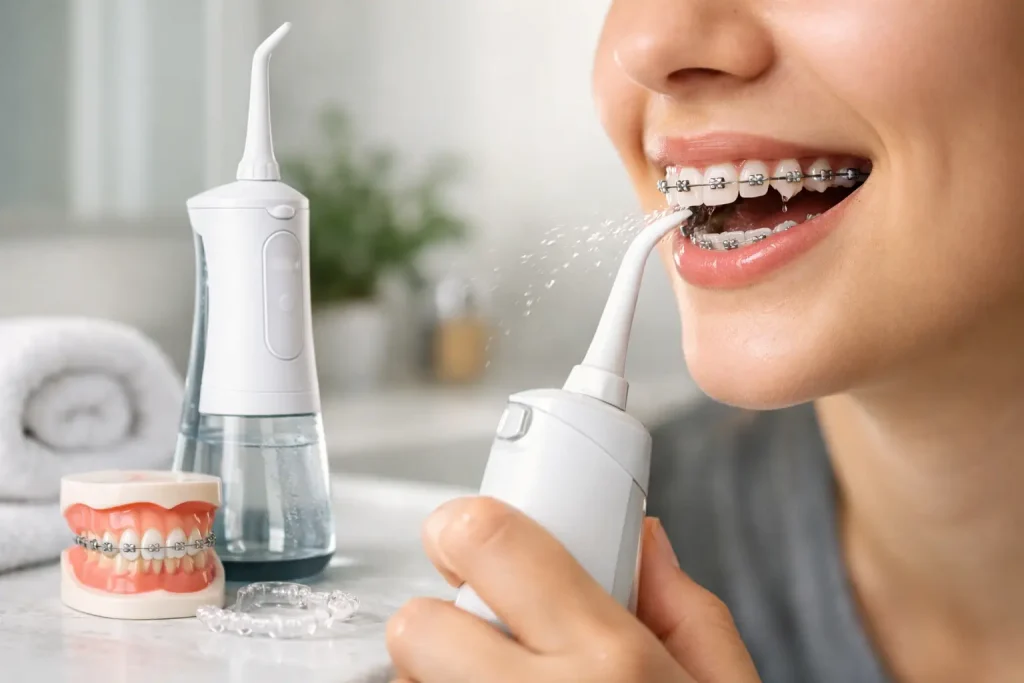
Read this water flosser review for braces to compare pressure settings, tips, tank sizes, and habits that make cleaning around brackets easier each day.
Braces turn a simple brushing routine into a small engineering project. Brackets collect food, wires create hard-to-reach angles, and floss threaders can make a tired evening feel even longer. This water flosser review for braces looks at what these devices do well, where they fall short, and which features are worth paying for when your goal is cleaner teeth with less daily hassle.
The short version: a water flosser can be an excellent addition to braces care, especially for rinsing out trapped debris around brackets and along the gumline. It is not a free pass to rush brushing or ignore the flossing plan recommended by an orthodontist or dentist. The best model is the one that is easy enough to use consistently, gentle enough for sensitive gums, and powerful enough to clear the places a toothbrush misses.
Why Water Flossers Make Sense With Braces
Traditional string floss remains a useful way to clean between teeth, but braces complicate the process. You may need to thread floss under the archwire at every gap, which takes patience and good technique. A water flosser sends a focused stream of water around hardware, between teeth, and near the gumline in a fraction of the time.
That convenience matters because the best oral-care routine is usually the routine people actually keep. A quick water-flossing session after dinner can help dislodge spinach, popcorn hulls, meat fibers, or other food that has settled around brackets. For teens, busy adults, and anyone new to orthodontic treatment, that immediate clean feeling can make a real difference in daily follow-through.
Still, expectations should be realistic. Water flossers are particularly good at flushing loose debris and supporting gum health, but they do not physically scrape plaque away in exactly the same manner as string floss. Your dental professional may recommend using both, or may suggest an interdental brush for specific areas. The right mix depends on your braces, gum condition, and ability to clean thoroughly.
Water Flosser Review for Braces: Features That Matter
A long feature list can be distracting. For braces, a few practical details have far more impact than fancy extras.
Pressure control is not optional
Look for multiple pressure settings, ideally with a low setting that still produces a steady stream. New users often start too strong, hit a sensitive area, and decide the device is not for them. Beginning on low lets you learn the angle and rhythm without spraying the mirror or irritating tender gums.
Medium pressure is often the daily sweet spot once you are comfortable. Higher settings can be helpful for stubborn debris, but maximum power is not automatically better. If your gums bleed, feel sore, or remain uncomfortable, lower the setting and ask your dentist or orthodontist for guidance rather than powering through.
An orthodontic tip earns its place
Many countertop and cordless models include a specialized orthodontic tip, often designed with a small brush-like end. It can help sweep around bracket edges while the water stream rinses away loosened debris. It is a useful accessory, though not a reason by itself to choose one model over another.
A standard jet tip can still work well with braces if you move slowly and aim carefully. The key is to trace the gumline, then work around the top, sides, and bottom of each bracket. If a model offers a tip that is difficult to replace or store, that convenience advantage can disappear quickly.
Tank size determines how often you refill
Countertop water flossers have larger reservoirs and usually provide enough water for a full session without interruption. They are a strong choice for a family bathroom, for people with fixed retainers in addition to braces, or for anyone who prefers a more powerful, steady flow.
Cordless models are compact and easy to bring to a dorm, office, or vacation rental. Their trade-off is a smaller tank. Some run out of water before you finish cleaning every area, particularly if you use a lower-pressure, slower technique. That is not a deal breaker, but it can become annoying enough to reduce use over time.
Battery and storage affect real-life value
A rechargeable cordless unit is convenient, but check whether it can stand upright, whether the charging port is protected from bathroom moisture, and how easy it is to fill under a faucet. A device that leaks in a travel bag or has an awkward reservoir lid will not feel like a smart purchase for long.
For countertop models, consider counter space and cord storage. They are generally more powerful and better suited to full, unhurried sessions, but they are less appealing in a cramped shared bathroom. The better choice is not always the biggest machine. It is the one that fits your routine without becoming clutter.
Countertop vs. Cordless: Which Type Is Better?
For most people wearing braces, a countertop water flosser delivers the best at-home experience. It typically offers more pressure options, a larger reservoir, and a stronger, more consistent stream. If you have room beside the sink and plan to use it every night, it is usually the better value.
Cordless water flossers win on portability. They are practical for college students, frequent travelers, or households where counter space is limited. They can also be less intimidating for younger users because they feel simpler and take up less visual space. Just be prepared for smaller water capacity and, in many cases, fewer settings.
Shower-safe or fully waterproof designs have appeal, but they are not essential. Using a water flosser in the shower may reduce mess, yet it can also make it harder to see whether food is coming out from behind brackets. In front of a mirror, you can be more deliberate.
What a Good Braces Routine Looks Like
A water flosser works best when it is part of a sequence rather than a substitute for everything else. Fill the reservoir with lukewarm water, lean over the sink, and keep your lips partly closed around the tip to contain splashing. Start at the back teeth, follow the gumline, and pause around every bracket before moving to the next tooth.
Give extra attention to the areas between the gums and brackets, where plaque can build up. Then rinse around the chewing surfaces and behind the last molars. The process should take roughly one to two minutes once you get the hang of it.
Use your orthodontist-approved toothpaste and a soft-bristled toothbrush afterward or before, depending on the routine you are most likely to maintain. Many people prefer to water floss first because it flushes out visible debris before brushing. Others like it after brushing as a final rinse. Either order can be reasonable if you are cleaning carefully and consistently.
Do not put mouthwash, essential oils, or homemade mixtures into the reservoir unless the device instructions specifically allow it and your dental professional agrees. Plain water is effective, inexpensive, and much easier on internal parts. Warm water can be more comfortable than cold water for sensitive teeth.
Common Drawbacks to Consider Before Buying
The biggest downside is mess during the learning period. Water flossers have a learning curve, and the first few uses may leave the counter wet. Leaning over the basin, starting the stream only after placing the tip in your mouth, and using a low setting solve most of that problem.
Noise is another consideration. Countertop units can be noticeably loud, while cordless models are usually quieter but may have less power. Replacement tips, battery longevity, and reservoir cleaning are also part of the ownership cost. Empty the tank after use and clean it regularly so standing water does not develop an unpleasant odor or mineral buildup.
Finally, a water flosser does not repair poor brushing habits. White spots near brackets can develop when plaque stays in place day after day. If you notice persistent bleeding, swollen gums, pain, loose hardware, or changes in tooth color, contact your orthodontist or dentist instead of relying on a device to fix the issue.
The Best Buying Decision Is the One You Will Use
Choose a countertop model if you want power, a generous water supply, and a permanent spot in your routine. Choose cordless if portability, small-bathroom storage, or travel matters more than having the largest reservoir. In either case, prioritize adjustable pressure and a comfortable tip over extra modes you may never touch.
Braces are temporary, but the habits built during treatment can last much longer. A water flosser will not make orthodontic care effortless, yet it can make the daily cleanup feel far more manageable – and that is often enough to keep a good routine going.










Leave a Comment
Your email address will not be published. Required fields are marked with *