
Choose the protein powder that matches your goal. Learn the 2.5 g leucine target, when to add 25–30% for plant blends, and key safety checks before buying.
For fastest post-workout recovery, whey isolate wins on speed and leucine content. For dairy-free daily use, a pea and rice blend covers the same amino acid ground with a bigger scoop. Casein suits overnight recovery, egg white works for the dairy-averse, and soy stands alone as a complete plant-based protein. The real rule: match digestion speed and amino profile to your goal, then check the label for fillers before anything else.
TL;DR:
- Whey isolate provides the highest protein content per scoop and digests fastest, making it ideal for post-workout recovery, especially if lactose sensitivity is an issue.
- Pea and rice protein blends can offer a complete amino acid profile similar to whey but require a larger scoop and are better suited for vegans or those avoiding dairy.
- Casein offers slow digestion, making it the best choice for overnight recovery, while egg white protein is a dairy-free complete source suitable for sensitive individuals.
- Select powders with short ingredient lists and third-party testing to avoid contaminants, hidden sugars, and artificial additives that pose health risks.
- For sustainability, plant-based proteins like pea, rice, and hemp generally have a lower environmental impact than whey from dairy, especially if you prioritize eco-friendly sourcing.
Table of Contents
- The Main Protein Powder Types, Side by Side
- How to Pick the Right Protein Powder for Your Goal
- Safety Checks Before You Buy Any Protein Powder
- The Environmental Trade-Offs Between Whey and Plant Powders
- Shelf Life and Storage for Every Powder Type
- Our Take: What Actually Matters When You Choose
- Sources
- FAQ
The Main Protein Powder Types, Side by Side
Every powder on the shelf traces back to one of a handful of source proteins, and each behaves differently once it hits your gut. Knowing the differences between whey vs plant protein sources saves you from buying the wrong tub twice.
Whey comes in three forms, and the differences matter more than most labels admit. Whey concentrate keeps more of the natural milk fat and lactose, which makes it cheaper but rougher on lactose-sensitive stomachs. Whey isolate strips out most of that fat and lactose during processing, so it digests faster and sits easier for people with mild lactose issues. Whey hydrolysate goes a step further, pre-breaking the protein chains for even quicker absorption, which is why it shows up in clinical and hospital-grade formulas more than in your average gym bag. All three deliver a fast leucine spike, the amino acid most responsible for kicking off muscle protein synthesis after a lift.
Casein is whey’s slow cousin. It clots in the stomach and releases amino acids over several hours instead of all at once, which is exactly why it’s the go-to pick for a bedtime shake rather than a post-workout one.
Egg white protein gives you a complete, dairy-free amino acid profile without the plant-blend math. It’s pricier per scoop than whey, but it’s the cleanest animal-based option for anyone who reacts to milk proteins but still wants a complete, single-source powder.
Soy protein is the only common plant-based powder that’s a complete protein on its own, no blending required. It contains isoflavones, plant compounds that mimic estrogen mildly, which some readers watch for hormone-sensitive conditions; talk to a doctor if that applies to you.
Pea and rice blends are the workaround for the fact that pea protein alone runs low on methionine, and rice alone runs low on lysine. Combine them and you get a complete amino acid profile similar to whey, just usually in a bigger scoop.
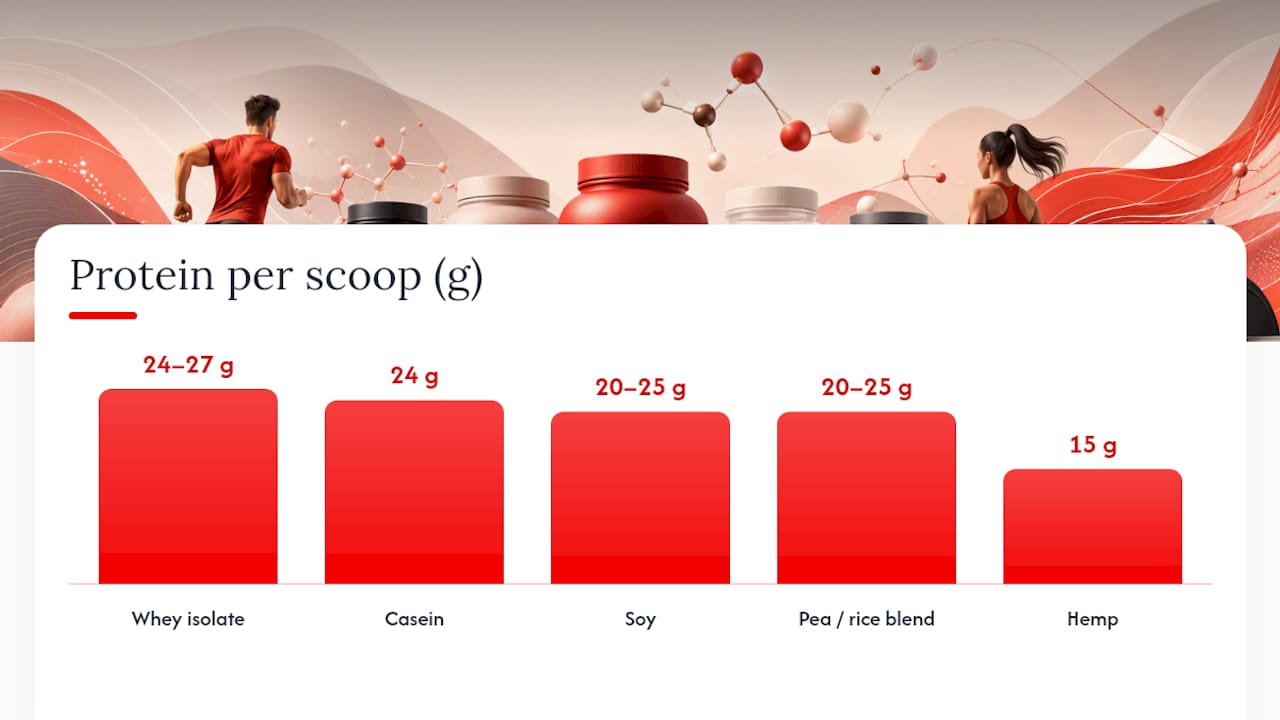
Hemp protein delivers less protein per scoop than the others, often 15 grams instead of 20 to 25, but it brings fiber and omega-3s that no other powder on this list offers.
Rice protein and other single-source plant powders work fine as a supplement to a varied diet, but alone they rarely hit a complete amino profile, which is why smart brands blend them rather than sell them solo.
- Whey concentrate: ~20–24 g protein per scoop, some lactose, budget-friendly.
- Whey isolate: ~24–27 g protein per scoop, minimal lactose, fast digesting.
- Casein: ~24 g protein per scoop, slow digesting, best before bed.
- Egg white: ~20–24 g protein per scoop, complete, dairy-free.
- Soy: ~20–25 g protein per scoop, complete, plant-based.
- Pea/rice blend: ~20–25 g protein per scoop, complete when blended, vegan.
- Hemp: ~15 g protein per scoop, added fiber and omega-3s.
A controlled comparison worth knowing about: a randomized crossover study testing 20 grams of whey against 20 grams of a pea, rice, and pumpkin blend found comparable effects on appetite and overall metabolic response, though whey produced a sharper short-term insulin and fat-metabolite spike. In practice, that means the plant blend isn’t a downgrade. It just moves at a different pace.
How to Pick the Right Protein Powder for Your Goal
Choosing well comes down to five checks, done roughly in this order.
- Start with your goal. Post-workout recovery favors whey isolate or hydrolysate for the fast leucine hit. Overnight recovery favors casein. Weight management favors whatever powder actually keeps you full and fits your calorie budget, which for most people is whichever one they’ll drink consistently. Vegan or dairy-free needs point straight to a pea-rice blend, soy, or hemp.
- Hit your leucine target. Muscle protein synthesis generally kicks in around 2.5 grams of leucine per serving. Whey delivers that in roughly 20 to 25 grams of powder. A pea-rice blend needs closer to 25 to 35 grams to match it, since plant leucine content runs lower per gram. Measure by leucine, not scoop size, if muscle gain is the priority.
- Read the ingredient list before the marketing. Harvard Health’s nutrition team advises choosing powders with short, minimal ingredient lists and adding whole foods like fruit or nut butter for flavor instead of relying on additive-heavy formulas.
- Calculate cost per 25 grams of protein, not cost per scoop or per tub. Scoop sizes vary wildly across brands, so a “cheaper” tub can actually cost more per gram of usable protein.
- Sample before you commit to a full tub. Texture and taste vary enormously between plant powders especially, and a bad first impression usually means an unused tub in the back of your pantry.
Pro Tip: If you’re switching from whey to a plant blend for the first time, add 25 to 30 percent more powder per serving to land near the same leucine dose. Your muscles don’t care what the label says. They care about the amino acids that actually reach them.
Safety Checks Before You Buy Any Protein Powder
Contamination and allergens deserve real attention, not an afterthought. A systematic review of contaminants in dietary supplements found concerning heavy metal levels in some protein powders, which is the strongest argument for buying only from brands that publish third-party lab reports.
Beyond metals, a few ingredient red flags are worth scanning for every time:
- High added sugar, often disguised under names like “natural flavors” or maltodextrin.
- Artificial sweeteners like sucralose, which some people tolerate poorly in large daily doses.
- Thickening agents such as carrageenan or excessive gums, both linked to gastrointestinal discomfort in sensitive people.
- Cross-contamination warnings for milk, soy, or tree nuts, especially critical if you have a true allergy rather than simple intolerance.
If you’re pregnant, managing kidney disease, or taking medications that interact with high protein intake, talk to a doctor before adding a new powder to your routine. MedlinePlus notes that protein content per scoop varies widely across products, which makes a quick professional check worth the five minutes it takes.
The Environmental Trade-Offs Between Whey and Plant Powders
Whey is a dairy byproduct, which means its environmental footprint is tied to the cattle industry’s land, water, and methane demands regardless of how the whey itself gets processed. Producing a kilogram of whey protein generally carries a heavier carbon and water footprint than producing the same amount of pea or rice protein, simply because dairy farming is resource-intensive further up the supply chain.
Pea protein, by contrast, benefits from a crop that fixes nitrogen in the soil, reducing the need for synthetic fertilizer compared to many other crops. Rice protein carries a mixed reputation because rice paddies produce methane too, though typically less per serving than dairy-based whey. Soy sits somewhere in the middle, with impact varying heavily by where and how it’s farmed.
None of this means whey is off the table if your priority is muscle recovery speed. It means readers who weigh sustainability alongside performance have a legitimate reason to lean toward pea, rice, or hemp powders, and blending two plant sources doesn’t meaningfully change that environmental math. If you’re building meals around plant protein generally, a protein-forward bowl recipe shows how far whole-food plant protein can stretch without leaning on powder at all.
Shelf Life and Storage for Every Powder Type
Unopened protein powder, regardless of source, typically stays good for one to two years from the manufacture date, thanks to its low moisture content. Once opened, that window shrinks. Most powders hold their quality for about six to twelve months after the seal is broken, assuming they’re stored correctly.
Correct storage means an airtight container, a cool and dry spot, and zero direct sunlight. Humidity is the real enemy here: moisture in the air causes clumping first and bacterial growth eventually, especially in whey and casein powders that still carry trace dairy fat. Plant-based powders like pea, rice, and hemp tend to be more forgiving because they contain less fat to go rancid, but hemp’s omega-3 content makes it slightly more prone to a stale, oily smell if left in a warm cupboard for months.
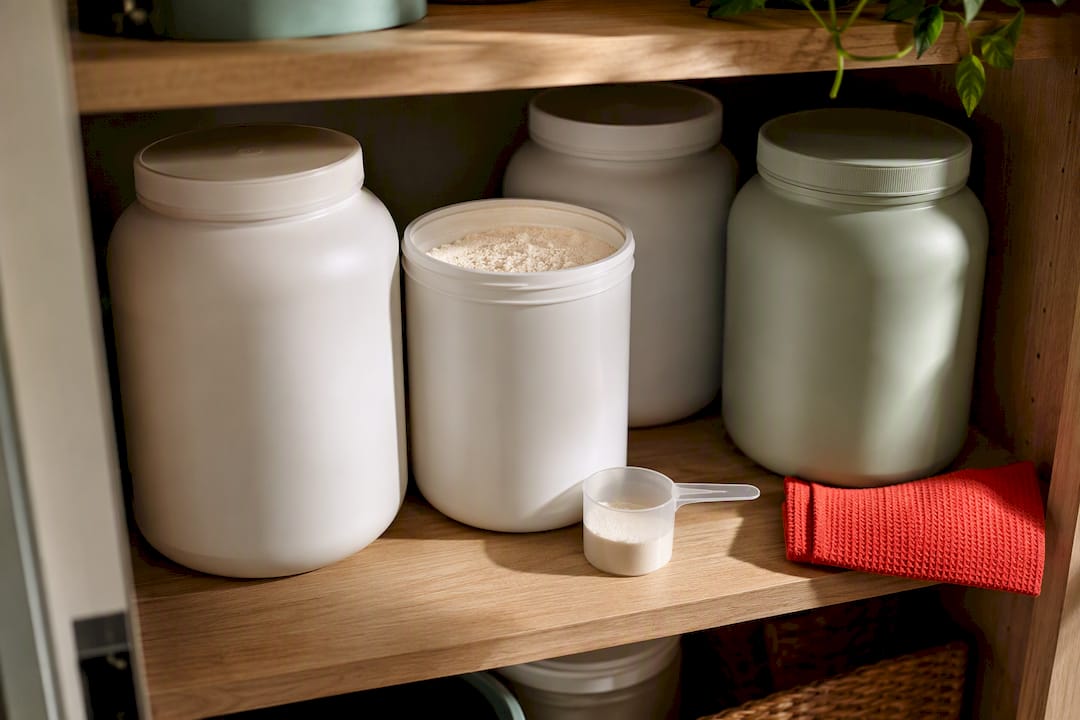
Skip the fridge unless your kitchen runs consistently humid. Condensation inside the container does more damage than room temperature ever will. And if a scoop smells sour, sharp, or off in any way that wasn’t there when you opened it, that’s your signal to toss it rather than push through the tub.
Our Take: What Actually Matters When You Choose
Match the powder to the goal, not the marketing on the tub. That single habit solves most of the confusion people bring to this decision. If dairy sits poorly with you, a whey isolate or a well-formulated pea-rice blend both work; the blend just needs a bigger scoop. Three steps to move on right now: try isolate first if you’re lactose-sensitive but not dairy-free, pick a pea-rice blend and bump the serving size if you’re vegan, and always check for third-party testing before you trust a new brand with your money. This guidance was put together to cut through the noise, not add to it.
— Alexander
This article is general information, not a substitute for advice from a qualified doctor. Consult a qualified healthcare professional about your own circumstances before acting on anything here.
Sources
- Weighing protein powders — Harvard Health
- Benefits of protein powders — UConn Extension
- Randomized crossover metabolic comparison of whey and plant protein supplements — PMC
FAQ
What Are the Different Types of Protein Powder?
The main categories are whey (concentrate, isolate, and hydrolysate), casein, egg white, soy, pea and rice blends, and hemp. Each source differs in digestion speed and completeness of its amino acid profile, which is why blends exist for plant-based options.
Which Protein Powder Type Is Best?
There’s no single best type. It depends on your goal: whey isolate suits fast post-workout recovery, casein suits overnight use, and pea-rice blends or soy suit vegan and dairy-free needs equally well.
What Are the Top Protein Powders to Consider?
Rather than specific brands, the top three categories worth comparing are whey isolate for speed and leucine content, casein for slow overnight release, and a pea-rice blend for a complete vegan option. MedlinePlus confirms protein content per scoop varies widely across all three, so always check the label.
What Are the 3 Types of Whey Protein?
The three types are whey concentrate, whey isolate, and whey hydrolysate. Concentrate retains more lactose and fat, isolate is more filtered and faster absorbing, and hydrolysate is pre-broken down for the quickest absorption of the three.

















Leave a Comment
Your email address will not be published. Required fields are marked with *