
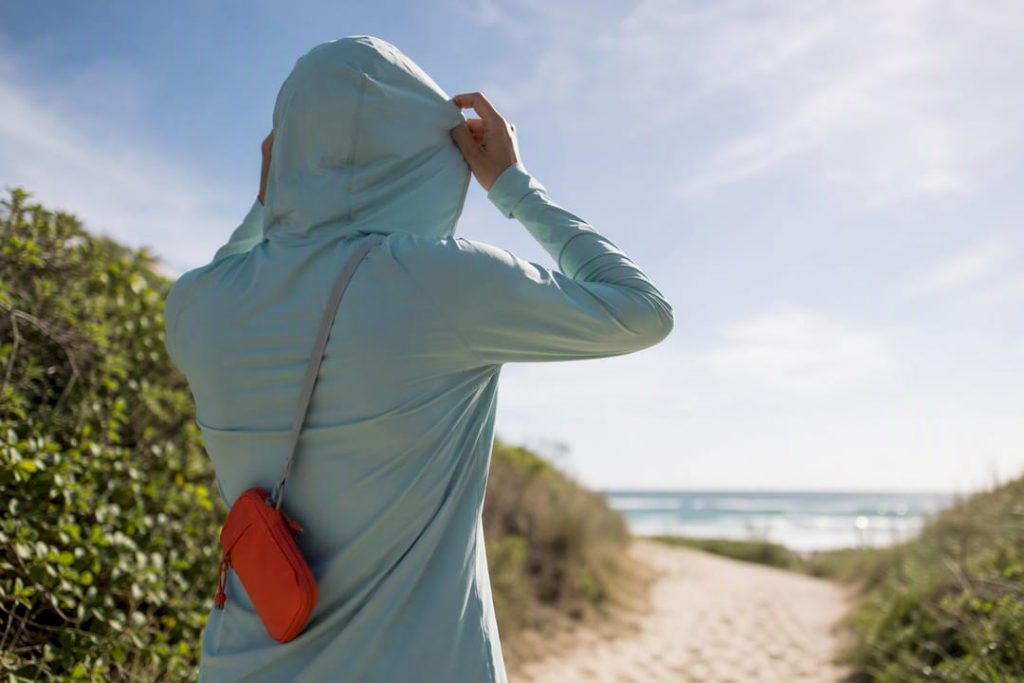
Six lab tested UPF picks with fit and care advice so you actually wear sun protection clothing that blocks UV.
Prioritize garments rated UPF 30 or higher, lean toward 50+, and choose coverage (long sleeves, a hood, thumbholes) over anything that stays folded in a drawer. Pair it with sunscreen and shade on the skin that’s still exposed, and you’ve solved the hard part of sun protection clothing before you even leave the store.
TL;DR:
- A UPF 50+ rated shirt with coverage features like long sleeves and a hood is essential for effective sun protection, especially when paired with sunscreen and shade.
- The REI Sahara Shade Hoodie offers excellent value with UPF 50+ protection at a budget-friendly price and suits casual outdoor activities.
- Breathability, fit, and fabric weave density significantly affect a garment’s UV blocking ability and comfort during different activities.
- Genuine UPF claims should cite standardized lab testing methods such as AATCC or ASTM, avoiding unverified marketing labels.
- Regular care and wear can degrade UPF, so monitor fabric thinning or fading to determine when replacement is necessary for sustained sun protection.
Table of Contents
- Which Sun Shirts and Hoodies Are Worth Buying?
- How Do You Choose the Right Sun-Protective Clothing?
- What Does UPF Actually Mean?
- How Do Washing and Wear Affect UPF Over Time?
- Which UPF Features Matter Most for Your Activity?
- How Did We Choose These Recommendations?
- What Should You Budget for Sun Protection Clothing?
- How Can You Tell Real UPF Claims From Marketing Hype?
- Our Take on Building a Sun-Safe Wardrobe
- Where Lizardslunch Fits Alongside These Gear Picks
- Sources
- FAQ
Which Sun Shirts and Hoodies Are Worth Buying?
Six garments show up again and again across gear-testing sites, and each one earns its spot for a different reason. None of them are interchangeable, so match the pick to how you’ll actually use it, not just the UPF number on the tag.
The REI Sahara Shade Hoodie is the value pick. It carries a UPF 50+ rating without the price tag of technical alpine gear, and testers consistently point to it as proof that effective UPF protection doesn’t require a premium budget. It suits casual hikers and beach days better than serious mileage.
The Mountain Hardwear Crater Lake Hoody trades a little durability for weight savings, staying UPF 50+ while feeling almost weightless on skin. Alpine hikers and fast-and-light backpackers notice the difference on long approaches where every ounce in the pack, and on the body, matters.
The Patagonia Capilene Cool Sun Hoody is the everyday workhorse. It combines UPF protection with odor-control treatment, so it holds up across multiple wears between washes, which makes it a strong travel companion for readers who need one shirt that does several jobs.
The Outdoor Research Echo Hoodie ventilates better than anything else on this list, built for runners and anyone who sweats through a shirt in twenty minutes. Some colorways carry a lower UPF than the rest of the lineup, so check the specific hangtag before assuming every shade performs the same.
The Cotopaxi Sombra Hoodie covers more skin than most sun shirts while still looking like something you’d wear off the trail. UPF 50+ and generous cut make it a strong all-rounder for people who want protection that doesn’t scream “technical gear.”
The Anetik Ultraguide Hooded L/S is built for people who live outside for days at a stretch. Multiple pockets and a rugged construction make it a favorite among gear reviewers testing multi-day trips, where a shirt has to survive sun, salt, and sweat without falling apart.
A few quick fit notes before you order: sizing on the Crater Lake Hoody runs close to the body, so hikers who layer underneath often go up a size. The Sahara Shade and Sombra hoodies both run true to size with room for a base layer. If you wear a bike or climbing helmet, check hood volume on the Echo and Ultraguide, since both are cut closer to the head than the looser Cotopaxi hood.
How Do You Choose the Right Sun-Protective Clothing?
Shopping for sun protection clothing gets a lot easier once you work through the same checklist gear testers use. Run down this list before you swipe your card:
- Confirm a lab-tested UPF number. A hangtag claim without a testing standard behind it is marketing, not proof.
- Check coverage features. Hoods, long sleeves, and thumbholes protect the areas sunscreen most often misses, like the tops of ears and hands.
- Look at the fabric and weave. Tightly woven synthetics block more UV than loose, thin natural fibers.
- Weigh breathability against protection. A heavier weave often blocks more sun but traps more heat; match the tradeoff to your activity.
- Test the fit before buying. Loose or relaxed cuts hold UPF better than tight, stretchy fabric that thins out fibers.
- Read the care label. Some garments lose rated protection if washed with bleach or fabric brighteners.
The breathability tradeoff deserves a second look. A dense, heavier fabric like the Ultraguide’s build blocks more UV per square inch, but it runs hotter on a July trail run. A ventilated knit like the Echo Hoodie breathes better but sacrifices a little protection in exchange. Neither choice is wrong. Pick based on whether heat or sun exposure is the bigger risk on your specific outing.
Pro Tip: Look for the actual test method on the product page, not just the UPF number. Reputable brands cite AATCC or ASTM testing; if a listing gives a UPF rating with no testing reference anywhere, treat it as unverified.
What Does UPF Actually Mean?
UPF stands for Ultraviolet Protection Factor, and it measures how much UVA and UVB radiation a fabric lets through, unlike SPF, which measures a sunscreen’s effect on skin. This is the UPF vs SPF distinction most shoppers miss: SPF numbers relate to time-to-burn, while UPF is a direct measure of fabric-level UV transmission.
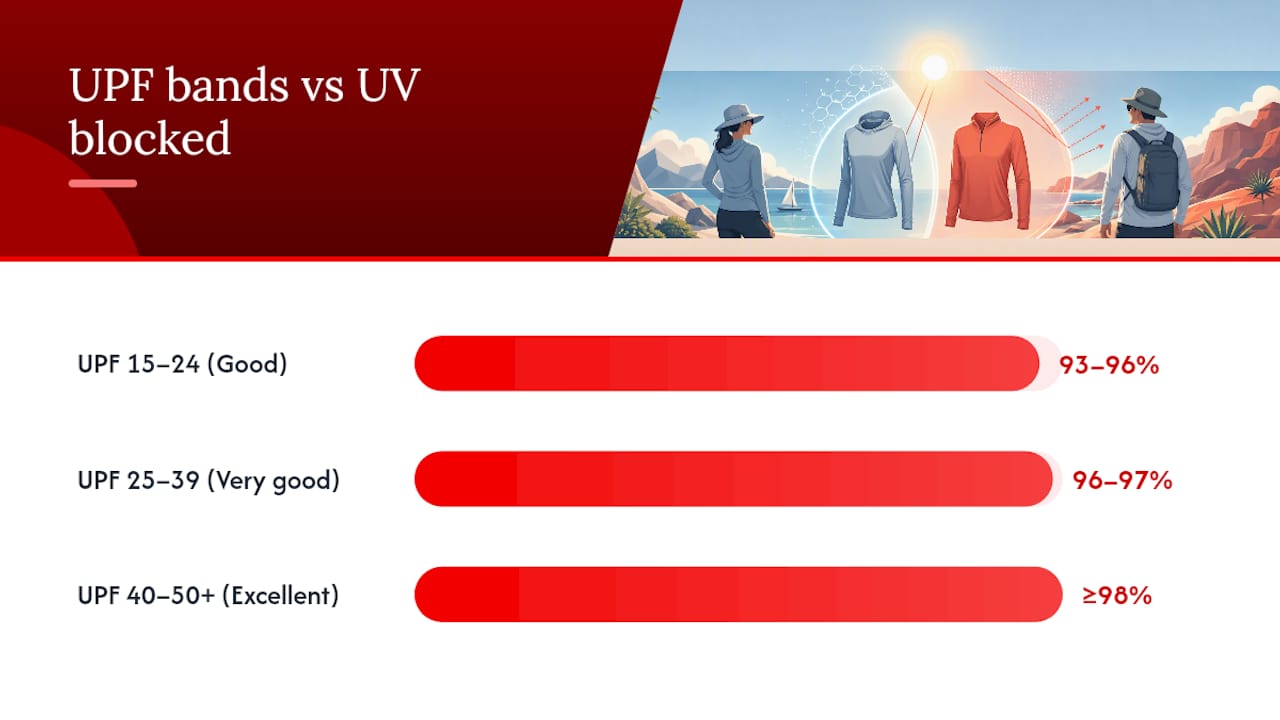
The Skin Cancer Foundation breaks UPF into three bands: 15 to 24 is good, blocking roughly 93 to 96% of UV; 25 to 39 is very good, blocking about 96 to 97%; and 40 to 50+ is excellent, blocking around 98% or more. That gap between “good” and “excellent” sounds small on paper, but it’s the difference between a shirt that needs backup and one that doesn’t.
Material matters as much as the number on the tag. Polyester and nylon typically block more UV than cotton or linen because of tighter fiber structure, and a dark, tightly woven denim shirt can rate far higher than a standard white cotton T-shirt, which often measures only around UPF 7. Merino wool earns a place in cold-weather UPF layers because it insulates while still blocking UV. Some cotton and mineral-treated fabrics add titanium dioxide or zinc oxide coatings to boost protection without changing the feel much.
Beyond fiber type, four things quietly change how much protection a garment gives you: color (darker blocks more), weave density (tighter blocks more), stretch (a stretched shirt has gaps a relaxed one doesn’t), and wetness (a wet shirt can lose a significant share of its dry-state UPF). If a shirt has no UPF label, hold it up to a bright window. Light passing through easily is a rough signal that UV passes through easily too.

How Do Washing and Wear Affect UPF Over Time?
UPF isn’t permanent. Stretching, abrasion, and sun-driven fading all chip away at a fabric’s ability to block UV, and wet fabric performs worse than dry fabric for many materials. None of that means your favorite sun shirt is a wasted purchase, it just means care matters as much as the initial rating.
A few habits keep protection closer to its original rating for longer:
- Wash gently and skip bleach or optical brighteners unless the label specifically allows them.
- Avoid excessive stretching or line-drying in a way that pulls the fabric taut.
- Pack a dry, quick-dry backup for water days rather than relying on a wet shirt for hours of coverage.
- Rotate garments rather than wearing one piece daily all summer, which slows fading and fiber breakdown.
Watch for three signals that a piece needs replacing: visible thinning you can see light through, fading that’s gone past cosmetic and into the fabric structure, and holes or permanently stretched areas near seams. Pro Tip: Hold a worn sun shirt up to sunlight next to a newer one of the same model. If noticeably more light comes through the older shirt, its real-world UPF has likely dropped even if the tag still says 50+.
Which UPF Features Matter Most for Your Activity?
Sun protective wear isn’t one-size-fits-all, and the smartest shoppers match features to their actual routine instead of chasing the highest number on the shelf, especially considering advice like Car Window Tint UV Protection: What You Need to Know that explains UV exposure through glass and reflections.
- Water and beach days: prioritize UPF 50+, quick-dry fabric, and a hood that layers well under a wide-brim hat rather than fighting it.
- Hiking, running, and biking: breathability wins. Look for venting panels, a helmet-compatible hood or a simple collar, and a lighter weight fabric like the Crater Lake Hoody or Echo Hoodie.
- Snow and high-altitude use: UV reflects off snow and intensifies at elevation, so an insulating UPF baselayer matters even in cold weather, per CDC sun-safety guidance on year-round exposure.
- Casual and town wear: treated cotton blends and style-forward cuts, like the Cotopaxi Sombra, let you get UPF protection without looking like you’re headed up a mountain. Our related guide to warm-weather layering covers more everyday-comfort picks worth pairing with a UPF top.
How Did We Choose These Recommendations?
Our team at Lizard’s Lunch weighed lab-tested UPF ratings against real-world wearability rather than ranking by spec sheet alone, following the same logic gear reviewers and dermatologists apply when the garment you’ll actually wear beats the one with the highest number in a drawer.
- Lab standards like AATCC Test Method 183 anchored every UPF claim we cited.
- Public-health guidance from the Skin Cancer Foundation and CDC shaped the coverage and year-round exposure advice.
- Gear-test results from outlets like GearJunkie and Wirecutter informed comfort and fit notes.
- Availability varies by retailer, so confirm sizing, color-specific UPF, and shipping to your region before buying.
What Should You Budget for Sun Protection Clothing?
Sun-protective apparel spans a wide price ladder, and the good news is that the cheap end isn’t automatically the weak end. Budget-friendly pieces like the REI Sahara Shade Hoodie prove that a sub-premium price tag can still carry a genuine UPF 50+ lab rating, since testers have specifically flagged it as strong value gear rather than a compromise pick.
Mid-range pieces, roughly in the same bracket as the Patagonia Capilene Cool Sun Hoody or Cotopaxi Sombra Hoodie, typically add extras like odor-control treatments, softer next-to-skin fabric, or a more tailored cut. That’s where most casual and everyday buyers land, paying a bit more for comfort features rather than a UPF jump, since 50+ is already close to the practical ceiling.
The top of the range, where the Anetik Ultraguide Hooded L/S sits, reflects rugged construction and multi-day durability more than a stronger UV block. If you’re not spending full days outdoors repeatedly, that premium buys durability you may not need.
One practical note on cost-per-wear: a $30 cotton T-shirt you never grab because it’s uncomfortable protects you less over a season than a $60 UPF hoodie you wear every weekend. Factor actual usage into the price comparison, not just the sticker.
How Can You Tell Real UPF Claims From Marketing Hype?
Not every “sun protective” label on a garment reflects an actual lab test. Retailers sometimes use terms like “sun protective” or “UV resistant” loosely, without a documented UPF rating behind them, so it pays to know what a legitimate claim looks like.
A trustworthy UPF claim references a specific number (30, 50, 50+) tied to a recognized test method such as AATCC TM 183 or the related ASTM standards used in the industry. Brands that stand behind their testing usually list this on the product page or hangtag, not just in ad copy. If a listing only says “UV protective” with no number and no method, treat the claim as unverified rather than assuming it matches a UPF 50+ rated garment.
Watch for a few common red flags: a UPF number listed only on marketing banners and not on the actual care label, claims that apply to “the fabric” generically rather than the specific colorway you’re buying, and pricing that seems too low for a genuinely tested technical fabric. When in doubt, check whether the retailer references the Skin Cancer Foundation’s Seal of Recommendation or cites a specific AATCC/ASTM test, both signals of a claim backed by real lab work rather than a marketing team’s best guess.
Our Take on Building a Sun-Safe Wardrobe
We favor usable UPF 50+ pieces over the highest lab number on paper, because the shirt sitting in your drawer protects nobody. Buy one versatile UPF 50+ layer for everyday coverage and one breathable active option for sweat-heavy days, and you’ve solved sun protection clothing for the whole season.
— Alexander
Where Lizardslunch Fits Alongside These Gear Picks
Once you’ve settled on the right UPF hoodie, the next challenge is often standing out with your own content or business online, and that’s a different problem than the one this article just solved. Some lifestyle and consumer-interest publications help readers and brands alike navigate everything from outdoor gear to marketing decisions, using an evidence-first approach.
If you run a business in the outdoor, apparel, or adjacent space and want visibility with readers actively researching purchases like these, some websites offer advertising and guest post placements rather than a one-off boost that disappears after a single campaign. This can be a direct route to an audience already primed to buy, without the overhead of managing your own editorial calendar. Reach out through advertising pages to discuss placement and reach readers already comparing their options.
Sources
These sources back the UPF ratings, testing standards, and care guidance used throughout this article: the Skin Cancer Foundation, REI’s expert guide, Wirecutter’s roundup, AATCC Test Method 183, and CDC sun-safety guidance.
FAQ
What is the best clothing for sun protection?
The best sun protection clothing combines a lab-tested UPF of 50+ with real coverage, meaning long sleeves, a hood, and thumbholes rather than a light rating alone. Among tested options, the Mountain Hardwear Crater Lake Hoody and REI Sahara Shade Hoodie both deliver UPF 50+ at different price points and activity levels.
Does SPF clothing actually work?
Sun-protective clothing, more accurately labeled with a UPF rating rather than SPF, does work when it carries a genuine lab-tested number. UPF 50 blocks roughly 98% of UV radiation, which is more consistent protection than most people apply with sunscreen alone since clothing can’t wear off or get missed in a spot.
What sun protection clothing is available in Canada?
Brands like REI, Patagonia, Mountain Hardwear, Outdoor Research, Cotopaxi, and Anetik ship UPF-rated apparel to Canadian addresses through their online stores or Canadian outdoor retailers. Always confirm the specific colorway’s UPF rating and shipping details before ordering, since ratings can vary between colors of the same shirt.
Which fabric is best for sun protection?
Tightly woven synthetic fabrics like polyester and nylon generally block more UV than loose-weave cotton or linen, and darker colors block more than light ones. Merino wool is a strong choice for cold-weather UPF layers, while treated cotton blends with mineral coatings can close some of the gap for people who prefer a natural-fiber feel.
How is UPF different from SPF?
UPF measures how much UV radiation passes through a fabric, while SPF measures how a sunscreen delays skin burning from UV exposure. They use different scales and test different things, so a UPF 50 shirt and an SPF 50 sunscreen aren’t directly comparable numbers, even though both aim at the same 98%-ish blocking range at their top ratings.














Leave a Comment
Your email address will not be published. Required fields are marked with *