
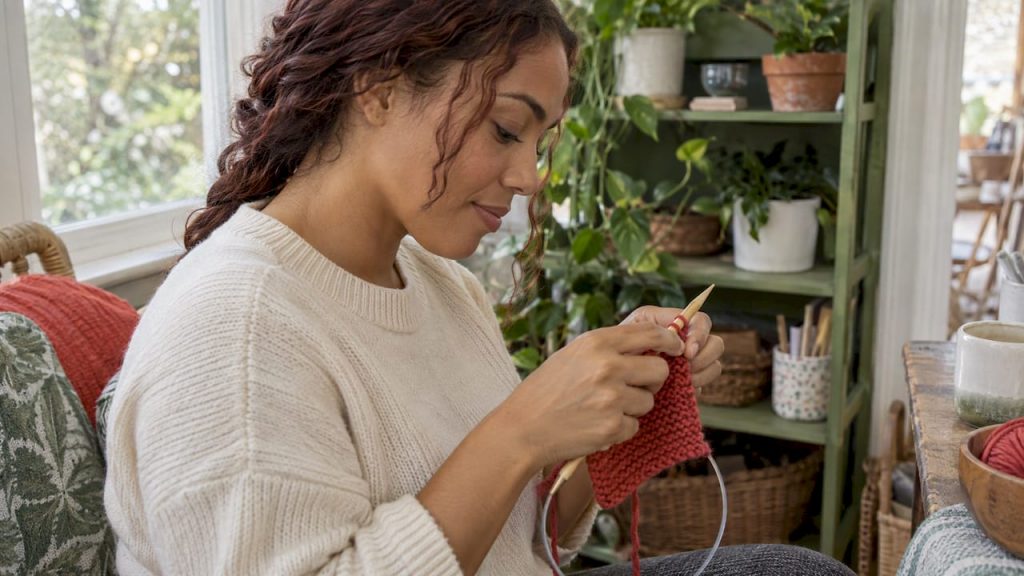
Everything you need to start knitting: the right needles, an easy yarn, a few small tools, how needle sizes work and what to check before buying a starter kit.
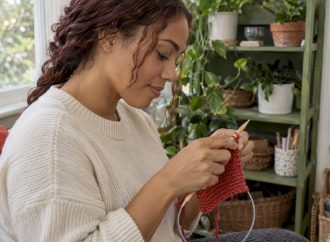
You need two things to start knitting: a pair of needles (or one circular needle) and a ball of smooth, medium-to-thick yarn. Add a tapestry needle for finishing, a small pair of scissors, a tape measure and a few stitch markers, and you have a complete starter set. Pick a 4 mm to 5 mm needle, a DK, worsted or chunky yarn in a light colour, and you are ready to cast on tonight.
This guide walks you through each item, explains needle sizes in plain language (metric and US), shows you how to read a yarn label, and tells you what to look for in a boxed starter kit. We wrote it for Canadian knitters, so we keep an eye on the cold-weather projects most of us actually want to make: toques, scarves, mittens and cozy blankets.
TL;DR
- The bare minimum is yarn plus needles. Everything else (markers, tape measure, scissors, tapestry needle) is cheap and helpful, not a barrier to starting.
- Choose a 4 mm or 5 mm needle and a smooth, light-coloured yarn in DK, worsted or chunky weight. Wool or a soft acrylic are both friendly choices.
- Needle sizes come in millimetres or US numbers. Lower numbers mean thinner needles, and Canadian sizing matches UK sizing.
- Always check the ball band: the weight, the suggested needle size, the yardage and the dye lot all matter before you buy.
- A starter kit is a good shortcut when it includes the yarn, needles, a pattern and a tapestry needle for one simple project.
Table of Contents
- The short shopping list
- What you really need on day one
- Choosing your first needles
- Needle sizes explained
- Picking the right yarn
- How to read a yarn label
- The small tools that make life easier
- What a beginner kit usually includes
- Your first project ideas
- Common beginner mistakes
- A note from our team
- Craft brands: reach readers who love making things
- FAQ
- Sources
The short shopping list
Before the detail, here is the list we would hand a friend heading to the craft aisle:
- Needles: one pair of straight needles or one circular needle in 4 mm or 5 mm.
- Yarn: two or three balls of smooth, light-coloured wool or acrylic in DK, worsted or chunky weight.
- Tapestry needle: a blunt, large-eyed needle for weaving in loose ends.
- Small scissors: any sharp pair that travels well.
- Tape measure: flexible, ideally with both centimetres and inches.
- Stitch markers: a handful of rings or clips to flag the start of a round or a pattern repeat.
- A bag or basket: to keep your project clean and your yarn from rolling away.
The rest of this article explains why each item earns its place, and which extras you can happily skip for now.
What you really need on day one
Knitting has a reputation for being gear-heavy, but the entry fee is small. The Guardian’s knitting guide says the essentials can be bought for about £10, which is roughly $18 to $20 CAD at the time of that article. Prices in Canadian shops vary by brand and fibre, but the point holds: you do not have to spend big to learn.
Think in two tiers.
Tier one, the non-negotiables: needles and yarn. That is all you need to practise the knit stitch and make your first rectangle.
Tier two, the small helpers: a tapestry needle, scissors, a tape measure and stitch markers. The same Guardian guide calls tapestry needles essential for weaving in loose ends, and describes stitch markers, a tape measure and a small pair of scissors as handy.
Anything beyond that, like row counters, gauge tools, needle cases and blocking mats, can wait until you know what kind of knitter you are turning into.
Choosing your first needles
Size: start at 4 mm or 5 mm
A 4 mm or 5 mm needle covers the widest range of beginner projects. The Guardian notes that a 4 mm or 5 mm circular needle with a 40 cm cable will handle most beginners’ needs, from sample squares to hats, scarves and mittens. A knitting expert quoted by The Strategist adds that beginners working with medium-weight yarn generally will not need anything smaller than a US size 10, around 6 mm, so if you are leaning toward chunky projects, a larger needle is the right call.
Material: wood or bamboo feel more forgiving
The first few rows are when stitches like to slide off the needle. Knitting teacher Tavel, quoted by The Good Trade, says wooden needles work better than metal for beginners because they are less slippery. The Guardian makes the same point about bamboo, noting it is less slippery than metal and lowers the chance of dropped stitches.
Metal needles are smooth and fast, and you may fall for them later. For your first project, though, a bit of grip is your friend.
Straight or circular?
Straight needles feel familiar and work well for flat pieces like scarves. A circular needle is a pair of short needle tips joined by a flexible cable. You can use it for flat knitting too, and it comes into its own for hats, cowls and sweaters worked in the round. Because the weight of your work rests in your lap instead of on the needle tips, many knitters find circulars more comfortable. If you want just one needle to begin with, a circular in the 4 mm to 5 mm range with a short cable gives you the most flexibility.
Needle sizes explained
Needle packaging can look like a code. Here is how to read it.
Metric and US numbers
According to Vogue Knitting, needles are marked either with US sizes from 0 to 50 or with millimetres from 2.00 to 25.50, and both describe the needle’s diameter. Lower numbers mean thinner needles. Thin yarn works best on thin needles, thick yarn on large ones, and each yarn weight has a recommended needle range.
Millimetres are the clearest system because the number is the actual width of the needle. If you see both on the label, trust the millimetres.
A quick reference
The Craft Yarn Council publishes a Standard Yarn Weight System that pairs each yarn weight with a recommended needle range. It runs from 1.5 to 2.25 mm for fingering weight up to 12.75 mm and larger for jumbo weight. The beginner-friendly middle looks like this, using the US sizes and ranges commonly seen on labels:
| Yarn weight | Also called | Typical starting needle |
|---|---|---|
| DK (light) | Double knit, light worsted | About 4 mm |
| Worsted (medium) | Aran, afghan | About 5 mm |
| Chunky (bulky) | Craft, rug | About 6 mm and up |
The DK figure comes from The Guardian’s recommendation of DK yarn with roughly a 4 mm needle. For exact ranges, check the Craft Yarn Council chart or the ball band on the yarn you are buying.
Canadian and UK sizes match
If you find an older pattern or a needle labelled in the traditional UK system, you are in luck. Yarn & Row confirms that UK and Canadian needle sizes are the same: both old systems used the same numbers, where bigger numbers meant thinner needles, and both countries now mostly use metric. US numbers are the ones that differ, so convert via millimetres when in doubt.
Gauge: why your needle may need to change
Gauge is the number of stitches and rows in every inch of knitting. Because everyone knits a little differently, the Craft Yarn Council says it is very important to knit a gauge swatch and match it to the pattern. If you knit loosely you may need a smaller needle, and if you knit tightly you may need a larger one.
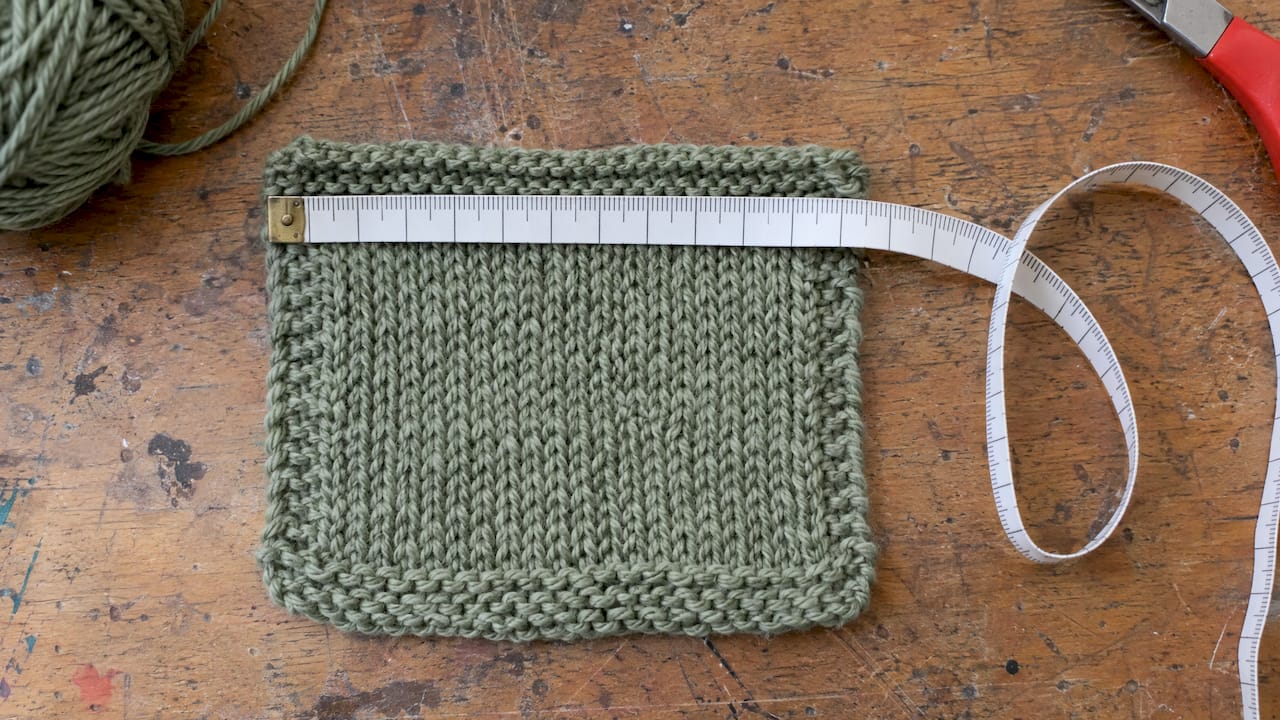
Yarn & Row gives a simple rule of thumb: start with the size on the ball band or pattern, knit a swatch, and if you get more stitches per 10 cm (4 in) than the pattern says, go up a needle size. If you get fewer, go down.
For your very first scarf, gauge hardly matters. When you move on to hats, mittens or sweaters that must fit, that swatch becomes your best friend.
Picking the right yarn
Thicker is easier to learn on
The yarn does as much of the teaching as the needles do. Tavel explains that thicker yarn makes stitches easier to see and understand. Another expert quoted by The Strategist says thicker yarn makes it easier to catch mistakes and that chunky projects grow faster, which gives beginners a welcome sense of instant gratification.
The Guardian recommends DK weight for beginners: thick enough to show clear stitch definition and easy to handle. Worsted and chunky are just as good if you like quicker progress.
Smooth, plain and light-coloured
Dark yarns hide stitches, and fuzzy yarns hide them even better. For your first project, look for:
- A smooth strand with visible, even twist, so the needle tip slides between the plies cleanly.
- A light or mid-tone colour, so every loop is easy to read.
- Solid colour, not heavily variegated, so you can see your stitches rather than a pattern of colour jumps.
Wool or acrylic?
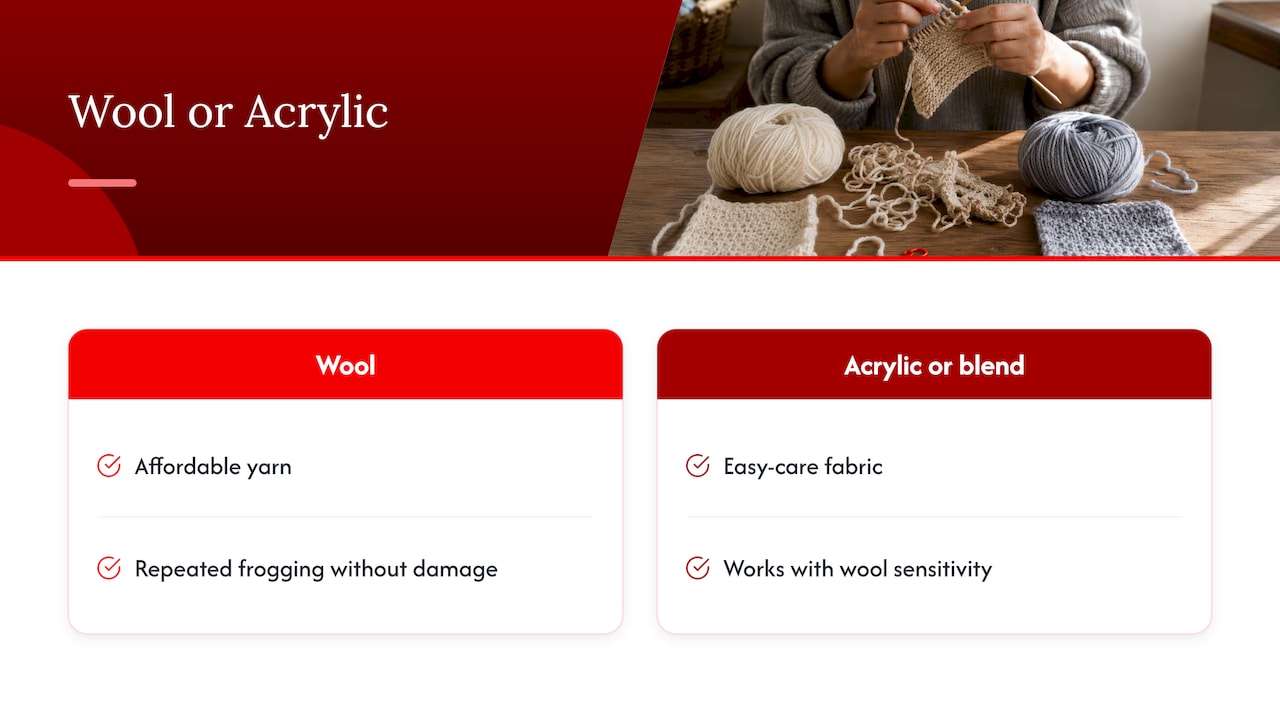
The Guardian shares advice from knitwear designer Enya Ødegaard: choose an affordable woollen yarn, because it can be ripped back many times without damage. Hairy, delicate yarns like mohair are harder to undo and look worse afterward. Mistakes are part of learning, so a yarn that forgives frogging (the knitter’s word for undoing rows) is a real asset.
A soft, smooth acrylic or an acrylic-wool blend also works well if you prefer easy-care fabric or have a wool sensitivity. Both fibres are fine; what matters is that the yarn is smooth and sturdy.
How much to buy
A simple scarf generally takes two to three balls of worsted or chunky yarn, though it depends on length and width. Your pattern will list the yardage it needs, so buy to that figure. If you are improvising, buy an extra ball, and check the dye lot (more on that below) so the colour matches.
How to read a yarn label
The ball band is a tiny instruction manual. The Craft Yarn Council says a yarn label should include the brand, fibre content, colour name and number, dye lot number, plies, weight classification, weight in ounces or grams, yardage or metres, knitting or crochet gauge, care symbols and washing instructions.
For a beginner, these are the lines worth reading first:
| Label detail | What it tells you | Why you care |
|---|---|---|
| Weight category | How thick the yarn is | Matches yarn to needle size and pattern |
| Suggested needle size and gauge | A starting point for your swatch | Saves guessing at the shop |
| Yardage or metres | How much is in the ball | Lets you calculate how many balls you need |
| Fibre content | Wool, acrylic, cotton or a blend | Affects feel, warmth and washing |
| Dye lot number | The batch the colour came from | Colours can vary slightly between batches |
| Care symbols | How to wash the finished item | Important for mittens, toques and baby gifts |
The dye lot is the one beginners overlook. When you need several balls for one project, pick balls with the same dye lot number so the colour stays even across the piece. Care symbols matter too: if you are making something that will be washed often, you want to know before you start whether it can go in the machine. For general guidance on reading care instructions on finished garments, our guide to reading labels shows the same habit of decoding small print before you buy, applied to skincare.
The small tools that make life easier
Tapestry needle
A blunt needle with a large eye. You thread your yarn tail through and weave it into the back of the fabric. It is the one small tool that every project eventually requires, so it goes on the must-buy list.
Scissors
Any sharp pair works. Small folding or thread scissors travel best in a project bag. Leave the big kitchen shears at home.
Tape measure
A flexible tape measures your swatch, your scarf length and later your head circumference for that toque. Choose one with both centimetres and inches, since patterns use either.
Stitch markers
Tiny rings or clips that slide onto the needle or hang from a stitch. They mark the start of a round, a pattern repeat or the place where you increase. You will not need them for your first garter-stitch scarf, but they cost very little and you will reach for them soon.
Project bag
A zippered pouch or a simple basket keeps the yarn clean and the needles in one place. It also stops a rolling ball of yarn from becoming a cat’s favourite toy.
Nice to have, not needed yet
- Row counter: helpful for pattern work, but a pencil and paper do the job.
- Needle gauge tool: a small ruler with holes that tells you the size of unmarked needles.
- Blocking mats and pins: for shaping finished pieces, useful once you make lace or sweaters.
- Cable needle: only when a pattern calls for cables.
What a beginner kit usually includes
A starter kit bundles the basics for one project into a single box, which takes the guesswork out of matching yarn to needles. Kits differ from brand to brand, so read the product description rather than the photo. Here is a sensible checklist to hold a kit against:
- Yarn quantity: enough for the whole project, as stated on the box, not a sampler that is only part of it.
- Needle size and material: a size in the 4 mm to 6 mm range suits most beginners, and wood or bamboo is easier to control than slippery metal.
- Yarn weight and fibre: smooth, light-coloured, DK to chunky. The label should list the weight, yardage and care symbols.
- A written pattern: with clear instructions for each step and the gauge it expects.
- A tapestry needle: so you can finish the piece without another shopping trip.
- Your project: a scarf, a headband or a simple hat is a more realistic first make than a sweater.
If the kit also includes stitch markers, a tape measure or a small pair of scissors, that is a bonus. If it does not, you can add them for a few dollars.
A kit is especially handy as a gift for someone who has never knitted. It removes the intimidating parts of shopping and gets them knitting the same afternoon. If you would rather build your own set, the shopping list at the top of this article gives you everything to put in the basket.
Your first project ideas
Choose something forgiving, flat and a little boring in the best way. A garter-stitch scarf (knit every row) teaches tension and finishing with no shaping at all. After that:
- Dishcloth or sample square: a small swatch lets you try stitches and check your gauge.
- Headband or ear warmer: a short rectangle sewn into a loop, quick and useful in a Canadian winter.
- Simple toque: knit in the round on a circular needle, with a few stitch markers to track the round.
- Mittens: The Guardian lists mittens among the projects a 4 mm or 5 mm circular needle can handle once you are comfortable.
- Handmade gifts: with the holidays near, small gifts are an ideal stage. If you need ideas for decorations to sit beside your knitted pieces, these Christmas craft ideas can inspire the whole table.
Keep your first project small enough that you finish it. The satisfaction of binding off that first piece is what keeps people knitting.
Common beginner mistakes
- Buying dark or fuzzy yarn. It hides every stitch, and mohair-type yarns are hard to undo.
- Choosing needles that are too thin. Fine needles with thin yarn demand tiny, tense movements. Start thicker.
- Skipping the label. The ball band tells you the weight, the needle size and the care, all in one place.
- Mixing dye lots. Colour can shift between batches, so buy enough for the whole project at once.
- Starting with a sweater. Begin with a flat scarf or headband and build up.
- Buying everything at once. Start with the essentials, then add tools as your projects call for them.
A note from our team
We love hobbies that give you something real to hold at the end, and knitting is one of the friendliest. After covering everything from beginner woodworking to 3D printing, our team at Lizard’s Lunch keeps coming back to the same advice: start with a small, well-chosen set of tools, finish one easy project and let your curiosity decide what to buy next.
For knitting, that means a smooth, light-coloured yarn, a 4 mm or 5 mm needle in wood or bamboo, and the handful of small tools that make finishing painless. We would rather you cast on this weekend with a simple kit than wait until you have the “perfect” collection.
If you enjoy building skills through hands-on projects, you may also like our guide to beginner woodworking tools in Canada, which follows the same buy-less-and-start-sooner approach.
Alexander
Craft brands: reach readers who love making things
If you run a yarn, craft or hobby business and want to reach readers who are planning their next project, our team welcomes sponsored placements and contributed articles. You can find banner ad and guest post options on our advertise with us page.
FAQ
What is the minimum I need to start knitting?
Yarn and a pair of needles are the bare minimum. A tapestry needle for weaving in ends is the next most useful item, and a small pair of scissors, a tape measure and stitch markers round out the set. According to The Guardian, the basics can cost around £10, or roughly $18 to $20 CAD.
What size needles should a beginner buy?
A 4 mm or 5 mm needle suits most beginners and most projects, from scarves to hats. If you prefer chunky yarn, move up toward 6 mm. Match the needle to the suggested size on the yarn’s ball band, and knit a swatch to check your gauge.
What is the best yarn for a beginner?
Choose a smooth, light-coloured yarn in DK, worsted or chunky weight. Wool is easy to undo when you make mistakes, and a soft acrylic is a good alternative. Avoid very fuzzy or delicate yarns like mohair until you are more confident.
Are Canadian needle sizes different from US sizes?
Canadian sizes follow the UK system, and both now mostly use metric millimetres. US numbers are different, so use the millimetre measurement to compare. Lower numbers mean thinner needles in the US system, while the millimetre figure is simply the needle’s width.
Is a knitting kit worth buying?
A kit is a convenient way to start because the yarn, needles and pattern are chosen to work together. Check that it includes enough yarn for the full project, a needle size in the 4 mm to 6 mm range and a clear pattern. A kit with a tapestry needle lets you finish the piece right away.
Sources
- Knitting is cool again. Here’s everything you need to get started (The Guardian)
- How To Knit For Beginners: A Guide (The Good Trade)
- How to Start Knitting: Tools & Tips for Beginners (The Strategist)
- Before You Get Started (Vogue Knitting)
- Standard Yarn Weight System (Craft Yarn Council)
- Top 10 Yarn Questions & Answers (Craft Yarn Council)
- Needle & Hook Size Converter (Yarn & Row)







Leave a Comment
Your email address will not be published. Required fields are marked with *