
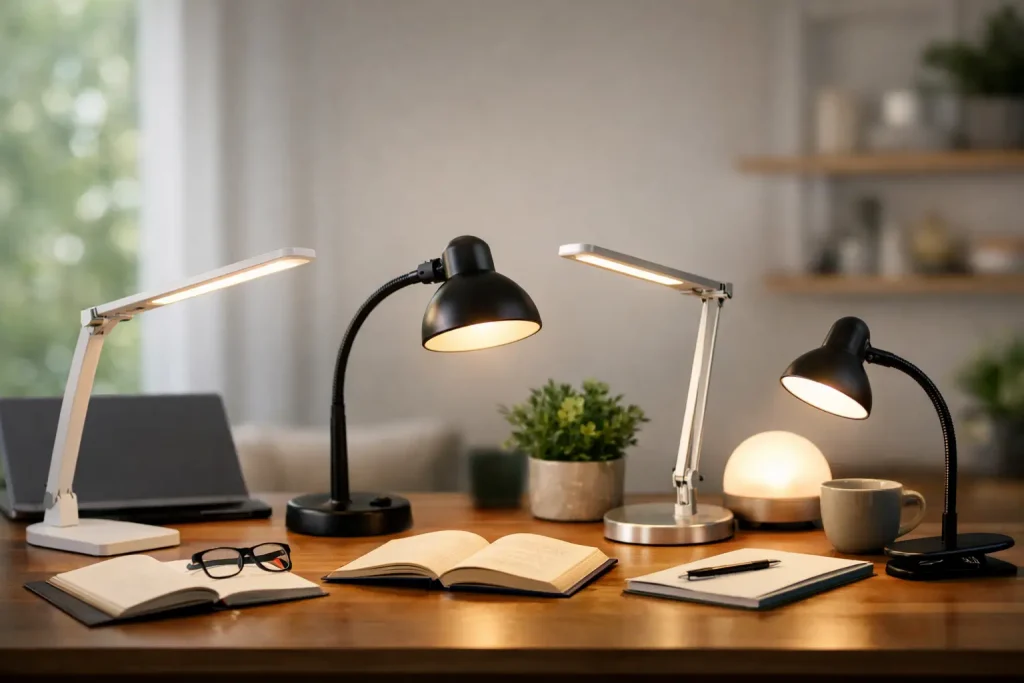
Find the best desk lamps for eyes with practical picks for reading, screens, crafts, and late-night work, plus features that reduce glare and eye strain.
A desk lamp can make a surprisingly big difference when your eyes feel tired by 3 p.m. The best desk lamps for eyes do more than make a keyboard visible: they spread light evenly, limit harsh glare, and let you adjust brightness and color temperature for the task in front of you.
That does not mean one lamp can medically prevent eye strain. Screen time, dry eyes, prescription changes, and long stretches without a break all play a role. But the right task light can remove one common source of discomfort: trying to work, read, sketch, or study in lighting that is too dim, too sharp, or pointed in the wrong direction.
What Makes a Desk Lamp Easier on Your Eyes?
Start with adjustable light. A lamp with several brightness levels lets you use strong illumination for paperwork or detailed crafts, then dial it down for a late-night email. Dimming matters because overly bright light can be just as uncomfortable as insufficient light, especially in a dark room.
Color temperature is the next feature to watch. Warm light, usually around 2700K to 3000K, feels softer and is a comfortable choice for winding down or casual reading. Neutral to cool white light, around 4000K to 5000K, can make print and fine detail easier to see during focused daytime work. A lamp that offers both gives you more flexibility than a fixed-color model.
Look for a broad, diffused light source rather than a tiny exposed bulb. Diffusion reduces intense bright spots, while a long LED bar or wide shade can light a larger section of the desk. A flexible arm is also valuable because you can aim light where it belongs instead of letting it bounce off a glossy screen.
10 Best Desk Lamps for Eyes
1. BenQ e-Reading Desk Lamp
The BenQ e-Reading Desk Lamp is a strong overall pick for people who split time between a monitor, books, and handwritten notes. Its curved head is designed to cast a wide pool of light over the desk, which helps reduce the distracting contrast between a bright work area and dark corners.
Its automatic brightness setting is especially useful for home offices with changing daylight. This is a premium-priced lamp, and its larger footprint will not suit every compact desk. Still, for a dedicated workstation, its broad and adjustable illumination is hard to beat.
2. Dyson Solarcycle Morph
For buyers who want a feature-heavy lamp that also looks polished in a living room or executive office, the Dyson Solarcycle Morph stands out. It adjusts light based on ambient conditions and offers multiple positioning modes, including task lighting and indirect ambient lighting.
The trade-off is obvious: it costs far more than a typical LED desk lamp. It makes the most sense when design, color quality, and smart controls matter as much as basic illumination. For a simple dorm desk, it is likely more lamp than necessary.
3. OttLite Wellness Series LED Desk Lamp
OttLite has long focused on task lighting for reading, hobbies, and office use. Several models in the Wellness Series combine adjustable brightness, color settings, and a diffuser that softens the look of the LEDs.
This is a practical category to consider for anyone who wants clean, clear light without paying luxury-lamp prices. Features vary by model, so check whether the specific version includes a flexible neck, USB charging, or the number of color modes you want. It is a sensible choice for shared household workspaces.
4. Phive LED Architect Desk Lamp
A long-bar lamp such as the Phive LED Architect model works well for ultrawide monitors, drafting tables, and desks where you need coverage from one side to the other. The extended head distributes light more evenly than a small round lamp, which can help prevent a bright circle of light surrounded by shadows.
Its clamp-style mounting saves desk space, a major advantage in smaller offices. Measure your desk edge before buying, though. Clamp lamps need a secure surface and may not work well with thick desks, glass tops, or built-in cable trays.
5. Brightech LightView Pro
The Brightech LightView Pro is built for precision tasks. Its illuminated magnifying glass makes it particularly useful for sewing, model building, jewelry work, detailed repairs, and other hobbies that ask your eyes to focus at close range.
It is not the best all-purpose office lamp if you mainly type on a laptop, because its magnifier is the central feature. For makers and crafters, however, putting bright, diffused light directly around the magnified area can be a real comfort upgrade.
6. LEPOWER Metal Desk Lamp With an LED Bulb
A simple metal-shade lamp from LEPOWER is a budget-friendly route for readers who prefer to choose their own bulb. Pair it with a quality dimmable LED bulb in a neutral white color range, and you get useful directional task lighting without a complicated control panel.
The metal shade focuses light, so placement matters more than it does with a broad LED bar. Aim it at paper or the desktop, not toward your face or monitor. This setup is ideal for a bedside writing desk or a student who wants a dependable lamp at a lower cost.
7. TaoTronics LED Desk Lamp
TaoTronics LED desk lamps are popular for their straightforward combination of touch controls, multiple brightness levels, and adjustable color modes. Their compact profiles make them a good fit for apartment desks, college rooms, and secondary workstations.
These lamps are often best for general use rather than highly detailed work. The light bar is smaller than on premium architect-style lamps, but the ability to quickly tune brightness makes them a capable everyday option. Availability can vary, so compare the current model’s control layout and light settings before choosing.
8. Globe Electric Architect Lamp
The Globe Electric Architect Lamp brings classic workspace style to a more affordable price point. Its articulated arm lets you direct light precisely, and its design suits a desk where a full-size lamp is more practical than a slim built-in LED fixture.
Because it typically uses a replaceable bulb, choose the bulb carefully. A frosted, dimmable LED bulb will generally be more comfortable than a clear bulb that leaves the filament visible. It is a good option for people who like traditional design and do not want another device with touch controls.
9. Lumiy Lightblade 1500S
The Lumiy Lightblade 1500S is worth considering for artists, designers, and people who care about color accuracy. High-quality LED task lamps can render colors more faithfully than bargain bulbs, which matters when matching fabric, paint, makeup, or printed materials.
Its clean, modern shape works well on a studio desk, and the broad light reduces the need for a second lamp. It is a more specialized purchase than a basic reading light, but it can earn its place in a creative workspace where visual detail matters every day.
10. Govee RGBIC Table Lamp
A Govee RGBIC table lamp is not the first choice for concentrated reading or spreadsheet work, but it can be a useful companion lamp in a screen-heavy setup. Place it behind a monitor or off to the side to add soft ambient light and reduce the stark contrast of a glowing display in a dark room.
Use a separate neutral-white task lamp for paperwork and close work. Colored lighting is fun and can improve the mood of a space, but it should not replace clear, adjustable white light when your eyes need to focus.
How to Set Up a Desk Lamp for Less Glare
Even an excellent lamp can feel wrong when positioned poorly. Right-handed users should generally place a task lamp on the left side of the desk, while left-handed users should place it on the right. That keeps your writing hand from throwing a shadow across the page.
For computer work, keep the lamp out of your direct line of sight and avoid aiming it at the screen. If you can see a reflected bright spot on the display, move the lamp farther to the side, lower the intensity, or tilt the head downward. The goal is balanced light around the monitor, not a spotlight competing with it.
A useful starting point is moderate room lighting plus a brighter task light on your desk. Working with only a glowing screen in an otherwise dark room can make the contrast feel harsh. Conversely, blasting a desk with maximum brightness can cause squinting and glare. Adjust until white paper looks clear but not glaring.
A Smarter Buy Than Chasing Lumens Alone
Lumens tell you how much light a lamp produces, but they do not tell the whole story. Shade design, beam spread, dimming range, color temperature, and where the lamp sits on your desk all affect comfort. A lower-lumen lamp with a good diffuser and flexible arm may serve you better than a brighter lamp that creates glare.
Choose the lamp that fits your real routine. A wide LED bar is excellent for dual monitors, a magnifying lamp earns its keep in a craft room, and a replaceable-bulb architect lamp offers easy, affordable flexibility. Once you have the light right, give your eyes regular breaks from close-up work too – your desk setup should support your focus, not demand more of it.
















Leave a Comment
Your email address will not be published. Required fields are marked with *