

Practical 6–12 month plan by Lizard’s Lunch for Canadian men: build a 25 piece capsule wardrobe with stepwise buys and cost per wear math.
A capsule wardrobe means owning a small, coordinated set of clothes, usually 25 to 35 pieces, built so nearly every item mixes with every other one. Most men do best starting around 25 to 30 pieces, which is enough to produce dozens of outfits without cluttering the closet. Get the palette and fit right, and a small collection outperforms a stuffed closet every time.
TL;DR:
- Building a capsule wardrobe requires focusing on neutral colors and proper fit, especially in shoes and outerwear, to maximize versatility and durability.
- A 25-piece start offers enough variety for a full week of outfits by emphasizing interchangeable pieces like blazers, shirts, and pants across casual and formal settings.
- To avoid mistakes, build the wardrobe gradually over six to twelve months, prioritizing shoes, outerwear, and tailoring adjustments before adding casual basics.
- Regularly review and rotate wardrobe pieces every six months, replacing worn items and adding subtle seasonal updates to keep the system functional and current.
- Successful capsule building relies on slow, deliberate purchases rooted in actual wear patterns, rather than rushing to reach a specific item count or following fleeting trends.
Table of Contents
- What Makes a Capsule Wardrobe Actually Work?
- What Should Be in a 25-Piece Starter Wardrobe?
- How Do You Actually Build a Capsule Wardrobe?
- Eight Outfits You Can Build From One Small Wardrobe
- What Should You Budget for Care and Cost-Per-Wear?
- A Signal Worth Trusting on Capsule Building
- Adapting Your Capsule to Casual, Business, and Formal Life
- Common Mistakes That Sabotage a Capsule Wardrobe
- How Often Should You Rotate and Refresh Pieces?
- Why Build-Over-Time Beats the Fashion-Philosophy Approach
- Sources
What Makes a Capsule Wardrobe Actually Work?
The math behind a capsule is simple: fewer pieces, more combinations, as long as those pieces share a color logic and a fit standard. Skip either rule and you end up with 25 items that still don’t go together, which defeats the entire point.
Start with color. Anchor everything in neutral tones like navy, charcoal, gray, white, and tan. These shades share undertones, so a navy blazer works with gray trousers, tan chinos, or dark denim without a second thought. Layer in one or two accent colors, maybe olive or burgundy, for personality. A roughly 70/30 split between neutrals and accents keeps things interesting without breaking the mix-and-match logic.
Fit matters more than the label sewn inside the collar. A $60 shirt tailored to your frame beats a $300 shirt that bags at the shoulders. Prioritize spending on tailoring adjustments over chasing designer names.
Building smart also means picking silhouettes that pull double duty:
- A navy blazer that works over a T-shirt on Saturday and a dress shirt on Monday
- Straight-leg chinos that layer under a topcoat or roll up bare-ankle in summer
- A crewneck sweater that goes under a jacket or stands alone
Adjust your ratios based on your actual life. Someone who wears a suit five days a week needs more tailoring pieces and fewer graphic tees. A remote worker or tradesperson flips that ratio toward denim, knitwear, and casual outerwear.
Pro Tip: Before buying anything new, lay out what you already own by color. If half your closet clashes with the other half, you’ve found your first fix, and it costs nothing.
What Should Be in a 25-Piece Starter Wardrobe?
A 25-piece capsule hits the sweet spot most style guides land on for 2026, tight enough to force good choices, roomy enough to cover a full week without repeating an outfit twice.
Here’s a starter breakdown across the categories that matter most:
Tailoring and jackets (3 pieces)
- One navy or charcoal suit
- One versatile blazer (navy or a subtle texture)
- One casual jacket, like a chore coat or bomber
Shirts and tees (7 pieces)
- 2 white dress shirts
- 1 light blue dress shirt
- 3 solid crewneck or henley T-shirts in neutral colors
- 1 button-down casual shirt (oxford or chambray)
Knitwear (3 pieces)
- 1 crewneck sweater
- 1 quarter-zip or shawl-collar sweater
- 1 cardigan or lightweight merino layer
Bottoms (5 pieces)
- 2 pairs dark denim
- 1 pair chinos in tan or stone
- 1 pair gray dress trousers
- 1 pair versatile joggers or casual pants
Shoes (3 pairs)
- 1 pair leather dress shoes (oxford or derby)
- 1 pair clean white sneakers
- 1 pair boots (chukka or Chelsea)
Outerwear (2 pieces)
- 1 wool topcoat or peacoat
- 1 packable rain shell or field jacket
Accessories (2 pieces)
- 1 leather belt
- 1 versatile watch
That’s 25. If you want more range, a 30-piece capsule adds a second suit color, another pair of shoes (loafers work well), and a couple more knitwear layers for cold climates. Push to 33 and you can add a statement piece, a leather jacket or a patterned overshirt, plus a scarf and a second belt for texture.
Your highest-impact buys are shoes, the suit, and outerwear. These get worn constantly and are visible from across a room, so quality shows. Shirts and tees are the easiest to swap or upgrade later without regret.
How Do You Actually Build a Capsule Wardrobe?
Building a capsule isn’t a weekend project. It’s a slow replacement of what doesn’t work with pieces that do, spread across six to twelve months so you don’t waste money or end up regretting rushed purchases.
- Audit what you own first. Pull everything from your closet and sort it by the last 12 months of wear. Anything untouched for a year, minus true seasonal items like winter coats, goes into a donate or sell pile.
- Buy shoes and outerwear first. These take the longest to break in, cost the most to replace, and anchor every outfit you’ll build around them.
- Add tailoring next. A blazer and one solid suit unlock work and event outfits you can’t fake with casualwear.
- Fill in shirts, tees, and knitwear last. These are cheap to test, easy to swap, and forgiving if you get a color slightly wrong.
Stretching this across a year matters because your taste and fit needs shift. Buy your whole capsule in one weekend and you’ll likely repurchase half of it within six months once you realize what you actually reach for.
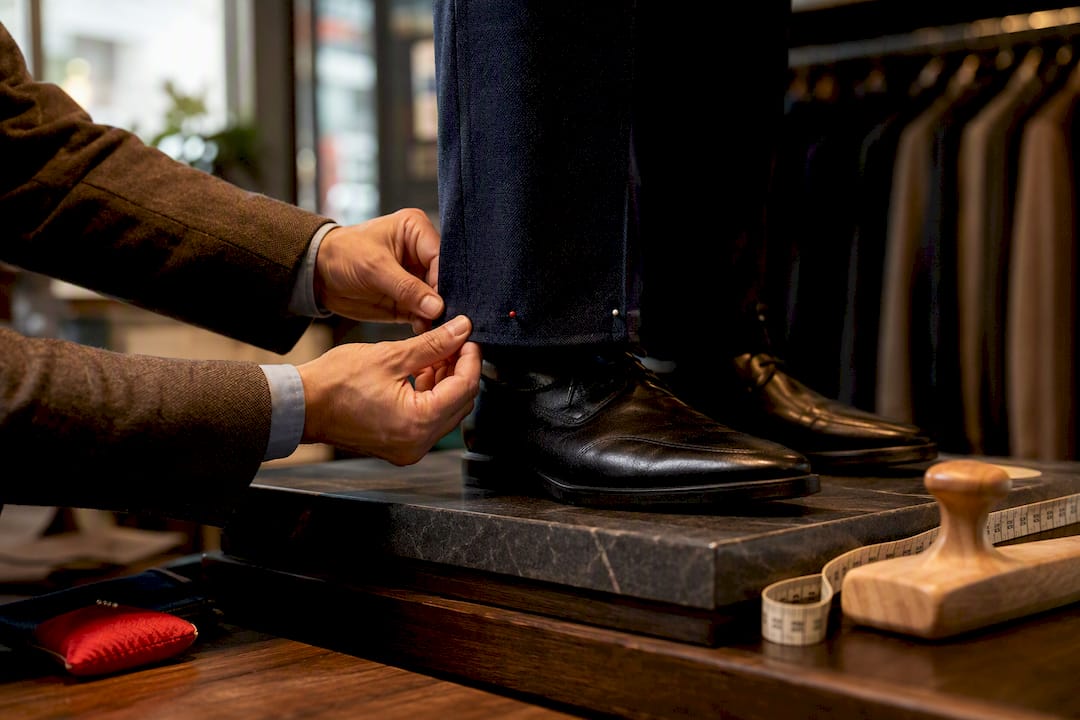
Look for value at end-of-season sales, outlet stores, and reputable secondhand platforms for outerwear and denim, which hold up well used. Build a relationship with a local tailor early. A $20 hem or waist adjustment on a $150 pair of trousers often does more for how you look than spending an extra $100 on the garment itself.
Pro Tip: Keep a running list on your phone of gaps you notice week to week, “need a warmer sweater,” “these shoes are dying.” Buy from that list, not from what’s on sale that day.
Eight Outfits You Can Build From One Small Wardrobe
A tight rotation still produces plenty of visual variety once the pieces are chosen to overlap.
For the office:
- Navy suit, white dress shirt, leather oxfords, and your everyday watch
- Blazer, gray dress trousers, light blue shirt, and derby shoes
Smart-casual:
- Blazer over dark denim with a white tee and clean sneakers
- Crewneck sweater, tan chinos, and chukka boots
Weekend casual:
- Solid tee, dark denim, and white sneakers
- Overshirt layered over a tee with chinos and boots
Date night:
- Leather or bomber jacket over a fitted tee with dark denim and boots
- Blazer with dark jeans and clean white sneakers for a dressed-down but sharp look
Notice how the blazer, the sneakers, and the dark denim each show up in multiple outfits across categories. That repetition, worn deliberately, is the entire mechanism behind a working capsule wardrobe list for men.
What Should You Budget for Care and Cost-Per-Wear?
Cost-per-wear beats sticker price every time. A $200 pair of boots worn 150 times a year costs about $1.33 per wear after two years, while a $40 fast-fashion pair that falls apart in four months costs more per wear despite the lower price tag.
A full 25 to 33 piece capsule typically runs $1,500 to $3,500 built gradually, with spending weighted toward shoes, the suit, and outerwear.
Care extends that math further. Rotate shoes so leather rests between wears, resole them once the heel wears down instead of replacing them, and store wool items folded rather than hung to avoid stretching. Wash denim less often, cold and inside out, to preserve color and shape. Buy your tees and casual basics, including plain T-shirts, new since fit and fabric weight matter most there. Save secondhand shopping for outerwear, denim, and leather goods that already come broken in.
A Signal Worth Trusting on Capsule Building
Our team at Lizard’s Lunch recommends fit first, a slow buildout, and spending where it shows most: shoes and outerwear.
Three moves to make today:
- Audit your closet using the 12 month wear test
- Pick your three most urgent buys (usually shoes, a jacket, and one tailoring piece)
- Book a tailor appointment for anything you already own that fits poorly
Small, deliberate steps beat a single overwhelming shopping trip.
Adapting Your Capsule to Casual, Business, and Formal Life
Your capsule ratio should track your actual calendar, not a generic template. Someone in a business-casual office needs a heavier tilt toward blazers, dress trousers, and collared shirts, maybe five of your 25 pieces dedicated to tailoring instead of three.
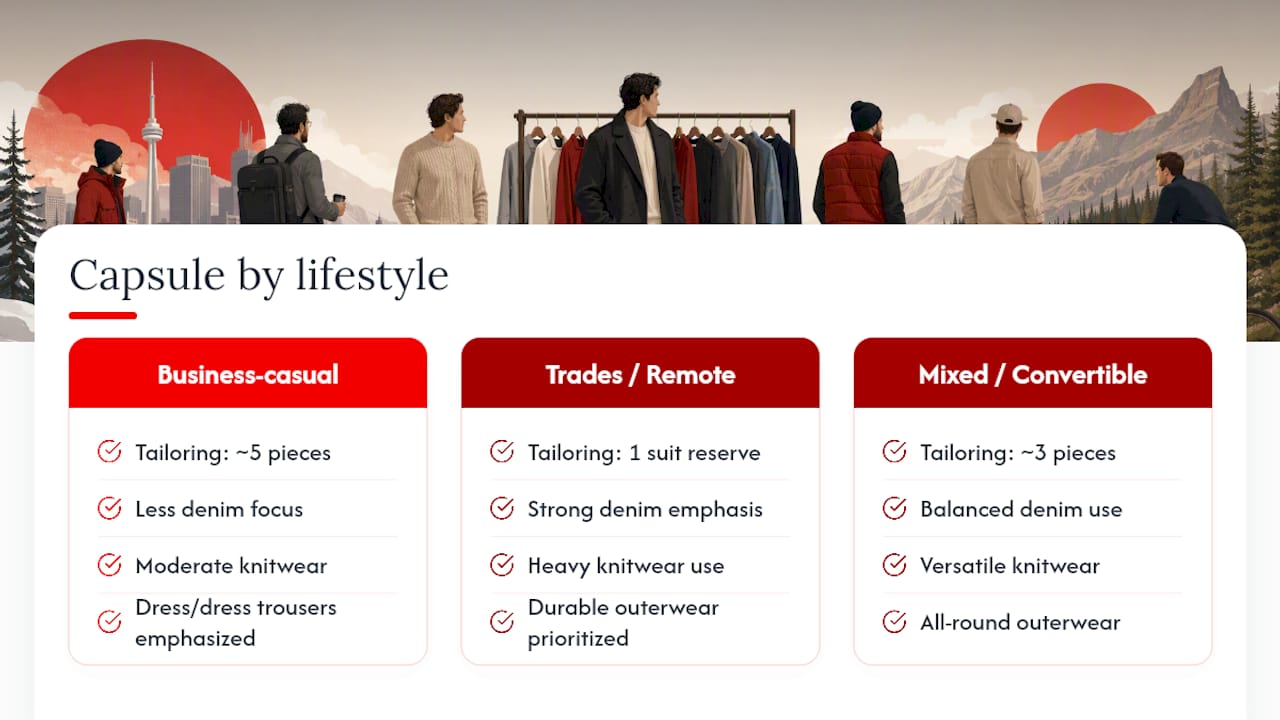
A tradesperson or remote worker can flip that entirely, leaning into denim, knitwear, and durable outerwear while keeping just one suit in reserve for weddings and interviews. The capsule principle stays the same across every lifestyle: neutral base, high crossover between pieces, minimal exceptions. Only the category proportions shift.
For men who move between worlds, client meetings one day, weekend hikes the next, build a “convertible” middle layer: a blazer that survives a casual Friday, chinos sharp enough for a client dinner but comfortable enough for travel. This is also where accessories earn their keep. A good watch, a leather belt, and one statement piece like a scarf or a patterned pocket square can shift a single outfit from casual to formal without buying a single new garment.
Formal events (weddings, galas) are the one area worth a slight exception to strict minimalism. Renting or borrowing a tuxedo for rare, one-off formal occasions makes more financial sense than owning one that sits unworn for years. Save your permanent 25 to 33 pieces for the wardrobe you actually live in daily.
Common Mistakes That Sabotage a Capsule Wardrobe
The most common error is buying everything at once. A weekend spending spree feels productive, but it skips the audit step entirely, so you end up duplicating items you already own or guessing at fits you haven’t tested in daily life.
The second mistake is chasing trends inside a system built for longevity. A capsule works because pieces stay relevant for years; a trendy cut or a seasonal color throws that off within a single year and leaves you back where you started.
Ignoring fit is the third and most damaging mistake. Buying a size that’s technically “yours” off the rack, without a single tailoring adjustment, is why so many capsule attempts fail visually even when the color palette is perfect. A $50 tailoring bill on a jacket or trouser hem changes how the entire outfit reads.
Finally, men often skip accessories entirely, treating them as optional. That’s backwards. Accessories multiply outfit variety disproportionately to their cost. A good watch or a second belt changes the read of an outfit more cheaply than a new garment ever could.
One more trap: building a capsule and never revisiting it. Bodies change, jobs change, and climates shift if you move. A capsule frozen in time from three years ago probably needs a fit check.
How Often Should You Rotate and Refresh Pieces?
Treat your capsule as a living system, not a one-time purchase. Review it every six months, once at the start of each major season, and ask honestly which pieces you’ve reached for and which have sat untouched.
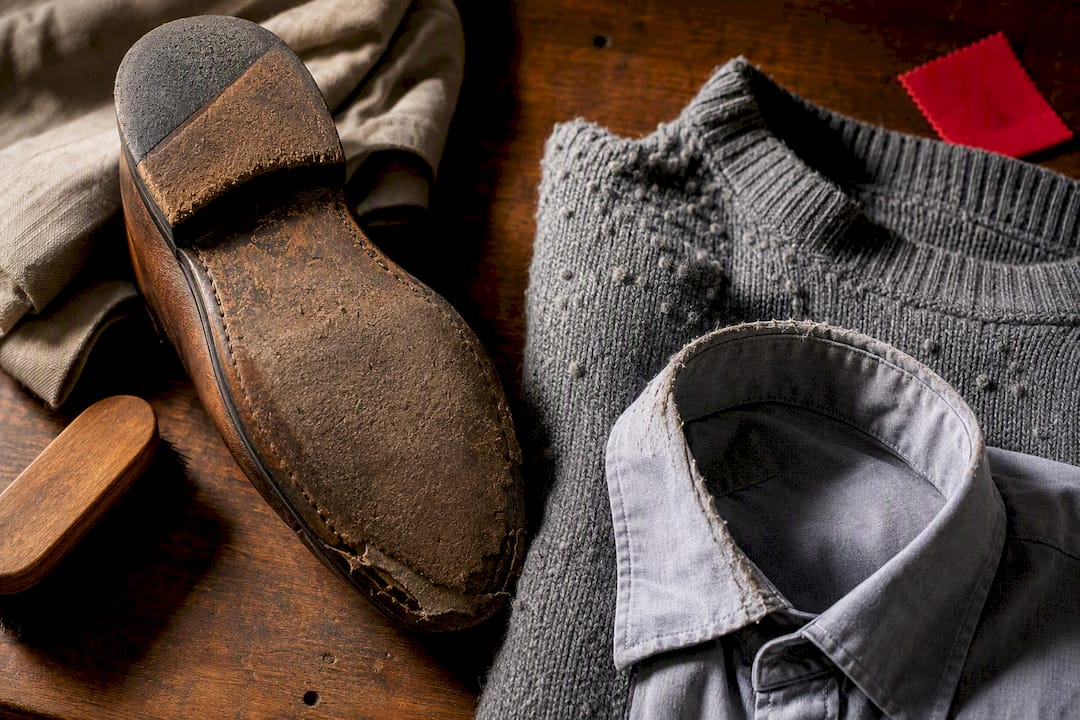
Retire anything that’s visibly worn: cracked leather soles, pilled knitwear, shirts gone thin at the collar. These items drag down the whole system’s polish even when everything else is sharp. Replace them one at a time rather than swapping out multiple categories simultaneously, which keeps your spending controlled and your fit standards consistent.
Give yourself permission to rotate in one seasonal or trend piece per year, an accent sweater color, a new sneaker silhouette, without disrupting the neutral core. This keeps the wardrobe feeling current without abandoning the system that makes it work.
Track wear the same way you did during your original audit. If a shirt hasn’t left the closet in eight months and it isn’t purely seasonal, it’s a candidate for the donate pile, freeing both space and budget for something that actually earns a spot in rotation.
Why Build-Over-Time Beats the Fashion-Philosophy Approach
Most capsule wardrobe content sells a philosophy: minimalism as identity, decluttering as self-improvement. That framing sounds good in an essay and falls apart the moment you’re standing in a store trying to decide if you actually need a third navy sweater.
What the research on this topic actually supports is duller and more useful: buy slowly, prioritize fit over brand, and put your money where wear happens most, shoes, outerwear, tailoring. The 6 to 12 month build isn’t a nice-to-have pace, it’s what prevents the expensive mistake of replacing half your closet twice in one year because you rushed the first pass.
Where conventional advice falls short is treating 25 or 33 as a rigid number instead of a starting range. Your job count, your climate, and your social calendar should bend those ratios. What you should prioritize first isn’t a shopping list, it’s the audit. Know what you own and how often you wear it before you spend another dollar.
— Alexander
Sources
These sources shaped the piece counts, palette guidance, and build timeline in this article:
















Leave a Comment
Your email address will not be published. Required fields are marked with *