
Canada aware rental car insurance: the four situations that justify buying, why loss of use fees sting, and a simple pickup checklist.
If you already carry collision and comprehensive coverage on your own vehicle, with a deductible under a high threshold, you can usually decline the counter collision damage waiver. Four situations still make buying protection worth it: liability-only coverage, a high deductible, an excluded vehicle type, or an international rental. Before you sign anything, check two things: your personal auto policy’s limits and deductible, and exactly what your credit card’s rental benefit actually promises.
TL;DR:
- Declining rental insurance is generally safe if you have comprehensive and collision coverage with a low deductible on your personal policy, but coverage gaps remain for international, high-deductible, or excluded vehicle rentals.
- Most credit cards offer secondary rental coverage that usually requires paying with the card and declining the rental company’s waiver, but verify territory limits, vehicle exclusions, and benefit activation before reliance.
- Buying rental insurance is justified if you lack personal liability coverage, face high deductibles, rent vehicle types like trucks or exotic cars, or travel abroad where coverage may be limited or terminated.
- Coverage gaps often exist for commercial use, unlisted drivers, long-term rentals, and certain vehicle classes, requiring careful check at the rental counter and proper documentation.
- Loss-of-use fees from rental companies can exceed thirty dollars per day during repairs, and neither personal policies nor credit card benefits reliably cover this cost, which influences the decision to purchase protection.
Table of Contents
- Car Rental Insurance Guide: What Each Coverage Option Actually Pays
- Does My Personal Auto Insurance Cover Rental Cars?
- How Does Credit Card Rental Coverage Work?
- When Should You Actually Buy Rental Insurance?
- What Vehicle Types and Situations Void Coverage?
- What Should You Check at the Rental Counter?
- What Do Rental Insurance Products Typically Cost?
- Quick Checklist: Decide Before You Drive Off
- Our Team at Lizard’s Lunch: Practical Takeaways
- Sources
- FAQ
Car Rental Insurance Guide: What Each Coverage Option Actually Pays
Rental counters bundle up to five products together, and the names alone tell you almost nothing about what they cover. Here’s what you’re actually being offered.
- Collision or Loss-Damage Waiver (CDW/LDW): This is a waiver, not an insurance policy. The rental company agrees not to hold you financially responsible for damage or theft of the vehicle, though it often excludes tires, windshields, and undercarriage damage, and may still carry a deductible.
- Liability coverage: Pays for injury or property damage you cause to someone else. Rental companies typically include a minimal statutory minimum, which is why supplemental liability insurance (SLI) exists.
- Supplemental liability insurance (SLI): Raises your liability limit well above the rental company’s base minimum, often to high liability limits often reaching about one million dollars or more.
- Personal accident insurance (PAI): Covers medical costs for you and passengers after a crash, frequently duplicating benefits you already have through health or travel insurance.
- Personal effects coverage (PEC): Reimburses stolen belongings inside the car, which often overlaps with what your renters or homeowners policy already covers.
Separately, watch for a loss-of-use fee. It’s not insurance at all. It’s what the rental company charges for the days the car sits in the shop, and it’s billed regardless of who caused the damage.
The Allianz breakdown of these four core products makes clear each one serves a distinct purpose, and buying all of them together at a range that can exceed thirty to sixty dollars a day is rarely necessary if your existing coverage already handles two or three.
Does My Personal Auto Insurance Cover Rental Cars?
In most cases, yes. Collision, comprehensive, and liability protection on your personal policy typically extends to a rental car the same way it covers your own vehicle, according to GEICO’s rental car coverage guidance. The catch is that your deductible and coverage limits travel with you too. A $1,500 deductible on your own car becomes a $1,500 deductible on the rental.
Before you decline the counter waiver, confirm two things:
- Territory: Some policies stop extending coverage once you cross a provincial or international border.
- Vehicle type: Trucks, cargo vans, and certain luxury models are frequently excluded outright, regardless of what your policy covers for your own car.
There’s also a cost most drivers forget to weigh: filing a claim through your personal insurer can raise your premiums for years, even if the rental company’s damage was minor. That risk alone pushes some drivers toward paying for CDW even when their policy would technically cover the loss.
How Does Credit Card Rental Coverage Work?
Card benefits sound generous until you read the fine print. The biggest distinction is whether coverage is primary or secondary. Primary coverage pays out first, no questions asked about your personal insurer. Secondary coverage only kicks in after your personal policy has paid its share, meaning you still file a claim at home and may still trigger a deductible or a premium increase.
Consumer Reports notes that card benefits have gotten thinner over time and increasingly default to secondary status, which makes verification non-negotiable.
To actually use the benefit:
- Pay for the entire rental with the card that offers the coverage. Splitting payment across cards can void the claim.
- Decline the rental company’s collision waiver at the counter. Accepting it typically cancels your card’s benefit for that rental.
- Call the number on the back of your card before you travel and ask specifically about territory limits, excluded vehicle classes, and rental-day caps.
Pro Tip: Even a “primary” card benefit rarely covers liability. If you damage another car or injure someone, you’re still personally on the hook unless you carry separate liability protection.
When Should You Actually Buy Rental Insurance?
Four scenarios consistently justify paying for protection, based on MoneyGeek’s rental insurance framework:
- You carry liability-only coverage. Nothing in your personal policy pays for damage to the rental itself, so buy the CDW.
- Your deductible is a high deductible level. Counter CDW at about fifteen to thirty dollars daily can cost less than paying that deductible out of pocket after a single fender bender.
- You’re renting an excluded vehicle type. Vans, trucks, and exotic cars often fall outside both personal and card coverage, leaving you fully exposed.
- You’re renting internationally. Many personal policies and card benefits stop at the border, or apply different rules entirely once you’re abroad.
If none of these apply, and your personal policy is solid, declining the extras is usually the financially smarter move. If even one applies, the math flips.
What Vehicle Types and Situations Void Coverage?
Coverage gaps hide in categories most renters never think to check.
- Excluded vehicle classes: Cargo or moving vans, RVs, motorcycles, oversized passenger vans, and luxury or exotic cars are commonly excluded from both personal auto extensions and card benefits.
- Commercial or prohibited use: Using a rental for delivery work, ridesharing, or off-road driving can void coverage entirely, even if the vehicle itself would otherwise qualify.
- Additional driver rules: Coverage can lapse if an unlisted driver gets behind the wheel, so add every driver at the counter.
- Duration and territory caps: Card benefits often max out around rental day limits that typically range from about two weeks to a month, and many exclude entire countries, so a long trip or an international leg can quietly fall outside protection.
What Should You Check at the Rental Counter?
The five minutes you spend at pickup determine whether a claim goes smoothly or turns into a fight. Work through this sequence before you drive off the lot:
- Confirm which card is being charged, and make sure it’s the one carrying your relied-upon CDW benefit.
- State clearly whether you’re accepting or declining each waiver offered, and check that the decision is written into the rental agreement, not just spoken to the agent.
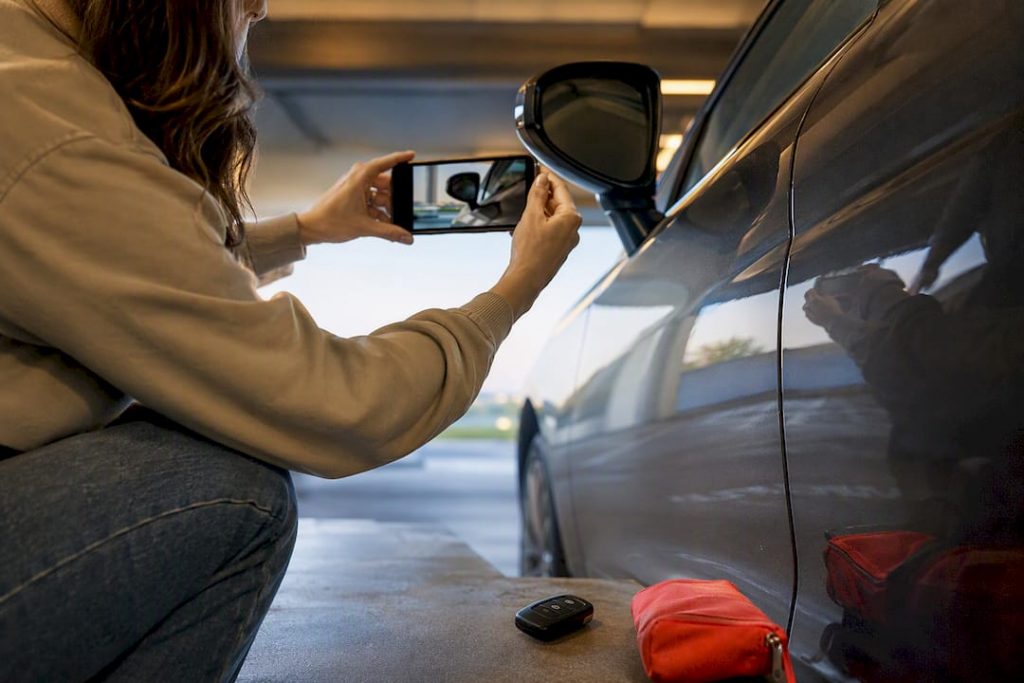
- Walk the car and record fresh photos and video of every panel, the wheels, and the interior, along with the current fuel level and odometer reading.
- Save the rental company’s claims number and your card issuer’s benefits line in your phone before you leave the lot.
Pro Tip: Time-stamp your walkaround video by narrating the date out loud. A silent photo dump is far easier to dispute than a dated video with your voice on it.
What Do Rental Insurance Products Typically Cost?
Counter pricing follows a fairly predictable pattern across rental insurance cost estimates:
- CDW/LDW: daily costs vary, typically in a moderate range
- Supplemental liability insurance: daily costs vary, generally at a moderate price point
- Personal accident and personal effects coverage: daily costs vary, generally lower priced
- Full bundles: daily costs can be higher depending on coverage
The number that catches most people off guard is loss-of-use. Daily loss-of-use fees can range widely, often running between thirty and seventy-five dollars while the car sits in the shop, and Consumer Reports flags it as one of the most commonly uncovered costs after an accident, since neither personal policies nor card CDW reliably pay it. A short rental with a low deductible usually means decline. A long rental, a high deductible, or an excluded vehicle usually means buy.
Quick Checklist: Decide Before You Drive Off
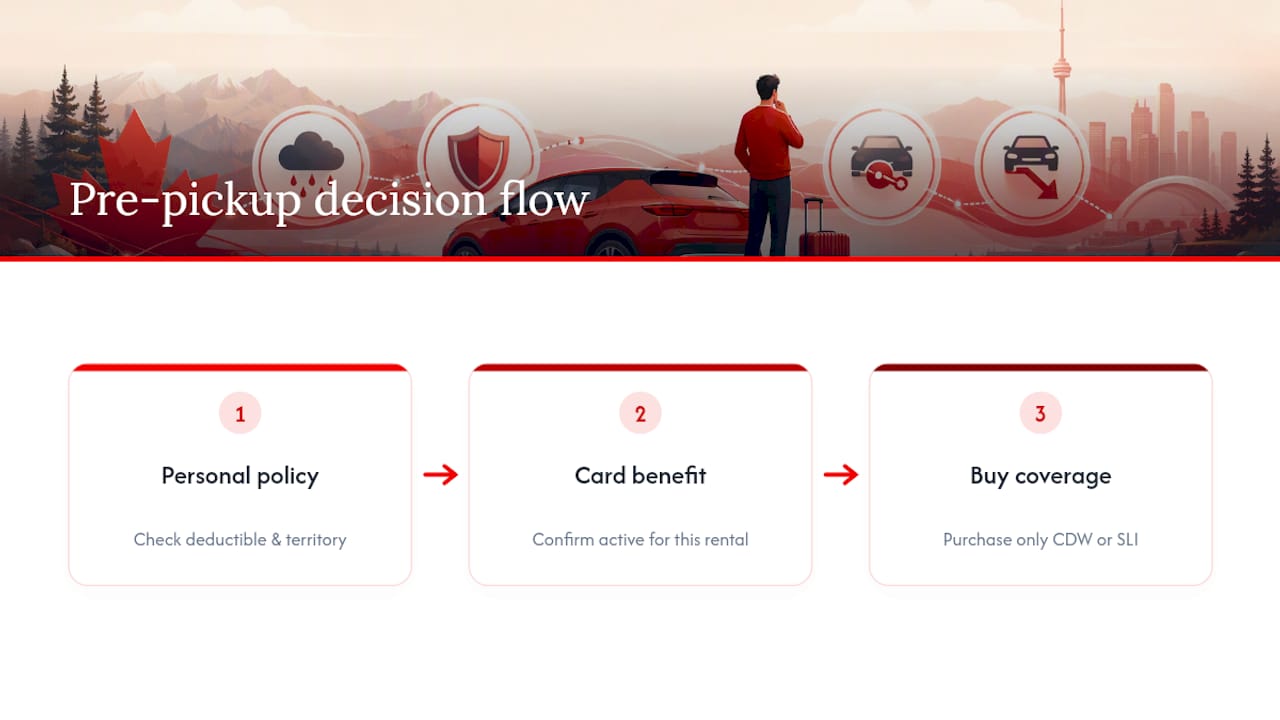
Run through three steps before your next pickup. First, check your personal policy’s deductible and territory rules. Second, call your card issuer and confirm the benefit is active for this specific rental. Third, if either check reveals a gap, buy only the narrow product you need, CDW or SLI, rather than a full bundle.
Our Team at Lizard’s Lunch: Practical Takeaways
We consistently recommend verifying your policy and card benefits before you travel, then documenting the vehicle at pickup regardless of what coverage you’re relying on. If you rent often for short trips, learning your card’s rules pays off fast. If you rent for weeks at a time or venture abroad, favor CDW or a primary third-party policy instead. Pair that decision with a broader look at travel insurance basics if your trip involves any international leg, since medical gaps and rental gaps often show up together. For readers weighing the cost tradeoffs, our guide on saving money while traveling covers where it makes sense to spend versus skip, and if the trip involves an international stretch, our travel insurance necessity guide walks through the same gap analysis from a health angle. Travelers heading abroad might also find value in reviewing health insurance options for time spent outside your home country, since medical gaps and rental gaps often surface on the same trip.
Once you’ve sorted out your rental coverage, the same “check before you assume” habit applies at home. If you’re weighing bigger changes to your living space, our home renovation ideas that add character are worth a look for planning your next project with the same clear-eyed approach.
Sources
- Should I Get Rental Car Insurance? (2026 Guide)
- Should you buy car rental insurance? | Consumer Reports
- The Four Types of Rental Car Insurance, Explained | Allianz Partners
- Everything You Need To Know About Rental Car Insurance | GEICO
This article is general information, not a substitute for advice from a qualified financial advisor. Consult a qualified financial professional about your own circumstances before acting on anything here.
FAQ
What rental car insurance do I actually need?
Most drivers with solid collision and comprehensive coverage on their own vehicle and a low deductible need little beyond what they already have, though supplemental liability is worth considering if your personal liability limits are low.
Do you really need the extra insurance when renting a car?
Not always. It becomes worth buying if you carry liability-only coverage, have a deductible of $1,000 or more, are renting an excluded vehicle type, or are traveling internationally.
Do I need additional insurance when renting a car in Canada?
If your personal auto policy and credit card benefits both extend fully to the rental’s territory and vehicle type, you likely don’t. Confirm both before you decline the counter waiver.
Do I need to take out extra insurance on a rental car?
It depends on your existing coverage gaps rather than a blanket rule. Check your deductible, your policy’s vehicle exclusions, and your card’s activation rules first, then decide based on where the gaps actually are.

















Leave a Comment
Your email address will not be published. Required fields are marked with *