
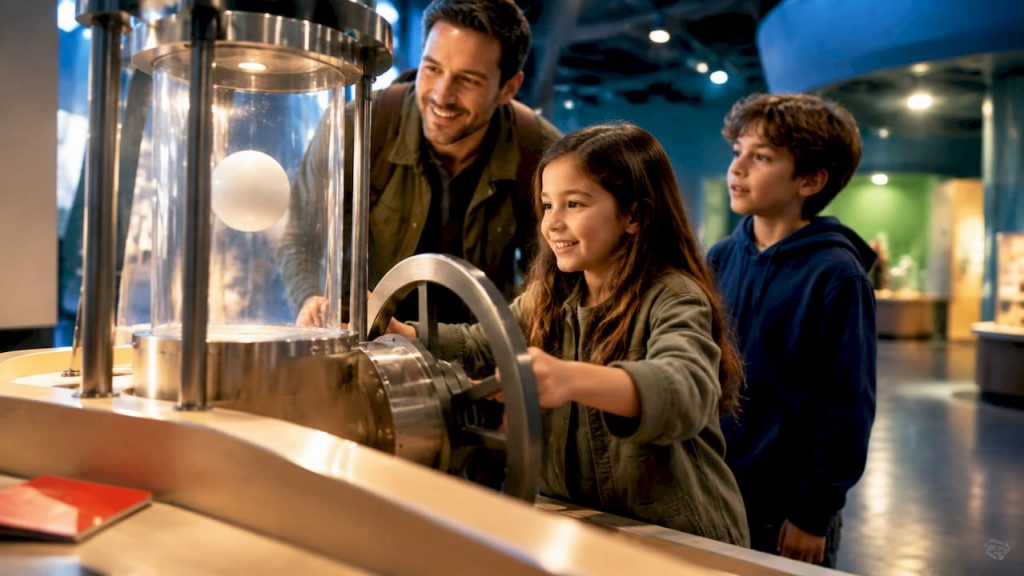
Canada-focused shortlist of interactive, hands-on science museums for families and educators. Six top picks, planning tips, and a five point selection…
This guide is a shortlist of the best interactive science museums, plus the practical details families and educators actually need before they go. It covers hands-on galleries, IMAX theaters, maker spaces, and how to plan a visit that fits your group’s age range and budget. Skip to any section below to find where to go and how to make the most of your day.
TL;DR:
- Most interactive science museums offer scheduled live demos and maker spaces, so checking schedules in advance helps maximize hands-on experiences.
- Visiting during weekday mornings or outside school breaks reduces crowds and allows more time with exhibits, especially if planning a full day trip.
- Attractions like IMAX theaters and VR exhibits are increasingly common and enhance immersive learning, but you should confirm their schedules when planning your visit.
- Combining nearby regional museums, such as Ontario Science Centre and Dynamic Earth, can provide a more comprehensive hands-on experience within a single day.
- Memberships or annual passes often offer better value if multiple visits are planned, and they typically provide access to partner museums in addition to the primary site.
Table of Contents
- Which Science Museums Are Worth The Trip?
- What Makes A Museum Visit Interactive?
- Planning Your Visit: Tickets, Hours, And Access
- Best Museums By Region
- Our Team’s Recommendations And A Selection Checklist
- How Science Museums Went From Display Cases To Hands-On Labs
- Why Hands-On Learning Actually Sticks
- Where Digital Tools Fit Into Museum Design
- Why Community Access Matters As Much As The Exhibits
- Why The Best Exhibits Are The Ones You Forget You’re Learning From
- Turning A Museum Day Into A Full Trip
- Sources
- FAQ
Which Science Museums Are Worth The Trip?
If you’re choosing where to spend a Saturday or plan a school trip, these six deliver the strongest hands-on experiences. Each one has built its reputation on getting visitors to touch, build, and experiment rather than just read a placard.
- Ontario Science Centre (Toronto) — One of the earliest pioneers of interactive science exhibits, with downloadable lesson plans and hands-on galleries that helped set the template other interactive science museums across Canada later followed.
- Canada Science and Technology Museum (Ottawa) — Run by Ingenium, this museum pairs guided tours with hands-on areas like Exploratek and a massive artifact collection covering everything from steam engines to space tech, detailed on the Canada Science and Technology Museum’s site.
- Montreal Science Centre (Montreal) — Known for its IMAX theater and rotating exhibitions such as Nanualuk and Fabrik², described on the Montréal Science Centre’s homepage, which change often enough to justify repeat visits.
- TELUS Spark (Calgary) — A Western Canada anchor built around hands-on STEM activities, with strong family programming and educator resources including camps and themed evening events, according to TELUS Spark’s program listings.
- Science North (Sudbury) — Combines interactive science galleries with regional geology exhibits, giving Northern Ontario a distinct identity among science learning centers.
- Dynamic Earth (Sudbury) — Science North’s sister attraction, focused on mining history and underground exploration, best paired with Science North for a full day.
The Canadian Museum of Nature in Ottawa rounds out any shortlist for groups who want to combine science exhibits with natural history collections in the same trip.
What Makes A Museum Visit Interactive?
Not every gallery works the same way, and knowing the format helps you match a museum to your group. Most interactive science museums split their offerings into a few recognizable categories.
- Hands-on galleries let visitors operate levers, build structures, or run simple experiments themselves rather than watch from behind glass.
- Live demos are scheduled shows, often built around chemistry, physics, or biology, that run at set times throughout the day.
- Maker spaces give older kids and teens tools to build, code, or tinker, usually with staff supervision.
- IMAX and planetarium screenings add a passive but immersive layer, and they’re worth checking when a museum, like the Montreal Science Centre, builds its schedule around them.
- VR exhibits are increasingly common additions that simulate everything from space walks to underwater ecosystems.
Programs are also split by age. Preschool zones handle toddlers with soft, sensory-friendly setups, general galleries suit school-age groups, and teen maker labs handle more advanced kids who want to actually build something.
Pro Tip: Call ahead or check the museum’s events calendar before you go. Live demos and maker space sessions often run on a fixed schedule, and missing the 11 a.m. slot can mean waiting until early afternoon for the next one.
Planning Your Visit: Tickets, Hours, And Access
Getting the logistics right saves you from standing in line while your kids lose patience. Here’s what to sort out before you leave the house.
- Check for timed entry. Many museums, including the Canada Science and Technology Museum, recommend advance booking for special exhibitions and IMAX screenings, so buy tickets online rather than showing up and hoping.
- Avoid peak windows. Weekend afternoons and school holiday weeks draw the biggest crowds; weekday mornings right after opening tend to be the quietest.
- Plan your transit. Downtown locations like the Ontario Science Centre and Montreal Science Centre often have easier transit access than driving and parking, especially during peak season.
- Confirm accessibility needs in advance. Official museum pages commonly list accessibility information alongside school-group booking details, so check before your visit if you need step-free access, sensory-friendly hours, or mobility equipment.
- Ask about memberships. If you plan to visit more than twice a year, a family membership or annual pass usually pays for itself and often includes reciprocal admission at partner museums.
Best Museums By Region
Location shapes which museum makes sense for a day trip, so here’s a quick regional breakdown.
- Ontario offers the widest concentration: the Ontario Science Centre in Toronto for hands-on galleries, Science North in Sudbury for interactive exhibits paired with regional science, and Dynamic Earth next door for underground mining exploration.
- Quebec centers on the Montreal Science Centre, with its IMAX theater and rotating family exhibitions, plus a range of nearby dining and cultural stops if you’re building a full Montreal day, similar to what’s covered in planning a Quebec visit.
- Western Canada is anchored by TELUS Spark in Calgary, which leans heavily into STEM programming and family-focused evening events.
- National collections like the Canada Science and Technology Museum and the Canadian Museum of Nature, both in Ottawa, give visitors broad artifact and specimen collections beyond what a single regional center can offer.
Our Team’s Recommendations And A Selection Checklist
Choosing between museums gets easier once you run through a short checklist. Our team at Lizard’s Lunch weighs five factors for any family outing:
- Age fit — does the museum have a dedicated zone for your youngest visitor?
- Hands-on vs. passive — are you looking for exhibits to touch or shows to watch?
- Special exhibits schedule — is there a limited-run exhibition worth timing your visit around?
- Travel time — is a half-day trip realistic, or does the museum warrant a full day?
- Cost — does a family pass or membership make more sense than single tickets?
For preschoolers, a half-day visit to a museum with a dedicated toddler zone beats dragging them through a full-day itinerary built for tweens. For a group of ten-year-olds, a full day at a museum with maker spaces and an IMAX screening gets far more mileage.
Pro Tip: If your group spans a wide age range, split the day: hit the toddler-friendly zone first while energy and patience are highest, then move to demos and maker spaces after lunch.
How Science Museums Went From Display Cases To Hands-On Labs
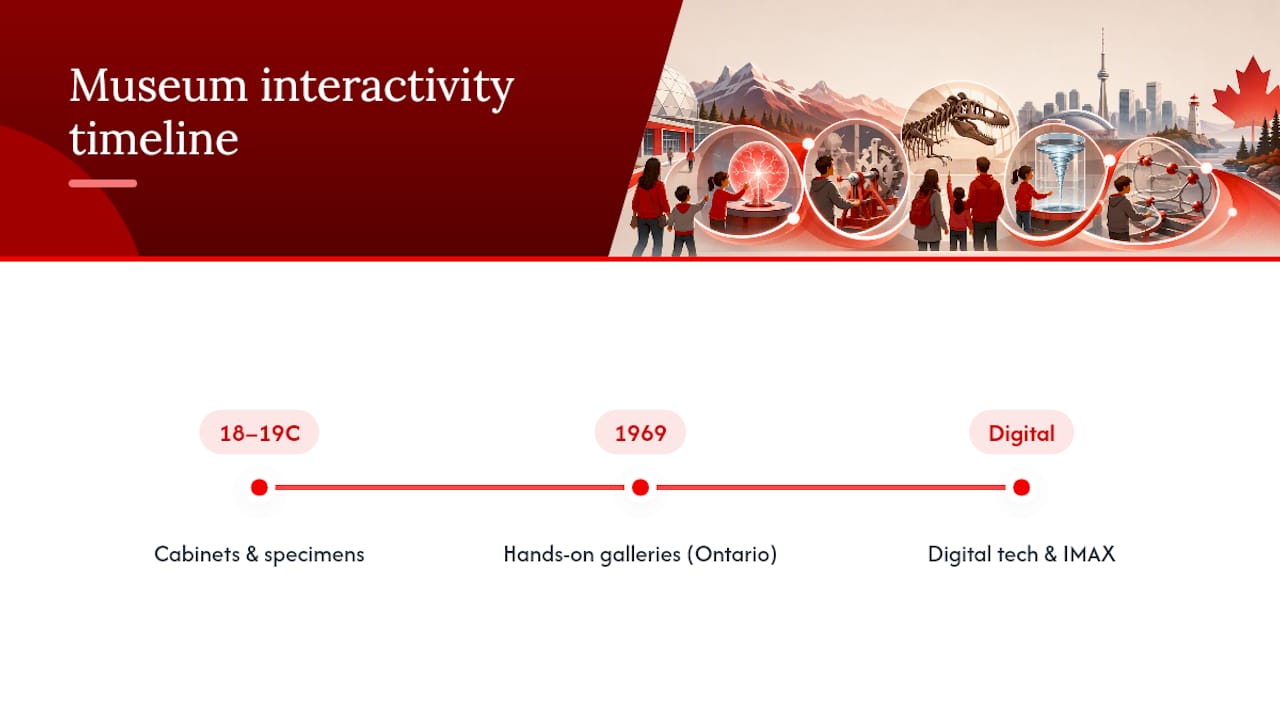
Science museums didn’t start out interactive. Early institutions, dating back to the 18th and 19th centuries, functioned more like formal collections: cabinets of curiosities, taxidermy displays, and glass cases full of specimens visitors weren’t meant to touch.
That started shifting in the mid-20th century as museum designers realized visitors learned more by doing than by reading. The Ontario Science Centre, which opened in 1969, became one of the early pioneers of this shift, building entire galleries around visitor participation rather than passive viewing. That approach proved influential enough that most major science museums built afterward, from Montreal’s science center to Calgary’s TELUS Spark, adopted some version of the same hands-on philosophy.
The next big leap came with digital technology. Museums that once relied purely on mechanical levers and pulleys started layering in touchscreens, motion sensors, and eventually virtual reality. IMAX theaters became a standard feature at larger centers, turning a single visit into both a hands-on exploration and an immersive show. What began as static exhibits behind glass has become an entire industry built around participation, and that shift shapes almost everything about how modern museums are designed today.
Why Hands-On Learning Actually Sticks
Science museums exist to do something classrooms often struggle with: make abstract concepts physical. A textbook explanation of air pressure is forgettable. Building a mini vacuum chamber and watching a marshmallow expand is not.
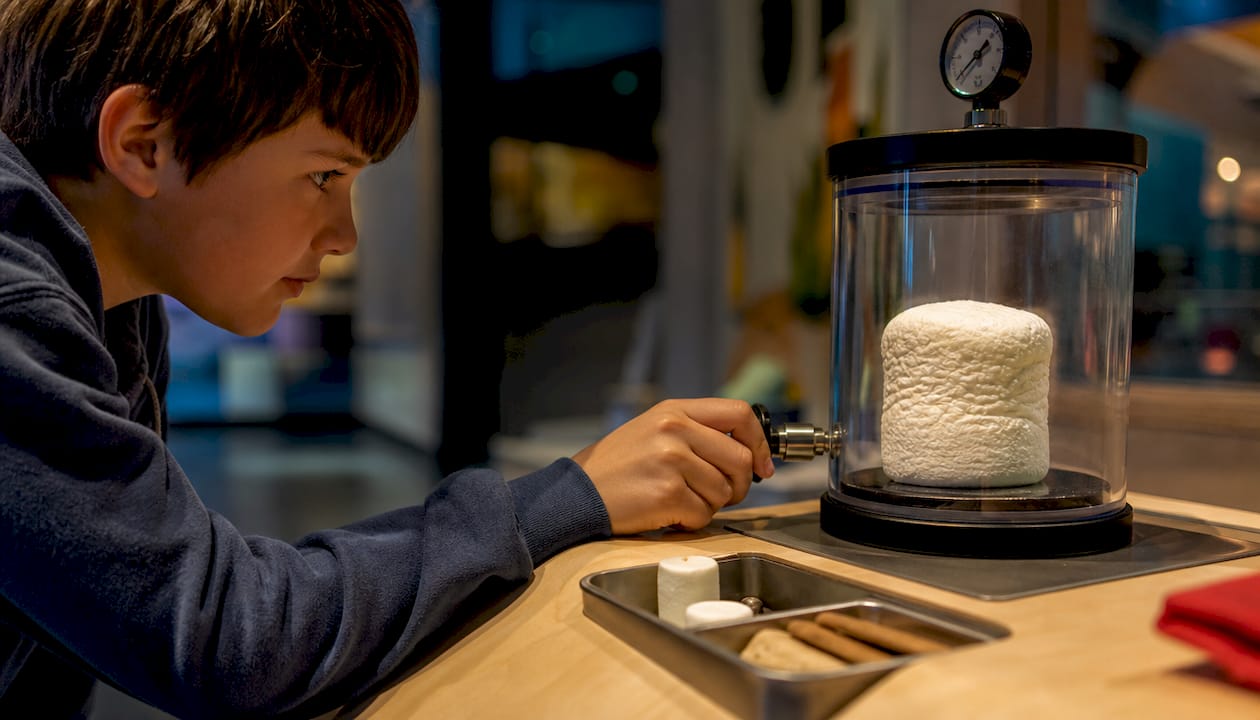
That’s the core educational goal behind interactive exhibits, and it’s why school groups make up such a steady share of museum visitors. Programs built for classroom trips typically align with curriculum standards, giving teachers a way to reinforce what’s taught in class with something students can physically manipulate. Camps and workshops extend that same principle into school breaks, letting kids build on a single topic, like robotics or chemistry, over several days instead of a single afternoon.
The impact isn’t limited to kids either. Adults visiting on their own or with family often report that a single well-designed exhibit clarifies a concept they never fully grasped in school. That’s the quiet success of interactive design: it doesn’t just entertain, it fills gaps that formal education left behind.
Where Digital Tools Fit Into Museum Design
Technology has moved science museums well past static displays and into territory that starts to feel like a video game crossed with a classroom. Touchscreen interfaces now let visitors control simulations, adjusting variables like temperature or gravity to see how outcomes change in real time.
Virtual reality has become one of the more notable additions at larger centers, letting visitors experience things no physical exhibit could replicate, like walking on Mars or diving into a coral reef. IMAX theaters, a fixture at museums like the Montreal Science Centre, pair giant-format film with immersive sound to turn documentary content into something closer to an experience than a lecture.
Even the practical side has gone digital. Timed-entry ticketing, online booking for school groups, and digital wayfinding inside the building all reduce friction for visitors juggling schedules and large groups. None of this replaces the core hands-on galleries that made these museums popular in the first place, but it does layer new ways to explore the same scientific ideas.
Why Community Access Matters As Much As The Exhibits
Science museums serve a role that goes beyond entertaining visitors for an afternoon. Many act as informal science education hubs for communities that don’t have easy access to research institutions or university outreach programs, giving kids exposure to STEM careers they might not otherwise encounter.
School partnerships are central to that mission. Museums that offer group booking, curriculum-aligned tours, and teacher resources give schools a way to bring lessons to life without needing lab equipment or specialized staff. Camps and workshops extend that access outside the school year, often at a lower cost than private STEM programs.
Outreach also shows up in accessibility efforts, sensory-friendly hours, and reduced-cost admission programs that widen who can actually walk through the doors. A museum that builds real hands-on exhibits but prices out half its community isn’t fully serving its public mission. The strongest programs treat accessibility and affordability as part of the science literacy goal, not an afterthought bolted on later.
Why The Best Exhibits Are The Ones You Forget You’re Learning From
The most memorable part of any museum visit tends to be the moment a visitor stops thinking about learning and just gets absorbed in doing something, whether that’s launching a rocket model or testing a bridge design to failure. That kind of engagement is hard to fake and impossible to force through a lecture. Accessibility matters just as much here: sensory-friendly hours and thoughtful design mean more visitors actually get to have that moment.
— Alexander
Turning A Museum Day Into A Full Trip
Once you’ve picked a museum, the bigger question is what to build around it. If Toronto’s on your list, our guide to Toronto day trips covers other stops worth pairing with a visit to the Ontario Science Centre. Heading to Quebec instead? Our roundup of things to do in Quebec works well even outside honeymoon planning, since it covers dining and attractions near the Montreal Science Centre.
We provide practical, region-specific guidance in one place, from packing checklists to family activity planning. If you’re building out the rest of your trip, our family-friendly activities checklist helps you match age-appropriate stops to your itinerary. For the broader lifestyle side of planning a healthy, well-rounded family trip, start with our complete guide to healthy living and build your itinerary from there.
Sources
- Visit these interactive science museums in Ontario
- Canada Science and Technology Museum – Ingenium
- Montréal Science Centre
- Ontario Science Centre: Home
FAQ
What Is The Best Science Museum In The World?
There’s no single universal answer since “best” depends on what you’re looking for, but among Canadian options, the Ontario Science Centre stands out for its early role in pioneering hands-on exhibits and its wide range of family programming.
What Are Some Good Science Museums In Ontario?
Ontario offers several strong choices, including the Ontario Science Centre in Toronto, Science North in Sudbury, and Dynamic Earth right next door to Science North for underground mining exploration.
What Is The Biggest Science Museum?
Size varies by collection type and exhibit space, and the Canada Science and Technology Museum in Ottawa ranks among the largest in Canada thanks to its extensive artifact collection and hands-on areas like Exploratek.
Is There A Science Museum In Montreal?
Yes, the Montreal Science Centre features interactive exhibitions, an IMAX theater, and rotating special exhibitions like Nanualuk and Fabrik² that change throughout the year.
How Do I Save Money On Museum Tickets?
Family memberships and annual passes typically cost less than paying for single admission more than twice a year, and many memberships include reciprocal access to partner museums.


















Leave a Comment
Your email address will not be published. Required fields are marked with *