
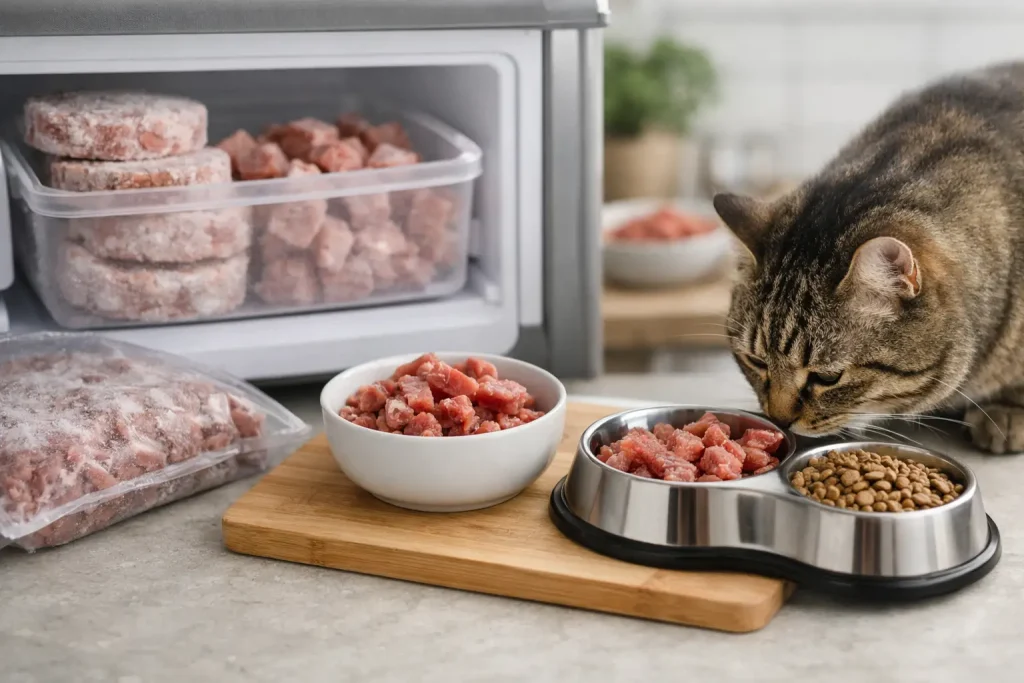
Cat frozen food can be a convenient raw or cooked meal option. Learn how to choose, thaw, serve, and store it safely for your cat with confidence at home.
A freezer can make feeding time easier, especially for pet owners who want portioned meals without a last-minute store run. But cat frozen food needs more than a quick thaw on the counter. Whether you are considering raw patties, gently cooked recipes, or frozen meal toppers, safe handling and nutritional balance should guide every purchase.
Frozen diets can be a smart fit for some households. They often offer convenient portioning, may use recognizable ingredients, and can reduce waste compared with opening a large can every day. Still, the best choice depends on your cat’s health, age, preferences, and your ability to handle the food carefully.
What Counts as Cat Frozen Food?
Cat frozen food is a broad category. It can include commercially prepared raw meals, freeze-at-home fresh recipes, gently cooked foods sold frozen, broth cubes, and raw or cooked toppers. These products are not all nutritionally equivalent, so the package matters as much as the format.
A frozen food labeled as complete and balanced is designed to serve as a cat’s primary diet when fed as directed. Look for a nutritional adequacy statement indicating that the recipe meets recognized life-stage standards, such as adult maintenance, growth, or all life stages. A topper, treat, or supplemental food may be tasty and useful, but it should not replace a complete diet unless your veterinarian has created a plan for your cat.
This distinction is especially important with raw frozen products. Meat alone does not provide everything cats need over time. Cats require specific nutrients, including taurine, vitamins, minerals, and the right calcium-to-phosphorus balance. Commercial complete recipes are generally a safer starting point than assembling a homemade raw diet from online tips.
Is Frozen Food a Good Choice for Your Cat?
For a healthy cat that enjoys the texture, frozen food can be a convenient option. Some cats are drawn to the aroma and meat-forward texture of thawed fresh meals. Owners may also appreciate individual patties or portioned bags that simplify serving sizes.
The trade-off is food safety. Raw frozen diets can carry bacteria that affect pets and people, even if the food looks and smells normal. Freezing slows bacterial growth but does not reliably eliminate harmful organisms. Households with young children, older adults, pregnant people, or anyone with a weakened immune system may want to avoid raw pet food or discuss the risks with a healthcare professional and veterinarian.
Gently cooked frozen meals can offer a middle ground for shoppers who like fresh-style ingredients but prefer a product that has been cooked. They still need refrigeration and careful handling after thawing, but they generally do not carry the same raw-meat handling concerns.
Cats with kidney disease, food allergies, pancreatitis, digestive issues, or urinary concerns need more individualized guidance. A frozen diet is not automatically better simply because it looks premium. Your veterinarian can help determine whether a particular formula supports your cat’s medical needs.
How to Choose Cat Frozen Food Wisely
Start with the label, not the front-of-package claims. Marketing phrases such as “human-grade,” “natural,” or “high-protein” can describe certain qualities, but they do not guarantee that a food is complete or appropriate for your pet.
First, check whether the food is complete and balanced for your cat’s life stage. Kittens need diets formulated for growth, while most healthy adult cats need adult-maintenance nutrition. If the product is a topper, use it as an add-on rather than the foundation of every meal.
Next, examine the feeding instructions and calorie information. Frozen foods can be calorie-dense, and a small patty may contain more energy than it appears to. Cats gain weight easily, particularly indoor cats with low activity levels. Measure portions rather than estimating by eye, then monitor body condition and adjust with veterinary input if needed.
It also helps to consider the package format. Individually wrapped portions are convenient and limit repeated exposure to air and handling. Larger bags can cost less per ounce, but only if you can use them before quality declines and keep the contents consistently frozen. Avoid packages with tears, excessive frost, signs of thawing and refreezing, or damaged seals.
Finally, buy from retailers that maintain proper freezer temperatures. A product should be solidly frozen when you purchase it. If your errand includes several stops, bring an insulated bag with ice packs so the food does not sit in a warm car.
Safe Storage and Thawing at Home
Once home, put frozen food in the freezer promptly. Keep it at 0°F or below, ideally in its original sealed package until you need it. Follow the brand’s storage date, since each recipe and package style may have different guidance.
The safest way to thaw a frozen meal is in the refrigerator. Move the next day’s portion from the freezer to a covered container in the fridge, where it can thaw gradually. Do not leave raw or cooked pet food on the counter to thaw, and do not use hot water, which can warm the outside of the food while the center remains frozen.
A microwave may heat food unevenly and can partially cook raw products, so it is usually not the best thawing method unless the manufacturer specifically provides microwave directions. If your cat prefers food closer to room temperature, place the sealed portion in cool-to-lukewarm water briefly after it has thawed in the refrigerator. Check the temperature before serving. Food should never be hot enough to burn your cat’s mouth.
Use thawed food within the time frame printed on the package. In many cases, that window is a few days under refrigeration, but brand instructions should take priority. Do not refreeze a product that has fully thawed unless the manufacturer explicitly says it is safe to do so.
Serving Frozen Meals Without the Mess
Wash your hands before and after handling pet food, especially raw diets. Clean bowls, scoops, countertops, and any surfaces that touched the food with hot, soapy water. If you use a food scale or dedicated spoon for cat meals, keep it separate from tools used for human food.
Serve only the amount your cat is likely to eat at that meal. Refrigerated food should not sit out for hours. Wet and fresh-style diets can spoil more quickly than dry kibble, particularly in a warm kitchen. Discard leftovers according to the manufacturer’s instructions, and wash the bowl before the next feeding.
Transition slowly if frozen food is new to your cat. A sudden switch can cause loose stool, vomiting, or food refusal, even when the new formula is high quality. Begin by mixing a small amount into your cat’s current food, then gradually increase the new food over about seven to 10 days. Go more slowly for cats with sensitive stomachs.
If your cat stops eating, seems lethargic, vomits repeatedly, or develops ongoing diarrhea, stop the new diet and contact your veterinarian. Cats should not go long without eating, particularly overweight cats, because prolonged appetite loss can become serious.
Common Mistakes to Avoid
The most frequent mistake is treating all frozen products as full meals. A frozen chicken topper may be useful for enticing a picky eater, but it does not necessarily contain the nutrients needed for daily feeding. Another common error is overfeeding because fresh foods can feel less processed and therefore easier to serve generously.
Raw-food households also need a sanitation routine that is realistic, not aspirational. If you cannot reliably refrigerate, clean, and discard leftovers on schedule, a cooked frozen food or a high-quality canned diet may be a better fit. Convenience only counts when the routine is safe enough to sustain.
Avoid making nutrition decisions based solely on social media before-and-after photos. A shinier coat or enthusiastic first meal does not prove that a diet is balanced, safe, or right for every cat. Look at the label, your cat’s stool and appetite, body condition, energy level, and veterinary feedback over time.
The right frozen meal is the one your cat can eat consistently, digest comfortably, and receive in the proper amount. Start with a complete formula, keep food safety simple, and let your cat’s health, not the trendiest package in the freezer case, make the final call.


















Leave a Comment
Your email address will not be published. Required fields are marked with *