
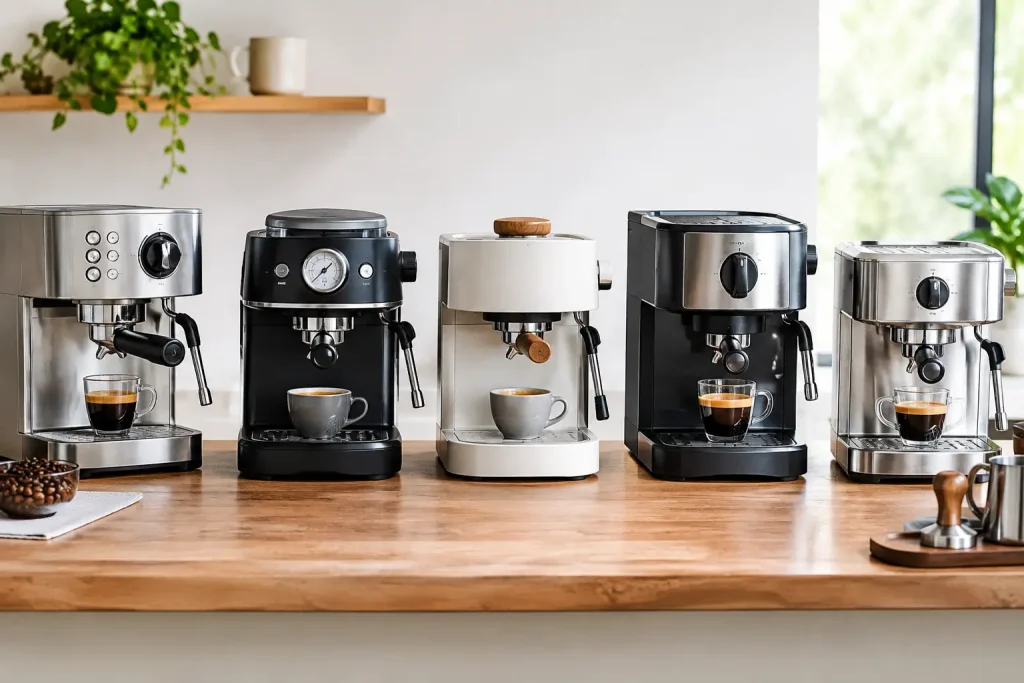
Find the best budget espresso machines for rich home shots, creamy milk drinks, and smarter upgrades without paying café-equipment prices at home.
A coffee-shop latte can cost more than $6 before tip, which makes a home setup look appealing fast. The best budget espresso machines can make that switch worthwhile, but only if you buy for the way you actually drink coffee. A compact machine and pre-ground coffee may be perfect for a quick weekday cappuccino. Fresh beans, a capable grinder, and a little practice are the better route for café-style straight espresso.
Budget does not mean every machine is equally equipped. Some prioritize fast heat-up times, some include convenient milk systems, and others leave more of the process in your hands. Prices move frequently, especially during major sales, so think of these picks as strong choices in their usual affordable range rather than fixed-price promises.
Best Budget Espresso Machines Worth Considering
1. Breville Bambino – Best Overall for Beginners
The Breville Bambino is often the smart stretch pick for shoppers who want better espresso without stepping into premium-machine territory. It heats up very quickly, uses a 54 mm portafilter, and has a strong steam wand for making microfoam rather than simply hot, bubbly milk.
Its biggest advantage is that it gives beginners room to grow. Start with the included pressurized baskets and a decent pre-ground espresso, then move to a non-pressurized basket and fresh-ground beans when you are ready. The trade-off is clear: it does not include a grinder, and buying one later may add significantly to the total setup cost. For households that want lattes, flat whites, and cappuccinos often, it is still one of the most satisfying options.
2. De’Longhi Stilosa – Best Low-Cost First Machine
The De’Longhi Stilosa is a practical entry point for anyone who wants real espresso-making controls at a low price. It has a traditional portafilter, a manual steam wand, and a compact profile that works well in apartments, dorms, and smaller kitchens.
It will not produce the consistency of a more expensive Breville or a finely tuned prosumer machine. Its pressurized baskets are forgiving, though, which matters if you use store-ground coffee and do not want a new hobby before breakfast. Expect to spend a little time learning how firmly to tamp and how long to steam milk. That hands-on process is part of what makes the Stilosa a better buy than a pod brewer for curious beginners.
3. De’Longhi Dedica Arte – Best for Small Counters
At just a few inches wide, the De’Longhi Dedica Arte solves a common kitchen problem: there is no room for another large appliance. Despite its slim footprint, it offers programmable shot buttons and a steam wand designed to make milk foam with more control than a basic panarello-style frother.
The Dedica Arte is best for the person who values a neat, space-saving setup and mostly makes one or two drinks at a time. Its 51 mm accessories are less universal than 58 mm tools, and its lighter build can feel less substantial than bigger machines. Still, it is a polished, approachable choice for small households that want cappuccinos without giving up half the counter.
4. CASABREWS CM5418 – Best Value Espresso-and-Latte Bundle
The CASABREWS CM5418 is frequently priced well below major-name machines while including the essentials: a portafilter, pressure gauge, removable water tank, and steam wand. It is a compelling option when the goal is to get a complete-looking espresso station for as little as possible.
A pressure gauge can be helpful, but do not treat the machine’s advertised high pump-pressure number as a measure of cup quality. Good espresso is generally brewed around 9 bars at the coffee puck, while higher numbers are often marketing specs. This machine can make enjoyable espresso drinks with pressurized baskets and fresh coffee, but quality control and long-term durability may not match better-established brands. Buy it for value, not for the expectation of commercial-machine performance.
5. Flair Neo Flex – Best Manual Espresso Maker
The Flair Neo Flex proves that an espresso maker does not need a pump, boiler, or large footprint. This manual lever brewer uses hot water from a kettle and your own pressure on the lever to pull a shot. It is inexpensive, portable, and remarkably capable once you learn the routine.
There is a catch: this is espresso only. You will need a separate way to heat and froth milk, and the workflow is slower than pressing a button. Water temperature, grind, dose, and lever pressure all matter. For someone who enjoys making coffee as a ritual, that control is the appeal. For a rushed household trying to make four lattes before work, it is probably the wrong fit.
6. Mr. Coffee Café Barista – Best for One-Touch Milk Drinks
The Mr. Coffee Café Barista is aimed at convenience-first coffee drinkers. Its automatic milk reservoir and one-touch drink settings make it easy to prepare espresso-based drinks with far less manual steaming and measuring than a traditional setup.
That convenience comes with limits. The milk texture will not rival properly steamed microfoam, and the milk reservoir needs prompt cleaning after use. It is best for people who want an easy cappuccino or latte at home and do not care about practicing latte art. If your priority is speed, predictable portions, and less morning mess, its compromises may be worth it.
7. De’Longhi ECP3420 – Best No-Frills Traditional Pick
The De’Longhi ECP3420 has stayed popular because it covers the basics without trying to be flashy. It offers single- and double-shot baskets, a steam wand, and a straightforward layout that makes it easy to understand. It also has enough clearance for shorter travel mugs once the drip tray is removed.
This is not the machine to buy for advanced temperature control or specialty accessories. It is a reliable candidate for a first traditional espresso machine, particularly for drinkers who make Americanos, cappuccinos, or mochas more often than delicate straight shots. Keep expectations grounded, use freshly opened coffee, and it can deliver a meaningful upgrade over standard drip coffee.
What Matters More Than a Bigger Pump Number
Espresso is unusually sensitive to small details. A machine can advertise 15 or 20 bars of pressure, but that figure does not guarantee balanced espresso. Fresh coffee, a consistent grind, the right dose, and even tamping have more influence on flavor.
Before buying, consider these four parts of the setup:
- Grinder: For whole beans, a burr grinder that can make fine, repeatable espresso adjustments is the most valuable upgrade. Blade grinders are not a substitute.
- Basket type: Pressurized baskets make store-ground coffee easier to use. Non-pressurized baskets offer more potential but require a capable espresso grinder.
- Milk workflow: A manual steam wand takes practice but produces better texture. Automatic frothers are quicker and simpler to clean only when maintained promptly.
- Counter space and routine: A narrow machine may be more useful than a larger, more capable model if it is the one you will actually leave out and use.
How to Get Better Results From an Affordable Machine
Start with coffee roasted for espresso and use it within a few weeks of opening. Pre-ground coffee can work well in pressurized baskets, but a smaller bag is better than a giant container that sits in the pantry for months. If you have a grinder, adjust one small step at a time. Shots that run too quickly usually need a finer grind; slow, bitter shots may need a slightly coarser setting.
Warm the portafilter when possible, use a level dose, and wipe the basket dry before adding coffee. After brewing, purge and wipe the steam wand immediately. Milk residue hardens quickly and can turn a good machine into a frustrating one.
The right budget espresso machine is the one that fits your morning, not the one with the longest feature list. Pick a setup you can keep clean, stock with fresh coffee, and enjoy using often – the better cup will follow.









Leave a Comment
Your email address will not be published. Required fields are marked with *