

Build a stronger credit score in Canada with a 90 day plan: pay on time, lower utilization, check free reports, and avoid quick fix promises.
The fastest reliable way to improve a credit score in Canada is to fix payment history and credit utilization first, since these two factors carry the most weight in how your score is calculated. Set up autopay, bring utilization under 30% (ideally under 10%), and pull your free credit reports to check for errors. Real movement takes months, not days, so pace your expectations while you work through the checklist below.
TL;DR:
- Payment history accounts for about 35% of a score; automate at least minimum payments and contact lenders before due dates if you risk missing one.
- Utilization contributes about 30% of a score, and balances below 10% can help; pay before the statement closing date, when bureaus capture balances.
- Order free reports from Equifax and TransUnion because their records may differ; checking your own file is a soft inquiry and leaves your score unchanged.
- Hard inquiries make up about 10% of a score; avoid new applications before borrowing, and group mortgage or auto rate shopping within about 14 days.
Table of Contents
- Pay your bills on time, every time
- Lower and manage your credit utilization
- Build a longer credit history without closing old accounts
- Limit hard credit applications and shop rates smartly
- Get your Canadian credit reports and fix errors
- When to seek credit counselling or formal debt relief
- Our team’s 90-day action plan to start improving your score now
- Why steady credit habits beat quick-fix promises
- Another option: free guides and checklists to keep you organized
- FAQ
- Sources
Pay your bills on time, every time
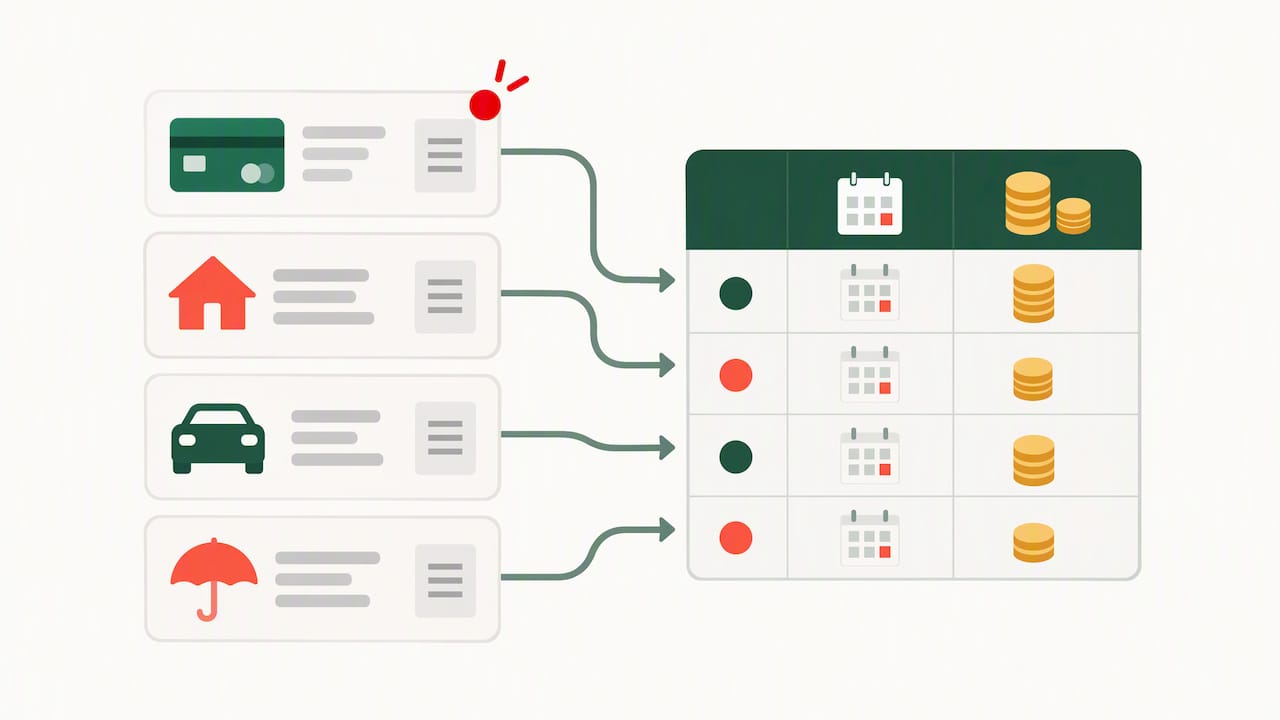
Payment history drives roughly 35% of your score, making it the single biggest lever you control according to Scotiabank’s breakdown of score factors. A missed payment reported to the bureaus can set you back further than almost anything else on this list, and it stays visible for years.
The fix is mostly about removing yourself from the decision. Automate it, and you stop relying on memory during busy weeks.
- Set up autopay for at least the minimum payment on every credit card and loan.
- Turn on e-billing and due-date alerts through your bank’s app.
- Rank your bills by consequence, prioritizing secured debts and anything reporting to credit bureaus.
- If a payment is genuinely at risk, call your lender before the due date and get any arrangement in writing.
Even a minimum payment when cash is tight beats a missed one. A small payment keeps the account current; a missed one creates a mark that outlasts the moment you were short on funds.
Pro Tip: Keep a simple spreadsheet or note with due dates and minimum amounts for every account, updated the day a bill arrives.
Lower and manage your credit utilization
Credit utilization, your balance divided by your limit and multiplied by 100, makes up about 30% of your score, nearly as much as payment history, per Scotiabank. Keeping total utilization under 30% is the baseline; getting it under 10% tends to produce faster, more noticeable gains.
The trick most people miss is timing. Bureaus see the balance reported on your statement closing date, not the balance you carry before the due date, so paying down a card before that closing date lowers what actually gets reported.
- Pay down balances before the statement closing date, not just before the due date.
- Request a credit limit increase if your spending and income support it, since a higher limit lowers your ratio without new debt.
- Avoid charging large one-time purchases to a single card when possible.
- Consider a balance transfer only with care, since it usually involves a hard inquiry and transfer fees that can offset the benefit.
Build a longer credit history without closing old accounts
Length of credit history accounts for a moderate share of your score, so the accounts you have had the longest are quietly working in your favor according to Scotiabank’s scoring model. Closing your oldest card to simplify your wallet can shorten your average account age and shrink your available credit at the same time, which can push utilization up.
- Keep old, fee-free cards open and use them for a small recurring purchase every few months so they stay active.
- Diversify your credit mix with a small installment product, such as a car loan, when it fits your budget, since credit mix contributes about 10% of your score.
- If you are new to credit or rebuilding after a gap, a secured credit card or a credit builder loan from a Canadian bank or credit union gives you a low-risk way to start showing payment history.
- Avoid taking on debt you don’t need purely to diversify your file.
Readers financing a vehicle can see how installment debt factors into their file in our guide to car loans and credit scores.
Limit hard credit applications and shop rates smartly
Checking your own report is a soft inquiry and never affects your score, but applying for new credit triggers a hard inquiry that can cause a small, temporary dip. New credit inquiries make up about 10% of your score, according to Scotiabank, so a string of applications in a short window adds up.
- Get pre-qualified where lenders offer it, since pre-qualification typically uses a soft inquiry.
- Group rate shopping for a mortgage or auto loan into a short window, often around 14 days, so multiple inquiries for the same purpose are treated as one event.
- Skip new credit card applications while you are actively trying to raise your score for an upcoming loan.
If you’re gearing up for a mortgage renewal, our 120-day mortgage renewal action plan walks through the timing in more detail.
Get your Canadian credit reports and fix errors
You can order your credit report directly from each bureau, and Canada.ca’s guidance on ordering reports confirms that checking your own file is a soft inquiry and will not affect your score. Equifax and TransUnion don’t always carry identical information, so reviewing both matters.
- Order your free report from Equifax and TransUnion, either online or by mail.
- Scan for accounts you don’t recognize, wrong balances, incorrect payment statuses, or outdated personal information.
- Gather supporting evidence, such as payment confirmations or account statements.
- Submit a dispute to the bureau and the creditor at the same time, since Canada.ca notes investigations are free and required by law.
- Follow up in writing and keep copies of everything you send.
Pro Tip: Request your reports from both bureaus on the same day so you’re comparing identical timeframes when you check for discrepancies.
When to seek credit counselling or formal debt relief
If minimum payments alone feel unmanageable, a nonprofit credit counsellor can help you build a realistic budget or set up a debt management plan, and Canada.ca’s debt help resources note that a reputable counsellor won’t charge for an initial consultation.
- For deeper debt trouble, a Licensed Insolvency Trustee is the only professional authorized to file a consumer proposal or bankruptcy in Canada.
- Missed or unpaid accounts generally stay on your report for up to six years, while consumer proposals and bankruptcies follow province-dependent timelines that can run longer, according to Canada.ca’s retention guidance.
- Steer clear of paid “credit repair” loans or debt settlement firms promising fast fixes, since they often charge high fees without reducing what you owe.
- After completing a consumer proposal, rebuilding starts the same way everyone else builds credit: on-time payments and low utilization, just on a slightly longer timeline.
Our team’s 90-day action plan to start improving your score now
This sequence turns the guidance above into a week-by-week routine built around Canadian timelines and reporting cycles.
- Days 1 to 7: pull both bureau reports, set up payment alerts and autopay, and list any missed payments so you know what needs attention first.
- Weeks 2 to 6: catch up on any past-due accounts if possible, and make targeted payments to bring utilization under 30% on your highest-balance cards.
- Month 2: request a credit limit increase on one or two established accounts, and keep making on-time payments without applying for new credit.
- Month 3: check both reports again for dispute updates, confirm utilization has dropped, and note any score change.
Visible movement by day 90 usually shows up as a modest shift rather than a dramatic jump, since score models update gradually as new statements report.
Pro Tip: Check your score through your bank’s free monitoring tool once a month rather than daily, since daily checks won’t show meaningful change and can create unnecessary stress.
For more short-term tactics to pair with this plan, see our 30-day credit score guide.
Why steady credit habits beat quick-fix promises
The real story behind credit improvement is unglamorous: on-time payments and low utilization, repeated for months, beat any paid shortcut. Credit repair loans and debt settlement companies often charge high fees without actually reducing what’s owed, and they rarely move a score faster than simply paying down a card before the statement date would. When debt is genuinely overwhelming, a licensed counsellor or a Licensed Insolvency Trustee is worth involving. A shortcut service rarely is.
— Alexander
Another option: free guides and checklists to keep you organized
While you work through your 90-day plan, staying organized matters as much as the plan itself. We publish free guides and budgeting resources that pair naturally with credit rebuilding, including budgeting tools to help you prioritize payments and track progress. If you run a site or business and want to reach readers working through financial topics like this one, explore available advertising and guest post opportunities.
This article is general information, not a substitute for advice from a qualified financial advisor. Consult a qualified financial professional about your own circumstances before acting on anything here.
FAQ
What is a good credit score in Canada?
Canadian scores typically range from 300 to 900, and “good” generally starts somewhere in the mid-600s to 670 or higher, depending on the lender and scoring model used, per NerdWallet Canada. Scores somewhat above 740 are often considered very good, and higher scores can be considered excellent.
How long does it take to improve a credit score in Canada?
There’s no fixed timeline, since improvement depends on your starting point and how consistently you pay down balances and make payments on time. Lowering utilization can show up within one or two billing cycles, while rebuilding after missed payments or a consumer proposal takes longer.
How long do missed payments stay on a Canadian credit report?
Missed or unpaid accounts generally stay on file for up to six years, according to Canada.ca. Consumer proposals and bankruptcies follow separate, province-dependent timelines that can extend further.
Does checking my own credit report hurt my score?
No. Checking your own report or score is a soft inquiry and has no effect on your credit score, confirmed by Canada.ca’s guidance. Review both Equifax and TransUnion regularly to catch errors early.
What’s the difference between a hard and soft credit inquiry?
A soft inquiry, like checking your own score or getting pre-qualified, doesn’t affect your credit score. A hard inquiry happens when you formally apply for credit, and too many in a short span can cause a small, temporary dip.


















Leave a Comment
Your email address will not be published. Required fields are marked with *