
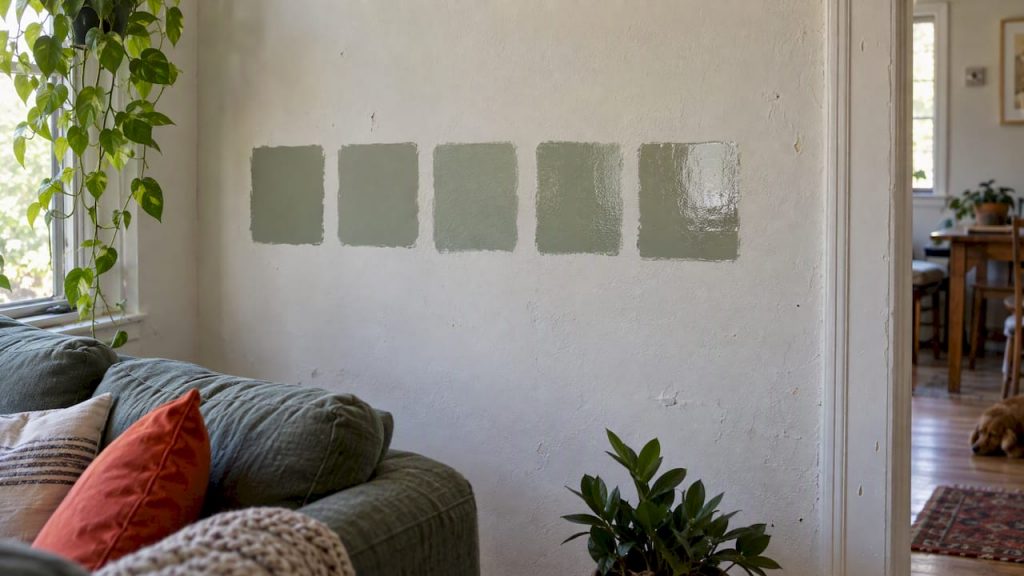
Compare five paint finishes, choose the right sheen for walls or trim, and get practical swatch and prep advice with a note on VOCs in Canada for DIYers.
For most walls, we recommend eggshell or satin; for trim and cabinets, semi-gloss or high-gloss works better because lower sheen hides flaws while higher sheen stands up to cleaning. The five finishes you’ll meet in any paint aisle are matte (flat), eggshell, satin, semi-gloss, and high-gloss, and the choice boils down to one trade-off: softness versus scrubbability.
TL;DR:
- Matte or flat paint conceals patched drywall and ceiling texture, but avoid it on busy walls because scrubbing can leave dull or shiny marks.
- Satin resists moisture and scuffs better than eggshell, making it suitable for bathrooms, kitchens, hallways, and children’s rooms that need regular wiping.
- Sheen labels vary by brand, so paint 12 by 12 inch swatches directly on walls and inspect them in morning, afternoon, and evening light.
- Clean, lightly sand, and prime the surface before painting; sound preparation can reduce flaws that show through even forgiving matte finishes.
- Water based acrylic or latex paints generally dry faster and emit less odor than oil based paints, while oil based formulas cure harder.
Table of Contents
- 1. What makes each paint finish different?
- 2. How sheen trades off hiding flaws against durability
- 3. Which finish fits which room and surface?
- 4. A quick checklist before you buy the paint
- 5. Our team’s hands-on test-swatch and prep tips
- 6. What causes the chemical differences between finishes
- 7. How finish changes the way color and light look
- 8. Tools and techniques for applying different finishes
- 9. How to clean and maintain each finish over time
- 10. Common mistakes homeowners make with paint finishes
- 11. Weighing appearance against durability
- FAQ
- Sources
- Grow your reach with Lizard’s Lunch advertising
1. What makes each paint finish different?
Every finish on the shelf sits somewhere on a sliding scale between soft and shiny, and that position changes how a wall looks and how it holds up over the years.
Matte (flat) paint has almost no shine. It gives walls a soft, velvety look that hides nail holes, uneven drywall, and old patch jobs beautifully. The trade-off is durability: matte marks easily and can be tough to wipe clean without leaving a dull spot behind.
Eggshell has a faint glow, roughly the sheen of an actual eggshell. It is often held up as the all-around winner for lived-in rooms because it balances a smooth appearance with enough wipeability for daily life, which is why industry guidance consistently points homeowners toward it as the default wall finish.
Satin steps up the shine a notch further and reads as smooth and slightly pearly. It resists moisture and scuffs better than eggshell, which makes it a favorite for hallways, kids’ rooms, and bathrooms where a little extra toughness matters.
Semi-gloss has a noticeable shine that reflects light and wipes clean with almost no effort. It shows every bump and brushstroke underneath, so it works best on smooth surfaces like trim, doors, and cabinets rather than broad wall expanses.
High-gloss is the shiniest option, with a mirror-like finish that is prized for furniture, cabinetry, and accent doors. It is the most durable and easiest to clean of the five, but it magnifies every imperfection in the surface beneath it.
A few things to keep in mind as you shop:
- There is no universal industry standard for sheen names, so what one brand calls eggshell can look closer to another brand’s satin.
- Manufacturers measure gloss level differently, which is why buying guides recommend testing before committing to a full room.
- Some newer matte formulas are built to be more washable than traditional flat paint, blurring the old durability rules.
- Water-based (acrylic/latex) and oil-based paints behave differently even within the same sheen category, affecting dry time, odor, and long-term finish.
Formulation matters as much as sheen label. A water-based satin and an oil-based satin can look and perform differently side by side, so the base of the paint, not just the sheen name, shapes the final result.
2. How sheen trades off hiding flaws against durability
The rule of thumb is simple: the lower the sheen, the more it hides, and the higher the sheen, the more it survives cleaning. Light bounces off a glossy surface, which draws the eye straight to every ridge, roller mark, or drywall seam underneath. A flat or matte finish scatters that light instead, smoothing out the visual noise.
Cleanability runs in the opposite direction. A semi-gloss or high-gloss surface sheds grease, fingerprints, and water spots with a damp cloth, while matte paint tends to absorb stains and can burnish or dull if scrubbed too hard.
A few practical markers help you decide which side of that trade-off matters more:
- Choose lower sheen when the wall has visible texture, patches, or uneven drywall you’d rather not highlight.
- Choose higher sheen when the surface gets touched, bumped, or wiped often, such as near light switches or in a mudroom.
- Choose a mid-range sheen like satin when you want some wipeability without the glare of semi-gloss.
Pro Tip: If your walls are freshly patched and sanded smooth, a little extra prep lets you get away with a lower sheen, giving you that softer look without sacrificing much durability.
3. Which finish fits which room and surface?
Once you understand the hide-versus-durability trade-off, matching finishes to rooms gets straightforward.
- Ceilings almost always call for matte or flat, since ceilings see little contact and benefit most from hiding texture and uneven paint application.
- Living rooms and bedrooms usually do well with eggshell, or matte if the walls are in excellent condition and photographed often.
- Kitchens and bathrooms benefit from satin or semi-gloss, where moisture and grease make cleanability the priority; our bathroom color guide walks through finish-and-color pairings for humid spaces.
- Hallways and kids’ rooms lean toward satin for its scuff resistance, or eggshell when easy touch-ups matter more than maximum durability.
- Trim, doors, and cabinets call for semi-gloss or high-gloss, which wipes clean easily and gives crisp, defined edges against wall colors.
4. A quick checklist before you buy the paint
Before you commit to a gallon, walk through a short mental checklist that saves time and repainting later.
- Look closely at the surface: patched, textured, or older walls hide flaws better under lower sheen.
- Decide how often the wall gets touched or cleaned, since frequent contact points toward higher sheen.
- Paint large test swatches directly on the wall and view them in morning, afternoon, and evening light before buying full cans.
- Box (mix) multiple cans of the same color together in one bucket to avoid subtle batch differences, and set aside a labeled touch-up can for later.
- Favor water-based, low-VOC formulas and keep the room ventilated while painting and drying, following Health Canada’s guidance on indoor air quality where VOC exposure is a concern.
Pro Tip: Paint your test swatch on an actual wall, not a scrap board. Wall texture and room lighting change how sheen reads far more than a sample card ever shows.
5. Our team’s hands-on test-swatch and prep tips
We have picked up a few shortcuts worth borrowing before your next project. We always recommend painting a swatch at least 12 inches by 12 inches directly on the wall, then photographing it at different times of day since natural and artificial light shift how a sheen reads dramatically.
- Box multiple cans together in a larger bucket before rolling, which smooths out tiny color and sheen variations between batches.
- Label and set aside a small jar of leftover paint for touch-ups, since repainting an entire wall over one scuff rarely matches seamlessly.
- Lean toward water-based acrylic or latex paints for faster drying and lower odor, a point Environment and Climate Change Canada tracks as part of its work on VOC emissions from architectural coatings.
- Clean, lightly sand, and prime a wall before painting. Good prep often lets you choose a softer, lower sheen without worrying about marks showing through.
6. What causes the chemical differences between finishes
Sheen level comes down to the ratio of binder, pigment, and additives inside the can. More binder relative to pigment creates a smoother, glossier surface as the paint dries, because binder forms a continuous film that reflects light evenly. Flatter finishes carry a higher proportion of matting agents and pigment, which roughen the dried surface at a microscopic level and scatter light instead of reflecting it.
That same ratio affects durability. A paint film with more binder resists scuffing and wipes clean more easily, which is why glossier finishes tend to hold up better under repeated contact. Flatter finishes, with less binder holding the pigment in place, are more prone to absorbing stains and showing burnish marks when scrubbed.
Formulation base matters too. Water-based acrylic and latex paints generally dry faster and emit less odor than oil-based alternatives, while oil-based paints often cure into a harder, more durable film, a distinction that matters as much as the sheen name on the can.
7. How finish changes the way color and light look
Sheen does not just affect durability. It changes how a color reads in the room. A glossier finish reflects more light, which can make a color appear brighter, more saturated, or even slightly different in hue depending on the angle you view it from. A matte finish absorbs more of that light, giving the same paint color a softer, more muted appearance.
This matters most in rooms with big windows or strong overhead lighting, where a semi-gloss wall might bounce glare back at you throughout the day, while the same color in eggshell stays calm and even. Designers often choose finish and color together for this reason, since a shade that looks rich in matte can look washed out or overly bright in satin or semi-gloss. For more on how color and sheen interact in specific palettes, our partners at Art in Lifestyle cover accent wall pairings that play with exactly this kind of light and finish interaction.
8. Tools and techniques for applying different finishes
Higher-sheen paints show brush and roller marks more than flat paint does, so your tools matter more as sheen increases. For semi-gloss and high-gloss trim work, a high-density foam roller or a quality synthetic brush gives a smoother lay-down than a thick nap roller, which can leave stippling visible once the paint dries glossy.
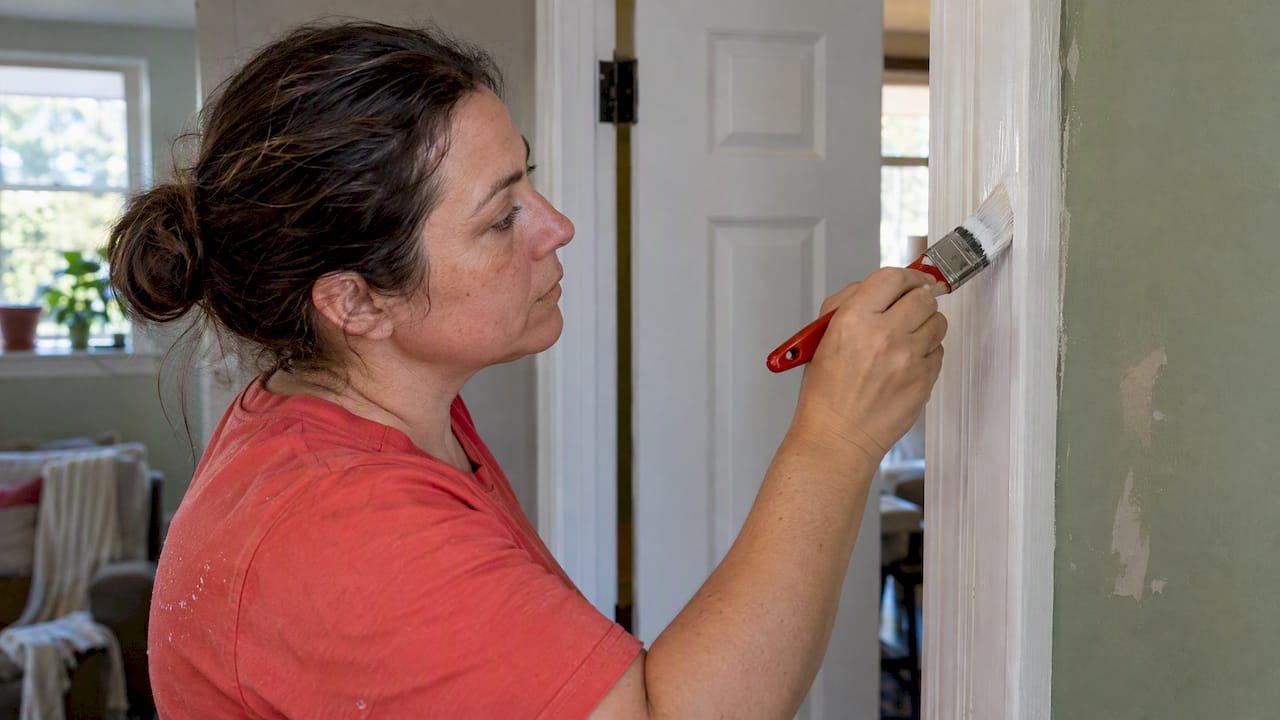
For matte and eggshell walls, a standard 3/8 inch nap roller works well and is more forgiving of minor technique inconsistencies. Satin falls in between, and a medium nap roller paired with steady, overlapping strokes helps avoid visible lap marks.
Whatever the finish, work in manageable sections and keep a wet edge, meaning you blend each new stroke into the still-wet paint from the last one rather than letting edges dry before you continue. This single habit prevents the blotchy look that shows up most on satin, semi-gloss, and high-gloss surfaces.
9. How to clean and maintain each finish over time
Matte and flat walls need the gentlest touch. A soft, dry cloth or a barely damp sponge lifts light dust and marks, but scrubbing can burnish the surface and leave a shinier patch behind.
Eggshell tolerates a damp cloth with mild soap for everyday marks, though it is still worth avoiding abrasive sponges that can dull the finish unevenly. Satin handles more frequent wiping and holds up well to a soft brush or sponge with warm water and dish soap, which is part of why it works so well in bathrooms and hallways.
Semi-gloss and high-gloss are the easiest to maintain. Both wipe clean with a damp cloth and mild cleaner, standing up to grease, fingerprints, and regular scrubbing without losing their shine, which is exactly why they remain the standard choice for kitchen cabinets and trim.
10. Common mistakes homeowners make with paint finishes
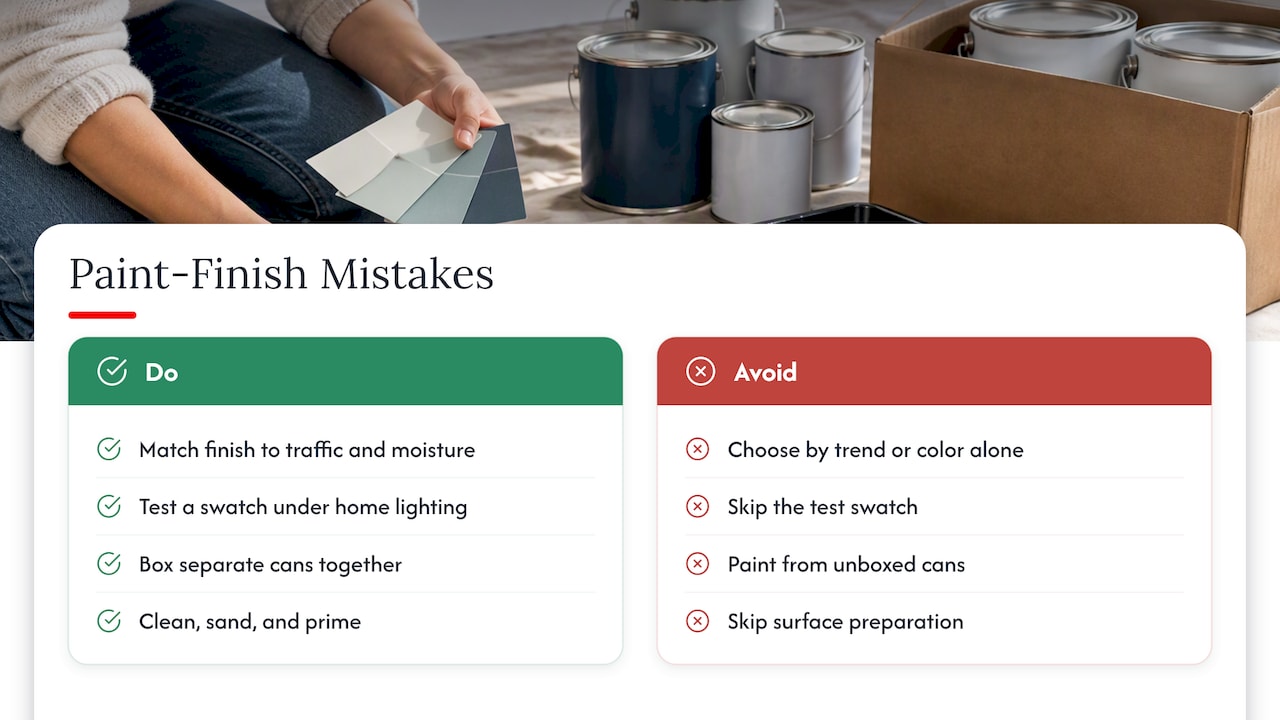
The most common mistake is picking a finish based on trend or color alone, without considering the room’s traffic or moisture. A gorgeous matte accent wall in a busy hallway will show scuffs within months.
Another frequent error is skipping the test swatch. A color card under store lighting looks nothing like the same paint on your wall under your own windows and lamps, and sheen amplifies that gap even further. Painting straight from separate cans without boxing them together is another habit that leads to subtle streaks or patches where one can’s batch doesn’t quite match the next.
Finally, many people assume prep does not matter if they are choosing a forgiving low-sheen paint. Skipping cleaning, sanding, or priming can leave dust and stains trapped under even the softest matte finish, shortening how long the paint job looks fresh. Our guide on prepping a room before painting walks through the steps that make any finish perform closer to its potential.
11. Weighing appearance against durability
We lean toward letting the room’s job decide the finish, not the trend of the moment. A guest room or a wall you photograph often can afford the softer look of matte or eggshell, since low traffic means less wear to worry about.
A family kitchen, a rental, or a humid bathroom deserves the extra durability of satin or semi-gloss, even if it means a touch more shine than you’d pick for looks alone. When you’re genuinely unsure, test a swatch and lean toward the more durable option. It is easier to live with a little extra sheen than to repaint a wall that scuffed within a year.
— Alexander
FAQ
Which paint finish should I use?
Eggshell or satin works for most interior walls because both balance a smooth look with reasonable cleanability. Reserve semi-gloss or high-gloss for trim, doors, and cabinets, and save matte for ceilings or low-traffic rooms where hiding imperfections matters more than wiping them down.
What are the three main types of paint finishes?
Many guides simplify the lineup to flat, satin, and gloss, though most paint lines actually offer five distinct levels: matte, eggshell, satin, semi-gloss, and high-gloss. Definitions vary by manufacturer, so checking the actual sheen on a sample card matters more than the category name.
How can I tell if my paint is eggshell or satin?
Look at how light reflects off the dry surface: eggshell has a faint, low glow similar to an actual eggshell, while satin reflects noticeably more light and looks smoother or slightly pearly. Testing a small swatch of each under your room’s lighting is the most reliable way to tell them apart, since manufacturer sheen labels aren’t standardized.
What is the difference between matte and sheen paint?
Matte paint has little to no shine and absorbs light, which hides surface flaws but makes it harder to wipe clean. Higher-sheen finishes like satin, semi-gloss, and high-gloss reflect more light, which shows imperfections more but holds up far better to cleaning and everyday wear.
Sources
- Indoor air reference levels for chronic exposure to volatile organic compounds (Health Canada) — Summary document
- Interior paint: A guide to buying the best paints for your home (Architectural Digest)
Grow your reach with Lizard’s Lunch advertising
Choosing the right paint finish comes down to matching sheen to how a room actually gets used, and the same logic applies to getting your own business in front of the right audience. If you make home products, offer painting or renovation services, or sell anything homeowners search for while planning a project like this one, we can put your message in front of engaged readers through Banner Ads and Guest Post placements.
We work with businesses across home improvement, lifestyle, and consumer goods to place content and display advertising where readers are already looking for practical advice. Reach out through our advertising page to talk about banner placement or a guest post that puts your brand in front of readers planning their next home project.

















Leave a Comment
Your email address will not be published. Required fields are marked with *