
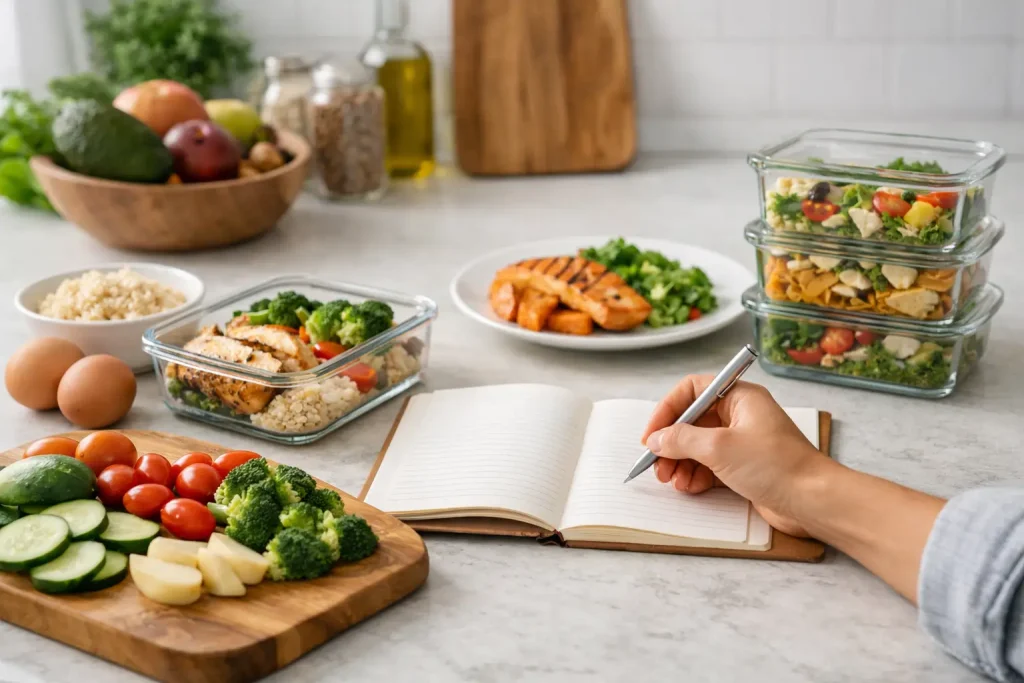
This guide to meal planning basics shows how to build flexible weekly menus, shop with purpose, cut food waste, and make busy nights easier with less stress.
A dinner plan does not need color-coded containers, seven new recipes, or a flawless Sunday afternoon. At its best, a guide to meal planning basics is simply a way to answer one tiring daily question before everyone is hungry: “What are we eating?” A workable plan saves time at the store, gives groceries a purpose, and leaves room for the nights when takeout or scrambled eggs are the real answer.
Start With Your Real Week, Not Your Ideal One
The most common meal-planning mistake is planning for the version of life where every evening is calm and every recipe gets made exactly as written. Start with what your calendar actually looks like instead. A late work meeting, a child’s practice, a long commute, or a weekend event should influence the menu as much as your food preferences do.
Look at the next seven days and identify the nights that need fast meals, the nights you can cook, and the nights you will likely eat elsewhere. For many households, planning four or five dinners is more realistic than planning seven. Leftovers, freezer meals, breakfast for dinner, and one flexible night can cover the rest.
It also helps to choose meals by effort level. Put a sheet-pan dinner, tacos, pasta, or a slow-cooker meal on packed nights. Save a new recipe or longer project for the evening when you have time and interest. Meal planning should reduce pressure, not turn dinner into another appointment you can fail.
Guide to Meal Planning Basics: Choose a Simple System
There is no single best method. The right system depends on your schedule, household size, cooking confidence, and budget. What matters is being able to see the plan and use it when the week gets busy.
A paper notepad on the refrigerator works well for people who like a visible reminder. A phone note is convenient when several people share shopping duties. A calendar app can be useful for families that already organize their week digitally. Keep the format simple enough that you will update it, rather than abandoning it after two weeks.
Instead of assigning a complicated recipe to every day, try a loose structure. You might choose one chicken meal, one vegetarian meal, one pantry-based dinner, one leftover night, and one meal built around sale produce or a favorite family request. This creates variety without requiring a new strategy every week.
Theme nights can help beginners make choices faster. Taco Tuesday is popular for a reason, but the theme can be broader: Mexican-inspired meals, pasta night, soup and sandwich night, or grain-bowl night. The ingredients can change while the decision-making stays easy.
Build Meals Around Ingredients You Will Actually Use
A smart meal plan begins with what is already in the kitchen. Before making a list, check the refrigerator, freezer, and pantry. That half bag of rice, frozen broccoli, canned beans, and rotisserie chicken may already be most of a meal.
Next, pick a few ingredients that can appear in more than one dinner. If you buy bell peppers, use them in fajitas one night and omelets or grain bowls later in the week. Roast extra sweet potatoes for tacos, salads, or lunch bowls. A bag of spinach can go into pasta, eggs, and smoothies before it wilts in the crisper drawer.
This approach lowers food waste and can trim grocery costs, but it has a trade-off. Repeating ingredients does not mean repeating the same meal. Change the sauce, seasoning, or format to keep dinners from feeling too similar. Ground turkey can become chili, lettuce wraps, or pasta sauce. Chickpeas can work in a curry, a chopped salad, or a crispy sheet-pan dinner.
When choosing recipes, consider the full ingredient list, not just the photo. A meal that requires one specialty sauce, three fresh herbs, and a separate side dish may be worth it for a weekend, but it can make a routine week more expensive and complicated.
Use the protein, produce, and pantry formula
For quick planning, build most dinners from three parts: a protein, a vegetable or fruit, and a filling pantry or freezer staple. Protein may be chicken, eggs, beans, tofu, fish, or leftover meat. The produce might be fresh, frozen, or canned. The staple could be rice, potatoes, tortillas, pasta, bread, or noodles.
This formula is not a nutrition rulebook. It is a practical way to look at a partly stocked kitchen and see dinner options. A bean-and-cheese quesadilla with salsa and fruit counts. So does baked salmon with frozen green beans and potatoes.
Make a Grocery List That Matches the Plan
Once the meals are selected, write down every ingredient you need, then cross off what you already have. Group the remaining items by store section: produce, dairy, meat and seafood, pantry, frozen, and household supplies. This small step reduces wandering and impulse buying.
Be realistic about quantities. Buying a large package can be a good value only if you have a plan to use or freeze the extra portion. If your household rarely finishes a giant box of greens, the lower price per ounce may not be a real savings.
Sales can shape a meal plan, but they should not control it completely. A discounted cut of meat is useful if it fits a meal you would enjoy making. It is less useful if it sits in the freezer for six months because no one knows what to do with it.
Online grocery pickup can be especially helpful for people trying to stay on budget. It makes substitutions and fees part of the decision, though, so compare the total cost with the value of saving time. For some households, the convenience is worth it. For others, a focused in-store trip works just as well.
Prep the Parts That Create Friction
Meal prep and meal planning are related, but they are not the same thing. You do not need to cook every meal in advance. Often, the most useful prep is handling the small tasks that make a weeknight recipe feel harder than it is.
Wash produce, chop onions or peppers, cook a pot of grains, boil eggs, or portion snack foods if those steps will make your week easier. You can also marinate chicken, portion freezer ingredients for a slow-cooker meal, or shred a rotisserie chicken for later use. Keep food safety in mind: refrigerate perishables promptly, use prepared foods within a reasonable time, and freeze what will not be used soon.
Avoid spending hours prepping foods you may not want by Thursday. A mix of ready-to-use ingredients and minimal advance cooking is often more flexible than a refrigerator full of identical containers.
Plan for Leftovers and Backup Meals
Leftovers work best when they are planned, not treated as an accidental obligation. Cook extra chili, soup, roasted vegetables, or protein on a night when you already have the kitchen going. Then assign it a purpose: lunch the next day, a leftover dinner, or a component for another meal.
Keep a few backup options on hand for plans that change. Frozen pizza, canned soup, boxed pasta, eggs, frozen dumplings, or a favorite shelf-stable meal can prevent an expensive last-minute order. These are not signs that the plan failed. They are part of a plan built for real life.
A good backup meal has ingredients you enjoy, takes little effort, and does not depend on produce that spoils quickly. The goal is to create an easy off-ramp when energy, time, or motivation disappears.
Review What Worked Before Planning Again
At the end of the week, take two minutes to notice what happened. Which dinner was easy enough to repeat? What ingredients went unused? Did you schedule too many cooking nights, or did everyone enjoy having a planned leftover night?
Use those answers to improve the next plan instead of starting from scratch. Keep a running list of reliable meals your household likes, sorted by quick, low-cost, freezer-friendly, and company-worthy options. Over time, meal planning becomes less about searching for ideas and more about choosing from a personal menu that already fits your life.
The best plan is not the most impressive one. It is the one that gets food on the table more often, wastes less of what you buy, and gives you a little more breathing room when the day runs long.


















Leave a Comment
Your email address will not be published. Required fields are marked with *