

Transform your space with our step by step home renovation guide for 2026. Learn planning tips, avoid common mistakes, and achieve your dream home!
A step by step home renovation is the process of transforming your living space through a structured sequence of phases: planning, preparation, construction, and finishing work. Done right, it turns what feels like an overwhelming project into a series of manageable, satisfying milestones. Whether you’re tackling a single bathroom refresh or a full-home remodel, the difference between a smooth project and a costly disaster almost always comes down to how well you planned before the first nail was driven. This guide walks you through every phase of the renovation process, from defining your vision to signing off on the final inspection, with honest advice on where most homeowners go wrong.
How to plan your step by step home renovation
Scope clarity is the single biggest predictor of renovation cost and timeline. Before you call a contractor or pick a paint color, you need a written definition of exactly what is changing and what is staying. Vague goals like “update the kitchen” lead to scope creep, budget overruns, and frustrated relationships with your contractor. A precise scope statement, such as “replace cabinets, countertops, and appliances while keeping the existing layout,” gives everyone a shared target.
Setting a realistic budget with contingency
Budget planning is where most homeowners underestimate their project. A 15 to 20% contingency is the industry standard for absorbing unexpected costs, and it exists for good reason. Hidden water damage, outdated wiring behind walls, and supply chain delays are not rare surprises. They are routine. Frame your budget as a range, not a fixed number, and treat the contingency line as money already spent.
| Budget Category | Recommended Allocation |
|---|---|
| Core construction and labor | 50 to 60% of total budget |
| Materials and finishes | 20 to 30% of total budget |
| Design and permitting fees | 5 to 10% of total budget |
| Contingency reserve | 15 to 20% of total budget |
Tools like Houzz, BuildZoom, and HomeAdvisor provide regional cost benchmarks that help you stress-test your numbers before committing. Apps like Buildertrend and CoConstruct are popular for tracking project budgets and milestones once construction begins.
Hiring professionals vs. going DIY
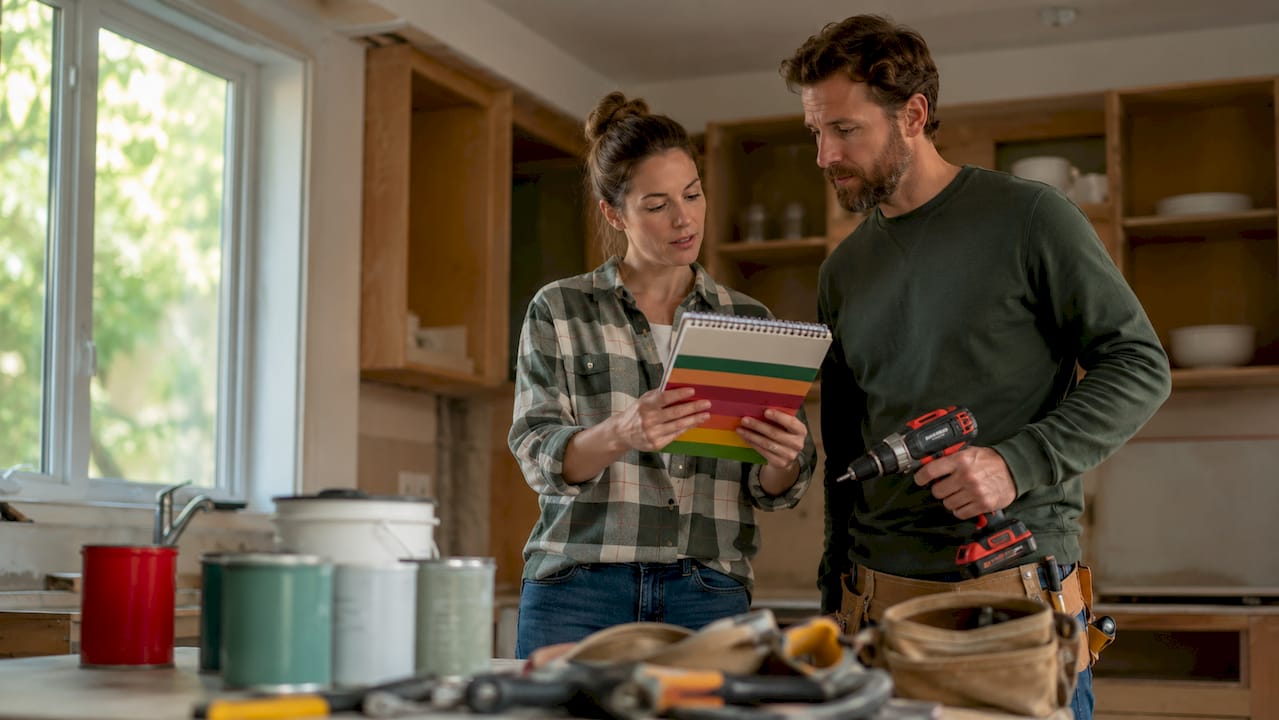
Deciding what you will handle yourself and what requires a licensed professional is a critical early decision. Structural work, electrical panel upgrades, and plumbing tie-ins carry real safety and legal consequences when done incorrectly. A good home remodeling guide will always tell you to be honest about your skill level before committing to DIY on high-stakes tasks. For cosmetic work like painting, tiling a backsplash, or installing trim, confident DIYers can save significant money.
Permits, materials, and timeline milestones
Permits are required for structural changes, plumbing and electrical work, finishing unfinished spaces, and window or door modifications. Skipping permits does not save money. It creates liability when you sell, voids homeowner’s insurance claims, and can require you to tear out completed work for inspection. Pull the permits. It is that simple.
Material lead times are another planning trap. Ordering long-lead materials one to three months before your start date prevents the most common construction delay: waiting on a custom cabinet order or a specialty tile that is backordered for six weeks. Confirm lead times with your supplier the moment you finalize selections.
Pro Tip: Create a shared project folder in Google Drive or Notion with your permit documents, contractor contracts, material receipts, and inspection records. This single habit saves hours of searching and protects you if disputes arise.
What are the construction phases of a home renovation?
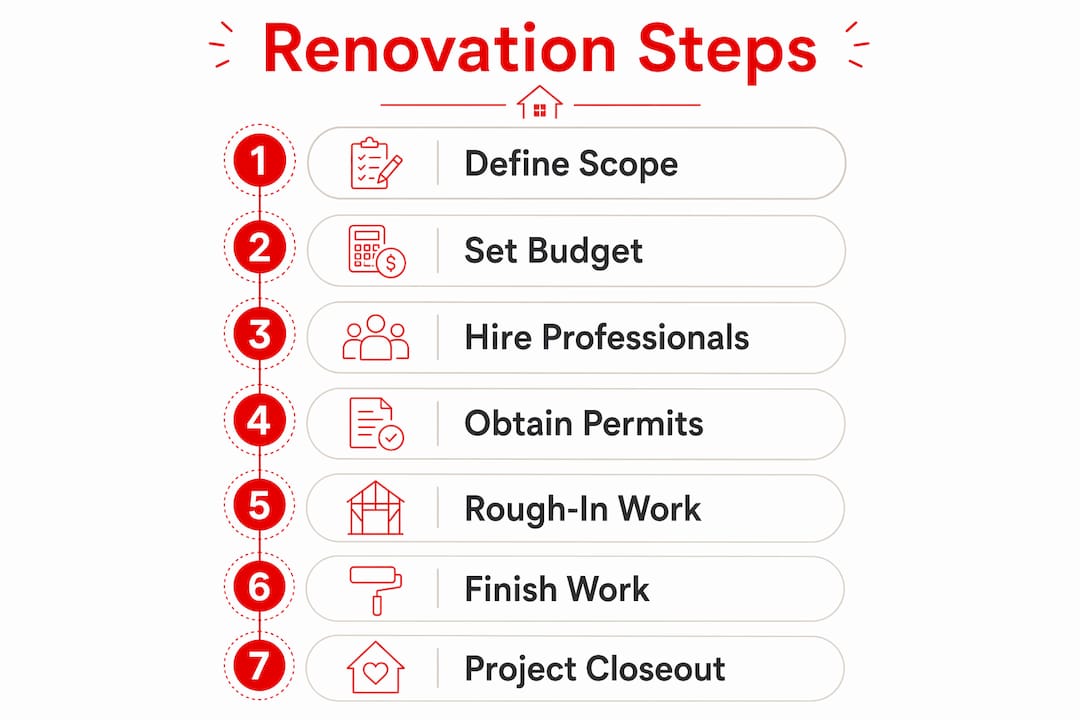
A full-home renovation typically runs through 19 distinct steps, with pre-construction lasting 4 to 12 weeks and the construction phase running 2 to 12 months depending on scope. Understanding this sequence helps you set realistic expectations and catch sequencing errors before they become expensive. Here is how the construction phase unfolds in order:
- Site preparation. Protect floors, cover furniture, and establish a debris staging area. Set up temporary utilities if needed.
- Demolition. Remove existing fixtures, cabinets, flooring, and drywall in the designated areas. Manage debris with a rented dumpster or scheduled haul-away.
- Structural and framing work. Address any load-bearing wall modifications, beam installations, or new partition framing. This is the skeleton of your renovation.
- Mechanical, electrical, and plumbing rough-ins. Run new wiring, ductwork, and pipes before walls close. This phase requires licensed trades in most jurisdictions.
- Rough-in inspections. Electrical and plumbing rough-ins require inspections before walls close. Failing an inspection here means opening walls after drywall, which multiplies your labor cost.
- Pre-drywall walkthrough. Before any drywall goes up, walk every room with your contractor. Pre-drywall walkthroughs verify framing straightness, outlet locations, and that protective measures are in place. This is your last chance to catch hidden problems at zero cost.
- Insulation installation. Install batt, spray foam, or rigid insulation depending on your climate zone and energy goals.
- Drywall hanging and finishing. Hang, tape, mud, and sand. This phase is dusty and time-consuming. Budget at least two to three days for each mud coat to dry properly.
- Priming and painting. Prime before finish coats. Skipping primer on new drywall creates uneven sheen and wasted paint.
- Window and door installation. Set new windows and exterior doors before interior finish work begins to avoid damage to completed surfaces.
- Flooring installation. Hardwood, tile, and luxury vinyl plank each have specific acclimation and substrate requirements. Follow manufacturer specs to avoid buckling or cracking.
- Trim and millwork. Install baseboards, door casings, crown molding, and built-ins after flooring is down.
Pro Tip: Sequence your subcontractors so that each trade finishes before the next begins. Electricians and plumbers working in the same space simultaneously create confusion, damage each other’s work, and slow both crews down.
Rough-in vs. finish work: what changes at each stage
| Phase | Key Tasks | Inspection Required |
|---|---|---|
| Rough-in | Wiring, pipes, ductwork, framing | Yes, before drywall |
| Pre-drywall | Insulation, blocking, fire stops | Often yes |
| Finish | Fixtures, flooring, trim, paint | Final inspection |
Proper sequencing of electrical, plumbing, and HVAC rough-ins prevents the most costly delays in any renovation project. Getting this order wrong is the number one cause of rework charges on residential remodels.
What does finishing work and project closeout involve?
Finishing work is where your renovation transforms from a construction site into a home. It is also where attention to detail separates a polished result from one that looks rushed. The renovation project steps in this phase are less about heavy labor and more about precision, patience, and documentation.
- Cabinetry and countertops. Install upper cabinets before lower ones to avoid scratching finished bases. Countertop templating happens after cabinets are set and level, so do not rush this sequence.
- Fixture installation. Plumbing fixtures, light fixtures, and hardware go in after painting is complete. Installing them before paint means masking or risking damage to finished surfaces.
- Appliance installation and testing. Connect and test every appliance before your contractor demobilizes. A dishwasher leak discovered two weeks after the crew leaves is your problem to solve alone.
- Punch list management. Walk every room with your contractor and document every incomplete or unsatisfactory item in writing. A punch list is not a criticism. It is a professional tool that protects both parties. Use photos with timestamps for every item.
- Final inspections and approvals. Schedule your final inspection with the local building department. Your certificate of occupancy or final sign-off is the legal confirmation that the work meets code.
- Post-renovation cleaning. Construction dust penetrates everywhere. Hire a professional post-construction cleaning crew or plan for a thorough deep clean before moving furniture back in. HEPA vacuums and microfiber cloths are your best tools here.
- Documentation and warranties. Collect all appliance manuals, warranty cards, paint color codes, and contractor warranties into one physical or digital folder. Future you, and future buyers, will be grateful.
The home renovation checklist for closeout is short but non-negotiable. Every item on that punch list must be resolved before final payment is released to your contractor. That leverage disappears the moment you write the last check.
Common DIY mistakes and safety considerations
DIY mistakes include ignoring permits and inspections, and attempting DIY electrical work, both of which increase safety risks and the likelihood of costly rework. The enthusiasm that makes DIY home improvement so rewarding can also lead homeowners to underestimate what certain tasks actually require. Knowing where to draw the line protects your home, your family, and your investment.
“Some renovation elements require professional skills and cannot be safely DIYed. Electrical panel work, load-bearing wall removal, and gas line modifications are not learning opportunities. They are licensed trades for a reason.” — Martha Stewart
Older homes carry a specific hazard that many DIYers overlook. EPA’s RRP rule requires certified renovators to follow strict lead-safe practices, including containment, cleanup, and recordkeeping, when disturbing lead-based paint in homes built before 1978. If your home predates 1978, test before you demo. The EPA’s “Renovate Right” pamphlet outlines exactly what is required, and ignoring these rules carries significant fines.
Poor sequencing is another silent budget killer. Starting finish work before rough-in inspections pass, or installing flooring before plumbing fixtures are set, creates rework that costs two to three times more than doing it right the first time. A written schedule with dependencies mapped out prevents this entirely.
Pro Tip: Always wear an N95 respirator, safety glasses, and work gloves during demolition. Construction dust contains silica, lead particles in older homes, and fiberglass insulation fibers. None of these are worth a shortcut.
Practical safety gear for any renovation project includes N95 or P100 respirators, ANSI-rated safety glasses, cut-resistant gloves, steel-toed boots, and hearing protection for power tool use. These are not optional accessories. They are the minimum standard for working safely on a job site, even your own.
For a deeper look at avoiding renovation mistakes, Lizardslunch has a dedicated breakdown of the most common sequencing and budgeting errors homeowners make and how to sidestep them before they cost you.
Key takeaways
A successful home renovation depends on defining scope clearly, sequencing construction phases correctly, and never skipping required inspections.
| Point | Details |
|---|---|
| Define scope before budgeting | A precise scope statement prevents cost overruns and contractor disputes throughout the project. |
| Build in a 15 to 20% contingency | Unexpected costs are routine in renovation work, not exceptions, so budget for them from day one. |
| Never skip rough-in inspections | Failing to inspect before drywall closes walls can require tearing out completed work at double the cost. |
| Order long-lead materials early | Confirm supplier lead times and order one to three months ahead to keep your schedule on track. |
| Document everything at closeout | Collect warranties, paint codes, and inspection sign-offs into one folder before releasing final payment. |
Why I think most renovation advice misses the real challenge
People talk about renovation budgets and timelines as if the numbers are the hard part. In my experience, the real challenge is psychological. You will hit a point, usually around week three of construction, where the house looks worse than when you started, the budget feels tight, and the contractor is asking questions you did not anticipate. That moment is where most projects go sideways.
The homeowners who come out of renovations feeling good about the experience are almost always the ones who defined their scope ruthlessly at the start and then gave themselves permission to be flexible on the details. They picked their battles. They let the contractor make judgment calls on things that did not matter and held firm on the things that did.
I have also seen too many people treat the punch list as a confrontation. It is not. It is a shared tool. Contractors who take pride in their work want a punch list because it gives them the chance to finish cleanly. The ones who resist it are telling you something important about how they operate.
The other thing I would tell any homeowner: do not underestimate the value of maximizing your renovation ROI. Not every upgrade adds equal value. Kitchens and bathrooms consistently return more than specialty rooms or luxury finishes. If your budget gets tight, cut the wine cellar before you cut the kitchen countertops.
Renovation is genuinely exciting. Watching a space transform is one of the most satisfying things you can do as a homeowner. Go in with clear eyes, a written plan, and a little patience, and the result will be worth every complicated week.
— Alexander
Start your renovation with the right resources
Planning a home renovation is exciting, and having the right ideas in front of you makes all the difference between a project you love and one you regret. Lizardslunch has put together a rich collection of home upgrade ideas that covers the most impactful improvements you can make to boost both comfort and property value. From smart home technology integrations to structural upgrades that pay off at resale, the guide helps you prioritize where your renovation dollars go. You can also explore home improvement tech ideas to discover the tools and innovations that make modern renovations faster, smarter, and more satisfying from start to finish.
FAQ
What is the first step in a home renovation?
The first step is defining your renovation scope in writing, specifying exactly what changes and what stays. Scope clarity is the single biggest predictor of whether a project finishes on time and on budget.
How long does a full home renovation take?
A full-home renovation typically runs 2 to 12 months in construction, plus 4 to 12 weeks of pre-construction planning. Scope, permit timelines, and material lead times are the biggest variables affecting the total duration.
Do I need permits for a home renovation?
Permits are required for structural changes, electrical and plumbing work, finishing unfinished spaces, and window or door modifications. Skipping permits creates legal liability and can require completed work to be torn out for inspection.
What contingency should I budget for a renovation?
Budget a 15 to 20% contingency on top of your core project cost. Hidden damage, material price changes, and scope adjustments are routine, not rare, so treating the contingency as pre-spent money protects your project from the start.
What is a pre-drywall walkthrough and why does it matter?
A pre-drywall walkthrough is an inspection of framing, rough-in work, and outlet placement before walls close. It is the last opportunity to catch defects at zero additional cost, making it one of the most valuable steps in the entire construction sequence.


















Leave a Comment
Your email address will not be published. Required fields are marked with *