
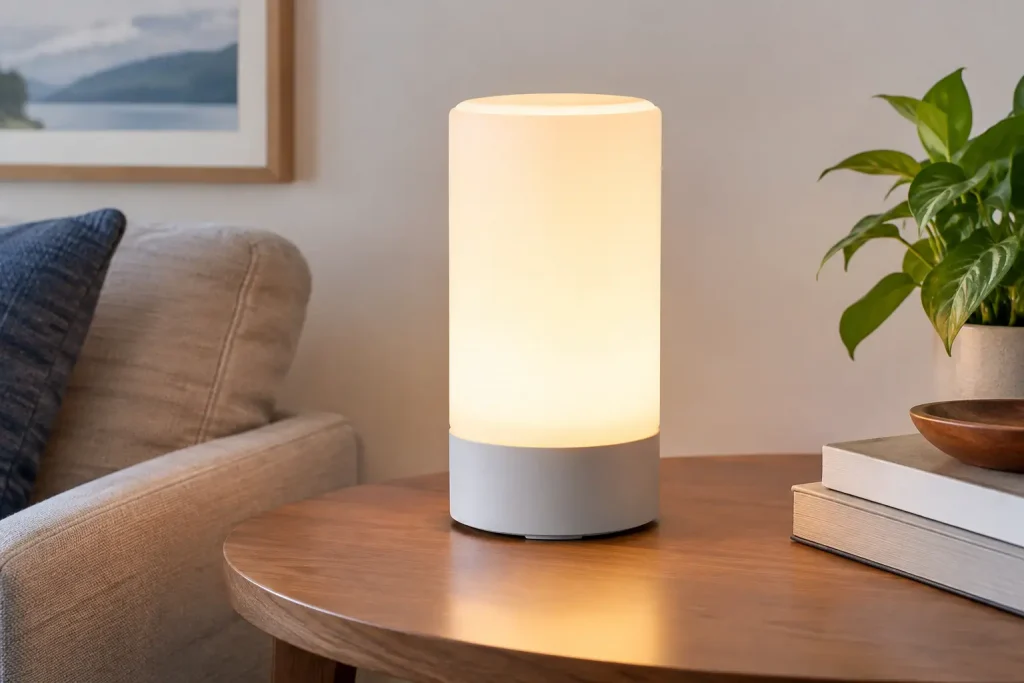
The Govee Table Lamp Classic brings colorful smart lighting to desks and nightstands. See its best uses, trade-offs, and who should buy it before you order.
A table lamp has a difficult job: it needs to be useful when you are reading, flattering when guests arrive, and quiet enough visually that it does not turn a bedroom or office into a gadget showroom. The Govee Table Lamp Classic aims to handle all three with app-controlled color, adjustable white light, and a compact design made for smaller surfaces.
For shoppers building a more flexible home setup, this is not really a replacement for every lamp in the room. It is a targeted lighting upgrade. It works best as a bedside accent, gaming desk light, dorm-room essential, or mood-setting piece for a shelf or side table. Whether it is worth buying comes down to how much you value color control and automation over a traditional lamp’s simpler, more understated look.
What the Govee Table Lamp Classic Does Best
The appeal begins with variety. Rather than committing a room to one bulb temperature or one fixed shade, the lamp lets users shift the atmosphere quickly. A warm, low setting can make a nightstand feel calmer before bed; a brighter neutral or cool white setting can make a desk more functional for morning tasks. Color modes add another layer for movie nights, celebrations, gaming sessions, or simply changing the feel of a familiar room.
Govee’s smart-lighting ecosystem is a major part of the value. Through the companion app, users can generally adjust brightness and colors, choose preset scenes, set timers, and build routines. That means the lamp can dim automatically in the evening or come on at a scheduled time without anyone reaching for a switch. Features can differ by model version, software update, and connection method, so it is smart to check the current product listing for the exact controls and voice-platform compatibility before purchasing.
The compact form factor is another advantage. Floor lamps can solve a lighting problem, but they take up room and tend to become part of the furniture plan. A smart table lamp can make a visible difference without requiring a redesign. Put one next to a monitor, on an entryway console, beside a bed, or near a reading chair, and it can add both practical light and a designed finish.
Where It Fits Best at Home
This lamp makes the most sense where one light needs to do more than one thing. On a nightstand, it can serve as a low-glare wind-down light, a reading lamp, and a soft color accent. The ability to reduce brightness matters here. A lamp that is too intense at bedtime often ends up switched off, which defeats the purpose of having it within arm’s reach.
At a home office, the Govee Table Lamp Classic is better treated as supplemental lighting than the primary source. It can reduce the harsh contrast between a bright monitor and a dark room, add light to a desk corner, or create a clearer boundary between work time and after-hours downtime. For focused work, white-light settings will usually be more useful than dramatic colors. Blue, purple, and red can look great, but they are not always the most comfortable choice for paperwork, video calls, or detailed tasks.
For gaming and entertainment areas, the priorities flip. Color effects and scene presets become the feature rather than the bonus. A small lamp can extend the look of an existing LED setup without putting strips on every wall. It is especially useful for renters or anyone who wants an easier-to-move lighting option. Unlike adhesive light strips, a table lamp can be relocated in seconds when the desk layout changes.
It is also a practical gift category. College students, apartment dwellers, teens with a first bedroom refresh, and smart-home beginners can all get immediate use from a lamp that does not require complicated installation. The setup is usually less intimidating than wiring a switch, replacing a fixture, or configuring multiple bulbs throughout a house.
The Trade-Offs to Consider Before Buying
The biggest trade-off is that smart accent lamps are not always the best choice for pure illumination. If the goal is to brightly light an entire living room, a single compact table lamp is unlikely to be enough. A conventional lamp with a high-output bulb, overhead lighting, or a dedicated task lamp may perform better for large spaces and long reading sessions.
There is also the question of app dependence. Smart controls are convenient, especially for schedules and scenes, but some people prefer a lamp that works perfectly with one physical switch. Before buying, consider who will use it. Guests, children, or less tech-comfortable family members may appreciate clear onboard controls more than a long menu of color options. A good smart lamp should still be easy to turn on and adjust when the phone is charging in another room.
Wi-Fi and app-connected devices also require a little patience at the beginning. Pairing, permissions, account setup, and firmware updates are common parts of smart-home ownership. Once configured, the experience can be very convenient. Still, shoppers who want zero setup should stick with a standard plug-in lamp or a basic dimmable model.
Finally, style is subjective. The modern, illuminated look suits contemporary bedrooms, game rooms, and minimalist desks. In a formal dining room, a vintage-inspired living room, or a traditional bedroom with brass and linen accents, it may feel out of place. Smart lighting looks strongest when it supports the room’s existing personality instead of becoming the only visual statement.
How to Get Better Results From the Lamp
Placement has more impact than most buyers expect. Do not tuck the lamp behind a large monitor or place it where the light shines directly into your eyes. On a desk, set it slightly off to one side so it fills the darker edge of the workspace. On a nightstand, position it far enough from the pillow to avoid direct glare while still keeping the controls accessible.
Start with useful routines instead of trying every animated effect at once. A warm evening schedule and a brighter morning schedule will likely earn more daily use than a novelty scene. If the lamp supports grouped control with other compatible lights, keep the group simple at first. One room, one routine, and one preferred color palette is easier to live with than a dozen automations firing at random times.
For color selection, think in terms of the room’s surfaces. Warm amber, soft pink, and muted orange often look inviting against wood, cream, beige, and warm gray. Blue and violet can create a sharper, more futuristic look around black desks, white walls, and media setups. Full brightness is not always better. Lower intensity often gives colored light a richer appearance while making the room more comfortable.
Who Should Buy the Govee Table Lamp Classic?
This is a strong pick for someone who wants more flexibility from a small lamp and will actually use schedules, dimming, and color settings. It is particularly appealing for bedrooms, desktop setups, apartment living, and entertainment spaces where one fixture needs to adapt throughout the day.
It is less compelling for shoppers who only need a bright reading light, who dislike managing products through an app, or who want a lamp to disappear into a classic decor scheme. In those cases, spending the same budget on a high-quality traditional lamp and a good dimmable bulb may be the better move.
The most satisfying way to use the Govee Table Lamp Classic is not as a flashing centerpiece, but as a light that quietly follows the rhythm of the room: clear and bright when you need to focus, warm when it is time to slow down, and colorful when the occasion calls for a little more personality.















Leave a Comment
Your email address will not be published. Required fields are marked with *