
A practical 3 day Banff plan for Canadian first timers. Book the park pass and Moraine Lake shuttle first, then follow one area per day.
Three days is enough to hit Banff’s highlights if you commit to one area per day and book the logistics before you arrive. Split your time between the Banff townsite (gondola and hot springs), the Lake Louise and Moraine Lake cluster, and a Johnston Canyon or short Icefields Parkway day. Before anything else, lock in your national park pass, your Moraine Lake shuttle reservation if you’re going, and your accommodation. Everything else in this Banff travel guide builds on that order.
TL;DR:
- Booking the Moraine Lake shuttle early is essential, as tickets sell out quickly during peak summer, with many visitors reserving months in advance.
- Park entry passes and accommodation should be secured at least three to six months ahead to avoid limited availability and higher prices.
- Visiting Moraine Lake at sunrise and Lake Louise early in the morning maximizes scenic views and minimizes crowds, with parking filling by 7 a.m. at Lake Louise.
- The Icefields Parkway drive to Bow and Peyto Lakes offers the most dramatic scenery but requires a vehicle and significant driving time, unlike Johnston Canyon, which requires minimal effort.
- Safety precautions include carrying bear spray, wearing layered clothing, packing plenty of water and snacks, and checking trail conditions before embarking on hikes or excursions.
Table of Contents
- Day 1: Banff Townsite, Gondola Rides, and Sunset Lakeside Views
- Day 2: Lake Louise and Moraine Lake — Handling the Shuttle Rules
- Day 3: Johnston Canyon or a Scenic Icefields Parkway Finale
- Booking Essentials: Passes, Shuttles, Roam, and Cars
- Safety, Wildlife, and a Short Packing Checklist
- Where to Stay and Eat on a Short Banff Trip
- Optional Stops for Different Interests
- Getting the Best Photos Without Losing Time
- Altitude and Outdoor Safety Basics
- Where to Eat Without Blowing Your Budget
- Our Take on Adapting This Itinerary
- Advertise With Lizard’s Lunch
- Official Links for Passes and Shuttles
- Sources
- FAQ
Day 1: Banff Townsite, Gondola Rides, and Sunset Lakeside Views
Start easy. Your first day of this Banff itinerary stays close to town, which matters after a travel day.
Morning: Book the Banff Gondola on Sulphur Mountain for the first available slot, ideally before 10 a.m. The ride up plus time at the summit boardwalks runs about 2 to 3 hours, and morning light gives you clearer views before afternoon cloud builds over the peaks.
Midday: Walk Banff Avenue for lunch. You’ll find everything from casual pizza counters to sit-down mountain cuisine, and the strip is compact enough to browse shops between bites. If you want a low-effort cultural stop, the Whyte Museum of the Canadian Rockies takes less than an hour and adds context to everything you’ll see over the next two days.
Afternoon: Drive the Lake Minnewanka Loop, or park at Two Jack Lake for a shorter, quieter stop with mountain reflections and far less foot traffic than the townsite lakes. Parking fills up by midafternoon in peak summer, so aim to arrive before 2 p.m.
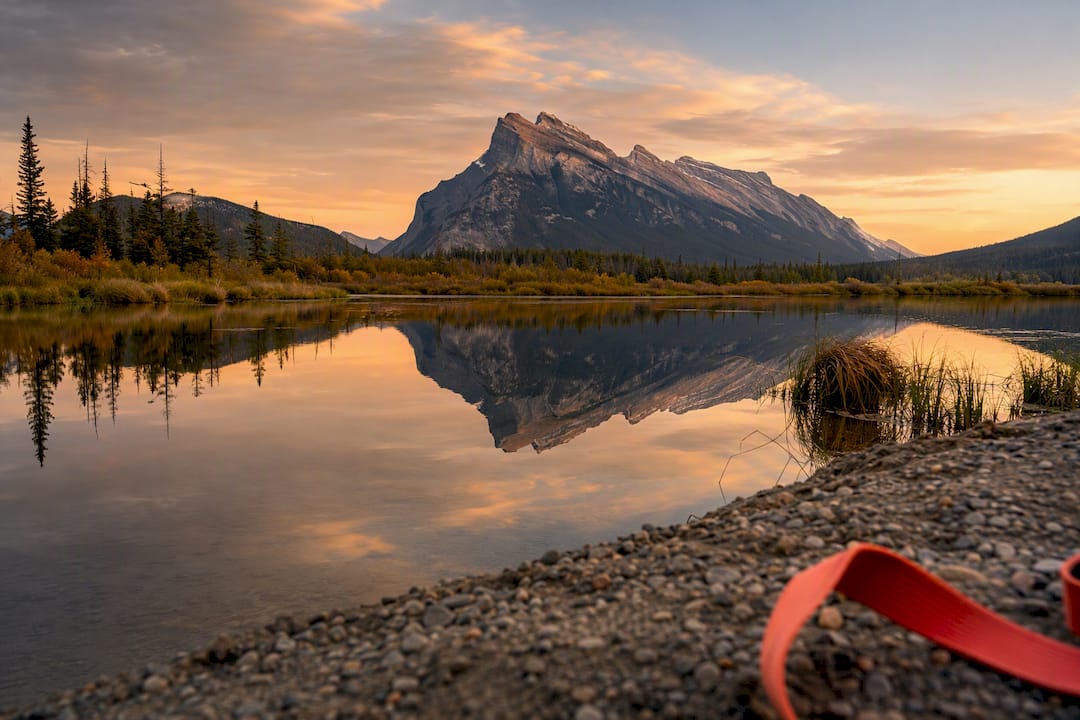
Evening: Close the day at Vermilion Lakes for sunset. The pullouts along Vermilion Lakes Road face west toward Mount Rundle, and it’s a five-minute drive from downtown, so you’re not burning daylight getting there.
- Families with young kids: swap the gondola’s summit trails for the shorter boardwalk loop and add a stop at the Cave and Basin historic site.
- Travelers with limited mobility: the gondola, Banff Avenue, and Vermilion Lakes pullouts all require minimal walking.
- Budget-conscious visitors: skip the sit-down lunch and pack sandwiches for a Two Jack Lake picnic instead.
Pro Tip: Buy your Banff Gondola ticket for a specific time slot online the night before. Walk-up lines in July and August routinely run past an hour, eating into the exact block of morning you need for the rest of the day.
Day 2: Lake Louise and Moraine Lake — Handling the Shuttle Rules
This is the day that makes or breaks a 3-day Banff National Park trip, so treat it as the one requiring the most advance planning.
Personal vehicles are permanently banned on Moraine Lake Road. Parks Canada requires visitors to arrive by shuttle, Roam Transit, or a commercial tour operator, and reservations for the Parks Canada shuttle open in advance and sell out fast during summer. If you’re set on seeing Moraine Lake, book that reservation before you touch anything else on this itinerary.
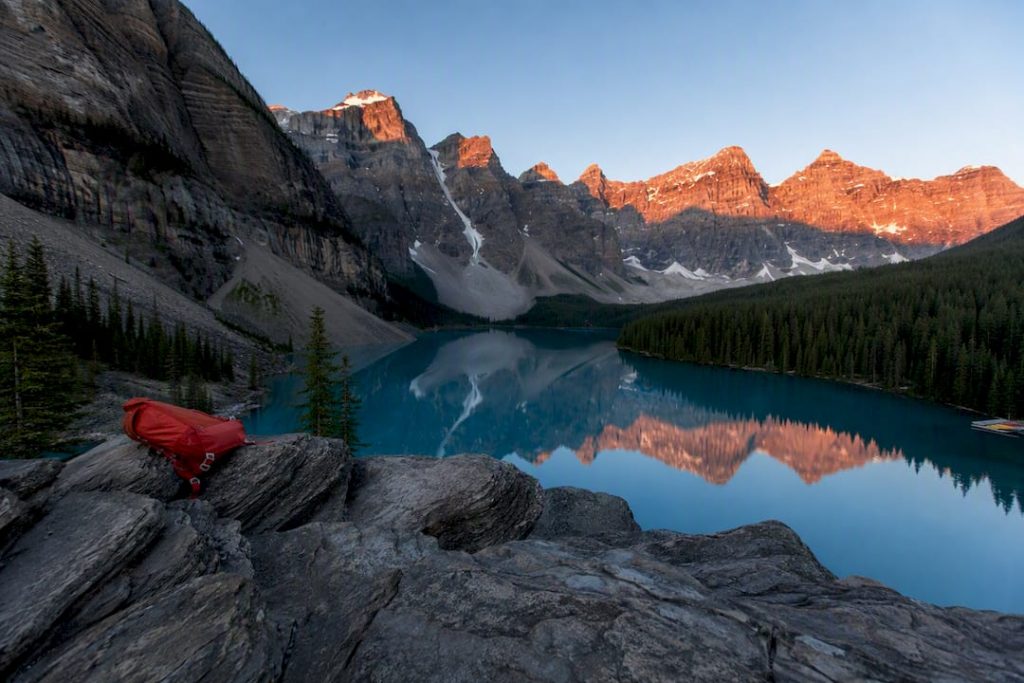
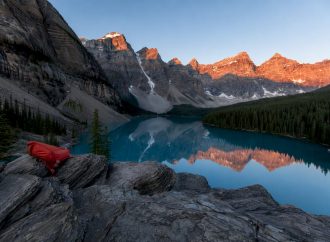
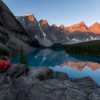
- Sunrise at Moraine Lake’s Rockpile viewpoint. Early light hits the lake’s turquoise water and the Valley of the Ten Peaks before crowds build, and it’s the single most photographed five minutes of most Banff trips. Arriving early in midsummer is not overkill; it’s the difference between an empty viewpoint and a shoulder-to-shoulder one.
- Move to Lake Louise by midmorning. Walk the lakeshore trail, rent a canoe on the lake if the wait isn’t too long, or hike to the Lake Agnes Tea House for a moderate 3.4-mile round trip that gains about 1,300 feet. Budget 3 to 4 hours if you’re doing the hike.
- Use the same shuttle ticket window when possible. Shuttle access often covers both Moraine Lake and Lake Louise in the same day during summer, which is the efficient way to pair the two stops without doubling back to town.
If shuttles sell out: book a commercial tour operator instead, or swap this day with Day 1 if your townsite plans are flexible. Lake Minnewanka, which you may have already seen, is a solid consolation stop if Moraine Lake access falls through entirely.
Major parking lots at Lake Louise fill by 7 a.m. in peak season, one reason public transit and early starts beat driving yourself during July and August. Many seasoned Banff itinerary guides recommend exactly this sunrise-then-Lake-Louise sequence for efficiency, and it’s the one piece of advice worth following without modification.
Day 3: Johnston Canyon or a Scenic Icefields Parkway Finale
Your last day has two honest options, and the right one depends on your energy level and whether you have a car.
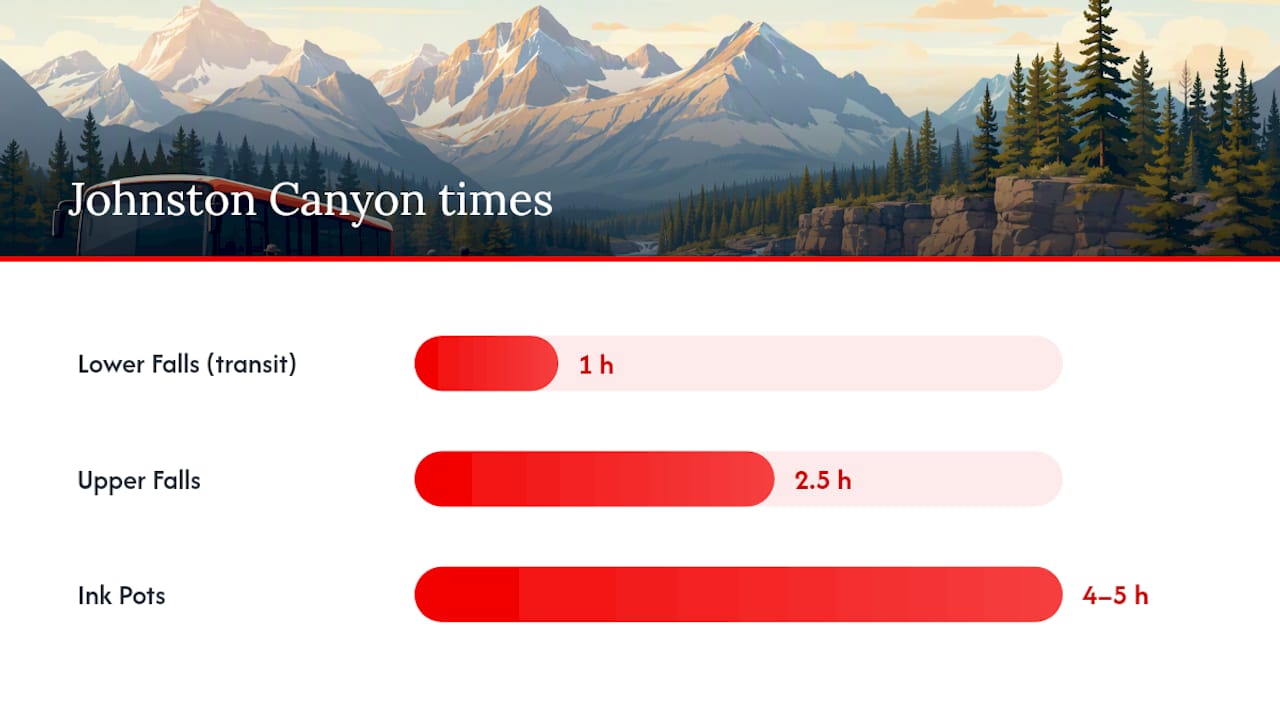
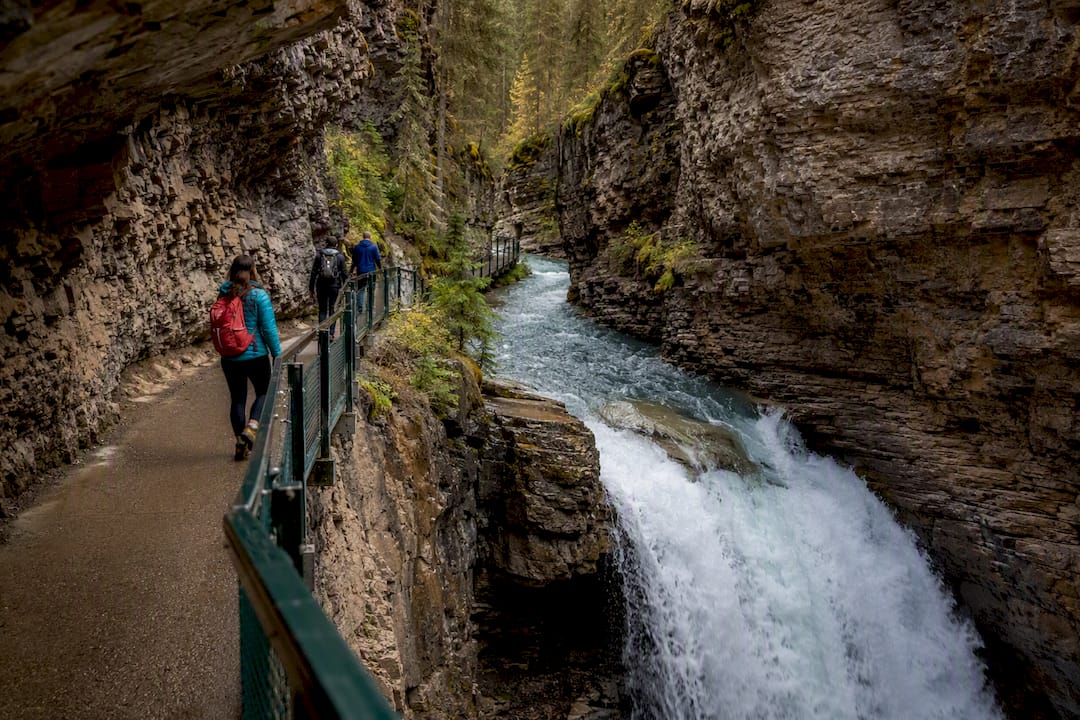
Option A: Johnston Canyon. The walk to the Lower Falls is an easy 1.2-mile round trip on a paved, cliffside catwalk, doable in about an hour. Extend to the Upper Falls and you’re looking at closer to 2.5 hours round trip. Go further to the Ink Pots, a set of cold mineral springs in an open meadow, and plan for 4 to 5 hours total. This is the transit-friendly choice: Roam’s Route 9 runs to Johnston Canyon seasonally, so you don’t need a car.
Option B: A short Icefields Parkway loop. Drive north to Bow Lake and Peyto Lake viewpoint for some of the most dramatic scenery in the entire park, glacier-fed water in a color that looks digitally enhanced until you see it in person. This route delivers more visual payoff per mile but requires a vehicle and eats up more driving time, roughly 2 to 3 hours round trip from Banff to Peyto Lake and back.
Option C: Lake Minnewanka, take two. If you did the loop briefly on Day 1, a relaxed final morning here, kayaking, a short lakeside walk, or just coffee with a view, makes a low-key close to a trip that’s had you moving fast for two days straight.
- Car travelers with energy to spare: Icefields Parkway loop.
- No car or a slower pace preferred: Johnston Canyon via Roam Transit.
- Anyone feeling worn out: Lake Minnewanka, no shuttle or long drive required.
If you’re driving yourself between these stops, a little pre-trip route planning helps. Our road trip planning guide covers how to sequence stops without wasting daylight on backtracking.
Booking Essentials: Passes, Shuttles, Roam, and Cars
Handle these before you arrive, not after you’re standing in a parking lot that’s already full.
- National park entry pass: required for anyone entering Banff National Park. Buy it at a visitor centre or online through Parks Canada before your trip.
- Moraine Lake shuttle: reservations open seasonally through reservation.pc.gc.ca. Set a reminder for the release date and book the moment the window opens; seats disappear within hours during peak weeks.
- Roam Transit: the express route between Banff and Lake Louise, plus Route 9 to Johnston Canyon, run seasonally and remove the parking headache entirely for those two stops.
- Car vs. no car: a vehicle gives you flexibility for the Icefields Parkway and Lake Minnewanka, but you’ll fight for parking at every major stop. Canmore, 20 minutes from Banff, works as a quieter, often cheaper base if hotel inventory in town is tight.
- Accommodation: book months ahead for a June, July, or August visit. Summer inventory in Banff and Lake Louise disappears fast, and last-minute travelers often end up paying premium rates for whatever’s left.
| Logistics Item | Action | When to Book |
|---|---|---|
| Park entry pass | Buy online or at visitor centre | Before arrival |
| Moraine Lake shuttle | Reserve at reservation.pc.gc.ca | As soon as booking window opens |
| Accommodation | Book Banff or Canmore hotel | 3 to 6 months ahead for summer |
| Roam Transit passes | Purchase online or on board | Day-of or ahead |
Safety, Wildlife, and a Short Packing Checklist
Banff is wilderness with a townsite attached, and Parks Canada’s rules exist because the wildlife is genuinely wild. Keep your distance from elk, bighorn sheep, and especially bears, and stay on marked trails; both protect you and the ecosystem.
Bear spray is required for backcountry travel and strongly recommended even for day hikes like the Lake Agnes Tea House trail or the Johnston Canyon extension to the Ink Pots. Know how to use it before you’re on the trail, not after you need it.
Weather swings fast at elevation. Pack layers, a waterproof shell, and sturdy footwear even in July, and expect limited cell service once you’re past the townsite.
- Moisture-wicking layers plus a packable rain shell
- Sturdy hiking shoes, broken in before the trip
- Bear spray, easily accessible, not buried in a bag
- Water, snacks, and a small first-aid kit
- Your park pass and shuttle confirmation, printed or saved offline
Pro Tip: Screenshot your shuttle and pass confirmations before you leave cell coverage. Several parking areas and trailheads around Lake Louise and Moraine Lake have no signal at all.
If you’re bringing a dog, review basic outdoor safety practices for pets before hitting the trails; wildlife encounters and hot pavement both pose real risks that catch owners off guard.
Where to Stay and Eat on a Short Banff Trip
Banff townsite puts you steps from the gondola and evening lake views, but it costs more and books out fastest. Canmore, a short drive away, tends to run quieter and cheaper, and it works well if you’re comfortable with a 20-minute commute each morning.
- Reserve dinner spots in Banff proper at least a day ahead in summer.
- Pack lunches for lake days; picnic tables at Lake Louise and Two Jack Lake save you an hour of driving back to town.
- Pick one dinner to splurge on if you want a sit-down mountain-view meal.
- Families should check for kitchenette units in Canmore to cut food costs across three days.
Optional Stops for Different Interests
If your group wants more than lakes and gondolas, Banff has a handful of worthwhile detours that don’t demand a full extra day.
The Banff Upper Hot Springs make an easy add-on to your townsite day, especially in the late afternoon after the gondola. Soaking in mineral pools with a mountain backdrop is a genuinely relaxing counterpoint to a hiking-heavy itinerary, and it’s a strong option for travelers who want one low-effort, high-payoff stop.
History and culture fans should carve out an hour for the Buffalo Nation Luxton Museum or the Whyte Museum, both of which give context on the region’s Indigenous history and the park’s early tourism era. Neither requires more than an hour, so it slots easily into a Day 1 afternoon.
Winter visitors get an entirely different Banff. If you’re planning this trip outside summer, the Banff Gondola still runs, Lake Louise and Moraine Lake Road close to shuttle service but open to snowshoeing and skating, and Sunshine Village or Lake Louise Ski Resort become the main draws instead. The three-day structure still works; just swap hiking-heavy stops for their winter equivalents.
Families traveling with kids might prioritize the Cave and Basin Historic Site over a longer hike, since it combines a short boardwalk with hands-on history that holds younger attention better than a scenic overlook.
Getting the Best Photos Without Losing Time
The Rockpile viewpoint at Moraine Lake at sunrise is the shot everyone wants, and it’s worth the early alarm precisely because the light and the crowd size both peak in your favor at the same narrow window. By 9 a.m., both are working against you.
At Lake Louise, the best angle is from the lakeshore path just past the Fairmont hotel, looking toward Victoria Glacier. Midmorning light works better here than sunrise, since the lake faces a direction where early light stays flat.
Johnston Canyon’s Lower Falls photograph best with a slower shutter if you’re carrying a real camera, since the catwalk puts you close enough to capture motion in the water. Bring a lens cloth. Spray from the falls fogs phone cameras faster than most people expect.
Vermilion Lakes at sunset gives you Mount Rundle reflected in still water, and it’s one of the few spots in this itinerary where you can shoot from the car pullout without a hike, useful if you’re short on time or energy after a long Day 1.
Altitude and Outdoor Safety Basics
Banff townsite sits around 4,500 feet, and Lake Agnes Tea House climbs to roughly 6,900 feet. That’s not extreme elevation, but it’s enough that some visitors, especially those arriving straight from sea level, notice shortness of breath or mild headaches on the steeper trails.
Hydrate more than feels necessary and pace uphill sections slower than you would at home. Sun exposure is also stronger at elevation, so sunscreen matters even on cool days.
Trail conditions change fast with weather, and snow can linger on higher trails like Lake Agnes into early summer. Check current trail reports before committing to a hike, and always tell someone your planned route and return time if you’re heading out solo.
Where to Eat Without Blowing Your Budget
Banff Avenue has the highest concentration of restaurants, ranging from quick counter service to upscale dining rooms with mountain views. Expect to pay more here than you would in a typical Canadian city, since everything in a national park townsite carries a premium.
For budget management across three days, mix it up: one casual lunch spot, one packed picnic lunch at a lake, and one nicer dinner reservation. Grocery stores in town let you stock up on picnic supplies for a fraction of restaurant prices, which matters if you’re covering two lake stops on Day 2 alone.
Canmore’s dining scene runs a notch cheaper than Banff’s and is worth the short drive if you’re staying there anyway.
Our Take on Adapting This Itinerary
We built this plan around booking the shuttle and lodging first, because that’s what actually determines whether your trip runs smoothly. If three packed days sounds exhausting rather than exciting, drop the Icefields Parkway option and spend that extra time back in Banff townsite or at Lake Minnewanka instead. For deeper prep, our solo travel planning guide covers pacing adjustments worth considering.
— Alexander
Advertise With Lizard’s Lunch
Canadian travelers and lifestyle readers turn to Lizard’s Lunch for practical, no-fluff planning advice, exactly the audience brands want in front of them when launching a travel product, gear line, or booking platform. If your business serves outdoor, travel, or lifestyle customers, sponsored content and banner placements put you directly in front of readers actively planning trips like this one. Reach out through our advertise with us page to discuss guest posts, banner ads, or a sponsored feature tailored to your launch timeline.
Official Links for Passes and Shuttles
Book directly through Parks Canada’s Banff visitor page for passes, and check the 2026 Visitor Guide PDF for shuttle reservation details.
Sources
- Banff National Park — Visit — Parks Canada
- 2026 Visitor Guide — Banff National Park — Parks Canada
- Banff Travel Guide 2026: Moraine Lake Shuttle, Parks Pass — PackzUp
- Travelbanffcanada
FAQ
Is 3 Days Really Enough for Banff?
Yes, for a highlights trip covering the townsite, Lake Louise, Moraine Lake, and one scenic finale like Johnston Canyon. It won’t cover backcountry hiking or every corner of the park, but it hits the sights most first-time visitors come for.
Do I Need a Park Pass to Enter Banff National Park?
Yes. Parks Canada requires a valid national park entry pass for anyone entering, available at visitor centres or online before you arrive.
Can I Drive My Own Car to Moraine Lake?
No. Personal vehicles are permanently banned on Moraine Lake Road, so you’ll need a Parks Canada shuttle, Roam Transit, or a commercial tour operator.
When Is the Best Time to Visit to Avoid Crowds?
June and September offer noticeably fewer crowds than the July and August peak, while still delivering excellent scenery and open facilities. July and August bring the warmest weather but also the heaviest lot and shuttle demand.
The Moraine Lake Shuttle Is Sold Out. What Now?
Book a commercial tour operator instead, or swap your itinerary days so Lake Louise and Moraine Lake move to a day when seats free up. Lake Minnewanka makes a solid backup stop if Moraine Lake access doesn’t work out at all.












Leave a Comment
Your email address will not be published. Required fields are marked with *